65.6 F
Los Angeles

NoHo Tours | Advertising | NoHo Card | Contact Us | Business Concierge

Home Blog Page 244

Album Review >> Mumford & Sons Babel Review Gets 5/10

Mumford & Sons are back with their new album ‘Babel’ and credit should be given where it is due. The record, in terms of sound quality, composition and lyrics are fantastic. Once again the band strip down music to the bare essentials and make it work for them. Songs like “Reminder” and “The Boxer” are perfect poetic stories that, whilst being short, have a huge amount of depth to them.

Now, you would think all these things would make the perfect CD wouldn’t you? As a matter of fact it doesn’t. Even with all these things it is still slightly disappointing. Whilst ‘Babel’ is spot on and hits the nail on the head in everyway in terms of how it sounds, you can’t help but feel that these songs were just left off their last album. There is no evidence of change within their music. Now I love the saying ‘if it aint broke don’t fix it’ more than anyone but when this is your sophomore attempt, proving that you aren’t just a one-track band is quite important.

Mumford & Sons had a large hand in helping with the revival of folk-rock and bringing it back to the mainstream radio, and they were praised to no extent for it and rightly so. However, now the dust has settled and the excitement has faded it is a shame that they couldn’t rustle up that excitement again.

The bands use of the banjo is something everyone has grown accustomed to and you could turn on a song midway through and after five seconds you would know whom you were listening to. With the same heavy use of it again, unfortunately it just makes the songs sound too familiar. Two stand out tracks however, as far of individuality and straying away from their normal sound, were ‘From Those Below’ and ‘The Boxer’. They still had their signature sound but it was something new and interesting; containing more of a classic folk sound.

So all in all if you were already a fan of the band and just want to hear the same sounds with different words this is your dream LP, if you were undecided this won’t be the album to turn you over the edge.

Rating: 5/10

{youtube}rGKfrgqWcv0{/youtube}

North Hollywood! Visit Toluca Lake Pumpkin Patch

Toluca Lake Pumpkin Festival-Haunted Maze-Petting Zoo-Coupon

TOLUCA LAKE PUMPKIN FESTIVAL

toluca lake pumpkin voucher.jpg - 155.79 Kb

Instructions
1)Print out page or right click on voucher – save and print, and bring to establishment or display iPhone/Android
2)Present when you arrive
3) Enjoy!

pumpkin patch north hollywood and toluca lake

We have all kinds of fresh pumpkins in many different sizes

Kids and adults love to take their picture with Halloween pumpkins. North Hollywood, Toluca Lake, Studio City, Valley Village and families from all over the San Fernando Valley are celebrating autumn with a visit to the Haunted Pumpkin Patch-Haunted Maze and Petting Zoo in Toluca Lake.

October isn’t complete without a family trip to an authentic pumpkin patch, and this one is photo-op heaven! You’ll find everything from huge 150-pound pumpkins down to teeny gourds in weird colors.

The Haunted Maze (semi-scary during the day, spookier after dark)
The Petting Zoo (featuring goats, sheep, pigs, ducks and chickens) is a special favorite with children and adults.

Location
10601 Riverside Dr.
North Hollywood, CA 91602
818-505-8039
Website:
http://tolucalake-pumpkins-christmastrees.com

Map
Click here

Very Independent Filmmaking >> Blog 2

independent-film.png - 329.96 Kb

Story

Where there’s a film there’s a way, and where there’s a story there’s a writer.

As long as there is a story of course…

I am completely sure that you and most people on the planet have seen many a film, particularly big budget hollywood, that has little to no story. And while I am also equally sure there is some faction of the filmmaking world who deliberately engineer their films this way, for some artistic reason, most films with no story just have …no…story.

I don’t know about you but I find this to be rather an obviously large problem, although I’m not certain that all Hollywood executives would agree.

I suppose this can happen on big budget films because most of them go through many, many, many rewrites, rebirths and reboots. The story can get lost when actors are given more screen time, fired, or cut out completely in the edit….or when too many people have too much control. When you look at the writers credits on some films, the list is alarmingly long. Although it has become a bit of a habit lately for the final writer of the final version of the final script to be the only one credited, and many a lawsuit has ensued because of it.

With very independent film, there isn’t much danger of lawsuits, but there is a very real danger of trying to write a script while worrying too much about the limits of your budget. I think that is a big mistake that many low budget filmmakers make. It can immediately limit the scope of the story before it really gets a chance to truly become anything. Making a film is such a difficult enterprise, so why waste your energy on anything less than the most important story that burns within you that you just have to make into a film. When you have little money to spend, getting the story right is almost more important than ever. With no money for slick tricks, camera moves, CGI or probably even reshoots, the story is your 3D. Actually I’m not a huge fan of 3D, but you get the idea.

Of course I’m not suggesting that while you write your story, and considering you probably have a budget of whatever’s in your coin jar, you still insist on sweeping airborne camera shots across the Masai Mara. But on the other hand, don’t make a list of everything you and friends and family own and try and build a story around that. It’s tempting, and it might seem like a good idea, but it’s a dead end. Unless you or your friends and family happen to own Warner Bros that is. But even then…

Write what you want to see, don’t worry about the logistics until you have your producers hat on. Don’t try and predict as a writer what is possible to achieve as a producer, it will make you nuts and the story will suffer.

When you are producing the script, then you can worry about trying to find a Ferrari, and replace it with your cousin’s Sebring. Or transform your best friend’s living room into a brothel, your dog into an elephant and switching the scene in a grocery store into a scene exiting a grocery store, standing in the parking lot out of sight of the security guard early in the morning before anyone’s around to walk through the shot. By the way passers by can be unpaid extras you know!

The writer shouldn’t have to worry about any of that, the producer will, even if the producer is your alter ego, one of many. Multiple personality disorder may actually be an asset to you as a very independent filmmaker. There are certainly plenty of ‘nutters’ gainfully employed in the entertainment business, it can be a job requirement in some particular areas….have you ever been to a film festival?

If you want to make a film, the chances are you have many stories in your back pocket, and just figuring out which one to make first may be your biggest challenge. So make them all!!

Seriously, I mean that. Just decide to start with your first one first. I have to say that a surprising number of very independent films are made with hardly anything written down, and with just an idea or a scenario in the head of the director. Much too frightening a concept for me I am afraid. And while this might make a compelling reality TV programming, as the crew follows around the hapless director while his personality shatters into a million pieces before our very eyes under the strain of his underpreparedness (not sure if that’s a word, but it is now). Eagerly covering the disaster as it unfolds. The panic of the actors trying to remember their spontaneous dialogue from take 13 or, heaven forbid, trying to improvise a scene. The delightful shot of the makeup lady and sound guy walking off into the sunset at hour ten of the shoot with no sign of a meal or even crafty. This may not be the initial goal of your film. Although maybe it would make an excellent idea for a reality show…now where is that card from that guy I met from that reality production company….

All joking aside, every film begins with a story.

Write a script!

Read it aloud!

Several times, to actual people.

You’d be surprised how helpful this can be at averting disaster.

There are writing groups, although I would try and get a referral if I were you, from someone you  know fairly well who has actually been to one. There are a lot of ‘oddbods out there and sometimes they all get together and host writing groups at Sherman Oaks adjacent addresses.

But writing and rewriting is the best way to learn. Don’t worry about having expensive script writing programs either, I use pages script writing on my mac, I love it. Just write it down! A story really does have a beginning a middle and an end. The basic three act premise is still the best concept to follow. It just works…although you don’t have to keep the three acts all the same length of course, but even in our three minute films last year, the most successful were the mini features, three acts in three minutes works just as  effectively.

Being prepared is the biggest challenge and yet the most important part of filmmaking. The more work you do before the shoot the easier it will be on everyone when you do. You cannot be too prepared, or have too many production meetings, although your future crew may not agree with me. But you, as the filmmaker, the writer, the director, the producer have many jobs and therefore many more chances to mess up, hence the multitude of emails, production paperwork rewrites, call sheet updates and google map links sent. And thats just behind the scenes and before you even film anything.

If you can rehearse, then rehearse. The chances are if you are shooting something cheap, then it’s probably not very long. So getting in at least one read through or rehearsal with at least some if not all of the actors shouldn’t be too hard. I have rehearsed in diners, parking lots, parks, apartments, cars or even on the morning of the shoot at a push. But it’s so important to run through the story, scenes and characters. If you can’t get your actors to do that, then they probably aren’t very invested in the project anyway. Experienced, serious, actors or any actor who really wants to work will thank you repeatedly for the opportunity to rehearse. They want to make you happy and to have every chance to do the very best they can in whatever role they play. They are investing their time and talent, and they want good reel. So make time for this, it will pay off tenfold on the day of the shoot.

The rest of the preparation is the other one million things you will need to make the film. Crew, wardrobe, props, makeup, lights, camera, crew, locations, shot lists, contracts, releases and lots and lots of duct tape, or grip tape as it’s called on this side of the pond.

But that’s a subject for another day.

Just keep this one very important thing in mind, donuts…lots and lots of donuts.

The Story of Chicano Rock & Roll Part 2 of 2

By 1968-69, when the term “Mexican-American” gave way to “Chicano,” at least among politically-engaged high school and college students, emerging musicians from East LA and surrounding areas adopted various ways to show solidarity with the movement. The quick and easy option was selecting a Spanish or Native-American name for your group. Three of the better-known examples from the era were Yaqui, a hard-rock band named after an indigenous tribe; Tierra, the Spanish word for “earth,” and El Chicano, a group combining jazz with r’n’b’ that had originally called themselves the VIPs.

el chicano.jpg - 58.26 Kb

El Chicano and Tierra incorporated Latin rhythms and instruments into their overall sound, along with the occasional Spanish lyrics, although few if any of the members of either group spoke the language well. The trend in what was now being referred to as Chicano rock mirrored what was happening on college campuses in California, Colorado, New Mexico, and Texas; the rise of Chicano Studies Departments, with courses being offered in Chicano politics, Chicano literature, and Chicano culture. For musicians who only a few years before had proudly, defiantly embraced American rock and roll and rhythm and blues, in part to rebel against the “old world” ways of their immigrant parents and grandparents, it could be awkward to reverse course and adopt some of those same Mexican and Latin American styles in their own music.

In the early summer of 1970, El Chicano released “Viva Tirado,” an instrumental recorded several years earlier by a black jazz artist from Los Angeles named Gerald Wilson. Eddie Davis, El Chicano’s Anglo manager, who had performed a similar role for Cannibal and the Headhunters and other East LA groups since the early 1960s, thought changing the name of the VIPs to El Chicano was a bad idea. He wanted to avoid the confusion that had prompted Bob Keane to change Richard Valenzuela to Ritchie Valens; plus, the word “Chicano,” implied radicalism and violence, which could alienate not only white consumers, but Mexican-Americans as well.

Yet the mood of the community had changed since 1957. There was no longer tolerance for what could be interpreted as selling out to the white market, even if doing so made sense in purely marketing terms. In 1970, Bob Keane would have been condemned for Anglicizing the name “Richard Valenzuela.” Not that that was any consolation to Eddie Davis, who with the rise of the Chicano movement lost control of the East LA music scene. As he recalled some 20 years later, when the VIPs changed their name to El Chicano, he spent the next several months in a severe depression, rarely leaving his house.

On August 29th, 1970, Los Angeles County Sheriff’s deputies attacked marchers, and were attacked in return, during the Chicano Moratorium. Though little remembered outside Los Angeles, this event, in which three people died, including Ruben Salazar, a columnist for The Los Angeles Times, at the time brought national attention to the Chicano movement and its issues. It also made Chicano groups enticing to record labels, which have a tendency to see a marketing hook in political protest and criminal behavior, especially in minority communities.

In 1972, Tierra, which would go on to become one of the biggest-selling groups in the history of LA-based Chicano rock and r’n’b, released its first album, called “Tierra.” The group was led by Rudy and Steve Salas, who in the mid-1960s had recorded a few singles for Eddie Davis’s Rampart label as the Salas Brothers. In high school, Steve Salas, the younger brother, had participated in large-scale walkouts to protest rules suspending students for speaking Spanish on campus and substandard conditions in the classroom. Many of the students involved in this effort, including Steve, would go on to become leaders in the Chicano movement during the late 1960s and early 1970s. Steve and Rudy were witnesses when sheriff’s deputies went after demonstrators with batons and tear gas at the Chicano Moratorium.

Unlike Chicano bands such as Thee Midniters, which added politics later, Tierra started with that purpose. On the first, self-titled album, they announced their cultural intentions through rhythms, chord progressions, musical arrangements, and instrumentation and imagery that simultaneously evoked progressive rock and Latin traditions. Along with Santana, 500 miles to the north, Tierra created an American/Latin rock hybrid, which outside of “La Bamba,” “Chicano Power,” and “Viva Tirado,” had been represented only by particular songs to that point. Within a few years, Los Lobos would launch an entire career dedicated to weaving between, and in and out of, American rock and roll, blues, and country rock, and various Mexican, Central, and South American musical forms.

At the end of the 1970s, Tierra suspended its political flirtations and reinvented itself as a contemporary rhythm and blues band, garbed in shiny jackets, jewelry, and suits, playing to the growing number of urban professionals of all races who spent their evenings dancing and drinking at trendy clubs in Beverly Hills, Hollywood, and West Los Angeles. Their 1980 cover version of “Together,” a soul ballad recorded a dozen years earlier by a black vocal group from Philadelphia called the Intruders, became a major national hit. Among other perks, the success of “Together” landed Tierra a performance at Carnegie Hall, which had been a longtime dream of Steve and Rudy’s mother, who sat in the front row. In the 32 years since the release of “Together,” Tierra has been marketed as an r’n’b/oldies act exclusively. Despite being asked to do so on occasion, the Salas Brothers have politely declined through the years to perform songs from Tierra’s first album at their gigs. Fans of the group under the age of 45 would have no reason to know that way back when, Tierra was immersed in Chicano politics and culture.

Since Ritchie Valens, Mexican-American/Chicano performers from Southern California have displayed considerable breadth in their listening habits and choice of influences. Not only do they have a genetic disposition toward Latin sounds and styles, but they also listen closely to funk, blues, soul, folk, punk, post-punk (the adoration of Chicano fans for Morrissey’s operatic-like ballads of sexually-confused, Irish-Catholic angst is a story all its own) and experimental art rock from England and the Continent. Chicano listeners simply ignored the rigid racial categories that became part of pop music after the arrival of the Beatles to America in 1964, reflected in soul-oriented radio stations that all but banned music by white performers from their playlists, or later in the decade, FM stations that featured album cuts aimed at the typical hippie/stoner. The formerly young, white, college-educated critics who to this day talk about how the Western world swooned for Sgt. Pepper’s Lonely Hearts Club Band immediately after its release in June 1967 conveniently forget that you wouldn’t have heard “Lucy in the Sky with Diamonds” blasting from a record store in Watts. On other hand, Rolling Stone, which debuted in the fall of 1967 and employed many of those same critics, didn’t feature major stories on James Brown in its early years, even though he was the most important soul and funk artist of the time, with a massive and devoted following in urban communities from Los Angeles to Boston.

Yet since the music business – radio, record labels, and the news media – did not recognize a separate Latin audience, except for Latin artists, Chicano fans of Anglo-American and African-American popular music could define their own tastes, without being directed to particular styles and performers by outside, cynical market forces. A prime example is Willie Herron, co-leader of a Chicano punk band of the 1980s called Los Illegals, who cites as two of his main influences James Brown and Van der Graaf Generator, an English progressive rock band formed in 1967.

Another is Los Lobos, who as individual teen-agers in the 1960s were huge fans of the Beatles, Rolling Stones, the San Francisco bands, and Motown, and then, after forming the group around 1972, both performed and carefully studied acoustic folk music from various regions of Mexico and Central America. Still, what the members of Los Lobos regarded as the marked decline in the quality of rock music during the mid-1970s made it much easier for them to launch their project their way. They were appalled by the many of the top groups of the era, such as Journey, REO Speedwagon, and Boston; particularly the overlong, indulgent guitar solos, pretentious lyrics, hyper-intense vocals, and bombastic stadium shows. If this was the present and future of rock, Los Lobos wanted nothing to do with it, as performers or fans.

But they changed their minds once they heard the Sex Pistols, the Clash, the Ramones, the Germs and other groups that were classified as punk and New Wave in 1976-77. They were excited by punk rock for many of the same reasons as bored white teen-agers in West Covina or Van Nuys; it returned excitement, energy, and authenticity to a once-noble form of music. Rock and roll wasn’t dead after all, just as it wasn’t dead at the end of 1963, a few weeks before the Beatles flew into New York City. It had only seemed that way at the time.

One night in the late 1970s, at a Mexican restaurant somewhere in Orange County, where they had a regular gig, Los Lobos decided without any advance warning to perform amplified, electric rock in English for their second set. The audience was not pleased; they had come to hear acoustic folk songs in Spanish, as advertised. But in the spirit of punk rock and Bob Dylan at the Newport Folk Festival in ’65, Los Lobos took the attitude that if these fans didn’t like it, too bad for them. The group could always recruit new fans, just as Dylan did when we went electric.

Los Lobos is known around the world for their ability to traverse a range of musical styles, recording albums of music primarily in Spanish, albums of music primarily in English, and albums alternating between the two languages. They have fans who don’t speak a word of Spanish, and fans who don’t speak a word of English. In 1987, Los Lobos recorded cover versions of several of the most popular songs by Ritchie Valens, including “Donna,” “La Bamba,” and “Come On, Let’s Go,” for the soundtrack of the biopic of Valens’s short life, also called “La Bamba.” As a result, they became popular in parts of the country where there were few Chicanos. The band members have said that the exposure from “La Bamba” could have provided them with a comfortable, lucrative career playing glorified oldies shows, like one of those “Las Vegas acts,” as a band member put it. Los Lobos not only rejected that option before it was formally presented to them, they deliberately recorded their next album, La Pistola y El Corazon (1989), entirely in Spanish, which alienated some of the white audience that had been attracted to the band because of the film “La Bamba.”

the sisters.jpg - 27.18 KbThrough the 1950s, 1960s, 1970s, few Chicanas were involved in the making of Chicano rock and roll. The exception was a group called the Sisters — Erzi Arvizu, Rosella Arvizu, and Mary Arvizu – which had a small local hit with a cover version of the r’n’b ballad “Gee Baby Gee” in 1964, at the height of the “girl group” craze in pop music. In their matching dresses and on-stage choreography, the Sisters emulated the Supremes, which had had several Top 10 records that same year. But the Sisters only lasted a year or so, and never had a follow up record of even minor consequence after “Gee Baby Gee.” At the end of the 1960s, Erzi joined El Chicano as lead singer; she was the only female contributor to the scene during the rise of Latin-influenced, political music. It would take the social, cultural, and musical influence of punk at the end of the 1970s to empower women to enter the once male-dominated genre of Chicano rock.

Teresa Covarrubias and Alice Armendariz, who called herself Alice Bag, leader of a band called the Bags, were figures of considerable importance in the thriving Los Angeles punk scene of the late 1970s and early 1980s. Neither of their groups (Teresa was lead singer of the Brat) left behind much of a recording history; one EP for the Brat and one album for the Bags. But this was typical; with the exception of the Clash and to some extent the Ramones, punk was hardly a hit-making factory. The Sex Pistols are the most influential group in the entire history of rock and roll with a mere one LP to their credit. The politics of punk, whether inherent or interpreted by outsiders, who in some cases had no idea what they were talking about, is a mix of left and right. In England, punk in its political incarnation represented an angry response to a brutal class system that essentially condemned the children of working class or unemployed parents to that same bleak fate. Anger at economic injustice is generally regarded as a left-wing concern, addressed with fiscal policies associated with liberalism. But at the same time, some punk bands in England and the United States adopted fascist and even Nazi symbols and rhetoric, which cannot just be dismissed as a desire to shock. If anything, the favorable references to fascism became a kind of offensive cliché.

For women, however, punk was not only a liberating force in popular music, but an equal opportunity employer. By consciously eschewing the traditional norms of feminine and masculine beauty, punk afforded aspiring, talented female performers the chance to pursue their goals without surrendering their souls. Because even men with spiky hair and piercings are still men, the punk scene was not free of sexism, especially in the after-hours pursuit of bedmates by band members, but it was much more enlightened than anything else in rock at the time.

Covarrubias and Alice Bag have often noted that in their pursuit of careers in music they not only had to contend with the sexism of rock, but also traditional ideas around the proper role of Mexican women. In taking their fashion – or anti-fashion – and musical cues from small clubs in dingy neighborhoods of East Hollywood, these women helped shatter an especially restrictive ethnic stereotype and make it easier for the next generation of Chicana performers such as Martha and Claudia Gonzalez and Lysa Flores to proceed on their own terms.

lysa flores.jpg - 44.21 Kb

The Brat performed regularly at the Vex, a venue in East Los Angeles launched by the unlikeliest impresario in punk history, a nun by the name of Sister Karen Boccalero. Sister Karen, as she was known to the Chicano punk crowd, intended the space as a way to keep teen-agers off of the streets and away from trouble. As long as it served that purpose, she didn’t care if the Vex provided an outlet for artists that had a penchant for radical politics, anti-social behavior, and excessively loud rock played at excessively high speeds. Along with the Brat, such seminal Chicano punk bands as the Stains, the Plugz, and Los Illegals were regulars at the Vex.

In the 1990s, the word “Chicano” fell into disuse with the media, replaced by “Latino,” which more accurately described the range of immigrants from the “Latin world” now moving to Southern California. The Chicano generation of the 1960s had become a minority within their community, outnumbered by recent arrivals from Mexico, El Salvador, Guatemala, and, to a lesser extent, Honduras and Nicaragua. The newcomers had a significant impact on pop culture in Southern California, including the rise and subsequent popularity of Rock En Espanol, which didn’t exist as a separate category before. Some Chicano performers are contemptuous of the genre, seeing it as little more than the blatant copying of Anglo-American rock set to Spanish lyrics. Objective critics tend to be kinder, praising the music of many of the groups and celebrating the global cultural diversity they represent.

Today, the increasing and overdue attention paid to America’s Latino population is reflective of the recognition that it’s the fastest-growing minority group of the 21st century, and could be an outright majority by the 22nd. A growing population suggests a growing market, which has raised the financial expectations of the music industry. The goal is no longer to sign Latino acts as a curiosity, or to take a chance on something different, but to find the next Jennifer Lopez or Ricky Martin.

quetzal_press_photo copy.jpg - 50.86 Kb

Considering that Southern California has more people of Mexican descent than any other part of the United States, there is every reason to think that that person or group could come from East Los Angeles, Pacoima, El Monte, or La Puente. Whether it happens, East LA and its environs have already sustained an indigenous, continuous music scene since the middle of the 1950s. From Ritchie Valens through Quetzal, the Romancers through Lysa Flores, Chicano performers built their own city on rock and roll.

Tom Waldman is co-author with David Reyes of “Land of a Thousand Dances: Chicano Rock ‘n’ Roll from Southern California“, published by University of New Mexico Press in 1998, 2nd edition, 2009. The book was the basis for the one-hour documentary “Chicano Rock! The Sounds of East LA,” broadcast nationally on PBS in December 2008. A musical about Cannibal and the Headhunters and the night they opened for the Beatles at the Hollywood Bowl is currently being developed

All photos courtesy of the David Reyes Collection.

Movie Review >> Arbitrage & The Words

Truth or Consequences in Arbitrage and the Words

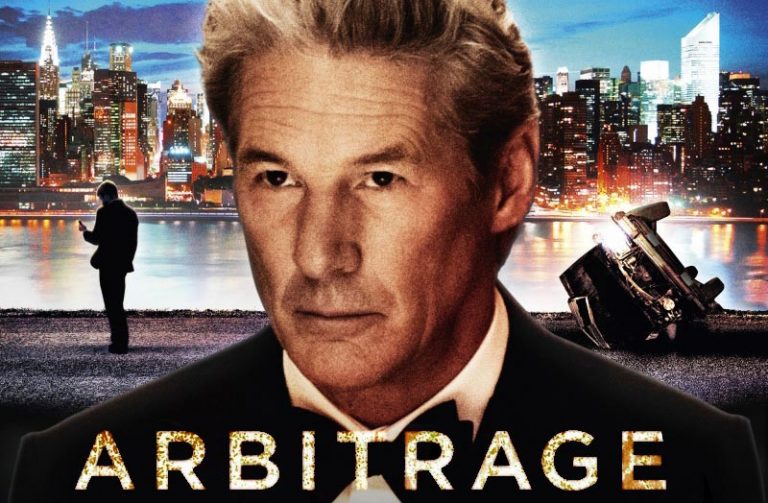
Richard Gere achieves the impossible in Nicholas Jarecki’s thriller Arbitrage: he makes us sympathize with an arrogant, ruthless (but charming) hedge fund magnate whose empire is threatened by some poor financial and personal choices.  When we first see Gere’s Robert Miller, he is on the verge of selling his venture capital company to the elusive Mr. Mayfield (Graydon Carter), while celebrating his birthday surrounded by family and friends, including Susan Sarandon as his philanthropic wife and Brit Marling as his daughter and business partner.  Yet, there are troubles lurking around every corner: the deal is not set, an audit has to be approved, the financial vultures are circling– and there is Miller’s very needy European artist/ mistress (Laetitia Casta) who will be very upset if he misses her opening.  An impulsive decision to assuage his mistress leads to a horrific accident (if you want to think a landlocked Chappaquiddick, I’m not stopping you) and some desperate maneuvers to avoid financial ruin and imprisonment.

Arbitrage ratchets up the tension as Miller is forced to rely on the other protagonist: his  proud, unwitting accomplice Jimmy Grant (Nate Parker), a young black man with a record (which allows Jarecki to skillfully introduce troubled  race relations and America’s class structure) who rebuffs Miller’s attempt to “buy” his loyalty, especially since he has no intention of doing the dishonorable act of selling Miller out—even when threatened by a dogged cop (an entertaining Tim Roth) with supposedly damning evidence.  These scenes between Gere and Parker—abetted by Stuart Margolin as Gere’s shadowy adviser–are among the best in the film.  Parker excels as Grant, a young man with a sense of honor and loyalty that is unknown in Gere’s rarefied circle of acquaintances.  Miller’s mistaken belief that all will be fine if you throw money at it (his business dealings, his mistress, his wife) doesn’t hold with Grant, and leads to a severe crisis of conscience-on both parts. Gere brings out Miller’s humanity even as he contemplates letting Grant take the fall; other scenes give Gere full rein to display the driven, desperate, dynamic machinations of a man who has forced himself to believe that all his actions are for the greater good of his investors.  It’s a terrific, skillfully shaded performance in a taut, extremely entertaining film that encourages the audience to take a rooting interest in Robert Miller’s plight without downplaying the character’s questionable motivations and financially fraudulent actions.

Fraud of a different kind is the subject of The Words, a flawed but not altogether uninteresting look at what can happen when the creative process decides to employ a short cut.  In the framing story, Dennis Quaid is a successful author who is supposedly regaling his audience at a reading of his new book.  However, his ponderous narration (which would have driven his audience into a lengthy stupor), magnified by a syrupy score, tells the story of a struggling writer (well-played by an earnest Bradley Cooper), his lovely wife  (Zoe Saldana, attractive and under-used)—and the battered briefcase that his wife bought for Cooper on their Paris honeymoon.

After Cooper’s latest novel is rejected (it’s too good) and he is forced to finally take a job (gasp—and -with a literary agency, no less), he finally gets around to looking in that briefcase, and lo and behold, what’s in there but a very old manuscript, both legible and literary.  After he types it into his laptop, Zoe reads it (unaware of its origins), gushes over it (and this new literary lion she’s married) and convinces him to give it to his employer/publisher.  The book becomes a hit, his earlier books get a second look, and everything is hunky-dory –until this mysterious old man (an ultra-weathered Jeremy Irons) shows up with some damning information.  The “tension” mounts.  Will Irons claim ownership of “the words?  Will he exact revenge?  Will Cooper fess up?  How will this affect his love life? The real letdown is that Brian Klugman and Lee Sternthal, the authors of these Words establish what might have been an intriguing premise– and then proceed to deal with it in a most pat and perfunctory manner.  The fact that  Cooper is a fictional character in “the story within the story” only serves to further distance the viewer from his plight. Moreover, the flashbacks wouldn’t have been out of place in a Lifetime movie while the framing device (with Olivia Wilde as an attractive, inquisitive fan) doesn’t really add anything of consequence—although I’m sure it was meant to add weight.  You may want to wait for the DVD.

Health >> How to get rid of “Beer Belly”

beer-belly-pic.jpg - 41.91 Kb

It may also be called “Pot Belly,” “Jelly Roll” or “Muffin Top.” While drinking too much beer can certainly lead to “Beer Belly,” it can also be caused by screaming “Git In My Belly” whenever you see junk food in front of you!

Even if you don’t drink beer, you can easily start to gain body fat in your stomach if you are not careful. That’s where men store much of their excess calories. (By the way, if you do drink beer or any type of alcohol, be aware that it’s 7 empty calories per gram, almost as much as fat, and your body will always use your alcohol stores before your fat stores for energy, thus making it even harder to burn your fat off.) And, it’s definitely very important to get excess belly fat under control, as excess belly fat in the midsection is linked to a variety of health problems like type 2 diabetes, high blood pressure, and cardiovascular diseases.

I always say the belly fat area is like a bad in-law, it’s the first to arrive and the last to leave, so stay focused and committed on these following exercises in conjunction with your cardio to get rid of the beer belly, and you’ll be on your way to six pack abs!

Crunch

1) Lie on your back on the floor or a bench with your knees bent and feet flat on the floor, and your hands behind head. Keep your elbows back and out of sight. Your Head should be in a neutral position with a space between your chin and your chest.
2) Leading with the chin and chest towards the ceiling, contract your abdominal and raise your rear shoulders off the floor or the bench.
3. Return back to your original starting position. Remember to keep your head and back in a neutral position.

Bicycles

1) Start by lying on your back with your hands clasped behind the back of your neck and your thighs bent 90 degrees at your hip with feet off the ground and toes pointing towards the ceiling.
2. Simultaneously curl your right shoulder and left knee up and in towards the center of your body until your elbow and knee touch. Extend your leg back and return to the starting position along with your elbow to reset and then repeat with the other side.
3. Continuously repeat this pattern of kicking your legs in and out while your opposite side elbow moves towards your opposite knee, doing at least 30 repetitions.

Plank Knee-ins

1) Start off by getting on your hands and knees in a push-up type position. Raise your knees up off the floor so that only your hands and feet are touching the floor and supporting your weight.
2. Keeping your abs tight and your trunk parallel bring one knee in towards your chest. Be sure not to raise your butt up too much putting your body in a “V” shape. Try to keep it straight and parallel to the floor.
3. Return the foot back to the starting position and repeat with the other leg, doing at least 30 repetitions.

Vacuums

1) Start off by getting on your hands and knees, keeping your head in a neutral position.
2) In a Drawing-in-maneuver, suck your belly button in towards your spine.
3) Hold in for 10 seconds then release.
4) Repeat for 15 repetitions.

Some additional tips for getting rid of and preventing Beer Belly:

-As mentioned, limit your alcohol intake. The CDC recommends up to 1 drink per day for woman, and 2 drinks for men. A drink is defined as 12 ounces of beer, or 5 ounces of wine, or 1.5 ounces or a “shot” of 80 proof distilled spirits or liquor (e.g., gin, rum, vodka, or whiskey).

-Consume no more than 30% of your total daily calories from fat (with no more than 10% of that coming from the bad fats which are trans and saturated).

-Consume no more than 100 calories a day from sugar. I’m talking about simple carbohydrates like table sugars, the bad stuff. Always remember, your body needs a certain amount of the good fats like polyunsaturated and monounsaturated, but it doesn’t need simple sugar. It’s that simple!

Cheers,

Jack Witt, MS, CPT
Fitness and Health Coach
818-760-3891 Main
310-562-5629 Cell
www.getfitwithWitt.com

Music Review >> Ryan’s Rock Show at “BONNERHAUS!”

“I didn’t know sh*t like this happened in the Valley” – Common comment from audience members.

Upon entering Bonnerhaus through a gated door, I was greeted by a Ben Franklin electro generator that seemed to symbolize a motioning foward with creativity pushing through challenges.

This engine fits Ryan Minic. Standing graciously with the use of a walker, he has not allowed his disability to handicap his artistic endeavors. Ryan was born in Ohio, and resides here in NoHo at the Bonnerhaus, where eclectic music and visual artists gather, perform and create.

{youtube}CgONfAWQlOg{/youtube}

Ryan’s Rock Show showcases emerging trending bands at this secret location, Bonnerhaus. Music is what keeps Ryan Minic moving in life. He found music after an accident when he was a child. He started a career in music in 2007 with just an audio recorder on loan from the universe which he intends on paying back. ( 🙂 ) His focus on music made the days of homelessness seem numb compared to feeling his dream come true. He created a website, interviewing bands and profiling them on his website Ryan’s Rock Show. He has interviewed Sonny Moore (know as Skrillex) , Glassjaw, Animals as Leaders, Between the Buried and Me, and more. Ryan created Bonnerhaus, a DIY music venue with his two house mates, Dorothy Gilbert and Asa Fox. Their motto is “encouraging each other’s individuality and wild imaginations.” The visual art and collectibles displayed reflected this elementally.

How does one get to perform or come to Bonnerhaus?
Ryan: “It’s invite only ” for a band to play but anyone can attend a show. The address is made available to those who RSVP on Facebook, and those who purchase tickets. You can find show detail on facebook.com/bonnerhaus.

What special artistic qualities must one possess?
Ryan: You must be a genuine person who appreciates creativity. We have a no douchebags policy.

Ryan, five years from now?
Ryan: “I don’t know, I just stay in the flow, I like where I am now in my life. I hope to expand, to share more of this creative experience.” I’m grateful.

What’s next for Ryan’s Rock Show and Bonnerhaus?
Ryan: The next show will be on 9/24 with Hypno5e and Badass Magic. Hypno5e is a metal band from France who has toured with Gojira. Badass Magic is a band from here in LA.

Carole: *A great discovery in NoHo, I was inspired on this balmy late summer eve as I entered the world of Bonnerhaus and chatted with these artists gleaming with beautiful energy.

NoHo Has Parking And It’s Affordable!

For Companies Looking for a Parking Solution, NoHo Parking Services, Inc. has your answer!

The best and the most professional parking service you will find in the NoHo Arts District and Los Angeles.

noho-parkiing.jpg - 9.10 Kb

Our Mission

Our mission to provide your company and facility with the best parking management service available. To deliver this promise, we have put together one of the best teams of parking professionals in the United States of America. Our Executive Management has a combined experience of over 100 years of hands-on operations of parking facilities. Our portfolio is comprised of a balanced mix of commercial, hotel, retail and multi-use properties. The ratio at Exclusive Management and super­visory staff of operations allows us to provide better personalized service and to take prompt action in the field as needed.

Special Events Parking

Valet parking is not only mark of a gracious host, but more often than not, a necessity.

  • Adds prestige to the Event
  • Improves traffic flow and operation Efficiency
  • Maximize parking space

Every Special event is unique. Our seasoned special event management team meets with our clients prior to their events and to help tailor the parking plan according to the specific location/Event needs within the allotted budget We provide insurance, parking lots, shuttle vehicles and trained/uniformed attendants.

Everyday Parking

In NoHo and in other urban centers, parking is limited and can be a frustrating experience for your customers. This is the area NoHo Parking Services, Inc. excels in. Don’t know where customers can park their cars…We do. We have carefully researched and secured parking spaces throughout NoHo.

fedbp.png - 207.23 Kb

For NOHO Visitors, you now have available convenient parking at The Federal Bar, Bow and Truss, Brickyard Pub and Pitfire Pizza. Give us a try….we promise courteous, affordable service!

bowp.png - 184.96 Kb fedp.png - 156.68 Kb

Questions? We want to hear from you.


NOHO Parking Services INC. 818-324-4707
rkarimeenoho@yahoo.com www.nohoparkingservices.com

Fitness >> How to get rid of “Poochies”

How to get rid of “Poochies”

fat knees poochies

Also known as “fatty knees”, it’s that fat pocket just above and/or slightly to the side of your knee cap where your quadricep (thigh) muscles end. It can keep you from wanting to wear shorts, skirts, and dresses as your knees look “bloated”.

As I always point out, you can’t spot reduce fat on your body, but doing some targeted exercises for the fatty area, along with a healthy diet and ample cardio will get the job done.

Perform these exercises for your “poochies” every other day. 3 sets of 15 repetitions.

Partial Co-Contraction Lunges

1. Start in a lunge position (one leg forward, one leg back with feet flat on the floor).
2. Slowly lower your back leg until your knee touches the floor.
3. Place one hand on the “poochie” fat area (lower thigh muscle just on the inside of your knee).
Place other hand on the glute (butt cheek) of same leg.
4. Now raise your back knee one inch off the floor and you will feel the two muscles contract.
5. This is the starting position. Slowly raise yourself up by extending both legs all the time feeling for the tension in the 2 muscles. The second you lose tension(it likely will not be long) pause and then slowy return to starting position.
6. Repeat for the recommended repetitions.

Chair Sit

1. Start by standing in front of a chair or box.
2. Proceed to sit back with your hips as if you are going to sit in the chair.
3. Stay in control during the movement and go at your own pace.
4. To keep your balance at first extend your arms out in front of you as you squat. As you get stronger you can keep your arms at you side.
5. Repeat for the recommended repetitions.

Power Jacks

1. Start in a shoulder width stance with your knees slightly bent.
2. Jump up into the air and spread your legs out into a wide stance and land in this position.
3. Immediately proceed into a squat and then stand back up into a jump to land with both feet at a shoulder width stance.
4. Repeat this movement for the recommended repetitions.

As you are going along with your program, it is a good idea to periodically measure your body fat. Ask a personal fitness trainer to do this for you with a calipur using skinfold measurements, or a Body Fat monitor devise using the bioelectrical impedance method. Reducing your overall body fat is the best way to spot reduce those pesky fatty areas of your body. Recommended ranges for woman are 18%-25% and for guys 8%-15%.

Cheers,
Jack Witt, MS, CPT
Fitness and Health Coach
818-760-3891 Main
310-562-5629 Cell
www.getfitwithWitt.com

Music Review >> Matchbox Twenty – “North”

Comebacks aren’t for everyone…

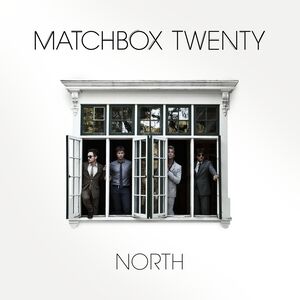
File:Matchbox Twenty North Album Cover.jpg

..there are plenty of bands who have gone on a rather long hiatus and try and revamp their career and have just come off as washouts. Having said that Matchbox Twenty are back after their lengthy ten-year hiatus with their 4th studio album “North”. In all honesty from the opening track ‘Parade’, the band picked up right where they left off. This may not be to everyone’s taste, but it is good for bands to hold their ground and stay true to their music and their style without feeling the need to conform. That isn’t to say that it is out-dated. There is still a real sense of freshness within their music. There is a big mixture of tone on ‘North’, from the more pop infused ‘She’s So Mean’ to the classic Matchbox sounding ‘Parade’. A nice addition to this record is ‘The Way’ it isn’t often that you hear the other band members sing, so it was a pleasant surprise.

Songs like ‘Sleeping At The Wheel’ will take the listeners back to the ‘Yourself Or Someone Like You’ album. This kind of resemblance could be debated endlessly as to whether this is a lack of evolution from the band; however the word evolution shouldn’t even come into conversation when discussing this band. If after ten solid years a group can come back and still draw on their experiences to create music whilst keeping their iconic sound and pull it off, then this band has a special kind of talent that should be praised.

If nothing else ‘North’ shows that Matchbox Twenty still have it after all these years. It is also a bit of slap to face to todays music. It is safe to say that over the recent years the music industry has taken a somewhat bad turn, with a machine music generation taking over. This band have come back, picked up a guitar and a microphone and shown the ‘phases’ what music is. If you were already a fan of Matchbox Twenty then you won’t be disappointed. If you like the more mellow and alternative sound of rock than this is for you. If you are into the chart music this album is most likely not going to be for you.


Rating:9/10


{youtube}cIMVPyx1OiY{/youtube}

Movie Review >> Lawless: Far from Flawless; Robot and Frank: a Winning Duo

File:Lawless film poster.jpg

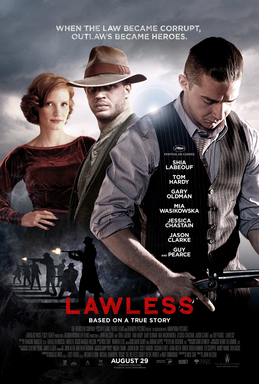
John Hillcoat’s Lawless purports to tell the story of the resilient Bondurant brothers who sold moonshine in Virginia during the 1930s  and allegedly achieved some degree of legendary stature…at least in the eyes of Matt Bondurant, the relative who wrote the book (The Wettest County in the World) on which the film (written by Nick Cave) is based.

If you see the film, these bootlegging brothers hardly seem worthy of that stature: sure they’re crafty, daring, rebelliou—but also (according to the film’s narrative) ornery, senseless, careless, guileless, and occasionally downright stupid.  Conflict is introduced early on when Guy Pearce’s sadistic federal agent appears to either get a share of the brothers’ bounty…or destroy them lock, stock and barrel (literally).  That it takes Pearce almost two hours of screen time to find their hidden still is one of many narrative flaws in the movie, flaws that might be less apparent if the film wasn’t so self-consciously lyrical: while admiring the cinematography, one has a great deal of time to consider the implausibility of the brothers’ actions and choices.  When the film should be building toward its inevitably blood-soaked climax, it tends to lurch in a haphazard, spasmodic manner.

Lawless is populated with fine performers: Gary Oldman is fairly dynamic—albeit in an extended cameo–as an established bootlegger who enters into business with the Bondurants;  Jessica Chastain gets to adorn the scenery as an attractive woman who finds refuge with the brothers; Tom Hardy gets to glower and brood  as the most legendary Bondurant of them all, and Guy Pearce makes the agent into an entertainingly glorified dandy.  With such fine actors as these jockeying for precious screen time, it’s a shame that the lion’s share of the footage goes to the bland and colorless (notice I did not include a qualifier such as ‘relatively”) Shia La Boeuf.  If ever anyone mastered the trick of being simultaneously sullen, callow, monotonous and vacuous, it is Mr. La Boeuf.  No doubt because of the strength of the Transformers franchise, Mr. La Boeuf has been permitted to lend his dubious talents to a number of films (as in the sequel to Wall Street), becoming the equivalent of a cinematic vampire who drains the narrative energy out of any enterprise.  One can only hope La Boeuf’s legacy does not prove to be as enduring as the Bondurants’…

Frank Langella is a marvel in the amusing yet melancholy Robot and Frank.  Set in a near-future in which robots (with some amount of agility) will be employed as companions, Langella plays Frank, a retired cat burglar whose failing memory arouses the concern of his adult children, particularly James Marsden’s well-meaning Hunter, who provides Frank with a versatile robot (voiced sensitively by Peter Saarsgard).  At first Frank is hostile to the robot, bristling at the inference that he can’t handle his own affairs anymore—until he decides the robot might make a useful accomplice…

Robot and Frank,  beautifully directed by Jake Scheier from Christopher Ford’s incisive screenplay, touches on a number of ideas: coming to terms with aging and mortality; the loss of individuality in an increasingly digital and impersonal world; the struggle to maintain family ties as one grows older; the tricky nature of memory; the difficulty of finding meaning in one’s life; and most movingly, the importance of friendship as exhibited not only with Frank’s relationship with the local librarian (warmly played by Susan Sarandon) but also the evolving friendship between Frank and the robot-whom Frank refers to yearningly as the son he didn’t have.  In the end, this is Langella’s movie, and he makes Frank irascible, sometimes cruel, occasionally cunning—and in the end, likable and heartbreakingly human.

Very independent Filmmaking

Good to meet you!

My name is Samantha Simmonds-Ronceros and I am a very independent filmmaker.

Confused? I know I regularly am, but to me the term ‘very’ or in some cases ‘very,very’translates as ‘low’ and mostly ‘no’ budget, entirely on your own, begging, borrowing and always stealing (locations usually) filmmaking. I will try to explain.

Its easy enough to spot the film crew with the big budget. On any given day on Los Angeles there are a dozen or so productions shooting on location. The grip trucks line the avenues, the caterers pitch their dinning tents and we strain enviously against our seatbelts to spot a movie star as we drive by. This is big budget Hollywood, with all its stops pulled and hired motorcycle cops eyeing you suspiciously, as they lurk at the edge of the blocked off thoroughfare organic hotdog in hand.

It is the stellar opposite of the world of the very independent filmmaker. Driven by love, artand blissful naiveté we skulk around the corners of the filmmaking world, borrowed lights in hand, to produce something, anything that we can capture with whatever equipment we have to hand.

Usually its a lot more organized than that sounds, although I can only speak for my ownproductions and those that I have been associated with.

For instance last year myself and a small group of filmmakers completed the somewhatinsane feat of making 52 films in 52 weeks. We quite literally produced a film a week for an entire year. Each of these films being written by us, adapted from original short stories, shot and edited by us in one week and put up on our Youtube channel, warts and all.

The point I hear you ask? Well, I’m not sure there is just one point or any when you create, whatever the medium. We had no budget, or just what money we had in our pockets onthe day. Our genres ranged from romantic comedy to slasher to thriller, fantasy and periodpiece. We shot on location in rain and cold and ridiculous heat. Mostly in North Hollywood,but also in Marina Del Rey, Lancaster, Burbank, Covina and The Los Angles NationalForest were we camped out to for two days and shot all night with only the light of a campfire.

It sounds romantic, and it is, if you enjoy sleeping on the floor of the forest and trying not tostep in bear poo. But I think as a filmmaker, whatever the budget and where ever you findyourself, you have to be in love with it, passionately, because why on earth would you putyourself through it otherwise?

Money or no money, making a film is a miraculous thing. You are reliant on so many different things falling into place, showing up and actually working properly, most of whichare completely beyond your direct control, regardless of whether they have been paid for or not. Your actors have to show up, not get sick, not have a paying gig, not have a car break down, or a hang over. Your makeup girl must not realize that she has some thing better to do than help you out for free on the off chance that you might actually complete the film and she might actually see her name on the credits at some point, in fact thatapplies to all of the crew. Your camera must not break down, your tape must not run out, your cast and crew must understand that at 3 in the morning and with 20 bucks the only food on the planet is Del Taco.

And throughout this potential catastrophe you must remember to say ‘action’ and actually capture everything on film that you need to construct your vision in the edit, and don’t get me started on sound. Getting an actual sound guy to show up more than once when theonly reward is the desperate need you have for them, deep appreciation and theoccasional donut is next to impossible. During our year of filmmaking we had four suchheroes, one of which was in LA for the Oscars, nominated for best sound on a student film, who I had the pleasure of working with on a TV pilot I produced in England. She didn’t winan oscar, but she did get to mix out mariachi music on location with us in North Hollywood, which I am sure meant far more to her.

You learn quickly as a very independent filmmaker that having an ego is like wearing a haton a roller coaster. Pointless and a bit silly really. You can try to hold on to it as hard as youcan, and you might even manage it for a while. But then you miss the ride, the thrills, thefun and eventually you will loose it anyway. The ride will rip it from your clutching fingers, or you will cast it off yourself after you realize you will look like a pillock in the photos that always show up on facebook somehow.

So, ego aside, and over the next few months, I hope to show you the world of very independent filmmaking. The perils and the pleasures, pinnacles and the pain, the…selfindulgence and the sublime. Well, you get the idea. I’ll interview and profile other filmmakers, go on set and relate the experience. Ill reference my own work and experiences as well as introduce you to the films made on a wing and a prayer, or an ipodand laptop. There is some truth to the rumor that you can make a film with a camera phone and it can still be compelling. But I believe that it’s all about the story, and althoughit is true that in theory anyone can make a film, not anyone can write a compelling tale, findthe right actors, film it, edit it, and put it out into the world. That is the miracle.

Biography

Samantha Simmonds-Ronceros is a British writer, director, filmmaker and photographer living in North Hollywood. In 2012 she was involved in the unprecedented project 52 Films/52 Weeks: A Year in Filmmaking, where she and her partners, wrote, directed, produced and edited a film a week for an entire year. She currently has several independent projects in development, runs a music video production company as well as a budget conscious photography business for the hard working actor. You can reach her at samronceros@gmail.com.

Your submission was sucessful

0

Thank you for your submission.  Your event will be available shortly

Please note, we do not accept Theatre events in this section. Please contact nancy@nohoartsdistrict.com if you would like to promote your theatre production.

LA Music Interview >> OTYP

Today, we are interviewing Jim Manzo, member of  the OTYP Band.  Jim goes back quite a few years with the NoHo Arts District.  He graduated from the Los Angeles Recording Workshop, which moved to Hollywood and is now where the Art Institute of California Hollywood is standing.  Jim was a regular at local recording and rehearsal studios such as AMP, Leeds and The Alley.   Now, the  OTYP Band is releasing their new album.

Tell us about your childhood, when you discovered music.

Music has always been in my life. From my uncles on my mom’s side of the family to a pro singer entertainer on my dad’s side of the family. My mom would play guitar to my brother and I instead of reading a book before bed.  When I was a kid, my mom would leave my brother and me at my grandparents and I would listen to my uncle’s rock band play in the garage.  When I was six years old my mom introduced me to accordion classes. I did really well with that and I still have that accordion. Then in jr. high I started music theory class and played trumpet, trombone and stand up bass in the school orchestra/band.

How did you get started in the music industry?

I really got into the business when I worked at a few video companies like EasyRider, and a small record label in the San Fernando Valley. Then in 1991 I worked in radio at an L.A. FM station [ 97.1FM KLSX ], and then a few other radio networks around the SoCal area. This really launched my career, but yet still not quite there yet.  I have been in bands since I was 15 years old, and some of the best performances were in a recent groups. The bands that really made an impact in my life were pretty much all of them. But here are the names of the bands I played in from when I started: Decoda, Realize, DPS [ Drunken Pond Scum ], RAZ, All These Souls, Black Nautilus, and currently with OTYP [ Older Than Your Parents ].

Tell us about your band.

“Older Than Your Parents” is the current and most unspoken rock band that I have played in. We have been together for over 21 years as different names but have now been “OTYP”for the last two to three years. The band is five members, including Joey Molland of Badfinger and Joe Vitale song writer and performer with Joe Walsh, CSN and The Eagles to name a few of his credits. The five of us put together quite a few tracks of music in the last 21 years.

Describe your new upcoming album.

OTYP has a new album coming this fall. We are still working on the title of the record. It is a collection of 16 new tracks with some hidden extras for fun.

Who have you collaborated with?

I have had the joy of playing with Skunk Baxter, Ike Willis of Frank Zappa’s band, Dalana, Jimmy McNichol, The Joe’s who recorded with me, Stu Cook of CCR, Gilby Clarke, and I know I’m missing a few more names.

Which bands and genre of music do you share likeness?

I am mostly a fan of ROCK music, but I do like metal and groups like Iron Maiden, Judas Priest, Metallica and Motley Crue, Kiss and Deathklok.  I’m mostly influenced by classic rock like The Beatles, The Rolling Stones, Led Zepplin, to Tom Petty, Lenny Kravitz and Fishbone.

Tell Us about your fan base.

These we’ll take anyone we can get.  I think with the older players and the legends in our group, most of our demographics would be in the 34 to 54 crowd. I have noticed when we do play the Hollywood clubs the younger kids do get into our music. Most of our outreach is found on social media like Facebook, MySpace, Youtube and twitter.

Where do you perform regularly and where can people see you next?

I myself stay active with live playing every Wednesday at a club in Tarzana called “Peties” on Reseda and Oxnard in the San Fernando Valley.  This is a “JAM” night from 9pm-1am every Wednesday. It’s a great place to meet up and get musicians together and play a bunch of rock or whatever. And we have had some high-profile musicians step in from time to time. As far as OTYP, nothing is in the books at the moment but I am playing in a few other groups to fill the void between OTYP gigs. This September 6th I will be performing at Universal Bar n Grill in N. Hollywood with a “Pat Benatar” tribute band, and on the 28th of September with solo artist “Nikki Lunden.”

What will be happening five years from now?

Hopefully, the next two to three albums will be out and we will have toured more than Los Angeles and the East Coast. But seriously, I think we will finally have the respect and recognition with in our peers in the music community. Lets hope the earth holds together after December 21, 2012.   Then I can give you all a real answer to what is up.

Name all the members of the band, in order of who’s most likely to sing in the shower?

Jim Manzo Bass – OTYP aka “Older Than Your Parents” is:

Michael Rescigno – Guitar, Vocals

Jeff Hutchinson – Drums, Vocals

Jim Manzo – Bass, Vocals

Joe Vitale – Keys, Percussion, Vocals

Joey Molland – Lead guitar, Vocals

{youtube}ARlEo2nsdlA{/youtube}

Dirty Rotten Horns will join us for the 2012-2013 tour

www.youtube.com/TheOTYPchannel

www.myspace.com/olderthanyourparents

www.facebook.com/otyp.olderthanyourparents

www.vibedeck.com/otyp-olderthanyourparents

Health >> How to get rid of Muffin Tops

muffintopgirl.jpg - 21.48 Kb

Does your flab spill over the waistband of your pants? That unwanted overhanging fat can occur with low rise pants and midriff tops, but can happen anytime you wear a pair of tight pants. It ends up resembling a muffin rising from its paper wrapping. It can be your back fat, stomach fat, love handles or all of them!

Anytime you have fat in the stomach area you are at risk for health complications due to it’s proximity to organs. A high waist circumference and too much abdominal fat puts you at high risk for type 2 diabetes, high blood pressure, high cholesterol and heart disease. Women with waist measurements over 35 inches (88 cm) and men 40 inches (102 cm) are at risk.

(To measure your waist circumference, use a tape measure. Start at the top of your hip bone, then bring it all the way around so it’s level with your navel. Make sure it’s not too tight and that it is parallel with the floor. Don’t suck your stomach in too much or hold your breath while measuring it!)

Here’s some great exercises you can do in conjuction with cardio and aerobics to “whittle the middle” and get rid of those Muffin Tops!

Ankle Wiggles

1) Lie on your back on the floor or a bench with your knees bent, feet flat on the floor, and your hands at your side. Your head should be in a neutral position with a space between your chin and chest.

2) Raise your head off the floor and chin and chest towards the ceiling, contract the abdominal and raise your rear shoulders off the floor. Reach for your ankle with one hand and repeat with the other side.

3) Go back and forth for a set of 50 (25 each side) for 3 sets.

4) Remember to keep your head and back in a neutral position. Hyperextension or flexion of either may cause injury.

Reverse Crunch Scissor Kicks

1) Start by lying on your back with your legs perpendicular to the floor and your hands either placed palms down on the floor, or under your lower back area for lumbar support.

2) Slowly lower one leg down towards the floor.

3) Lift that leg back up and then repeat with the other leg.

4) Do 50 repetitions (25 each side) for 3 sets.

Lying Side Crunch

1) Lie with your back on floor or bench with knees bent.

2) Let your knees fall to the right so that your hips are somewhat rotated.

3) Leading with the chin and left shoulder, contract abdominal muscles and raise left shoulder off the floor or bench towards your left knee.

4) Do 3 sets of 20 repetitions. Repeat with the other side.

5) Don’t twist excessively, your elbow doesn’t need to touch your knee.

Cobra on Floor

1) Lie on your stomach with your arms at your sides and palms facing up.

2) Slowly raise your shoulders up off the ground by contracting your low back. Simultaneously, raise your toe off the ground.

3) Do 3 sets of 20 repetitions. Don’t hyperextend your back.

GRANT WRITING, FUND DEVELOPMENT, STRATEGIC PLANNING, TAX RETURNS, BOOKKEEPING

0

writing.jpg - 19.46 Kb

A GIFT FOR YOU!

20% OFF

Would you like to have a successful grant writer & non-profit specialist available as you need her?

Look No Further! In these days of economic stress, it is more important than ever to stretch our precious dollars. I can help. My gift to you is 20% off the first 12 hours of my already affordable rates.

GRANT WRITING & MORE!

OVER 16 YEARS EXPERIENCE IN THE NON-PROFIT ARTS SECTOR.
GRANT WRITING, FUND DEVELOPMENT, STRATEGIC PLANNING, TAX RETURNS, BOOKKEEPING
CALL FOR A FREE CONSULTATION:

lesliedebeauvais45@att.net or call: 818-613-3197

Add your event.

0

You must be logged in to add an event.  Please login and then click “ADD EVENT”

FILM FESTIVAL FLIX

0

FILM FESTIVAL FLIX

WHAT:  Premiere of FILM FESTIVAL FLIX: a new monthly film festival.

Film Festival Flix is a monthly series which brings the film festival experience to communities around the country. Film enthusiasts in selected cities are offered an All Access pass to the “Best of the Fests” and a chance to enjoy festival events in the comfort of a local theater in their home town.   Join the filmmakers in celebration each month at Pasadena Playhouse 7 and Laemmle NoHo 7.

Films premiering:  FACE TO FACE & EXPIRATION

Michael Rymer’s Face To Face:

Ten Australians from diverse backgrounds sit down to determine the fate of a violent young man.

group_shot.jpg.opt672x195o00s672x195.jpg - 40.13 Kb

Alastair Orr’s Expiration:

Four applicants, with their own hidden agendas, are accepted by a mysterious corporation to participate in a medical experiment at an isolated testing facility.

expiration.png - 932.46 Kb

DETAILS: WEDNESDAY, SEPTEMBER 5, 2012

Laemmle Playhouse 7, 673 E. Colorado Blvd, Pasadena

“Face to Face” – premiere @ 7pm – Reception and Q&A with filmmakers and cast following

“Expiration” – premiere @ 9:30pm – Q&A with filmmakers following

THURSDAY, SEPTEMBER 6, 2012

Laemmle NoHo 7, 5240 Lankershim Blvd, North Hollywood

“Face to Face” – premiere @ 7pm – Reception and Q&A with filmmakers and cast following

“Expiration” – premiere @ 9:30pm – Q&A with filmmakers following

TICKET

http://filmfestivalflix.com/purchase-tickets/

WEB: www.FilmFestivalFlix.com

Spotlight >> A Profile on Director Ira Sachs of “Keep the Lights On”

Long Night’s Journey Into Light

ira_sachs_headshot.jpg - 1.21 Mb

How many times have you told a lie? The funny thing about lies is they often times don’t require you to tell anything; a lie can be a behavior, a belief, even an action- but no matter the form, one can argue their sole purpose is to protect secrets.

Yes, protecting secrets with falsehoods seems to be a common thread in the stories that are our lives; stories where we fail, where we succeed, where we get it wrong far more times than we get it right. And one story where this truth unfolds unapologetically is in the new film Keep the Lights On, in theaters September 7th. Winner of the Outfest Jury Awards this past July for Outstanding Screenwriting in a US Dramatic Feature Film, and for Outstanding US Dramatic Feature Film, Keep the Lights On explores the sexually-charged, nine-year relationship between two men, Erik (Thure Lindhardt) & Paul (Zachary Booth), living in New York City, plagued by obsession, addiction and secrets.

The buzz in Los Angeles surrounding Keep the Lights On during this year’s Outfest was more than generous, and the film certainly did not disappoint. The dissection of these two composite characters, their mistakes, their pain, their intense love for one another, makes for a story that leaps off the screen. So when I heard leading, multifaceted film distributor Music Box Films had picked up the North American rights to Keep the Lights On, granting them a distribution deal that would bring the film to theaters around the country, I jumped at the chance to speak with Keep the Lights On director and co-writer Ira Sachs about his latest, semi-autobiographical work.

ktlo_stills0086403_thurelindhardt_zacharybooth_photobyjean-c.jpg - 140.29 Kb

Reflection

“I wanted to make a film about shame with the intention to do so shamelessly,” Ira says during our telephone interview. “I ended a relationship in 2008 that exploded around the issues of addiction and buried secrets, and, as a storyteller, I recognized that my relationship was representative of many other relationships. But I hadn’t seen many other films that conveyed the details of contemporary gay life, so I felt like I had an opportunity.” Ira quickly got to work pouring over his journals, and writing two hundred pages worth of material that he eventually handed over to fellow screenwriter Mauricio Zacharias, who also saw the potential. “I needed someone else to grant me permission to make this film and assure me that there was a story that he could relate to as a reader,” Ira says. Mauricio then took the massive amount of material that Ira had provided him with, and wrote the first draft of the script- but in adding his own point of view, transformed the story into something slightly different from Ira’s real life. “And that was an important moment for me,” Ira says. “My history was material to make the drama pop, but it was never something to be rigidly adhered to.” And after collaborating with Mauricio on several more drafts, Keep the Lights On was born. “The title is significant because it’s a call to arms, directed towards the audience, to live a transparent life,” Ira explains. “And there’s also a sexual pun intended in the sense that it’s a film that is very open with sex and sexuality; a film that literally doesn’t turn the lights off when characters are having sex or talking about sex because sex is integral to who these people are as much as it’s integral to who we all are.” This raw, truthful aspect of the story is partially what makes Keep the Lights On so riveting, but it’s also what made casting the film challenging.

The Price of Sincerity

“When I finished the script, I sent it to an agent in Hollywood whom I’d often send my work to, and I got the response back that no one in his agency would be available for this film,” he says. “So I was instantly made aware that I was going to have to cast this film in an unconventional fashion.” Luckily for Ira, he had gotten word of Danish actor Thure Lindhardt, famous in Europe for his breakout role as an autistic boy suspected of murder in the Danish film A Place Nearby in 2000. Credited as being one of the greatest talents to come out of Denmark, Ira quickly sent him a copy of the script. “He really responded to the material,” Ira comments. “And when he came in to audition for Erik, he did these takes that were so naked; there was an openness to him. And as an actor who is portraying a character with so many secrets, he doesn’t leave much hidden. And I knew that he would be appropriate in the role, but that he would also be distinct as every actor is, including Zachary Booth. Zach’s understanding of Paul’s challenges within his relationship, his challenges with drug use, his sexuality, was something that he was very sympathetic to. And that’s why no one in this film is a villain. All of the characters are struggling to make their way in life.”

ktlo_2445-2_zacharybooth_thurelindhardt_photobyjean-christop.jpg - 255.94 Kb

The Payoff

With wardrobe donated by fashion icon Marc Jacobs, a free shooting location at Julius’, the oldest gay bar in New York City, and help from a variety of other sources who contributed to the film’s production, Keep the Lights On wrapped up filming late last year, just in time for admission into the U.S. Dramatic Competition at the 2012 Sundance Film Festival. But Ira is no stranger to Sundance, as he was the recipient of Sundance’s Grand Jury Prize in 2005 for his film Forty Shades of Blue. “Sundance is the most important American film festival,” he says. “Once you’re there, particularly with a film about gay life, you feel the vulnerability of that because economically, there’s a resistance to telling our stories.” That was in January. By February, Keep the Lights On had won the Teddy Award for Best Queer Film at the prestigious 2012 Berlin International Film Festival, and that wasn’t all.

“There was a general reception in Berlin that was very positive and welcoming, where we got the sense that this was a film that would have a life in the cinema,” Ira remembers. “And soon after we won the Teddy Award, the film sold in twenty countries.” That’s also when Music Box Films jumped on board, offering a distribution deal that would include the U.S. in that list of twenty. But make no mistake, this might seem like an enchanted story, but Ira’s journey has not been without challenges, probably the most surprising being in the form of three rejection letters from three different film schools when his journey was just beginning.

The Benefit of Rejection

A native of Memphis, Tennessee, Ira had been involved in the Memphis Children’s Theater from a young age, directing his first play when he was just a junior in high school. And with a deep love for the theater, he graduated from Central High School in 1983, immediately enrolling at Yale University to study Literature and Film Theory. But after taking a semester off, trading in the mania of New York for the outdoor museum that is Paris, one of the most romantic cities in the world, Ira fell in love a second time. “When you’re alone for the first time as a young person, you find what you’re drawn to in a very natural way,” he says. “What I found was I was very comfortable inside a movie theater, and I was also very inspired.” Ira watched hundreds of films during that time, but one director in particular really left him in a state of longing. “I was extremely turned on by seeing the work of John Cassavetes,” he says. “He made extremely personal films that were unlike anything I had ever seen like A Woman Under the Influence. Seeing that film really changed what I thought was possible because I have since been interested in the way movies capture so much of life within images.” Ira graduated from Yale in 1987, and immediately applied to film schools at NYU, UCLA and USC, but was denied admission into all three. He didn’t let that stop him, though, instead- deciding to forge ahead and make his own films on his own terms. “In a way, I benefited from the rejection because I had always considered myself an artist,” he says. “I had always made theater and wrote and produced my own plays, so I just did the same thing with my films, assuming there would be an audience who wanted to see them.” His first project was the 1992, fifty-five minute short film Vaudeville, which took a close look at the social and political issues surrounding a primarily gay, traveling theater troupe. “I worked with a lot of the people I went to college with, and I was making a film about something I knew very well, a group of gay and lesbian theater performers,” he says, “so I’ve always drawn from my own life.”

Two years later, a slew of other films emerged, including the ambiguous Lady in 1994, the heartbreaking tale The Delta in 1997, and the Sundance-favorite Forty Shades of Blue, about a woman having an affair with her husband’s estranged son, in 2004.

Full Circle

Yes, Ira was a proven filmmaker who was successful without the benefit of film school, but, ironically, his films and numerous awards had started to draw the attention of some of the very film schools that had rejected him years earlier. And in 2008 he was invited to teach at Columbia University’s MFA Film Department, followed by an invitation to teach at the NYU Graduate Film Department in 2009. “As a teacher, I learn so much because you’re constantly engaged in the questions of your work and your student’s work,” he admits. “I learned that I can make a film in a very different way than I thought possible even a decade before because I’m working with students who are making films with the tools they have available.”

2009 was also the year that Ira directed one of his most influential films Last Address, which captures the exteriors and addresses of homes where New York-based artists, men who have all died of AIDS over the last thirty years, once lived- noting the disappearance of a generation. “I’ve never had mentors,” he notes. “I’ve never had someone older than me to give me guidance, and I think one of the reasons is due to AIDS decimating that generation.” And it was that loss that prompted Ira to co-curate Queer|Art|Film, a monthly film series and forum where conversation about this decimation and other topics surrounding queer art and artists can be had. “We invite artists, novelists, filmmakers and musicians to pick the film that’s been most inspiring to them, and share it and talk about it with the audience,” he says. “What developed is a kind of community conversation about the possibility of queer cinema, which includes Fellini, or John Cameron Mitchell, or James Bidgood, who directed Pink Narcissus, these are people who are all a part of my imagination now because of the series.”

As for the future, Ira just finished the script for his next film titled Love is Strange. “It’s about two men living in New York, who have been together for thirty-eight years, who decide to get married at sixty-three and seventy-three years old,” he explains. “One of them is a choir director for an all-boys, private Catholic school, and following their marriage, he’s fired. So the film is about consequences, and it’s really a love story, which I don’t think I’ve done yet.”

But one thing Ira has done is secure his place in the imaginations of millions of moviegoers and students of film all over the world with works of art like Last Address and Forty Shades of Blue. He’s a community organizer with projects like Queer|Art|Film, an educator with students at both Columbia and NYU, and an award winning filmmaker who, despite his success, still has to work tirelessly to get his films made, confiding, “Success is the ground to stand on. It’s a base of encouragement, but it doesn’t make the films possible because I tell stories about marginalized people; I don’t make commercial films, so it’s not like each film produces the next.” But in spite of that, he’s still managed to induct himself into the pantheon of queer artists, and he’s hoping Keep the Lights On will not only entertain, but inspire others to do the same. “I’ve learned that there’s a hunger for stories like this,” he says, “and I have a passion and an understanding about things I’ve experienced that I want to continue turning into films. And I hope that Keep the Lights On finds an audience that will allow other films like this to be made because it says to the powers that be that these are important stories, and they have a place in the market.”

ktlo_8471_thurelindhardt_zacharybooth.jpg - 235.52 Kb

Keep the Lights On will be playing in Los Angeles at the Sundance Cinema Sunset 5, starting September 7th. For more information on venues in your neighborhood where Keep the Lights On will be shown, please click on the following link: THEATERS.

Movie Review >> The Expendables 2 and Hit & Run

The Expendables 2 is an action-packed, testosterone-filled sequel to the 2010 Sylvester Stallone-driven (writer, director, star, set caterer—I may be mistaken on that last part) commando adventure. This time out Stallone shares the writing credit with Richard Wenk and relinquishes the directorial reins to Simon West. The result is the rare sequel that is actually an improvement on the original. Whereas the first film was laden with expository, brooding scenes meant to establish the team’s camaraderie and air of fatalism, the sequel is more focused and tighter paced yet with a looser feel, courtesy of some macho, quasi-mocking banter. In addition, the action scenes are consistently exciting and exhilarating without being excessive and exhausting. The plot is pretty negligible…the bad guys led by Jean-Claude Van Damme want to steal a lot of plutonium, enslaving a small town-and killing an expendable Expendable (Liam Hemsworth with death written all over his face—you’ll know the minute he mentions the girl waiting at home) in the process. This galvanizes these altruistic mercenaries (they only kill for a good cause) led by Stallone and Jason Statham into doing what they do best: locking and loading to wipe out these evildoers and possibly the save the world as we know it. Bruce Willis and Arnold Schwarzenegger are back, but this time they ‘re not just picking up a check—these action icons are picking up automatic weapons and blowing away the bad guys; in addition, the script abounds with references to their past triumphs that enables everyone to be in on the joke-and enjoy themselves while doing it. At the screening I attended, the biggest audience response was reserved for Chuck Norris, playing a renowned lone wolf of a mercenary. Perhaps the big screen wants him back…

Dax Shepard wrote and co-directed (with David Palmer) Hit & Run, a hit or miss chase comedy that is noteworthy for not wasting the lovely and talented Kristen Bell, as well as giving Bradley Cooper a chance to shine as a vengeful bad guy with jail issues. Shepard is Charlie Bronson, so named after he entered the witness protection program. His idyllic, anonymous existence in New Mexico (with live-in girlfriend Kristin Bell and skittish agent/caretaker Tom Arnold) is jeopardized when he decides to drive her to L.A.—thus incurring her ex-boyfriend’s wrath, which leads the ex to contact Shepard’s nemesis, a dread-locked Bradley Cooper. Much fleeing, chasing and stunt driving ensue. The car chase scenes themselves are probably the lesser part of the movie; they’re not bad but you’ve seen them before-and better. However, the writing gives the performers plenty of opportunities to show off their wares; Tom Arnold, while initially a little too cartoonish as the would-be protective agent, nevertheless gets to display flashes of likability and warmth; Bradley Cooper is like an actor reborn as the animal-loving, gun-toting robber with more than a few axes to grind. Kristen Bell finally has a lead role that gives her a chance to show many of her formidable skills, including her comic timing, intelligence and ability to project strength and vulnerability (previous films of hers generally focused on one aspect, much to the films’ detriment). Shepard (Bell’s real-life fiancé) and Bell convince and have genuine chemistry as a couple, so that their exchanges between the chases aren’t just filler, but portray the insecurities and suspicions that can befall even a seemingly happy couple. Hit & Run is a hit—whenever the tires aren’t screeching.

Music Review >> Our Innocence Lost- Like A Complete Unknown

Our Innocence Lost- Like A Complete Unknown

Rock and Metal are one of the few genres that are still thriving with talent. Each new band seems more underrated than the last and Our Innocence Lost release of their brand new album ‘Like A Complete Unknown’, is no exception to that rule.

I liked the general tone of the record, it was crisp and fresh but you still heard some more classic sounds creeping through on the riffs. Vocals wise it was pretty solid, the singer proved himself as being able to hold his own well and came across rather versatile by being able to seemingly switch from clean vocals to screams. It was almost surprising how professional it sounded, not to say that I was expecting bad things but these guys clearly knew what they were doing. They honestly sounded confident in their music and as we all know this can make a world of difference.

The stand out track on the album was ‘Falling To The Ground’. From the guitar intro it felt strong, then switching to the chunky metal riff the song really picked. The lyrics were deep and his vocals were outstanding on the track. The musicianship was also pretty impressive; every beat was placed perfectly to fit one another. However what really did it for me on the track was the constant switch between clean and screaming vocals. They just seem to work together so well creating a mix of emotions within the same song.

The main positive was the musicianship it felt melodic and ballsy. This is band that is clear in who they are and the direction they want to go and it generally does show in their music.

Overall if metal and rock are your thing then you wouldn’t go wrong listening to this album. Some clear hard work and discipline have gone into this CD, it deserves a listen.


Rating:8/10


{youtube}8M54njHu6XE{/youtube}

Movie Review >> The Campaign and Hope Springs

Jay Roach’s funny but uneven political spoof The Campaign pits morally lax incumbent North Carolina congressman Will Ferrell against insecure, uptight tour guide Zach Galifianakis.  Before you can say “no contest,” Galifianakis, with some seriously shady financial backing, not to mention a shark of a campaign manager (Dylan McDermott), manages to give the previously unopposed Ferrell a run for his money, as the two candidates descend to the kind of overzealous one-upmanship (including a novel use of a sex video) that gives politics a bad name.   While the movie makes some passing references to the current economic situation and the power of the media, much of what occurs is a little too silly, with a corresponding lack of insight, to make this a genuine political satire.  Despite this lack of artistic ambition, The Campaign is pretty funny, with a few hilarious sequences including a dinner in which Galifianakis learns more than he wanted about family secrets, and a scene involving the overly eager candidates and a baby.  There is solid support form Dan Aykroyd and John Lithgow as Galifianakis’ rapacious backers, Jason Sudeikis as Ferrell’s campaign manager, and Dylan McDermott as Galifianakis’ campaign manager from Hell-almost literally.  As for the candidates: I’ve rarely found Galifianakis funny in the past, yet here he manages to be likable and appealing, even when he engages in some down and dirty dealings.  Ferrell’s incumbent also manages to retain his likability, even when indulging in the must outrageous, childish behavior.  Amidst all the shenanigans, there is a quiet scene where Ferrell and Galifianakis share some bourbon and reflections. It is not a particularly funny scene (nor was it intended to be), but it manages to convey some of the characters’ decency, so that what happens at the end of the contest is not totally unexpected or unfounded.

The sunny trailers for David Frankel’s Hope Springs might lead you to believe this may be a cheerful comedy about post mid-life crisis, but it’s much more serious than that.  Meryl Streep and Tommy Lee Jones’ lengthy marriage has fallen into a malaise of hasty morning goodbyes, unrelieved small talk (if any) at dinner, separate bedrooms, and nothing in the way of intimacy.  While Jones is seemingly content with how things are, Streep has decided (over Jones’ objections) that they will travel to a small town in Maine (called-you got it-Hope Springs) for some intensive couples therapy with compassionate counselor Steve Carell. There is some humor here- in the befuddled, cantankerous Jones’ reactions to small town life, as well as Streep’s sojourn in a tavern (under the watchful eye of bartender Elizabeth Shue—somebody get that actress more work). However, the wrenching power of the movie is in the portrayals of Streep and Jones.  They are entirely convincing as a couple whose relationship is more like that of roommates than of soulmates. One can see Streep’s insecurity as she wonders if she is still attractive to Jones, as well as Jones’ fear that he is no longer the man he was-or that Streep deserves.  The most intense scenes are in the therapist’s office as they lay bare, under Carell’s gentle prodding, all the disappointments and regrets-as well as the happy memories that caused them to find each other in the first place.  The movie shows is how easy it is for two people to fall into marital monotony, to forego meaningful communication in favor of impersonal distance.  Where the movie occasionally falls down is in not trusting the actors’ abiltities and instead adding some music to needlessly underscore the emotional moments.  In spite of this shortcoming, the exquisite artistry of Streep and Jones should manage to move the hardened heart.

Spotlight >> The BrickYard Pub…. Drink – Play – Connect

Features a huge dark bar type pub in the front with darts & 20 foot shuffleboard tables plus a classy pool hall in the back – two great vibes. Very Affordable Drinks. Great venue for 2-300 guests and friends. Perfect new spot for company holiday parties and events. We can cater it anyway you wish and stock a full bar for private events. Email us today to hold a date for your group –  BrickYardNoHo@yahoo.com

brickyard.png - 266.28 Kb brick-yard-pub-pool.png - 207.57 Kb

holiday party 1.jpg - 32.38 Kb

“FREE Raffle and no cover charge for our 1st Annual Xmas / Happy Holiday Bash! DJ Playing fun Rock n Roll in the front bar, and a FREE Pong Tourny in the back bar! Drink Specials and great times Wednesday Dec 12th doors open at 7pm / FREE raffle at 11pm.”

HAPPY HOUR ! 7-9pm 7 Days Per Week!

Happy Hour is buy 2 get 1 FREE drinks, plus 50% off pool everyday 7pm to 9pm. More than 100 Beers, Ciders, Malts & more from around the world plus NoHo’s best pool room featuring eight, 9′ Championship Brunswick Tables. www.facebook.com/TheBrickyardPub

brick-yard-pub-beers.png - 196.21 Kb

FREE FACEBOOK DAILY RAFFLES!

Everyone who likes us on Facebook automatically qualifies to win $25 bar tabs, Free Office / Happy Hour parties, daily raffles, tickets to our major parties and events like our Halloween Party, Holiday Parties, Super Bowl and New Years Eve Bash. – Please “Like Us”:

http://www.facebook.com/TheBrickyardPub

NEW BUSINESS HOURS: 7pm-2am EVERY DAY !

Closed Dec 23rd – 26th and Jan 1st & 2nd

The BrickYard Pub
11130 Magnolia Blvd.
NoHo, CA 91601
818-505-0460

www.BrickYardNoHo.com

Music >> BETO CUEVAS – A Music Star’s “TRANSFORMACION”

BETO CUEVAS is in demand! He is currrently in Puerto Rico inundated with press interviews for his new album,”TRANSFORMACIOM” Warner Music. “TRANSFORMACION” is fast on track to becoming a hit. “QUIERO CREER,” (I Believe), the first single released that has climbed the music charts and is now a number one music video. After ten successful albums as the frontman for Latin rock group La Ley, selling millions and receiving a Grammy, Latin Grammys and MTV Awards, BETO CUEVAS emerged as a solo artist in 2008. “Miedo Esceni,” his first post La Ley launch spawned notable hits such as “Vuelvo” and “Hablame.”

{youtube}8zrQsySTrqg{/youtube}

BETO CUEVAS will also be featured as a judge for “La Voz,” The VOICE/Mexico, Latin America’s number one cable show. He will help in discovering and coaching the next music stars. His expertise and nurturing is valued, as noted in the hit show “Protaganist” on Univision where he shared his acting skills and talent as a mentor.

BETO is an international talent born in Santiago, Chile where he was discovered and where he came into his musicality. He currently resides in Los Angeles, horning his talents in the creative enclave of the NoHo Arts District in North Hollywood. His creative verve and success adds to the elevating of NoHo as one of LA’s hottest and most desirable residential art scenes.

BETO is both prolific in music and visual art which is reflected in his album art for “TRANSFORMACIOM.” He is in a unique kinship of musical artists for which I have termed “RockStARTIST.” Like David Bowie, Donna Summer, John Cougar Mellancamp, Joni Mitchell and many more I discovered in Jim McMullan’s book “Musicians As Artist” have many talents. “TRANSFORMACION” was envisioned and executed by him from start to finish revealing Beto’s fecund imagination which marries Beto’s music and visual artistry well. It encompasses a mixture of collaborations, “QUIERO CREER,” with hip-hop star Flo-Rida, integrating Latin pop-rock with hip-hop. The sound is bold, and “SWAGgalicious” as Urban Dictionary defines as super fly, fresh and tight, possessing super hot style, having that “special thing going on.”

beto.png - 484.85 Kb

‘TRANSFORMACION’ also introduces us to his son, Diego Cuevas, who wrote “COME and GET ME” for his father’s album. From the sound of it, it is inherent that he wears Beto’s musical genes well.

Expect BETO CUEVAS to continue his “TRANSFORMACION,” fruitfully into the future yielding his best works.

BETO CUEVAS will be appearing at the Staples Center, Los Angeles in Reventon Super Estrella, Friday August 10, 2012.

You may connect with him at, WWW.BETOCUEVAS.COM, @IamBETOCUEVAS,Twitter, BETOCUEVAS OFFICIAL ,Facebook

Written by CaroleJ’ArtistMcCoy, @CJthefineartist, Twitter . This is an ARTonART, conversation

Health >> Are You Sitting Up Straight?

posture.gif - 7.53 KbYou’ve may have heard it from your mom or dad or a teacher while growing up: “Sit up Straight”! Sitting up straight is indeed very important, especially as we spend more and more time in front of our computers. A slouched sitting posture not only affects your back, but your neck as well, and interupts proper breathing and comprimises your energy levels.

Our bodies have a natural inward curve of the spine in the lumbar (lower back) area called “lordosis”. Slouching at your desk while sitting places greater stress on the vertebrae in that area, especially around that L4-L5 region. About 80% of people experience back pain at some point in their lives. Much of this can be avoided by proper posture.

There is also a natural lordosis (inward curvature) in your cervical vertebrae (neck area where it attached to your head) that gets comprimised with poor posture. This can cause your head to assume a more forward position (protracted) and place stress on those vertebrae as well.

Slouching while sitting also affects your respiratory (breathing) actions, compressing the lungs and diaphragm. This will in turn deplete your energy and brain power over time.

Proper sitting position: (possibly aided by a low-back cushion) The lumbar spine (lower back) assumes a more normal lordosis (inward curve), which facilitates a more desireable “chin-in” (retracted) position of the head.

A good way to stay in good sitting posture is set a timer at your desk for every 20 minutes to remind you to re-align. Also, keep in mind that your hip line should be over your knee line while sitting at your desk (in other words, if you draw a line straight out from your hips parrallel to the floor, it should be above where your knees are), and your head should be in a neutral positioin while looking at your computer monitor (not looking up or looking down). Finally, proper height positioning of your keyboard relative to your bent arms is also important. Sit with your arms bent at a 90 degree angle (at your elbow joint), then let your wrist drop down with your fingers hanging. Your fingers should be touching the keyboard. If not, re-position the keyboard either up or down accordingly.

Cheers,

Jack Witt, MS, CPT
Fitness and Health Coach
818-760-3891 Main
310-562-5629 Cell
www.getfitwithWitt.com

OUT-laws No More A Profile on the Beautifully OUTrageous Filmmakers of OUTFEST 2012,

OUT-laws No More

A Profile on the Beautifully OUTrageous Filmmakers of OUTFEST 2012

Imagine growing up in a world where the only visible images of people like you in the mainstream media were portrayals of degraded abnormals and tragic victims. Who would want to identify with a group where mass perception of your most essential truths are determined by an ill-equipped, culturally misinformed and downright ignorant bottom line? Well, many people didn’t have to imagine because this was the climate in as recent as thirty years ago for the lesbian, gay and transgender community.

Frustrated with these misrepresentations in large part due to the lack of visibility surrounding films focused on realistic gay and lesbian characters, UCLA graduate students Clair Aguilar, Chris Berry, Don Diers and John Ramirez- led by Larry Horne- got together and decided to do something a little out there, a little dangerous and a lot brave.  With the promise and optimism of youth, they approached then UCLA Film & Archives Director Robert Rosen and Programmer Geoff Gilmore about starting what they called the Gay and Lesbian Media Festival and Conference.

It was 1982, and slated with just three films: Queen of Sheba Meets the Atom Man, Making Love, and Taxi Zum Klo, the festival proved to be another huge proponent for change, aiding in the work Frameline (San Francisco’s Gay and Lesbian Film Festival) had started five years earlier by portraying themselves as the complex, multi-dimensional individuals they really are – as apposed to the sick deviants they had often been depicted as in many mainstream movies of yesteryear.

Quickly rising in popularity, the festival eventually outgrew the college campus, and became Outfest as it is known today – currently spearheaded by Executive Director Kirsten Schaffer who in her Overview Statement in the film guide wrote, “We are expanding our reach by focusing on mentorship and education, and through our strategic partnership with NewFest in New York, beginning the process of becoming a national organization.” Kirsten and her staff have already made a significant leap in the process towards expansion with Outfest programs like Fusion: The Los Angeles LGBT People of Color Film Festival, Outfest Legacy Project for LGBT Film Preservation, and Access LA: Mentoring and Networking for Emerging Filmmakers.

I wasted no time in taking extreme measures to ensure my attendance to Outfest 2012 where some of the most notorious gay champions and straight allies in California were present during the eminent Opening Night Gala at the Orpheum Theater in Downtown Los Angeles. It was my first time inside the legendary theater where gay-icon Judy Garland performed in 1933. And I imagined how proud she would’ve been to have so many of her surrogate children under one roof, where Ricki Lake presented the 16th Annual Outfest Achievement Award to filmmaker and gay activist John Waters of Hairspray fame.

The night was truly enchanted with a mix of music from DJ Paul V, a silent auction with deals on spas and destination packages, delicious treats from some of Los Angeles’ top eateries- and, of course, drinks from Absolut, Barefoot Wine and Stella Artois flowing freely during the after party. But aside from all the networking and relationship building, the real genius of the festival came from the motion pictures, and the camaraderie shared by the filmmakers and lovers of cinema alike. One of the more central pieces in the festival being the much-anticipated Opening Night Film Vito, a powerful, informative, and touching documentary, directed by Jeffrey Schwarz for HBO Films.

I had the pleasure of sitting down and chatting with several of the filmmakers during the twelve days of story-telling mania, included Jeffrey Schwarz of Vito, Silas Howard & Ernesto Foronda of Sunset Stories, and Glenn Gaylord and David W. Ross of I Do.

Jeffrey Schwarz, Director of VITO

untitled-2.jpg - 77.83 Kb

“We are living Vito’s vision for the world right now,” said Jeffrey Schwarz during our telephone interview. And I couldn’t have said it better myself.  If you know anything about Vito Russo, you know this vision encompassed acceptance of the LGBT community, along with truthful depictions in the media- which is exactly the point, and has been the success of film festivals like OutFest. And what you don’t know about Vito Russo, you will certainly learn in Jeffrey’s wonderfully-crafted documentary film. A biopic accounting of an awkward gay teen growing up in the early 60’s who, in 1969, after witnessing a police raid of a Greenwich Village gay bar called The Stonewall- where one gay man lost his life- went on to become one of the world’s most immovable civil rights leaders to date until he died of AIDS in 1990.
untitled-3.jpg - 68.61 Kb

Vito was a key player in the development of several civil rights organizations: GAA (Gay Activists Alliance), tasked with protecting the basic rights of all gay people, using peaceful confrontations with officials to draw media attention; GLAAD (Gay & Lesbian Alliance Against Defamation), developed to advance fair and accurate representation of gays and lesbians in the media; and ACT UP (AIDS Coalition to Unleash Power), the guerilla advocacy group who fought to positively impact the lives of people living with AIDS. But he is arguably most widely known for his influential book The Celluloid Closet, which scrutinized the history behind Hollywood’s negative images of LGBT characters in film, and how these skewed depictions contributed to the injustice gay people faced on a daily basis.

It was The Celluloid Closet, in fact, that first inspired a young and impressionable Jeffrey Schwarz- combining homosexuality and film, two of his most fundamental passions. So when he heard that filmmakers Jeffrey Freidman and Rob Epstein of Common Threads: Stories from the Quilt were directing the film adaptation of The Celluloid Closet, he immediately contacted the directors and landed his first job in the film business as an assistant editor on the adapted work. “I had access to all of Vito’s original research materials, and also access to extensive interviews that Rob and Jeffrey had conducted with him when he was alive,” Jeffrey says. “So even though he was gone, I felt like I got to know him a little bit, and learn about his entire history from what it was like growing up gay in the late 50’s and early 60’s to his ten-year struggle to research and write The Celluloid Closet.”

It was 1996, and The Celluloid Closet documentary film continued to prompt the need for positive images of homosexuals in the media, even earning an Emmy Award nomination for Outstanding Informational Special, and winning the Freedom of Expression Award at Sundance. But in spite of the accolades and recognition, Jeffrey still wasn’t done with Vito’s personal story. During the next four years, he’d make significant leaps in his career, starting his entertainment production company Automat Pictures in 2000, and directing two of his own films: Spine Tingler: The William Castle Story in 2007 and Wrangler: Anatomy of an Icon in 2008, but the man he had come to know during the making of The Celluloid Closet still continued to enthrall him. “About five years ago, I started thinking about Vito again, and how this next generation isn’t familiar with him,” he says, “and I wanted to try and correct that by making a film about him that would restore him to his proper place in the pantheon of gay and lesbian heroes.”

Vito, the moving documentary film, did just that and more- challenging, educating and gripping the Outfest Opening Night Gala audience with the same passion that undoubtedly struck Jeffrey years ago when he first discovered Vito Russo’s story for himself. “Screening at Outfest was such a huge thrill for me because I’ve attended for a number of years, and it’s only the third time in history that they’ve shown a documentary,” Jeffrey says. “So a lot of people who might not normally watch a documentary got to see Vito, and they learned so much about our history without even noticing. And the best thing was the younger people coming up to me after the film saying things like, ‘I can’t believe I’ve never heard of Vito; this history is all new to me.’ That’s really why we made this film because it seems like in the younger generation’s minds, this history doesn’t necessarily affect them, and that’s the farthest thing from the truth.”

The New York native’s time as a film student at the SUNY Purchase Film Department undoubtedly inspired his proclivity towards iconic individuals, as he confides, “It was seeing Rob Epstein’s The Times of Harvey Milk that really turned me on to telling stories about larger-than-life personalities, and it set me in the direction of the kind of stories I wanted to tell.”

The story he’ll be telling next is a documentary titled I Am Divine, an intimate examination of the colorful, bright, neon-pink life of the infamous drag diva Divine, formerly known as Harris Glenn Milstead. “Harris was an overweight, gay, effeminate kid growing up in suburban Baltimore who got the crap kicked out of him everyday in high school,” Jeffrey shares, “but he found a way through working and making films with John Waters to channel all that rage into the Divine character- who was a larger-than-life, almost drag terrorist. And especially today with all the talk about bullying in school, and the It Gets Better campaign, I can’t think of a better poster child for misfit youth than Divine.”

Jeffrey’s working on setting up a fund-raising campaign for I Am Divine in the fall, and he’s anticipating having the film done by the end of the year, but make no mistake- the legacy of Vito Russo will continue to influence Jeffrey no matter where his career takes him. “Vito’s life showed that each individual can make a difference; he was somebody who stood up when he saw injustice in the world and threw his hat into the ring and said, ‘I’m going to do what I can to make the world better.’ And he did make the world better.”

For more information on the I Am Divine fundraising campaign, please visit: http://www.indiegogo.com/I-AM-DIVINE-Fan-Fundraising-Campaign

Vito airs on HBO on the following play date: Aug. 8th (9:15 a.m.)

HBO2 play dates: Aug. 12th (11:45 a.m.), and 17th (2:30 p.m.)

SUNSET STORIES

sunset stories movie still.png - 1.07 Mb

Directors: Silas Howard & Ernesto Foronda, Co-writer: Ernesto Foronda

sunset stories silas  ernesto headshots.png - 287.56 Kb

Anyone who’s ever experienced regret, fear, insecurity, or any other human emotion will likely see themselves in Sunset Stories. A tale complete with a princess, but no fairy (although, that’s debatable), Sunset Stories examines the complicated relationships between a diverse array of characters on one eventful Los Angeles night, after May (Monique Curnen) loses the bone marrow she’s responsible for transporting due to an unexpected run-in with her ex JP (Sung Kang), and must get it back within 24 hours. The tension between Monique and Sung leapt from the screen during the entire movie, and while the other characters each brought their own unique dilemmas into the larger equation, the plot never felt cluttered, but rather enhanced by the queerness of the eclectic ensemble.

I meet with both Silas and Ernesto at the Directors Guild of America where Ernesto shares, “One of the inspirations for this story came from my sister who was a nurse in the children’s oncology ward. She took part in the transporting of bone marrow from all over the world, and it would come in this cooler- and I remember looking at photos of her at these famous European landmarks holding the cooler because she couldn’t let it go.” That’s where the inspiration for the bone marrow came from, but May’s strained relationship with JP was inspired by a past strained relationship Ernesto had of his own. “I had this relationship that fell to pieces, and I associated it with a location. And to this day, I can’t bring myself to step foot into Berlin because I know once I get there, I’m going to bump into this person.”

After teaming up Silas to direct, and working on the script with co-writer Valerie Stadler, Ernesto harnessed his personal experiences and created the fresh, dramatic work that Sunset Stories is today. “This film is definitely a character study, and the ticking clock was just a great metaphor,” Silas says. “And I really loved the idea of interconnectivity and the way we influence each other without knowing it.”

Well, whether or not they knew it at the time, both Ernesto and Silas influenced one another during their collaboration process, as Silas shares, “I thought Ernesto and I worked really well together in terms of divide and conquer; we would talk, and one of us would give notes- so there was consistency. And it was really great having the screenwriter catch things that I might have missed because my script analysis isn’t as complete as the writer’s script analysis.” Ernesto piggybacks on Silas’ comment, saying, “This was my first directing attempt on a feature level, so I looked to Silas, who is really great at getting amazing performances from the actors.”

When you watch Sunset Stories, one of the things you’ll notice- in addition to the beautifully-shot streets of Los Angeles, the stellar performances, and the cameo appearance from Kevin Bacon- is the diverse casting that reflects the true and accurate atmosphere of most big cities. May is a Latina who had an interracial relationship with JP, a Korean-American. And on their hunt to reclaim the bone marrow, they encounter every type of individual (gay, straight, young and old) you can imagine. “And that’s often missing from Hollywood films unless there’s a specific point to it, or unless it’s central to the main conflict of the story,” Silas says. “It’s a transgender story, or an interracial relationship story. Those things are all important in a story, but it’s nice to have stories where we all get to exist and deal with things beyond that in our own lives.” In fact, by the time Silas and Ernesto are done, diversity in film will be so prevalent that it will fly right by wholly unnoticed. What’s certain not to go unnoticed, however, are the upcoming projects both Silas and Ernesto are currently working on. But in order to understand their futures, you need to understand their pasts.

Born in the Philippines, Ernesto immigrated to this country at a young age with his family, ultimately settling in Orange County where his love of film first began. “My parents couldn’t afford childcare, so they used a multiplex as childcare,” Ernesto says. “They would drop me off in the morning and pick me up at night, and I would watch movies all day, so I had this trajectory that was very clear from early on.” Ernesto’s earliest education in film started with very mature movies like Jaws and The Texas Chainsaw Massacre, eventually graduating to working at movie theaters and Blockbuster Video, even writing movie reviews for the Orange County Register as a teen in the early 90’s. But his big induction into the industry, following graduate school at Columbia University, came when he wrote the festival hit Better Luck Tomorrow in 2002 for director Justin Lin. Better Luck Tomorrow proved to be a huge turning point in Ernesto’s career, winning the San Diego Asian Film Festival Visionary Award, and receiving a Sundance nomination for the Grand Jury Prize, but it wasn’t exactly the life-altering experience he was hoping for. “It took me another three years to establish myself as a writer where I was actually selling scripts,” Ernesto says, “but it came to a point where that big break felt like the biggest soul-draining experience. There were times where I wasn’t even allowed on set; I had to be hidden due to set politics. And it was actually the impetus of going back and talking to Silas and other friends about wanting to make our own films.”

Silas’ background was a bit different. Growing up in a working class neighborhood in Vermont, Silas’ first inclination towards cinema came at an early age as well when his mother took him to see One Flew Over the Cuckoo’s Nest. “I remember watching Big Red throw the water fountain through the window, and, as a kid, that imagery was so powerful to me,” Silas remembers. “And I also loved acting; my dad would often drive me to auditions at any little community theater that would have me, and I loved it.” But Silas’ trajectory into the film industry would prove not to be the straight line that Ernesto’s was, as he strayed a bit in the beginning in order to join the punk-band Tribe8. Touring throughout the United States, Europe and Canada, as well as an honorable mention in Rolling Stone magazine, were certainly high points for members of Tribe8- but film was still in Silas’ blood. “I’m a late bloomer to filmmaking,” he shares. “I honestly got involved because I didn’t see a film that represented a world that I thought was very vibrant, and I felt like it was my responsibility to create that.”

And from that need came his highly-praised film By Hook Or By Crook, which went on to become the Official Selection at the South by Southwest Film Festival (where it won the coveted Audience Award for Best Feature); it screened at the Cleveland International Film Festival, and ultimately at Sundance where Silas first met Ernesto in 2002. Ernesto was there with Better Luck Tomorrow, and the two forged a powerful alliance that would at last bring us Sunset Stories.

Now, with their futures showing more promise than ever, Ernesto and Silas are diligently strategizing the next phases of their budding careers. Ernesto has just finished working on an adaptation of Scott Heim’s novel We Disappear, and he’s currently working on another adaptation of a classic Japanese manga artist called Dororo for his mentor Justin Lin. “Dororo is a big, action, sci-fi film- and I’m a kid of the 80’s, so I was on a constant diet of Indiana Jones, and Empire Strikes Back, and there’s a certain part of me that really loves that big, summer, tent-pole filmmaking,” Ernesto shares. “But the other spectrum is We Disappear, which is an ultra dark narrative in the vein of Mysterious Skin; I just love the simplicity of the characters in the story, and I think darkness is liberating when you watch it on film.”

Silas is busy with a project focusing on a transgender 1940’s jazz musician named Billy Tipton, as well as an adaptation of a novel by Michelle Tea’s called Chelsea Whistle- a coming-of-age story about a crass 13-year-old girl in search of a runaway who is rumored to be dead. “I love the dark humor of Chelsea Whistle,” Silas comments. “Michelle Tea’s comes from some really harsh places, but she has this buoyancy as a writer, and I love that contrast. Humor is a tool for survival.”

And survival is one thing that both Silas Howard and Ernesto Foronda know more than their share about, each hitting their own level of success with their previous works, and continuing on that road now with Sunset Stories. “I feel like with having no money, and feeding our crew with food from restaurants that, in exchange, would let us shoot on their property for free- and still being able to attract the level of people who came out to work with us on Sunset Stories, that has currency, and value,” Silas says. “And there lies the real success.”

I Do

untitled-6.jpg - 613.28 Kb

Director: Glenn Gaylord, Writer/Actor: David W. Ross

glenn gaylord 1.png - 627.25 Kb untitled-7.jpg - 52.96 Kb

A gripping story about the consequences that marriage inequality has for same sex couples raising families, I Do is an ensemble drama following Jack (David W. Ross, Quinceanera), a gay Brit who, after not being able to obtain U. S. citizenship on his own, convinces his lesbian best friend Ali (Jamie Lynn-Sigler, The Sopranos) to marry him in order to get his green card. But things spiral downward rather quickly when Ali has second thoughts about their union, and Jack must fight to stay in this country with the only family he knows. With such sensitive subject matter, subtext-laced dialogue and an anthology of conflicting emotions from the outstanding cast, I found this story to be honest, raw and necessary. As a result, I’m excited to meet with Director Glenn Gaylord and Writer/Actor David W. Ross for an intimate discussion here at the DGA about the film.

“I wanted to tell a human story about a very inhuman law, which is DOMA (Defense of Marriage Act),” David says. “I had originally been working on a gay, green card script that was comedic because I had actually gone through a break-up with somebody who couldn’t get their paperwork myself. And my character Jack is a photographer’s assistant, so I decided to buy a camera and start shooting just to get in the head of Jack.” One of the things David decided to shoot was the Fresno-based, 2009 Meet in the Middle 4 Equality rally, a pro-gay marriage rally where gays and straights alike came together to protest the Supreme Court’s ruling on Proposition 8, which officially placed a ban on same sex marriages in California. “I was the official photographer for that,” David says. “And I was meeting all these families and bi-national couples, and I realized that this is not a funny story, and it shouldn’t be dealt with in a funny way. So I slowly started to develop the film as a serious piece.”

He later met Glenn at a party through their future producer, Stephen Israel, after having seen some of his short films, and asked him to sign on as director. “It was not a difficult yes,” Glenn says. And that comes as no surprise considering Glenn has experienced the effects of DOMA himself after his stepsister, who is a U.S. citizen, and her wife, who is Israeli-born, were both forced to leave the United States. “They have a son and both had careers here,” he says, “but my stepsister marrying her wife legally in California still did not grant her federal rights like citizenship. So they ended up having no choice but to move back to Israel. And it split up our family because my stepsister was someone I had known since I was born. So when I read David’s script, I was really touched and moved by it.”

And with David coming from the world of pop stardom, where he admits, “I was in a situation where I had no control,” the fact that he entrusted his creation into the hands of anyone else is a sincere compliment to Glenn.

Having grown up in a rural area of England, David moved to London at seventeen, just after his mother died of cancer, where he was soon spotted by a boy-band producer. Within a few months, David had become a sensation all over Europe and Asia as one of the members of English boy-band Bad Boys, Inc. “I used to joke with my friends that I never had an alarm clock, I had a limo driver,” David says. “So the doorbell would ring, and I’d jump up and get ready, and I had no idea where I was going for that day; I just got into the limo and off we went.” David eventually matured out of Bad Boy, Inc., moving to the States where he worked as an assistant to some very high level executives in the fashion industry before landing several films roles in movies like 200 American, The Receipt and Quinceanera, prior to ultimately writing and staring in I Do. “I had an artistic breakdown around twenty seven when I realized I didn’t want to do music,” he shares, “so the pop songs started becoming scenes, and then shorts, and then turned into feature films. So I Do has given me so much on so many levels.”

Meanwhile, Glenn’s initiation into the film business started with a trip to the movies. “My mother was a writer, and she really instilled in me this love of film and writing from a very young age,” Glenn comments. “She would take me to the most adult films when I was little; I saw Taxi Driver and The Exorcist and Midnight Cowboy, films that a little kid wouldn’t normally see, but my mother saw great merit in showing me great films.” Glenn’s love for film and writing carried him all the way to UCLA where he got his first taste of the high that comes with directing. “I was lucky enough to have gone to UCLA Film School where we were forced to be actors to the theater student’s direction,” he says. “So we saw how the other half lived, and I never forgot that. And with I Do, I was there for the actor’s wardrobe fittings where they really found their characters, and we would go through every scene and really break down the script while they were in their costumes because that changes everything. Also, I like to keep the camera running instead of yelling ‘cut’ just to see what people will do, and some of the real gems in the film came from that.”

And with I Do being his 6th film to have screened here at Outfest, Glenn’s career has truly come, once again, full-circle. He’s already had major success as a television producer on shows like Tori & Dean: Inn Love and Queer Eye for the Straight Girl, and with writing his feature musical Leave It On The Floor in 2011, but Outfest holds a special place in his heart as he’s been here from the beginning. “I was in film school at UCLA when Outfest first started; two of my classmates programmed it when it was just the three films,” he says. “So to see it grow from three films to what it is today: a world-class festival that’s one of the largest film festivals in Los Angeles- that’s amazing, and it’s a tremendous honor to have our world-premier here.”

Glenn is currently hard at work on the stage adaptation of Leave It On The Floor, a story following an outsider who, after having been thrown out of his own dysfunctional family, stumbles into the world of Ball competitions. He’s also set to write lyrics for another musical he’s working on with Beyonce’s musical director Kimberly Burse. Meanwhile, David is writing a feature script that he’d like to direct about his time in the band. “My time in the boy-band was an interesting experience for me because my mother had just died of cancer, and I was dealing with fame, and just trying to get through life and grieving, and all that stuff,” David says, “so I’d love to bring all of that into my writing.”

But when it comes to I Do, the duo isn’t giving up hope that the true message of the film will inspire change. “Success for me is creating something that moves people, or changes their hearts and minds,” Glenn says. “And for I Do, success would be for this film to, in any way, whether it’s small or large, find its way in helping change policy so that my step sister and her wife could have the choice to live where they want as a family.”

So, yes, as it turns out, Outfest is more than just a bunch of films with gay and lesbian themes, it is an agent for change and equality. Once seen as pushing the envelope with just the mention of a gay or lesbian character, Outfest has created an environment where the envelope no longer needs pushing, and built a creative plane where homosexuality is no longer the focus, but simply an accent to a larger picture, as with Sunset Stories. And as the narratives continue to change, so does the world.

Movie Review >> The Watch, Searching for Sugar Man, and Killer Joe

The Watch has received its share of scathing reviews and, if truth be told—they’re well-deserved. This so-called comedy about a neighborhood watch that encounters aliens (I hope I’m spoiling everything) fails on practically every conceivable level.

Start with its faux-Election opening voice-over—the major difference is that while Matthew Broderick’s sincere narration in Election pulled you in, Ben Stiller’s musings only convey an insincerity bordering on smugness. One can continue with the slumming cast: Jonah Hill (underplaying to little effect), Vince Vaughn (wildly overplaying), and Richard Ayoade (giving the closest equivalent to a performance) as the watch members; Will Forte as a policeman you hope (vainly) that the aliens will devour; Billy Crudup as a suspicious neighbor; Rosemarie DeWitt as Stiller’s neglected wife (what is he thinking!). Let’s not forget the perfunctory “climax” where our intrepid heroes (and wife) manage to vanquish the alien marauders on the battlefield that is-Costco. The major culprit here, of course, is a script by among others Seth Rogen and Evan Goldberg that is generally devoid of humor, and direction by Akiva Scaffer that allows the actors to indulge in their worst mannerisms. I will say, in fairness, that there is one amusing bit– halfway through–that plays on the heroes’ paranoia about who might be an alien. And that’s it for funny ideas.

Once upon a time, there was this Detroit-born singer-musician named Sixto Rodriguez who released two albums in the early 1970s that went nowhere in the United States. The fact that his live performances were uncomfortable (he would turn his back to the audience) didn’t help, and so Rodriguez fell into obscurity—with tales of his violent onstage death in his wake. Then a funny thing happened—his music was embraced by South Africans and became a symbol for anti-apartheid activists, leading to some (belated) curiosity from music lovers and music historians alike—what really happened to Rodriguez? Some of the answers can be found in Malik Bendjelloul’s extremely engaging documentary Searching for Sugar Man, which uses interviews, visuals, and above-all Rodriguez’ music to tell the story of how this search for the truth leads to some interesting and surprising discoveries. I shall not play spoiler here—in fact, it’s better if you don’t know too much going in. This way you’ll appreciate-as I did– the passion of the filmmakers and researchers for their subject, the love and dedication that Rodriguez inspired, and the artistry and power of Rodriguez’ music. Searching for Sugar Man is one of the best films I’ve seen this year.

William Friedkin’s Texas-set dark comedy/neo-noir Killer Joe (script by Tracy Letts) about a desperate ne’er do well (Emile Hirsch) who involves his willing family (weak-willed dad Thomas Haden-Church, slutty step-mom Gina Gershon, and sister Juno Temple) in a scheme to kill his mother for the insurance money, has one huge asset: Matthew McConaughey. His performance as a policeman who moonlights as a hired killer is a towering creation: steely, soft-spoken, seductive, with an undercurrent of threat and terror behind his every syllable. One believes Killer Joe when he says he’ll get the job done-on his terms-and that he’ll take no prisoners. The film is filled with set-pieces that underscore Joe’s menace, and are strikingly well-played by McConaghey, Temple (as a possibly willing object of Joe’s desire), Gershon, and Church. Unfortunately Hirsch is a little too one-note and unsympathetic as the troubled catalyst, but the bigger problem lies in the “let’s get a NC-17” climax. It’s here that the film goes off the rails in its attempt to bring home the wrath of Killer Joe—with the makers seemingly unaware that Joe’s terror is much more pronounced when he offers his quiet, incisive observations, veiled threats or penetrating stares on the unwilling, uncomfortable recipients.

Health >> Controlling Thunder Thighs

Ok gals, I know it’s unfair that women tend to deposit much of their fat on the thighs. So let’s just take action right now and get those “Thunder Thighs” and “Saddle Bags” under control. It’s all about slimming down your inner (adductor muscles) and outer (abductor muscles) thighs. You’ll also want to incorporate some front thigh (quadriceps muscles) and back of the leg (hamstring muscles) too for the complete toned up look.

So, I want you to do these 4 resistance/weight bearing type exercises at least 3x per week for your thighs/legs, along with a daily cardio (at least 30 min.) routine for all around fat loss (jogging, stationary bike, elliptical etc.)

Abductor Raise
1. Lie on your side and lean up on your elbow. Place your top foot over your lower thigh.
2. Maintaining this position and raise your lower leg keeping it straight.
3. Repeat for 25 repetitions and then repeat with the other leg. 3 Sets each leg.

Hip Abduction with Ankle Tube
1. Place an ankle tube around your ankles and stand with your feet shoulder width apart.
2. Slowly extend one leg out to the side and then bring back to the starting position and repeat.
3. Keeping your hips level repeat to the other side for 25 repetitions. 3 sets each leg.

Stationary Body Weight Lateral Lunge/Squat

1. Start by placing your hands behind your head and your feet placed with a wide stance.
2. Shift your weight and hips to one side and squat down so that your hips drop down behind that foot.
3. Return to the starting position and repeat the same movement to the other side.
4. Alternate this movement back and forth completing 50 total repetitions (25 each side). 3 complete sets.

Prone Hamstring Curl with Ball
1. Lie on your stomach and place a stability ball or large medicine ball between your legs and hold it with the inside of your lower leg.
2. Curl your legs up while holding the ball until the ball reaches your butt.
3. Return to the starting position, and repeat for 25 repetitions. 3 sets.

Jack Witt
Lifestyle Fitness Coach
818-760-3891 Main
310-562-5629 Cell
www.getfitwithWitt.com

Movie Review >> Tragedy Unfolds: The Dark Knight Rises


Christopher Nolan’s The Dark Knight Rises is, to my mind, an improvement over its overly busy, overrated predecessor. However, while this is intended to be mainly a movie review, it is difficult to ignore the striking parallels to real life, some intended—some regretfully unintended…

After the conclusion of The Dark Knight, Bruce Wayne-and Batman (Christian Bale) have gone into seclusion for eight years, while Commissioner Gordon (a fine Gary Oldman) has publicly maintained the lie-at Batman’s behest-that the late crusading attorney turned vengeful, psychotic Two-Face, Harvey Dent was the man solely responsible for preserving the safety of Gotham City. Two events combine to shake Bruce/Batman out of his self-imposed exile: an attempted theft by attractive, athletic jewel thief Selina Kyle (Anne Hathaway) and the deadly machinations of Bane (Tom Hardy), a masked, mercenary/arch villain who has his own reasons for terrorizing Gotham City. At first, these combine to result in the financial downfall of Wayne Enterprises…enter Marion Cotillard as Miranda, a socialite with an interest in the sole remaining asset—a clean energy program which—if placed in the wrong hands-can be corrupted into a nuclear threat. In the meantime, Alfred (a poignant, persuasive Michael Caine) is duly concerned that Bruce/Batman is not only overmatched, but only too willing to lay down his life.

There are a number of reasons why The Dark Knight Rises proves to be a reasonably satisfying climax to the trilogy. The action sequences, from the opening skyjacking/kidnapping pulled off by Bane (the gas-masked Hardy sounding like a young, garbled Sean Connery) to the climactic battle are crisply edited for maximum effect, without being overly jarring. The acting is generally top-notch, with some unexpected pleasures. Besides the aforementioned Oldman and Caine, Christian Bale turns in his most intense, driven Bruce Wayne/Batman yet (with echoes of Bale’s Rescue Dawn outing) while Marion Cotillard is alluring and enigmatic as Wayne’s potential love interest. Joseph Gordon-Leavitt is a worthy addition as an energetic, idealistic cop, Tom Conti also turns in some nice work as a Bane prisoner and possible Wayne sympathizer, and there are some noteworthy surprise appearances. While Tom Hardy makes for a reasonably menacing villain—when he can be understood through the mask…the film is stolen by Anne Hathaway as a quipping, daring cat burglar caught in the middle between Bane and Wayne. While the film drags a little in the middle, there is a momentum and undeniable emotional pull in its last quarter…

Which brings me to some concerns. The Dark Knight Rises presents a Gotham City which has settled into a tenuous peace built on a potentially fatal lie, with a populace markedly split between the haves and the have-nots. Bane’s plan involves the ruination of Wayne, and the physical, financial, and moral destruction of Gotham City—by galvanizing the citizens to take Gotham back from the rich and upend the legal system. The movie presents a harrowing, if extreme reflection of our society’s current plight, and those who would seek to take advantage of it—and it’s especially despairing in its presentation of mob rule and governmental indifference. Yet, within the logic of the movie, it is unlikely that Bane would gather so much devotion from Gotham’s citizens, given his avowed intent of destroying Gotham in a few months. In any case, Gotham itself seems increasingly like a place that is not worth saving.

Because of the recent tragedy in Colorado, one might become uncomfortable viewing the hostage situations and wholesale slaughter presented in The Dark Knight Returns. After watching this film, and especially in light of recent events, one might be reminded that the horrors depicted on the screen, no matter how real they may seem, are but shadows and only pale beside the horrors that real life can inflict on us. In the movies, however, a superhero might arrive and save the day—alas, real life usually doesn’t offer that salvation.

5TH ANNIVERSARY OF THE INT’L FEEL GOOD FILM FESTIVAL

0

Laemmle’s NoHo 7 Theatre to Host FGFF August 3-5, 2012
Leave a Film Festival Feeling Good!

noho sliderbox art.jpg - 64.73 Kb

The Feel Good Film Festival is right around the corner. See http://fgff.org/

Coming August 3-5, 2012, we will celebrate the Festival’s 5th Anniversary. This buzzing, feel-good event will be arriving with a full schedule of film screenings aimed at both adult and family audiences that highlight positive themes, happy endings, make audiences laugh, and capture the beauty of our world. The Festival, hosted by Laemmle NoHo7 in North Hollywood, is dedicated to provide a platform for filmmakers worldwide with positive views on life.

During the three-day event, 60 films will be shown, including 15 features, 32 shorts, and 13 student and future filmmakers’ films. The Festival opens with the signature “Yellow Carpet” Entrances and an Opening Gala Party hosted by a celebrity. The Opening Night feature film, Red Dog, won the coveted Best Film award at the Australian Academy of Cinema and Television Arts in addition to many other awards.

Throughout the weekend 18 separate film screening blocks will accompany an original screenplay competition, a screenplay panel discussion, a Saturday Evening Gala, and a Closing Night Awards Gala, including a BBoy dance performance, and celebrity host. Additionally, the Feel Good Film Festival will represent eleven countries including the U.S, U.K, Switzerland, Italy, Spain, Australia, Germany, Austria, Belgium, Czech Republic, and Israel.

For more details on each screening, see http://www.fgff.org/films.php?id=films. All Access Passes are available at http://www.brownpapertickets.com/event/257915. Also, the complete schedule can be viewed and tickets purchased at http://www.filmfestivals.com/files/2012_FGFF_Ticket_Links_with_Program_Final2.pdf, on Laemmle’s ticket website, or at the Laemmle NoHo7 box office. “FGFF films offer innocence, hope, and change – something we so desperately need…,” according to The Los Angeles Journal. It’s a chance to laugh, see the beauty of the world, and walk away with a good feeling!