72.7 F
Los Angeles

NoHo Tours | Advertising | Contact Us | Business Concierge

Home Blog Page 269

Black Swan: Are There No Happy Ballerinas

 
Darren Aronofsky’s Black Swan is a riveting, florid walk on the wild side of dancing, desire and self-destruction, wrapped inside a scenario that incorporates elements of “The Red Shoes,” “All About Eve” and even a little “Single White Female.”  The exquisite Natalie Portman is Nina, a New York ballerina who pushes her body and punishes herself in an everlasting desire for perfection.  
It’s this desire that leads her to try for the lead role of the White Swan—it’s the same rigid obsession with perfection that leads the ballet director (Vincent Cassel) to question whether Nina has the wild abandon to convey the White Swan’s dark side.  (I’ve never seen a complete performance of “Swan Lake” but I’m guessing the lead role is like the “Hamlet” for dancers).  To her surprise, Nina is given the lead, and thus earns the wrath of the former prima ballerina Winona Ryder, the friendship-and possible rivalry-of free-spirit ballerina Lily (Mila Kunis-who can do the dark side-very well), the watchful,  and possibly unsavory eye of Mr. Cassel—and the smothering attention from her ambitious stage mother (a blazing Barbara Hershey).  

Aronofsky , working from a script by Andres Heinz, Mark Heyman, and John McLaughlin, has created a compelling melodrama that constantly plays with expectations, as well as illusion vs. reality. The rehearsal scenes provide an intense display of what the dancers must endure on a daily basis; in Portman’s capable hands (and feet), we see her rigidity and repression which present a striking contrast to the rapacious Lily.  As Nina strives to capture (apparently unsuccessfully) the dark side in art, forces compel her to flirt with the darker side of life.  Ambition, guilt, paranoia envelop her and there’s no easy way out: an evening  with the ambitious,  fun-loving, Lily turns into a drug-induced unleashing of pent-up sexual desire—yet Nina’s alternative, staying in with her fiercely possessive mother- is an altogether repulsive option.  Aronofsky’s passionate filmmaking keeps the viewer a little off-balance throughout, punctuated by violent episodes almost out of a slasher film—especially in the last section, as Nina tries to overcome immense opening night anxieties in her quest for perfection.   I won’t tell you what happens—as it is certainly worth accompanying Nina on this dark journey.

Ellie Goulding

 
Artist: Ellie Goulding Album: Bright Lights Location: London
 
Ellie Goulding’s new re-release of her debut album ‘Lights’ includes an additional seven tracks including a hypnotic cover of Elton John’s ‘Your Song’; and also features a new album name ‘Bright Lights’. 
I’m not usually a fan of the re-release trend, because it just seems artists do it when they can’t be bothered to record a new album. Having said that however once I listened to the new material I recommend buying it. All seven extra songs on the album are chart quality and make the album well worth purchasing again. Overall I think this was a smart move by Goulding to remain in the limelight in between the time of her next album. I’m looking forward to seeing what Ellie does in the future for her sophomore album, I’m sure it will be just as brilliant as the first.

The Wanted

Band: The Wanted Album: The Wanted Location: London

Newest boy band in the UK music scene The Wanted have released their self titled debut album. Their number 1 hit ‘All Time Low’ was exceptionally catchy and surprisingly unique for a manufactured boy band, and after hearing it I had high hopes for this band.

The Wanted – All Time Low

To my disappointment however most of the album is sadly a letdown. Listening to the album I was given a selection of the same generic wash of music that comes from a typical boy band; with most of the songs sounding pretty much the same. The only other track that I felt really stood out was their other hit ‘Heart Vacancy’.  I noticed how they suitably placed their two hits tracks one and two on their album. Maybe I am being a little harsh as it is the boy’s first album, but after listening to the full album I’m really not impressed with it, especially after all the media attention it got. My verdict, the lads should go away mature a bit and come back with something a bit more heartfelt.


The King’s Speech

Prince Albert of England certainly does have his share of problems.  Plagued since youth with a perpetual stammer, his position in the realm requires him to speak publicly at a growing number of ceremonial occasions.  A particularly painful address at Wembley Stadium is dramatized by screenwriter David Seidler in excruciating detail at the beginning of Tom Hooper’s The King’s Speech.  

Colin Firth does a masterful job of portraying the king’s halting delivery before an unmerciful microphone that amplifies every repeated consonant and syllable.  As difficult as this is for the reluctant prince, events on the world stage such as Hitler’s rise to power, King George’s death, followed by the swift ascension-and abdication of Albert’s brother Edward (giving it all up for “the woman I love”) will cause Prince “Bertie” to become a very unhappy King George VI.  In desperation, Albert and his wife (charmingly played by the beguiling Helena Bonham-Carter) turn to a somewhat unorthodox expatriate Australian speech therapist (a quietly compelling, immensely likable Geoffrey Rush) who insists on a degree of equality with the man who might soon be king—or no deal. And there’ll be a need for stirring speeches from Albert, especially as England moves to the brink of war…

Well, enough with the history lesson.  The King’s Speech, like its title, works beautifully on many different levels.  It succeeds as a look at the royal family in turmoil, from events both within and without (Guy Pearce makes a good haughty, lovestruck Prince Edward); it captures the tumultuous times– and the emerging power of technology to make or break people and nations.  However, the movie, in spite of the world-shaking events in the background, most strongly succeeds as a very intimate look at two strong-willed individuals who have something to prove despite (or because of) feelings of insecurity and inequality.  To look at the well-developed, witty, occasionally intense scenes between Geoffrey Rush and Colin Firth is to view master classes in the art of acting.  One marvels at what they can do with phrases, inflections, looks, and timing. Their first scene when they meet at Rush’s workplace and proceed to poke, prod, and generally test each other; the lovely scene where Rush introduces the royals to his wife (he hasn’t told her!); the gradually heated walk during which Rush challenges Firth to be as good a king as he can, should the situation arise—which is interpreted as “treasonous” by Firth; the emotionally charged confrontation at the dress rehearsal before the coronation where Firth berates Rush for not being “official.”  Such scenes from the heart of the piece, but there are other pleasures: the sterling supporting work of Derek Jacobi, Jennifer Ehle, Michael Gambon (as a formidable King George); the scoring by Alexandre Desplat; the artfully recreated period settings.  In the end, The King’s Speech is an extremely satisfying work that has all the attributes of high quality filmmaking: a strong, insightful script conflict and, players at the top of their game, assured direction.  If only we had more films like this… 

Watch the trailer: 

Tinchy Stryder – Third Strike


Tinchy Styrder’s highly anticipated third studio album, Third Strike, hit shelves Monday and has been open to great reception, rapidly climbing into the Top 10 album downloads. Having the chart single ‘In My System’ already, there are sure to be many to follow from this album, with anthems such as ‘Game Over’ and ‘Stereo Love’. 

Tinchy Styrder has some of the finest artists on the UK music scene today featured on his new album.  After the mainstream success of his second album, Catch 22 in 2009, fans were worried that Stryder would leave his grime roots and continue to produce commercial albums, but he has completely outdone himself and created, in my opinion, his best album to date. Could this be the album that rockets Mr. Styrder into international success? I think it just may be.

The Script – Science & Faith

Irish Boys, The Script, released their sophomore album Science & Faith recently, with one smash hit and a number 1 album already, the follow up CD hasn’t done too bad so far. In the second album we see The Script take a deeper and personal direction; however, they have still kept the same unique sound we heard on the first album. 

Their emotional first single from the new album ‘For the First Time’, was given great reception peaking at 4 in the UK singles charts. In an interview the boys stated that this album address the hardship of constantly being on the road, whilst reassuring us that they are not complaining about their life, they are simply stating they miss their family and friends at home. The Script seems to have put their heart and soul into their second and album and it has definitely paid off.

I would have liked to have included a video here but apparently they don’t like to share their music…hmmmm!  Link to video: http://www.youtube.com/watch?v=ScJezHweiYc 

Red and The Social Network Well Worth Your Time

Two of the most enjoyable movies out right now probably don’t need my recommendation for you to see them-but I’m going to supply it anyway. Red
and The Social Network are both vastly entertaining films with assured direction, witty scripts, and enough twists and turns to satisfy the moviegoer looking for a modicum of intelligence with his entertainment.
 
Robert Schwentke’s Red (based on the comic book series) is probably the bigger and most welcome surprise.  A retired agent (a loose, funny, believable Bruce Willis) who passes the time chatting on the phone with a customer service rep (an engaging Mary-Louise Parker) finds himself a most wanted man for reasons unknown—at least at first…  
However, facing down these killers helps rejuvenate him, in a way (and his involving the lovely Miss Parker doesn’t slow him down any), and he decided to round up his old team when he realizes they too are in danger.  That the team consists of cancer-stricken Morgan Freeman, an exhilaratingly (and endearingly) off the wall John Malkovich, and the refined yet deadly Helen Mirren (toting all kinds of weaponry) should be reason enough to get thee to a multiplex.  Toss in Ernest Borgnine as a helpful government worker (I know….it seems like an oxymoron), Richard Dreyfuss as a shady industrialist and Brian Cox as a Russian agent who is cultivating a “thing” for Dame Helen and you have a thrill-packed caper with a soupcon of appealing romance and a whole lot of good-natured banter.
 
There is plenty of wit on display in Aaron Sorkin’s script for David Fincher’s The Social Network and the wonder of this movie is how entertaining and involving it is, given the antisocial, insufferably intelligent nature of its lead character, a certain Mark Zuckerberg who went on to become the founder of Facebook.  Jesse Eisenberg is exceptional as Zuckerberg, who, in the framing device, is being sued by various individuals who claim he cheated them out of their rightful financial position in the Facebook pantheon.  One in particular, Eduardo, ( a very sympathetic, appealing portrayal from Andrew Garfield) is presented as being Zuckerberg’s only friend…and the one who suffered the biggest betrayal when Facebook hit it big.  The film doesn’t purport to depict the facts; rather it presents a fast-paced version culled from some available accounts (definitely not Zuckerberg’s) and the creativity of its makers. (The first scene, by the way, which depicts a date that goes badly, is a small masterpiece in revealing character, particularly the way some incredibly intelligent people can lack any and all social graces). What you get is a driven Zuckerberg who, for various reasons (spite, acceptance) is willing to do whatever it takes, in his own quiet way, to get what he wants.  It may not be the Zuckerberg that is, but I suspect it might be the Zuckerberg we imagine him to be.  You also get a Sean Parker ( Justin Timberlake) who is kind of like the Snake in the Garden of Palo Alto, and is presented as playing no small role in the events that lead to Eduardo’s ouster.  And let me not forget the Winklevoss twins, (both played by Arnie Hammer),athletic, imposing members of Harvard’s elite who wished to utilize Zuckerberg’s skills—and wound up being definitively used by him.  If people continue to flock to this film, and I suspect they will,  it’s because of the fine performances and exceptional storytelling (in short supply, this summer) that keep you riveted and entertained every step of the way.

Stone

I looked forward to John Curran’s Stone and really wanted to like it, but I felt something lacking.  I’m going to chalk it up to Angus MacLachian’s script which, though it provides one of Robert DeNiro’s best parts of recent years, still lacks a satisfying third act.  

The premise is a good one for a cat-and-mouse tale: retiring correctional officer DeNiro on one of his last case studies , (and as we know, no one can retire without a last-minute monkey wrench thrown at them) meets arsonist up for parole, “Stone” Creeson (Edward Norton).  Since the initial interview doesn’t go swimmingly (Stone’s refusal to take responsibility and his needless taunting of DeNiro probably don’t help his cause), Stone turns to his lovely young wife (an alluring Milla Jovovich) to help get the job done—any way she knows how. What should be a slow, simmering tale gets bogged down in discussions of faith, hope (no charity), guilt, responsibility, and redemption. I kept anticipating a few more plot developments—instead I got mournful looks, muddy motvations and murky behavior.  It becomes very hard to sympathize with Stone, and even harder to care about the eventual outcome.  DeNiro, however, does a good job as a struggling man trying to make sense of things—if only the script didn’t let him down.

The American

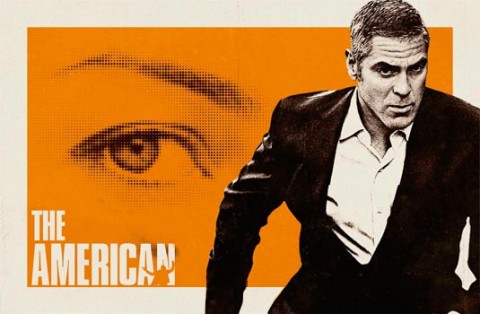
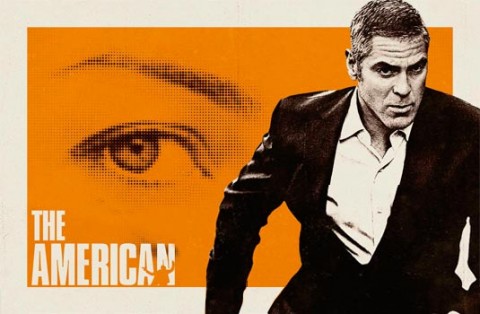
Movie poster for The American starring George Clooney

 The American starring George Clooney is attractive to look at…and that’s about it. The plot deals with an assassin/weapon maker who wants to get out of the game (following a taut opening sequence that leads us to expect more from the movie). 

 Alas, he cannot leave this nasty business without angering his shadowy employer (don’t these hit men ever watch movies about other hit men). So we get a series of scenes set in Italy, with Clooney being taciturn, suspicious, pensive—all with little meaningful interaction with others (don’t get me wrong,-the movie thinks it’s meaningful, but it really isn’t). I looked at my watch a lot, but the time didn’t move any faster.

Wall Street: Money Never Sleeps

Michael Douglas and Oliver Stone revisit Gordon Gekko in the long-awaited sequel, Wall Street: Money Never Sleeps. While it’s not the cultural touchstone its predecessor was, Money Never Sleeps is an enjoyable tale which brings Gekko into the 21st Century, replete with reptilian financiers who make him look like small change in comparison– and consequently, a more sympathetic character. It would be nice to say the recently released market master Gekko is the main player, but alas, this Wall Street has more players on its mind besides Gekko. 

The protagonist is really Jake, the requisite young, naive Wall Street hotshot (earnest and ultra-bland Shia LaBoeuf) who loves Gekko’s daughter Carey Mulligan, (who was wonderful in An Education—what happened?) while plotting revenge against the heartless capitalists (chief among them Josh Brolin) who conspired against his boss (Frank Langella), leading to financial ruin…and worse. Jake’s plans (love, vengeance) lead him to befriend Gekko, who has plans of his own, some of which include his estranged daughter. Will Jake get his revenge? Will Gekko reunite with his daughter? Will the market tumble again, despite Gekko’s warnings of impending disaster (the movie is set in 2008)? What do all the shots of those bubbles mean? (as if we didn’t know) And how does a guy like Jake become a Wall Street hotshot and be so naïve about a) money b) people c) motives d) all of the above? (And by the way, how did Gekko’s anti-capitalist daughter fall for Jake?) As with the first Wall Street, the young innocents are far less interesting (and plausible) than the venal financial masterminds whose machinations really run Wall Street, both in life and in the movie. Brolin brings a few layers to his villainous role until the script turns on him, while Langella does a fine job as an early victim of the bubble burst. But the movie really belongs to Douglas, who sinks his teeth into Gekko and makes him a little wiser, a little chastened, but still just as devilish—only with perhaps a little more heart. See it for Gekko.

Get Low

Aaron Schneider’s Get Low is only now getting a wider release, and it’s about time. Beautifully filmed by David Boyd to evoke the Depression era, the film is a gentle, charming, funny, moving tale starring Robert Duvall is a hermit (on a fairly large tract of land) in self-imposed exile from his small town (and life, in general) who decides he wants to throw himself a funeral while he’s still around to see it. 

He has reasons for doing this, involving some past actions on his part and a growing sense of his own mortality. Plot developments aside, what really draws you into the film are the exquisite performances at the core. Duvall has played this kind of character before, but under Schneider’s direction, with the help of a fine script by Chris Provenzano and C. Gaby Mitchell, he finds fresh ways to exhibit the irascibility and fundamental decency of this wounded man. Bill Murray, as the funeral director who laments that there’s nobody dying in his town (while, as he puts it “they really know how to die in Chicago”) is funny and sympathetic as a man who wants to hold on to his business and sees Duvall’s funeral as his own lifeline. Lucas Black contributes some fine work as Murray’s sales assistant with a growing conscience, and there are other sterling contributions from Gerald McRaney as the town reverend and Bill Cobbs as another reverend and keeper of Duvall’s secrets. Finally, there’s the luminous Sissy Spacek, who is wonderful as Duvall’s old flame. In their scenes together, she projects warmth, humor, underlying resentment, compassion, and your heart just melts…at least mine did. When you see Duvall through her eyes, you see how high the stakes are for them both. Get Low is well worth seeking out; it’s one of the best films of the year.


Inception

Finally caught up with Christopher Nolan’s Inception and I’m glad I did. While I don’t think it’s as profound as it thinks it is, or wants to be, it’s perfectly enjoyable as a thrill-packed action ride. Yes, there is the “dream team” and corporate espionage, as well as a dead wife who keeps causing problems. 

But the film takes time to explain the various complications, as well as the dream-invasion methodology (and the rules, so many rules—key among them, try not to get dead). A good cast headed by Leonardo DeCaprio (and including a well-used Tom Berenger) keeps the viewer involved, while the second half amounts to a rousing homage to action thrillers that does not let up. Worth giving the movie a spin if you haven’t already…

The Other Guys

The Other Guys

The Other Guys, courtesy of director Adam McKay, is a funny buddy movie with Will Ferrell and Mark Wahlberg as mismatched desk jockeys living in the shadow of supercops Samuel Jackson and The Rock, until something happens…

Needless to say, the duo have to overcome their own deficiencies and natural antipathy to crack the big case involving corrupt tycoon Steve Coogan. The fun here lies in the interplay, not only between Ferrell (in particularly fine form) and Wahlberg, but Eva Mendes as Ferrell’s “ball and chain” and an excellent turn by Michael Keaton as the beleaguered police captain. It’s been a while since Keaton has had such a good role in such a high-profile movie. Welcome back.

The Expendables

There are some other films worth checking out if you haven’t already… The Expendables, a muscular old-fashioned action yarn from writer/director/actor Sylvester Stallone, pits a singular group of mercenaries led by Stallone and action stalwarts such as Jet Li and Jason Statham, against a regime consisting of a corrupted ruler and an evil rogue operative, played with relish by Eric Roberts.   

After a shaky opening action sequence which is almost shot as a video game, the film gets down to business with an abundance of well-staged action, a little philosophizing, and some welcome humor. Stallone gives each of the cast members a chance to do what he does best, and even stretch a little (Jet Li does humor and vulnerability, Mickey Rourke exudes warmth and a true spirit of camaraderie—and you can understand 100% of his dialogue, which is the real stretch). I’d catch the sequel… 

Despicable Me

I’ve managed to catch up with a few of the many summer films that the major studios have pinned their hopes on.  Let me start with two films that might be worth your time. The animated, 3-D Despicable Me is a joy from beginning to end, including the closing credits (stay for them).

Steve Carell voices Gru, a supervillain (with financial support from the Bank of Evil) whose grandiose schemes have resulted in diminishing financial returns. 

  He also faces stiff competition from Vector, the brash young new villain on the block (he’s successfully stolen the Great Pyramid of Egypt!).  Desperate to prove his supervillainous worth, Gru enlists the (unwitting) aid of three orphans, as well as his loyal minions and the esteemed Dr. Nefario, to accomplish the greatest feat of villainy yet: shrinking the moon and holding it for ransom.  Now if this sounds nonsensical in print, it makes for a funny, sharp, occasionally tender romp in which a hardhearted villain is softened, true villains are defeated, and the diminutive minions come close to stealing the show.  Carell makes a suitably accented, imposing yet bumbling Gru; the three orphans are adorable; the film’s creators (directors Pierre Griffin, Chris Renaud, Sergio Pablos along with writers Ken Daurio and Cinco Paul) have managed to accomplish the feat of producing a witty, visually appealing, gag laden work that will entertain kids and the parents they take along.  Well worth seeing.


The Sorcerer’s Apprentice

 was pleasantly surprised with The Sorcerer’s Apprentice, as I haven’t been the biggest fan of  director Jon Turtletaub’s National Treasure opuses.  However this fantasy of rival sorcerers (Nicolas Cage, the good; Alfred Molina, the bad) who keep their feud going for centuries (over a beautiful woman—what a surprise) manages to mostly enchant from beginning to end.  

Cage is in good, subdued, extremely likable form as Balthazar, a sorcerer in modern-day Manhattan looking for the true successor to Merlin, and finding him in an intelligent but awkward college student Dave Stutler (Jay Baruchel) It turns out that Dave is the only sorcerer capable of vanquishing Morgana LaFey and saving the world-only he’s a little reluctant (and a little hapless) about acquiring his quite formidable powers-and he’s got the hots (actually, he really loves) a fellow student and radio DJ (Teresa Palmer), which tends to interfere with learning the tools of the sorcery trade.  The chase is on throughout a well-utilized Manhattan, as the evil Molina wants to destroy the good sorcerers, release the evil Morgana (Cage has got her trapped) and annihilate mankind.  The special effects are effective; Molina contributes fine villainy; Teresa Palmer makes an appealing damsel who helps save the day (no shrinking violet, she); however it took time for Baruchel to grow on me.  In fact at the beginning, he was more than a little irritating.  However I warmed to him as the movie progressed, and by the end I was pulling for him to get the girl and prove himself worthy of Cage’s respect. 

The Last Airbender

the last airbender

What can I say about M. Night Shamaylan’s latest exercise in tedium,The Last Airbender?To begin with, I don’t think it’s a good thing when you want all those characters who are hunting the young hero (a boy with airbending powers and a reluctant, would-be Avatar to boot) to actually catch up with him and put him—and us—out of our misery. 

 In fact, the last time I felt like this was when I saw The Client, in which everyone is after this truly obnoxious boy that Susan Sarandon is shielding—and I wanted the gangsters to get him).  The movie is in 3-D, which I don’t mind paying for if there are some good effects-well I ‘m still waiting for them.  The cast is either bland or unsympathetic; the airbending scenes look like failed auditions for the Alvin Ailey Dance Company; the action scenes are ineptly staged.  This is a movie that Aasif Mandvi would make fun of in his role as a commentator on the Daily Show with Jon Stewart—only he can’t because he plays the villain-poorly.  There is also the threat of a sequel, so please save your money and go to another movie—any movie.  Life is too short.


Predators

Predators, with a chiseled Adrien Brody in action hero mode (there’s no avoiding those soulful eyes as he tries to proclaim how soulless he is), is a pretty good thrill ride for about two-thirds of the way.

Various human predators (soldiers, convicts) are dropped in a very remote area to do battle with some skillfully constructed (go special effects!), monstrous predators.  In another words, it’s The Most Dangerous Game all over again, as the unwilling but skilled human prey try to evade, outwit, and overpower the beasts, while trying to figure out how to “get off the island.”  Director Nimrod Antal successfully creates a feeling of dread, and the early action sequences are savage and well-staged, even if we know it’s only a matter of time before the characters cash in their chips.  However, after Lawrence Fishburne’s character is introduced-as the world’s unlikeliest stealth fighter- the movie disintegrates into a series of unlikely, prolonged battles, unnecessary sacrifices, and a few jawdropping surprises.  But for about 65 minutes, the movie delivers the goods—too bad it didn’t know how to finish the trip.


Cyrus

After all this escapism, I escaped to Jay and Mark Duplass’ intelligent, entertaining comedy of terrors, Cyrus. A very endearing John C. Reilly is John, a divorced man on a downward spiral who drunkenly meets lovely Molly (a very appealing Marisa Tomei) and proceeds to hit it off with her—so much so, that even in the light of day, these two troubled souls seem to have found each other’s salvation.   

And all would be delightful—but then there’s Tomei’s adult son Cyrus (Jonah Hill-terrific), socially awkward, troubled, devious—and he’ll stop at nothing to break up the relationship.  The trusting, goodnatured John may not have a chance….I do hope this movie finds an audience: performances are uniformly excellent (let’s not forget Catherine Kenner as John’s ex-wife who has prodded John to work his way out of his depression); there is genuine wit in the writing; the plot developments are plausible, and in the end you really want these two people to get together, with or without Cyrus.  Well worth seeking out.


Knight and Day

Summer’s here and it’s popcorn movie a go-go…First, the Tom Cruise we know and occasionally like is back in James Mangold’s breezy, entertaining Knight and Day, playing a possibly rogue CIA agent who entangles a first unwilling, then willing hostage Cameron Diaz in his flight from murderous operatives and some other very bad people, all in the service of preserving a longlife battery (Duracell, it ain’t). 


 Well I won’t bore you with the details of the implausible plot. I will say that a caper like this can work if it has a fast pace, engaging stars, amusing banter, and an occasional thrill or two. For the most part, the movie moves fast enough to hide some rather big plot holes (or craters, if you will). In fact, there are a number of things in the movie’s favor: the opening sequence on the plane in which Cruise controls a plane full of bad guys; some bangup car chases (despite an overreliance on the ol’ CGI); some witty exchanges.  However, the biggest thing in the movie’s favor is a very engaging turn from Cruise as a charming, respectful agent who is solicitous even when he’s at his most dangerous.  He and Diaz also have a nice rapport throughout, while Peter Sarsgaard makes a smooth villain.  There are worse ways to spend 105 minutes…


Solitary Man

It’s nice to see Michael Douglas back in a good vehicle with Solitary Man. In many ways, Brian Koppleman and David Levien’s film (script by Koppleman) presents a greatest-hits display of the Douglas persona: ambitious, unscrupulous entrepreneur undone by greed and supreme hubris (following a trip to the doctor—what was in that EKG?); charming, irresponsible ex-husband, lover, father, grandfather etc; unlikely mentor. 


 The movie, following a brief prologue, finds Douglas’ character in the midst of his decline, as a once-reputable car magnate in career freefall who is now trying to get back on track.  The problem is, Douglas can’t help himself from knowingly screwing up any break that comes his way—mainly because of his insatiable desire for younger women, which leads him to jeopardize family relationships, as well as a present romance with a wealthy, powerful woman ( an icy Mary Louise Parker) who has an attractive, college-bound daughter (Imogen Poots).  You can probably figure out some of the rest, but the strengths of the film lie in Douglas’ unflinching, yet not entirely unsympathetic portrayal of the main character—and the fine ensemble cast, including Danny deVito as Douglas’ reliable college friend, Jenna fischer in a lovely turn as Douglas’ daughter, and Susan Sarandon as Douglas’ ex-wife who still has a soft spot for her wandering boy.  If it comes to your neighborhood, look up this Solitary Man.


Shrek Forever After

Shrek - NoHoArtsDistrict.com Movie Reviews 

It’s summer season at the multiplexes, and this brings out the inevitable sequels of variable quality. Shrek Forever After (in 3D!) is a pleasant surprise, a vast improvement over the last installment and while it doesn’t quite reach the heights of the first Shrek, it does have generous helpings of wit and poignancy in addition to the visual wizardry.  In case you haven’t heard by now, Shrek (Mike Myers) is married to the love of his life Fiona (Cameron Diaz), but in a bit of a rut, what with three kids, a slew of responsibilities, as well as that pesky tour bus that arrives daily to point out the now-celebrity ogre—who by the way, hasn’t been feeling ogre-ish. Shrek enters into an ill-advised contract with an evil Rumpelstilskin (well-voiced by the animator Walt Dohrm), which plunges Shrek into a nightmare resembling It’s a Wonderful Life—and from which Shrek can emerge from if he wins Fiona’s love again-if only he could find her. Of course, Shrek must befriend-again- Donkey and a somewhat slovenly Puss in Boots (Eddie Murphy and Antonio Banderas in good vocal form). Needless to say, it’s all very enjoyable. The pop-culture references and visual gags are just as present (and enjoyable) as ever, but the George Bailey echoes of Shrek’s plight bring some adult themes of discontent and dissatisfaction to a predominantly fairy-tale landscape. When Shrek gets to be an ogre again, we feel his momentary joy in his recapturing the past even though we know–something wicked this way comes. In the end, the kids will enjoy the 3D effects, and the adults should enjoy the good humor along with the darker elements. In many ways, Shrek Forever After is the perfect ending for the series—let’s hope it ends here.

MacGruber

macgruber - movie reviews nohoartsdistrict.com

Nothing you have seen in your life can prepare you for something as awe-inspiring as MacGruber. No movie I have seen recently (or perhaps ever) succeeds—through an overabundance of mind-numbing ineptitude masquerading as celluloid–in alienating the audience on so many levels. But where do I begin? One can start with the character of MacGruber himself. 

If the filmmakers set out to create an unsympathetic, unfunny, uninteresting protagonist ( played by Will Forte, who let’s face it, deserves most of the credit) they’ve succeeded beyond their wildest dreams. If the filmmakers set out to squeeze the supremely talented Kristin Wiig into the role of an unfunny sidekick, they have triumphed. If the filmmakers tired to cajole Ryan Philippe into giving perhaps the most dispirited (read embarrassed) performance of the millennium so far, they have exceeded all possible expectations. And if they wanted to persuade Val Kilmer to be perhaps the most colorless villain since Edison (or whoever) first cranked a movie camera, then victory is theirs. I hope by the time this is printed, that moviegoers will have already heeded the warnings and let MacGruber die a quick multiplexic death. Don’t even rent it when it comes to DVD—not even from your free public library. It’s still too much.

Harry Brown

Michael Caine is Harry Brown says the poster…and you know what, he really is. Caine’s Harry is an elderly pensioner in South London with a dying wife and a best (only?) friend who is being harassed by the young hoods who seem to have taken over the rundown area.  After enduring the death of his wife and the brutal murder of his best friend, as well as the slow response of the police, the grieving Brown slowly takes up arms—did I mention he was a former marine and Northern Island vet—and exacts, if not justice, then certainly revenge.  


Now you may have seen the plot (as scripted by Gary Young)  before in various locales but what makes director Daniel Barber’s gritty film work is Caine operating at full-throttle. At first, Harry is a man retreating from life, unwilling to get involved; however his friend’s murder galvanizes him into action, giving his life new purpose.  However, Caine’s Harry isn’t just a Bronsonian action hero; he’s an old avenger who unearths long-buried skills but is still beset by the ravages of age, in the form of slowed reflexes and a nagging case of emphysema.  He also does not lose his basic humanity, exhibiting compassion for an abused girl even while ridding the streets of two loathsome drug dealers/gun runners/pornographers.  It is a believable, layered performance; watch the scene where Caine hears from Emily Mortimer’s police detective that the youths may get off with manslaughter.  In that scene alone you see Caine go from touching vulnerability to anger and defiance, and the transition is perfect.  While the movie is far from Caine’s best, it certainly contains a recharged, dynamic Caine in a powerhouse performance.  Definitely worth seeing.


City Island

city_island_poster_m

Before telling you how much I enjoyed City Island, I should tell you that I have never been a big Andy Garcia fan.  He’s always seemed to be a little uncomfortable, especially in scenes where he emoted, or should I say over-emoted.  However I started liking him, believe it or not, in the Ocean’s 11-13 movies—Garcia’s appearances as the powerful casino owner exhibited menace as a well as a welcome sense of humor.  Now with his role as a prison guard who dreams of being an actor, Garcia has finally turned me into a full fan.  

He gives an amusing, heartfelt, engaging performance in a lovely film (that he co-produced) about an affectionately dysfunctional family of “clam-diggers” (City Island slang for people born on City Island)—I mean, they would be affectionateif they weren’t keeping so many secrets from each other.  I really don’t want to reveal much of the plot—suffice it to say that Juliana Marguiles is sexy and funny as Garcia’s wife (who thinks he’s having an affair); Steven Strait is amusingly bemused as a young convict sprung by Garcia for reasons unknown, and Emily Mortimer, so steely in the aforementioned Harry Brown, is thoroughly winning as Garcia’s lovely acting partner who gently nudges Garcia to follow his dreams.  Alan Arkin is also on hand as an acting coach with a hilarious harangue directed at actors (like Brando) who unnecessarily pause.  Speaking of Brando, Garcia’s impression late in the film is so hysterical it almost made me fall off my quite comfortable seat. City Island is a small film in terms of budget, but it’s got an intelligent, amusing script, confident direction (both by Raymond De Felitta) and a cast working at the top of their game.  It’s a movie that has been gaining a wider release, and deservedly so, as it’s one of the most thoroughly enjoyable movies I’ve seen in a while.


Greenberg

Ben Stiller (Roger Greenberg) in Greenberg

Roger Greenberg, the titular character of Noah Baumbach’s new comedy Greenberg, is the type of person you would probably want to avoid if you had occasion to know him. As written by Baumbach and portrayed (in a sincerely insufferable way) by Ben Stiller, Greenberg is self-deluding, self-righteous, self-absorbed, and with no capacity for self-deprecation. At the beginning, Greenberg is recovering from a nervous breakdown while housesitting at his successful brother’s spacious Los Angeles home (complete with dog and visiting pool-users). 


He wiles away the time trying to reconnect with former friends who have good reason to be wary—in turns out years ago, Greenberg and his band buddies were on the verge of signing a major recording contract—that Greenberg scuttled. He also attempts to reignite an old flame (Baumbach’s wife, Jennifer Jason-Leigh nicely uninterested) while striking up a very unlikely friendship with the brother’s assistant (Greta Gerwig), which develops during their mutual concern for the dog’s illness. Her sympathetic, agreeable nature attracts Greenberg while simultaneously scaring him; his needy, neurotic nature and desire to “do nothing” attract her. In addition, Greenberg hooks up with one friend from the past (Rhys Ifans) who still tolerates him; again, this tolerance isn’t easy given Greenberg’s proclivity towards tirades, insensitive behavior and overall boorishness. These unflattering attributes are on full display during an uncomfortable birthday party, which results in a full-scale tantrum, replete with some memorable epithets.


Consequently, Greenberg is a difficult character to warm to, for both the film’s other characters and the audience. Given this, it’s a wonder that the film is as engaging as it is which is mainly due to the efforts of a top-flight supporting cast led by the appealing Greta Gerwig and Rhys Ifans. They don’t have the easiest jobs in that they have to make us believe that their characters would find something endearing, and even possibly redeeming in the abrasive Greenberg. Ifans, in particular has some fine seriocomic scenes with Stiller, rehashing past and present regrets. Stiller is a little more problematic; at the beginning I felt as if I were watching Stiller a little removed from his character, perhaps even commenting on him. I have to say that Stiller (and the character) crept up on me during the film so that by the end, I was hoping for him to take some responsibility and perhaps extend his concern into care for others. To the movie’s credit, there are no epiphanies but a believable step or two forward.

The Ghost Writer

The new ghost writer (Euan McGreggor) for the former British Prime Minister Adam Lang’s memoirs in Roman Polanski’s compelling thriller The Ghost Writer has good reason to be worried. His predecessor has died in a suspicious accident; his employer Lang (Pierce Brosnan) is facing charges that he sanctioned torture toward suspected terrorists; 


he is attacked soon after getting the assignment by someone who may kill to know what’s in those memoirs; he is harassed after being whisked away to a new England coast hideaway by people shouting for Lang’s arrest; and he has to deal with Lang’s relentlessly faithful assistant (Kim Cattrall) as well as Lang’s resolutely dour wife (an excellent Olivia Williams)—who may have some secrets of her own.


If the final revelations are a little conventional (to say the least) most of the fun is getting there—and in the well-staged final sequence (I’ll go no further in that regard) which provides a perfect ending. The screenplay (by Polanski and Robert Harris, from his novel) and direction quickly seize and hold our interest, as an intriguing cat and mouse game develops between Brosnan and McGreggor (one caveat—I wish there had been more scenes between the two as both are in good form as wary allies/opponents). Later, as McGreggor starts to do some digging into Brosnan’s past, as well as his own predecessor’s death (Did I say it was suspicious? Did I say Eli Wallach contributes an excellent cameo as a senior emeritus “Basil Exposition”?), there is some genuine suspense, especially in a chase sequence aboard a ferry. In addition, Alexandre Desplat’s evocative score makes the whole movie reminiscent of a superior 1970’s French thriller. Try to catch this Ghost before it vanishes into thin air.

Shutter Island

Martin Scorsese’s new thriller Shutter Island seems to have been waiting for the same ferry that Leonardo De Caprio’s U.S. Marshal character hopes will take him off this forbidden, forgotten and foreboding island. Originally an October release, it has been pushed back to the wintry wastelands of February. Many speculated that it might have been because of a matter of quality, or lack thereof (well, maybe not many—perhaps just me). Others felt it was more economically viable to wait—and they may have been right, given the killer box office results. How you feel about the film may well be determined by how you feel about a certain revelation occurring two/thirds of the way through. (More about that—but not exactly that—later)

The movie, adapted by Laeta Kalogridis from Dennis Lehane’s book, certainly has atmosphere and anguish to spare. DiCaprio’s haunted, driven Marshal Daniels, accompanied by new partner played by Mark Ruffalo, arrives at the Ashecliff Hospital for the Criminally Insane on Shutter Island to investigate a dangerous woman prisoner’s disappearance. As one may gather, nothing about the movie feels subtle—heck, my previous sentence is far from subtle (Ashecliffe, Shutter—I’m back in symbolism school!). The marshals are greeted—and thwarted– by a head psychiatrist (Ben Kingsley—channeling Claude Rains by way of George Sanders); a complacent, even jaded staff; and a sinister German doctor (Max Von Sydow). There’s also a storm that is a-brewing, both literal and contained in the migraines that debilitate Daniels; the nightmares and visions involving concentration camps, Daniels’ late wife (ashes, ashes) and dead children. Not to mention the real reason for Daniels’ visit—to find his wife’s murderer—and who may be somewhere on Shutter Island.

Scorsese isn’t coasting here; much of the filmmaking is invigorating and involving, with scenes, images and performances that linger after the film is over. Robbie Robertson’s faux-Bernard Herrmann score (culled from various classical pieces) contributes to the hallucinatory quality. The film resonates with paranoia, guilt, and some quite scary imbalances of nature. Halfway through, the viewer, like Daniels, isn’t sure who’s on his side. Then comes the twist, which like that of Lehane’s book, you either buy or don’t buy. As for me, I wanted to buy it, but the denouement is a little too drawn out—and by the end, I felt I stayed a little too long on the Island.


The Wolfman

Joe Johnston’s The Wolfman also took its time getting to the theaters (2008, 2009?) but the results are fairly enjoyable. You know the story: Larry Talbot (Benicio Del Toro) goes back to England (in this case after his brother’s brutal death), gets bitten by a werewolf, turns into one himself (that darned full moon) and all hell breaks loose. He also falls in love with his brother’s fiancée (Emily Blunt) while trying to avoid the long arm of the law (Hugo Weaving) and the savage arms of the villagers—torches anyone?

To be sure, the film has its flaws, namely a love story that is meant to evoke the heartbreak of David Cronenberg’s The Fly, but merely seems under scripted and undeveloped. Better you should enjoy the authentic period atmosphere (this is one good-looking film); Del Toro’s performance as a man haunted by his past and condemned by his present; the transformation scenes which are riveting and harrowing; the scenes at the asylum where one can sympathize with poor Larry; an intense turn by Weaving; and in full scene-stealing (but rarely over-the-top mode) Anthony Hopkins as Talbot’s dad, who has a few secrets of his own—and when Hopkins tells his son to look into his dead eyes—you see them—and feel the command of an actor making the most of the material.


The Last Station

I enjoyed Michael Hoffman’s The Last Station when I was watching it, but as Lieutenant Columbo would say, I’ve got a problem. The basic plot concerns an aging Leo Tolstoy, his wife Countess Sofya, and the tense situation that arises when it becomes apparent that Tolstoy plans to leave his writings (and future royalties) to all of Russia–albeit in the care of Chertkov, an unctuous Tolstoy worshipper—rather than to his own privileged wife and family.

This fierce three-way tug of war is unexpectedly complicated by another Tolstoy disciple who has arrived at Tolstoy’s estate (at Chertkov’s bidding) to spy on the couple. Here is my problem: Hoffman’s screenplay, based on Jay Parini’s novel (which is loosely based on Tolstoy’s last days) provides a set-up which leads to developments that are hardly plausible. Case in point: the Countess, both in the writing and in Helen Mirren’s playing, is so intelligent, so on to the devious Chertkov’s (cue mustache-twirling Paul Giammatti) machinations, and so aware of how to use her womanly wiles (damn, she still looks great) to get her wavering husband to listen to her—that the Countess’ subsequent repeated emotional tantrums that alienate Tolstoy are almost out of character. Additionally, Plummer’s Tolstoy seems so in love with his wife, so aware of his own failings, so aware of the sycophantic nature of the “Tolstoyan” movement, that his later decisions are hard to fathom. In spite of these caveats, there is much to enjoy: flavorful, full-bodied, even touching portrayals by Mirren and Plummer that try to overcome the script’s weaknesses; engaging performances (in a stock situation) from James McAvoy as the Chertkov pawn who turns on his master and Kerry Condon as Masha who helps McAvoy embrace the physical nature of love; and a convincing feel for the period. It’s worth a look—mainly for Mirren and Plummer.