


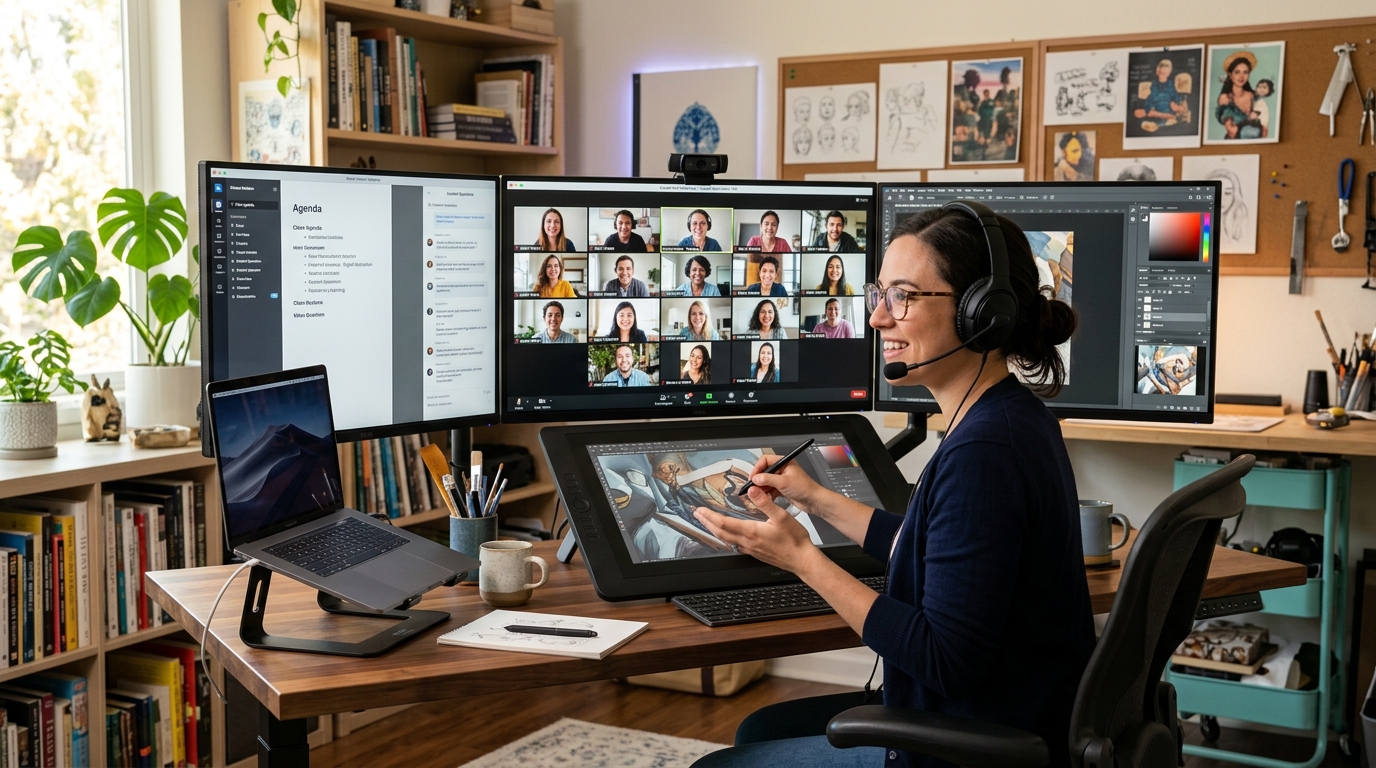
That raw, electric energy of a shared creative space feels irreplaceable at times, but with so many eyes on NoHo creativity – and so many ways of teaching – taking a hybrid approach via online creative workshops just makes sense. Don’t get me wrong, it requires a massive psychological shift because you and your lesson-plan will need to completely rethink how that teacher-learner connection functions across a screen. Any hands-on, intimate practice – acting, painting, dancing, music lessons, or anything else expressive – into a virtual format can feel almost impossible in the beginning.
The great news is, it’s been done before (and to resounding success). It just takes a unique approach to the prep, and a slight shift in mindset.
1. Translate the Physical Energy, Don’t Just Copy It
Trying to replicate a classroom setup pixel-for-pixel is a recipe for frustration. Even if your usual setup is just a couple chairs and a table – or even just a couple chairs, no table – it won’t necessarily translate onto Zoom.
Instead of forcing students to stare blankly at a grid of faces while waiting their turn, restructure your sessions to embrace the unique intimacy of the webcam. Encourage actors to use the frame as a cinematic tool, or have singers focus on microscopic adjustments in their breath control that might get lost in a massive, cavernous rehearsal hall (a total game-changer for screen-acting coaches).
2. Invest in Visual Clarity for Tactile Mediums
The biggest barrier to entry in visual arts is the lack of over-the-shoulder guidance. This can be easily solved by creating a multi-camera environment whereby students can switch between a close-up shot of your hands working the medium and a direct view of your face.
Seeing the exact angle of a brushstroke or the amount of pressure applied to a piece of clay in high definition removes the guesswork and allows remote participants to keep up with a precision that is actually very hard to achieve when twenty people are crammed around one table in a noisy studio.
3. Lock Down Your Creative Infrastructure
Running a digital workshop means you’re suddenly responsible for a massive influx of proprietary student work. You’re handling a sensitive range of creative assets – from unreleased scripts and vocal demos to digital portfolio pieces – that need to be protected from accidental leaks or digital snooping, especially if you’re managing your backend system from a local coffee shop or a shared co-working space. Instead of adding a ‘123’ to your usual password, using a secure password manager into your basic digital toolkit ensures that your administrative accounts are locked down with ironclad, unique credentials, allowing you to run your business with total peace of mind while keeping your focus entirely on the art.
4. Build Dedicated Spaces for Unstructured Chat
One of the biggest things we lose in the digital transition is the casual, organic socialising that takes place right outside the studio doors before and after a session. Think about creating a breakout room for 15 minutes or having particular chat channels where painters can post references and actors can rehearse together – anything to keep your workshop from feeling sterile or transactional (practically lobby chatter, or close as you can get online).
These unstructured gaps are precisely where real creative communities are created, providing your students with a sense of belonging that far exceeds the structured curriculum.
5. Reimagine the Feedback Loop
In a live workshop, critiques are given in real time, but online workshop groups can sometimes make feedback feel harsh or disconnected simply by virtue of them being remote. Adopt a hybrid model where students send their work digitally in advance, and you can create personalised, deep-dive video reviews for them to watch again at their own pace.
It takes the edge off of live critiques and allows creatives to privately digest notes so the following live discussion is much more collaborative, constructive and deeply aligned with their personal artistic growth.