


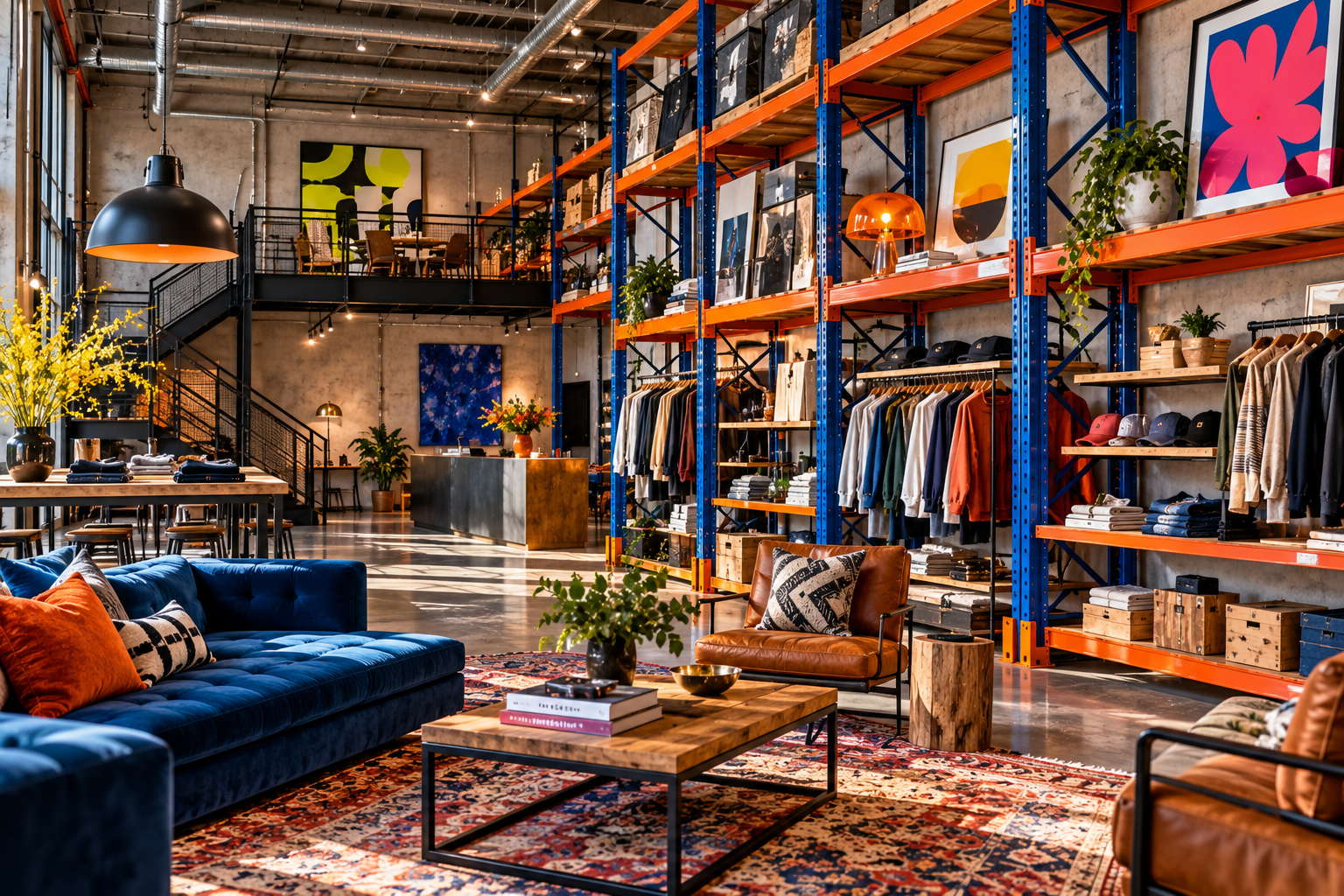
Ever walked into a warehouse-turned-café and felt weirdly at home? There’s something about all that raw steel overhead, the honest bones of a building on full display, that just works. And here’s the funny part. The thing responsible for a lot of that look is something most people associate with forklifts and shipping boxes, not design magazines.
Pallet racking. Yep, that.
From the Loading Dock to the Living Room (Sort Of)
Industrial design has been having a moment for years now, but it keeps finding new ways to surprise us. Exposed brick, ductwork left uncovered, concrete floors that would’ve been carpeted over a couple decades ago. It all speaks to this idea that authentic beats polished.
Pallet racking fits right in.
Picture this: a boutique clothing store where the racks holding the merchandise aren’t hidden behind fancy fixtures. Instead, the actual industrial shelving becomes the fixture. Bold blue uprights, orange beams, clothes hanging off it like it’s the most natural thing in the world. Suddenly the storage is the statement.
The truth is, designers have caught on that these systems carry a certain visual weight. They’re strong, they’re geometric, and they don’t pretend to be something they’re not. Kind of refreshing, really.
Why Does Steel Racking Look So Good?
It comes down to a few things, and honestly some of it is just vibes.
There’s the colour, for starters. Those bold factory hues weren’t chosen to look pretty, but they do. Set against a neutral wall or raw concrete, a stretch of blue and orange steel pops in a way that expensive art installations sometimes try really hard to pull off.
Then there’s the repetition. The other day someone pointed out that our brains kind of love patterns, and racking is basically pattern on repeat. Verticals, horizontals, that grid running across a room. It creates rhythm. Your eye follows it whether you mean to or not.
And the height. When you let racking climb toward the ceiling without hiding it behind a false wall, you’re drawing attention upward. Rooms feel taller. More open. The mundane act of stacking things becomes almost architectural.
Where People Are Actually Using It
Retail is the obvious one. Streetwear brands especially seem to adore the industrial-warehouse feel, and the racking basically does double duty. Storage plus aesthetic. Two birds.
But it’s popping up elsewhere too.
Cafés and restaurants use lower racking to divide areas or hold wine, glassware, whatever needs displaying. Home renovators, the brave ones anyway, have started bringing scaled-down versions into open-plan homes for books, plants, and general clutter that somehow looks curated when it’s sitting on steel.
Even offices are getting in on it. Creative studios in particular. Anyone chasing that raw, we-actually-make-things-here energy tends to gravitate toward exposed shelving.
This part’s a bit tricky, but there’s a balance to strike. Go too heavy and your space feels like a genuine warehouse, which isn’t always the goal. A little goes a long way.
Function Hasn’t Left the Building
Here’s the thing people sometimes forget when they get swept up in the look. This stuff is engineered to hold serious weight. We’re talking tonnes, not a few paperbacks.
So when you bring it into a design setting, you’re getting something that’s genuinely built to last. It’s not decorative shelving that’ll sag in six months. It’s the real deal, and that durability is part of the appeal.
If you’re thinking about going down this road, it pays to talk to people who actually know racking inside out. There’s proper pallet warehouse racking Gold Coast expertise out there, and getting the load ratings and configuration right matters, even when your goal is more about looks than logistics.
A Look That’s Honest
What makes this trend stick, I reckon, is that it doesn’t try to fool anyone. So much of interior design is about concealing the guts of a building. Racking flips that. It says, here’s the structure, here’s the strength, take it or leave it.
There’s something a bit rebellious about that. Confident, even.
Will exposed pallet racking end up in every home on the block? Probably not. But for anyone wanting a room with genuine character and a bit of industrial swagger, it’s a surprisingly clever choice. Bold, useful, and completely unapologetic about what it is.
And maybe that’s the whole point.