


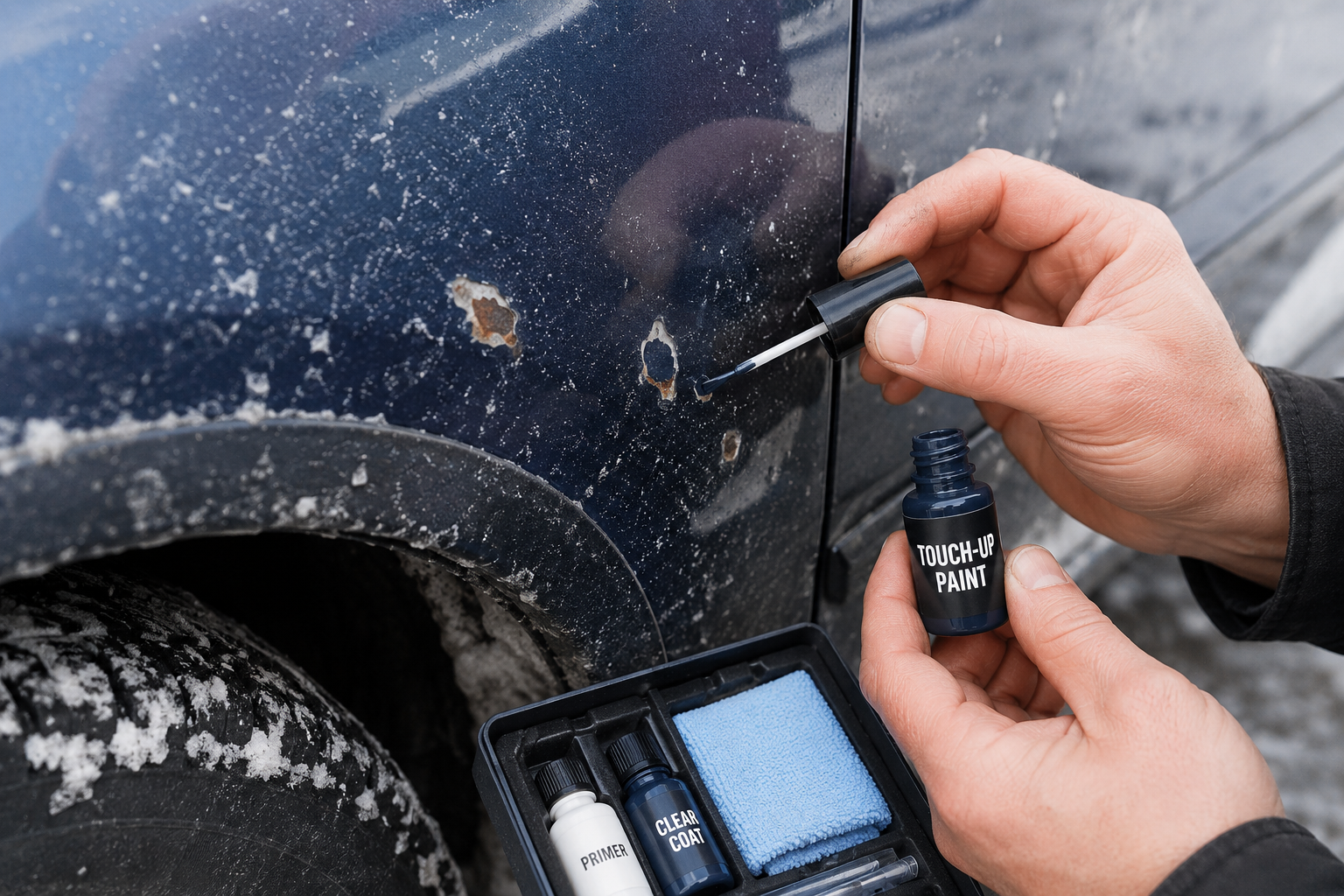
When it comes to car paintwork, road salt, grit and the cycles of freeze and thaw are the main culprits responsible for damage during winter. Salt is corrosive and clings to a car, while the tiny rocks or grit that are thrown up from the roads that have been treated to de-ice chip away the vehicle’s paintwork. The water that gets into the chips freezes and expands. So removing the paint on the surrounding areas. To have nice car body paint, it helps to regularly wash the car to get rid of salt during the season and seal chips before corrosion sets in. The biggest issue is that winter throws several different forms of attacks at once. A small stone chip to the car’s paintwork in July should be harmless and sit there for some time without any problem, while if the same incident occurs during the colder months, then a single chip will probably be exposed to salt, very heavy humidity, and also weather fluctuations where temperature drops and rises below and above zero degrees.
This mix of conditions transforms slow and sporadic corrosion into a rapid and aggressive process, and because of that many vehicles are usually very unpleasantly looking upon leaving winter than when they went into it.
Why Winter Is So Hard on Car Paint
It’s the sodium chloride mixed with the grit that is most responsible for corroding cars, not the grit itself, although that can do damage too. The combination is effective in melting the snow on roads, but as road salt has a high salinity, it will form a salty moisture film around the vehicle, which will make the car surface constantly wet and salt-wet. This salt water conducts very well, as it also makes the chemical reaction that is a big part of rust. So if water is allowed to get down to the bare metal of the car body by way of a paint chip, the corrosion will develop a hundred times quicker in winter when everything else is closed! Of course, the grit itself, which is the coarse aggregate mixed with the salt, is actually capable of doing some mechanical damage. Tiny bits of gravel and coarse particles launched by your own turning wheels and other moving vehicles crash into the paint, thereby making the foremost edges of the bonnet wings, upper part of doors, and the car floor the most vulnerable spots where chippings can be seen.
Winter roads have many more of this kind of flying particles, so not only do you get plenty of new chippings during this time, but also the existing chippings find perfect conditions to become much bigger. And then comes the effect of the freeze-thaw process, which is quite simple in nature, but very often ignored. Water that penetrates a chip or any small defect in the clear coat will expand when it freezes, pushing at the edges from the inside due to the ice. The repeated freezes during the night and melting in the day will slowly but steadily work on the paint as if it were being pried by a lever, making a small chip transform into a larger peeling patch within only a few weeks of cold weather.
Spotting the Damage Before It Spreads
The habit that saves the most money is checking your paint through winter rather than waiting for spring. Look closely at the front-facing panels and the lower bodywork, because that’s where salt spray and grit concentrate. A fresh chip shows as a clean break in the paint, while one that’s started to corrode shows a brown or orange tinge, and that colour change is your signal to act quickly.
Certain areas deserve extra attention. Wheel arches, sills, and the lower edges of doors trap salt and moisture and are slow to dry, so corrosion often starts there unseen. For a home repair you’ll want your paint code, found inside the driver’s door frame or under the bonnet, and a colour-matched system rather than a generic bottle, and if you want to see how a proper primer, matched colour, and clear coat kit is meant to work together, visit site, because the layered, blended approach is what makes a repair blend in rather than stand out. Bird droppings and tree sap, still a problem in milder winter spells, are acidic enough to etch the clear coat if left, and winter’s shorter washing routines mean they often sit longer than they should.
Where you drive changes the risk profile significantly. Motorway commuters rack up chips fast from high-speed grit, coastal drivers face salt in the air on top of the salt on the road, and anyone in a region that grits heavily deals with a thicker, more persistent salt film. Rural drivers on untreated lanes may see less salt but more mud and standing water, which holds moisture against the paint in its own way.
How to Wash and Protect Through the Season
Beneath it all, one of the best habits to keep is regular washes. This will have a greater impact than achieving a perfect finish. Getting salt out of your wheel wells and paint by rinsing them every winter week or so is a great way to prevent corrosion. Even a rapid jet-washing after a heavily salted drive will help.
Clearly, the most crucial areas where salt tends to stick to the underside and underbody are the ones that collect the most. Despite Really you might be in a hurry, the method is still important. First of all, rinse the car to make loose dust float off the dirt, then clean with the help of a wash mitt rather than a household sponge, and you should not allow your hand to bring grit from one spot of the clear coat to another since winter grit is not only coarse but also readily scratches. Dry with a microfibre cloth or at least wipe off dripping water, because leaving a car wet in conditions of hard overnight freeze can cause serious damage from expanding water that has been trapped.
The winter protection purchase will cover everything. When properly applied with a good wax or a synthetic sealant, the salt and grit will have to get over the protective layer to reach the clear coat, which will greatly reduce direct contact. Dirt will come off quicker when you have a nice wax or synthetic sealcoat on your car and washing every weekday will not take too much effort. The automotive industry recommends applying protective coating before the arrival of winter, for example, because the harsh winter weather tends to remove it much more quickly than mild summer driving.
Restoring Paintwork After Winter
When the change from winter to spring takes place, a good look will tell you what work is needed. Give your car’s exterior a good rinse to remove the salt deposits first. In the daylight, get a look at the areas of the panel that are most likely to be damaged, like the front fender and the side panels, so that you can easily find the places of chipping and scratching and even any small rusted spots that might have appeared during the winter. Repairing these spots in the early season will save you bigger repairs later on.
Pitting that has removed the paint and reached the bare metal should be sealed by filling, and it is necessary to carry out rust treatment before you do the painting because corrosion trapped under the paint will definitely cause problems later. First, cover the bare metal areas with a primer, and then build up the colour with several thin layers, with drying time in between, and finally apply clear coat paint so that it is only a little beyond the repair area. Most of the time, the results will be much better when two or three light coat layers are applied than when one thick layer is just slapped on.
Logically speaking, it will also save you a bit of money if you do car body work right away at home rather than waiting for the damage to get worse. A basic set for minor touch-ups can be bought for about 15 to 40 and it will be sufficient to cover most of the scratches and paint chips. Leaving rust to spread without treatment during winter may ultimately result in having to pay anywhere up to 80 to 300 per panel for body restoration services at the workshop level. Doing your little repair job at home one afternoon in spring can often prevent rust damage that otherwise may have turned into a huge problem a year later.