


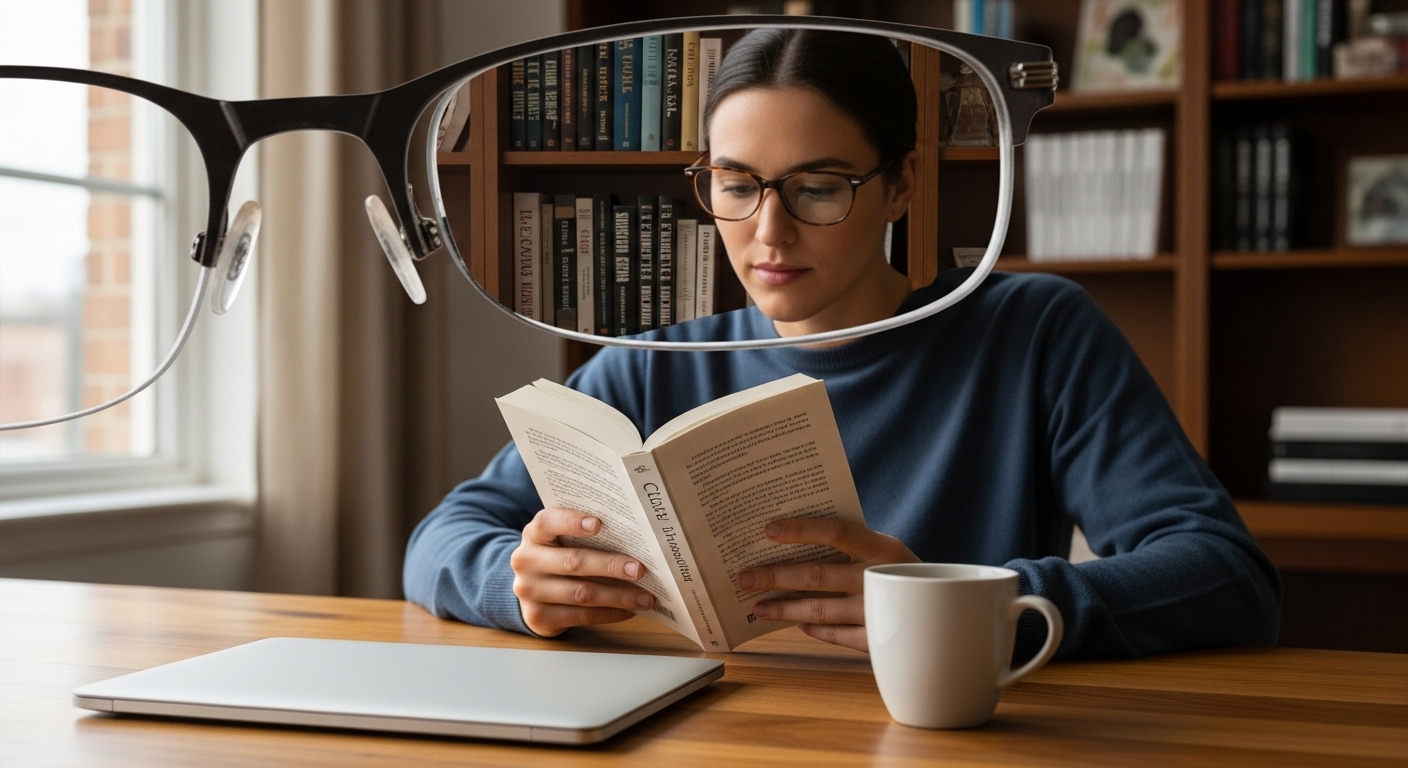
Progressive lenses help people see clearly at all distances without switching glasses. They combine distance, middle, and near vision into one seamless lens, allowing smooth focus from faraway objects to close-up tasks. This design removes the visible lines found in bifocals and creates a natural, comfortable viewing experience.
As eyesight changes with age, many people develop presbyopia, which makes it harder to focus up close. Progressive lenses solve this by adjusting power gradually from top to bottom. They look like regular glasses but provide more flexibility for daily life—whether driving, working on a computer, or reading a book.
Choosing the right progressive lenses depends on lifestyle, frame size, and prescription accuracy. Some lenses work better for long hours at a desk, while others suit outdoor use or frequent reading. Understanding these differences helps each person find lenses that match their needs and make vision feel effortless.
Understanding Progressive Lenses
Progressive lenses combine multiple prescriptions in one lens to help people see clearly at near, middle, and far distances. They remove the need for switching glasses and provide a smooth visual experience for daily tasks such as reading, driving, or using digital screens.
How Progressive Lenses Work
Progressive lenses have three main viewing zones: distance, intermediate, and near. The upper area supports far vision, the middle part helps with mid-range tasks, and the lower section focuses on close-up work. Each zone blends gradually into the next without visible lines.
This design allows users to move their eyes naturally rather than tilting their heads. The smooth transition helps reduce image jumps that occur with bifocal lenses.
Modern digital technology allows for custom lens mapping based on a person’s prescription and frame shape. People who need new lenses without changing their frames can explore lens replacement online services for convenience and cost savings. High-quality coatings, such as anti-reflective or scratch-resistant layers, also improve clarity and comfort. These features make progressive lenses a practical choice for daily wear.
Progressive Lenses vs Bifocals and Trifocals
Bifocals and trifocals divide the lens into distinct sections with visible lines. Each section serves a specific distance, but the sharp separation can cause sudden image changes. Progressive lenses, on the other hand, use a continuous surface that eliminates those lines.
The absence of visible divisions gives progressive lenses a more natural look and smoother vision. Wearers can shift focus between distances without abrupt jumps.
Although bifocals may cost less, progressives offer more comfort for activities that involve frequent focus changes. They also provide a modern appearance, which many users prefer.
People who spend time reading, driving, or using computers often notice fewer distractions with progressives. The design supports a wide range of visual needs in one pair of glasses.
Who Needs Progressive Lenses
Progressive lenses work best for people with presbyopia, a common age-related condition that affects near vision. It usually develops after age 40 as the eye’s lens loses flexibility.
Those who switch between reading, computer work, and distance tasks benefit most. Progressive lenses remove the need for separate reading or distance glasses.
They also suit people who want a single pair for all visual ranges. Eye care professionals can measure each person’s prescription to match their lifestyle and daily habits.
Anyone experiencing frequent eye strain, blurred near vision, or difficulty adjusting focus may find progressives helpful. Regular eye exams help confirm whether this lens type fits their needs.
How to Choose the Right Progressive Lenses
Choosing the right progressive lenses depends on lens design, daily habits, and comfort. The best lens type balances clear vision at all distances, fits the chosen frames, and matches the user’s visual needs.
Types of Progressive Lenses
Progressive lenses come in several designs that serve different purposes. Standard lenses work well for most users and offer a wide reading area but need larger frames. Short corridor lenses fit smaller frames yet reduce the reading zone, which may require more adjustment.
Computer or office lenses suit people who spend long hours in front of screens. They provide clear mid-range vision and reduce eye strain. Premium lenses include advanced customization that matches the wearer’s prescription, frame shape, and eye anatomy.
Some lenses include photochromic features that darken outdoors for UV protection. Others use specialized designs to reduce image jump, giving smoother transitions between distance zones. An optician can help identify which type aligns best with specific vision and lifestyle needs.
Key Factors in Lens Selection
Several factors affect how well progressive lenses perform. A current eye exam is important to determine accurate prescriptions and identify any astigmatism or presbyopia. Lens material also matters—plastic lenses are lightweight, while high-index materials suit stronger prescriptions.
Frame size influences how the prescription zones fit within the lens. Smaller frames limit the reading area, while larger ones allow smoother transitions. Coatings such as anti-reflective or UV protection improve clarity and comfort.
Lens design quality varies across manufacturers. Some use digital surfacing to create smoother gradients between distance zones. Discussing these options with an optician helps match the design to personal vision habits, such as reading, driving, or computer work.
Adjusting to Progressive Lenses
Adjustment takes time as the eyes learn to focus through different lens zones. Most people adapt within days, though some may need several weeks. Regular wear helps the brain and eyes coordinate more quickly.
Users should move their head, not just their eyes, to locate the clearest focus area. Reading through the lower part and looking ahead for distance vision improves comfort.
If dizziness or distortion persists, an optician can check the lens alignment and frame fit. Proper fitting and consistent use usually resolve issues and lead to clear, balanced vision across all distances.
Conclusion
Progressive lenses give people clear vision at all distances without visible lines. They help correct presbyopia and remove the need for multiple pairs of glasses.
Each lens type serves different needs. Therefore, understanding daily habits and vision goals helps narrow the best choice. A proper fit from an eye care professional also improves comfort and clarity.
Features such as anti-reflective coating, UV protection, and scratch resistance add long-term value. As a result, users gain sharper sight and better lens durability.
Selecting the right progressive lenses requires attention to lifestyle, comfort, and quality. With the right guidance, anyone can achieve clear, balanced vision for everyday life.