


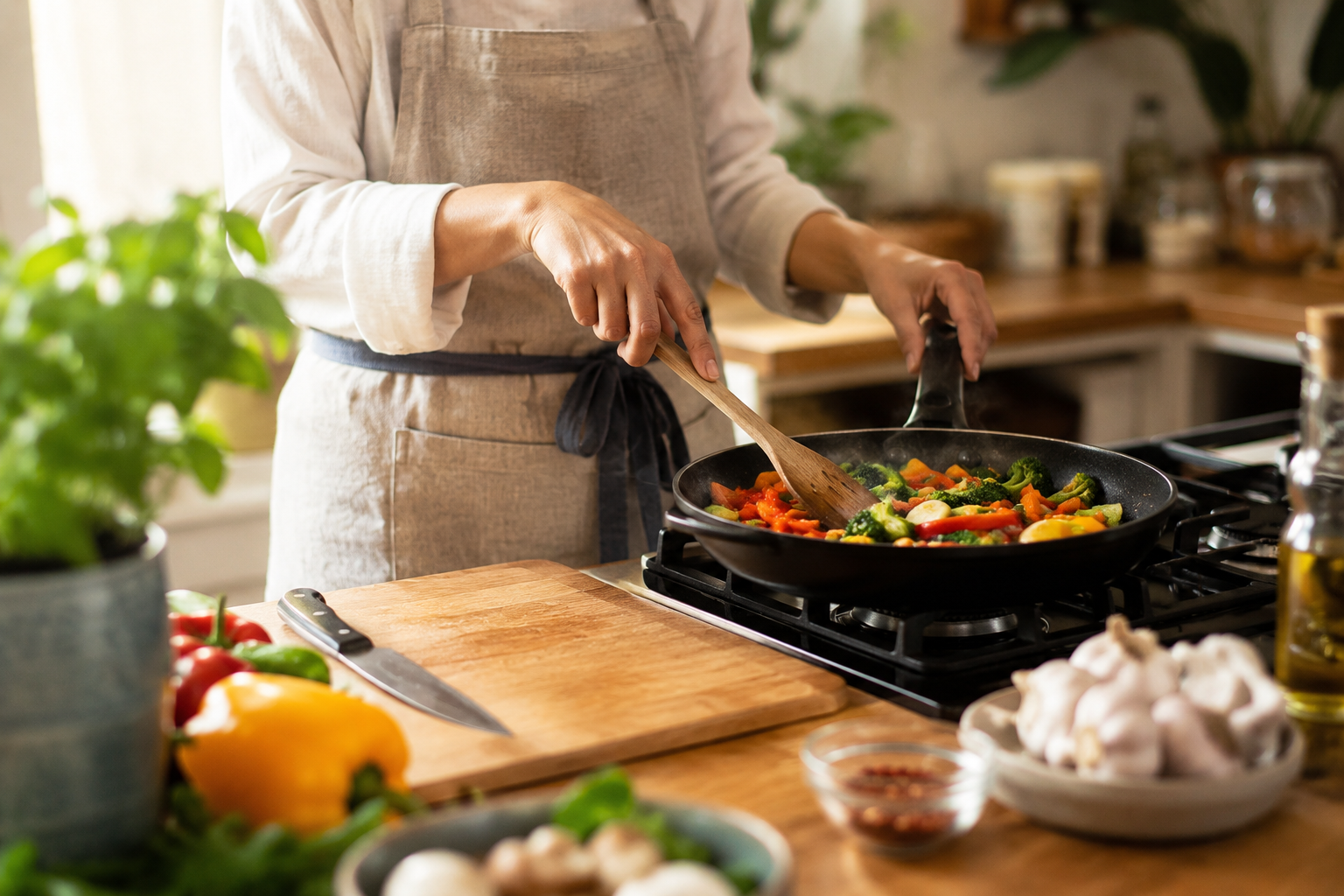
Good cooking comes from practice, attention, and knowing how to use the right techniques. Small changes can make meals easier to prepare and more enjoyable. These seven tips can help you build confidence and improve your cooking skills at home.
7 Ways to Improve Your Everyday Cooking Skills
You do not need complicated recipes or expensive equipment to become a better cook. Learning a few reliable habits and paying attention to how food changes while cooking can make a noticeable difference.
1. Try Different Cooking Methods
Using the same method for every meal can limit your skills. Try roasting vegetables, steaming fish, sautéing meat, grilling chicken, or using an air fryer to see how different methods affect texture and flavor.
For example, learning how to prepare this pork steak air fryer recipe gives you a chance to practice controlling temperature and cooking time. Trying different methods with familiar ingredients helps you understand what works best for each dish.
Roasting, steaming, grilling, and air frying can all produce different results with the same ingredient. As you gain experience, you will become more comfortable choosing a method based on the texture, moisture, and finish you want.
2. Master Basic Knife Skills
Good knife skills make food preparation faster and safer. Learn how to hold a knife correctly, keep your fingers away from the blade, and make consistent cuts for even cooking.
Start by practicing simple cuts such as slicing, chopping, and dicing. Try cutting vegetables into similar sizes so they cook at roughly the same rate.
A sharp knife also gives you better control and requires less force. Keep your cutting board stable by placing a damp cloth underneath it, especially when preparing ingredients quickly.
3. Learn to Taste and Adjust
Tasting food while you cook helps you understand how ingredients work together. Rather than waiting until the meal is finished, taste sauces, soups, vegetables, and other dishes at different stages.
Pay attention to salt, acidity, sweetness, bitterness, and heat. If something tastes flat, a small amount of salt or acid may help, while herbs or spices can add more flavor.
Season gradually instead of adding large amounts at once. It is much easier to add more seasoning than to correct a dish that has become too salty or heavily spiced.
4. Start With Quality Ingredients
Good ingredients can make cooking easier because they often need less preparation to taste good. Fresh vegetables, properly stored meats, quality oils, and well-seasoned staples can improve a simple meal.
You do not need to buy the most expensive products. Focus on freshness and choose ingredients that suit the dish you are making. Planning what you need before shopping can also help you save time when cooking and make meal preparation more organized.
Learn how ingredients should look, smell, and feel when they are fresh. This can help you make better choices when shopping and avoid ingredients that may affect the final dish.
5. Learn From Other Cooks
Watching experienced cooks can teach you techniques that recipes do not always explain. Pay attention to how they control heat, season food, prepare ingredients, and decide when something is ready.
You can learn from family members, classes, cookbooks, or reliable video tutorials. Seeing a technique performed can make basic cooking techniques easier to understand and practice.
Compare different approaches and notice which methods work best with your kitchen, equipment, and ingredients. You may also pick up small habits that make preparation easier.
6. Practice Without Trying to Be Perfect
Mistakes are part of learning to cook. A dish may be too salty, undercooked, overcooked, or different from what you expected, but each result gives you information for next time.
When building cooking skills as a beginner home cook, start with simple recipes and repeat them instead of constantly making something new. Familiar dishes give you a chance to improve without feeling overwhelmed.
Keep track of small changes when repeating a recipe. You might need less salt, a lower temperature, more cooking time, or a different pan the next time you prepare it.
7. Use Fresh Herbs and Seasonings
Fresh herbs and seasonings can change a dish without requiring complicated preparation. Parsley, basil, cilantro, rosemary, thyme, garlic, ginger, pepper, and chili can add flavor to everyday meals.
Learn which seasonings work well with different ingredients. Add smaller amounts first, taste as you go, and adjust near the end so the flavors stay balanced.
Fresh herbs can also be used at different stages of cooking. Tougher herbs such as rosemary and thyme can handle longer cooking, while delicate herbs such as parsley and cilantro are often best added near the end.
Related Questions
What are the best ways to improve my cooking skills?
Practice regularly, learn basic techniques, taste your food while cooking, and pay attention to how heat affects different ingredients. Repeating simple recipes can also help you become more confident with timing and seasoning.
Which cooking techniques are the healthiest and why?
Steaming, poaching, baking, roasting, grilling, sautéing with little oil, and pressure cooking can help limit the amount of added fat used in cooking while preserving the flavor and texture of many foods.
What are the 5 P’s of cooking?
The five P’s are commonly described as preparation, practice, patience, precision, and presentation. They highlight the importance of planning, practicing, paying attention to details, and presenting food well.
Conclusion
Improving your cooking skills does not require mastering difficult recipes. Practice different methods, improve your knife skills, taste as you cook, and work with good ingredients. With regular practice, everyday meals can become easier to prepare and more consistent.