


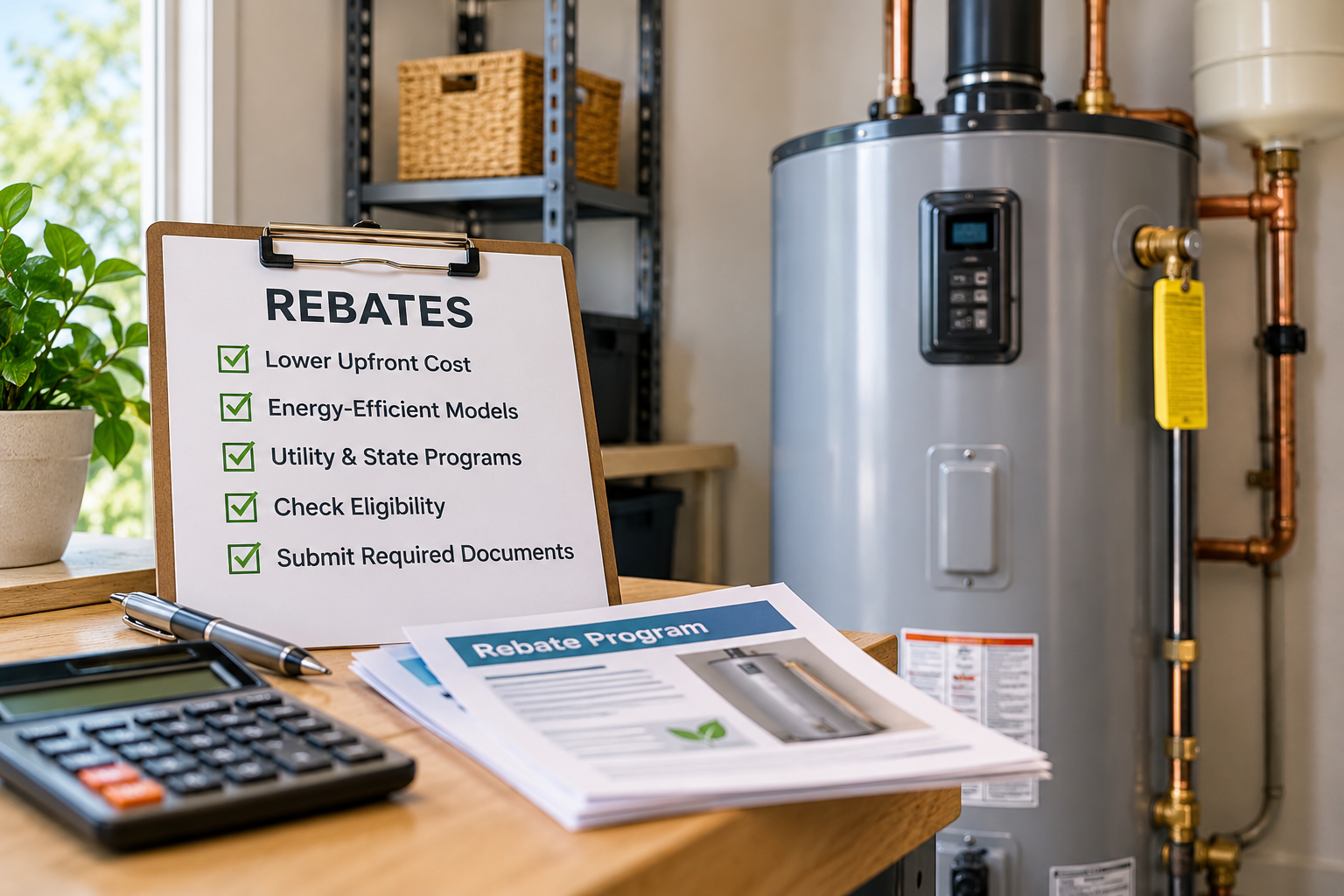
Replacing a water heater requires more than comparing purchase prices. Available rebates can reduce the upfront cost when a model meets a program’s energy-efficiency requirements. The final savings depend on location, equipment type, installation rules, and application deadlines. A careful review before purchase helps households avoid choosing an ineligible unit or missing required paperwork. The process begins by identifying which rebates apply and how each affects the project budget.
Rebate programs typically provide cash back after an eligible water heater purchase, but each program sets its own conditions. A household should confirm the qualifying product category, the required efficiency standard, the installation date, and the submission deadline before ordering. To compare current options by location and equipment type, check out these available rebates. It can help organize that initial search without assuming every listed program applies to every home.
Why Rebates Change the Purchase Equation
A rebate reduces the net cost of an eligible water heater after the program processes the application. The purchase price remains on the invoice, but the household’s final expense falls by the approved rebate amount. That difference matters when an efficient unit costs more than a basic replacement. Comparing only the shelf price can make an eligible model appear less affordable than it is after the rebate. The better comparison uses the purchase price minus confirmed incentive value.
Rebates also help households compare equipment categories more accurately. A program might apply to a heat pump water heater while excluding another type, so the equipment category must match the program rules.
Check Eligibility Before Ordering
Eligibility usually depends on the water heater’s energy-efficiency rating, product type, location, and purchase date. Some programs also require installation by a qualified professional or approval before work begins. A product listing alone does not prove eligibility. The household should verify the exact model, required rating, and program terms before placing an order. A similar model with a different configuration might fall outside the approved criteria.
Location affects available incentives because utilities, states, and local agencies establish different programs. A rebate listed for one service area does not automatically apply to a nearby address. The applicant should use the property’s exact service location when searching.
Calculate the Real Project Cost
The rebate is only one part of the replacement budget. The full cost can include the water heater, labor, delivery, permits, disposal of the old unit, and changes to plumbing or electrical connections. A heat pump water heater, for example, might require different site conditions than a standard electric tank. The household should request a written estimate that itemizes equipment, labor, and related work. This makes the rebate’s effect easier to measure.
Energy use also deserves consideration, although the rebate itself applies to the program’s stated purchase requirements. Lower operating costs can improve the long-term value of an eligible model, but households should review expected performance and local utility rates separately.
Prepare the Application Carefully
Many rebate applications require an itemized invoice, the model number, the installation date, and proof of purchase. Some also require photographs, contractor information, or confirmation that the old water heater was removed. Keeping these records together reduces delays. The applicant should save the product documentation, payment receipt, installation paperwork, and any confirmation received during the process. Digital copies provide a practical backup if the original documents are misplaced.
Deadlines deserve equal attention. A program might set a submission period after installation, limit funding to a specific budget, or require an application before the purchase. The household should record the deadline and submit the complete application promptly.
Filter Choices Using Efficiency Requirements
Energy-efficiency standards help determine which water heaters qualify for a rebate. They also narrow the shopping process by directing attention toward models that meet the program’s technical requirements. Households should compare eligible models based on capacity, fuel source, installation requirements, warranty terms, and total project cost. Selecting an ineligible unit because it has a lower sticker price can eliminate the expected rebate and change the project budget.
A contractor can confirm whether the selected model fits the home’s space, connections, and demand. That review should happen before purchase, especially when the replacement requires new electrical work, ventilation changes, or other site adjustments.
Conclusion
A rebate search should happen before a water heater is selected, not after the invoice is paid. Confirm the program’s location, efficiency standard, equipment category, installation rules, deadline, and required records. Then compare the net purchase cost with the full project total, including labor and related work. A written checklist keeps the application on track and gives the household a clear basis for deciding whether the available rebate justifies the selected model.