


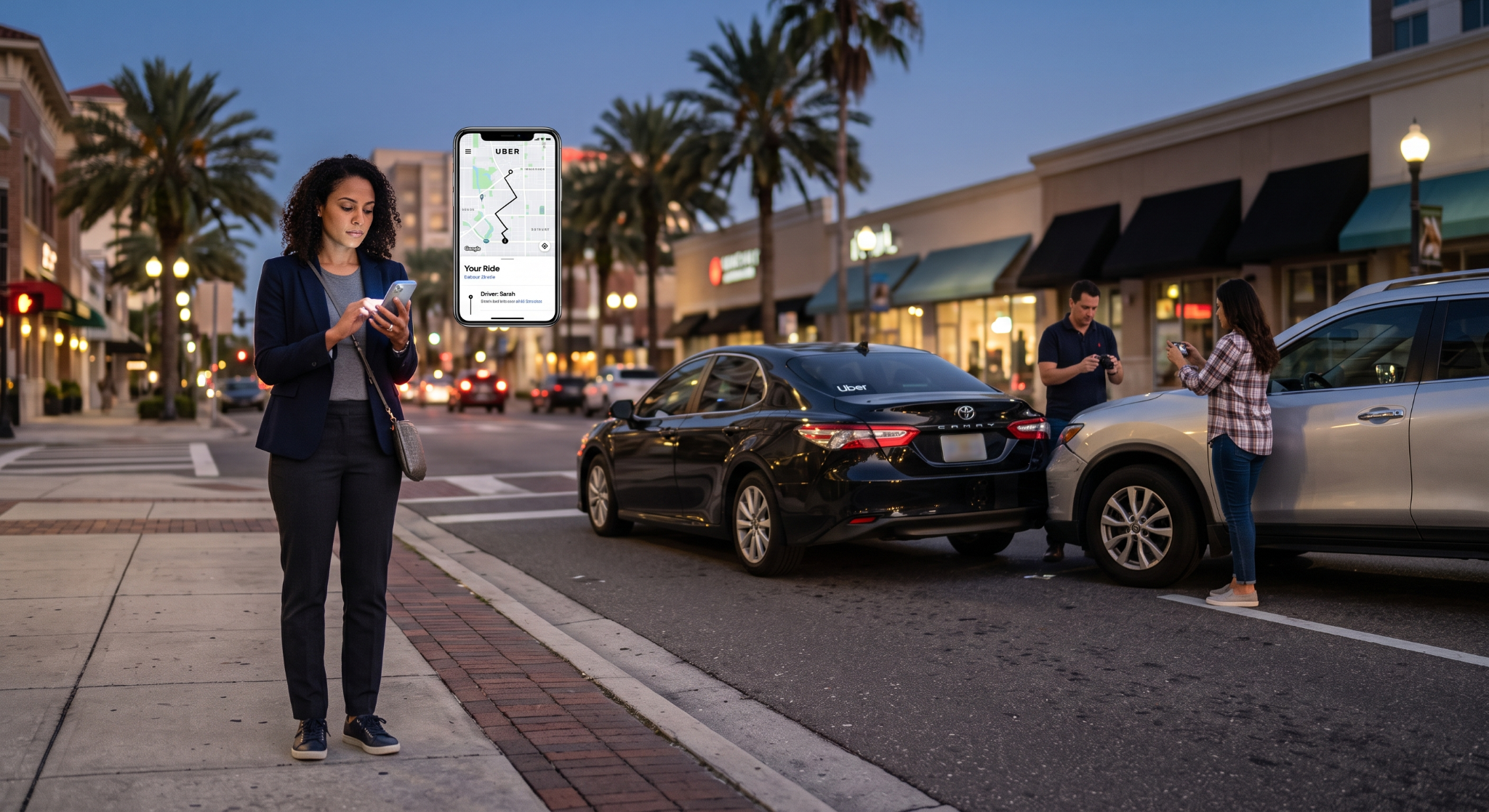
Between the theme parks, the downtown bar scene, and a packed calendar of live shows and gallery walks, Orlando runs on rideshares. Anyone spending a night out at a local venue has probably tapped “request ride” at least once, trusting that Uber or Lyft has them covered if something goes wrong. But the truth is more complicated than most riders realize. Insurance coverage for these trips isn’t a single flat policy; it shifts depending on exactly what the driver’s app was doing at the moment of the crash.
Understanding these shifting coverage windows, often called “phases,” is the single most important factor in whether an accident victim gets fairly compensated or gets stuck fighting an insurer that claims it owes nothing at all.
Why Rideshare Coverage Isn’t One-Size-Fits-All
Uber and Lyft drivers aren’t traditional commercial drivers, and their personal auto policies typically exclude commercial activity. To fill that gap, both companies carry layered insurance policies that only activate under specific conditions tied to the driver’s app status. Florida has codified minimum requirements for this coverage under state law, but the practical effect is that two nearly identical accidents can have completely different insurance outcomes depending on timing.
Phase 1: The App Is Off
When a driver hasn’t logged into the Uber or Lyft app, they’re simply a private citizen driving a private vehicle. If that driver causes a crash during this window, the rideshare company’s insurance does not apply in any capacity. Only the driver’s personal auto policy is in play, and many personal policies contain exclusions for any driving done for commercial purposes, even if the app happened to be closed at the exact moment of impact. Victims injured by an off-duty rideshare driver often find themselves relying solely on that driver’s personal liability limits, which in Florida can be minimal.
Phase 2: The App Is On, But No Ride Has Been Accepted
This is where things start to get interesting and where a lot of confusion happens. Once a driver logs into the app and is actively waiting for a ride request, a contingent layer of insurance kicks in. Under Florida’s transportation network company statute, this phase typically requires coverage of at least $50,000 per person and $100,000 per incident for bodily injury, plus $25,000 in property damage coverage. This coverage is “contingent,” meaning it only applies if the driver’s personal insurer denies the claim outright. Because of that structure, victims frequently get bounced between the driver’s personal insurer and the rideshare company’s insurer, each pointing at the other before anyone pays.
Phase 3: A Ride Has Been Accepted Through Drop-Off
Once a rider is matched with a driver, whether the driver is en route to the pickup location or actively transporting the passenger, the highest tier of coverage applies. Uber and Lyft are both required to carry up to $1 million in third-party liability coverage during this phase, along with uninsured/underinsured motorist coverage. This is the phase most people assume applies to every rideshare accident, but it’s actually the narrowest window of the three. A crash that happens seconds before a ride is officially accepted in the app can fall back into the far more limited Phase 2 coverage, which is why the exact app data and trip logs matter enormously in these cases.
Why These Phases Create Real Problems for Victims
Insurance carriers know most victims don’t understand these distinctions, and adjusters aren’t in a hurry to volunteer which phase applies to a given crash. It’s common for an insurer to argue a driver was in a lower-coverage phase than they actually were, or to claim the app data is unavailable or inconclusive. Because rideshare companies control the trip data that proves which phase was active, victims often have no way to verify these claims without formal legal requests.
Add to that the fact that multiple parties may share liability: the rideshare driver, another motorist, the rideshare company’s insurer, and sometimes a vehicle owner if the driver doesn’t own the car, and it’s clear why these cases rarely resolve quickly on their own.
What Orlando Victims Should Do Immediately
Anyone injured in a rideshare-related crash should document the driver’s app status as soon as possible, including screenshots if accessible, and request an official trip receipt, since this often shows timestamps tied to each phase. Seeking prompt medical evaluation and filing a police report also creates a paper trail that insurers can’t easily dispute later.
Because Florida’s coverage tiers depend on facts that are largely controlled by the rideshare companies themselves, victims are often at a serious disadvantage trying to sort this out independently. This is exactly the kind of dispute where experienced rideshare crash lawyers in Orlando can make a measurable difference by pulling trip data, identifying every applicable insurance layer, and pushing back when an adjuster tries to minimize which phase was active at the time of the crash.
Rideshare accidents in Orlando rarely come down to a simple fender-bender claim. They come down to which of three very different insurance policies was active in the seconds before the crash, and whether the victim has someone in their corner who knows how to prove it.