


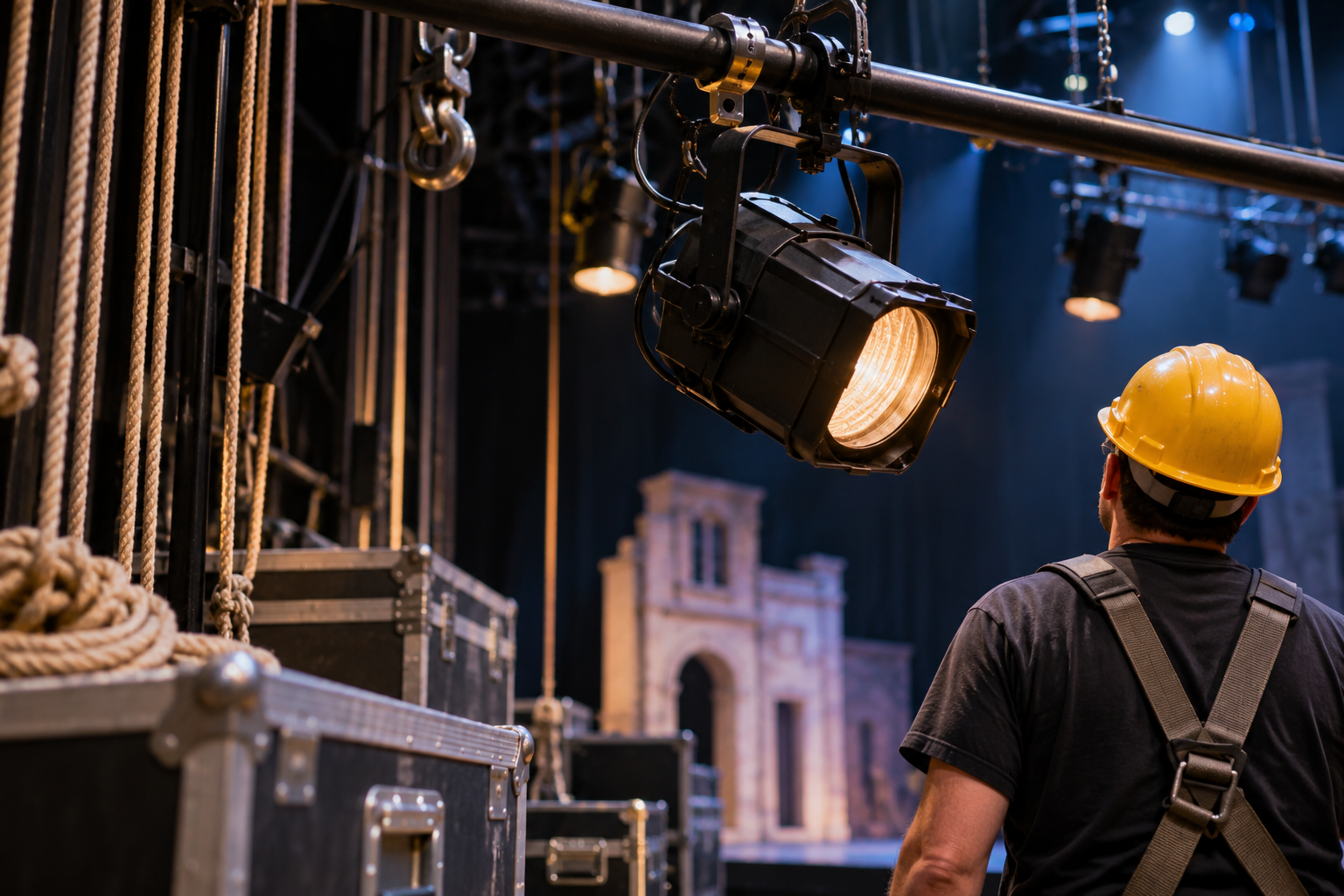
When audiences sit down in a theater, their focus is naturally drawn to the performers, the elaborate costumes, and the captivating storyline unfolding under the spotlight. What spectators rarely notice, however, is the complex, highly dangerous environment suspended directly above the stage. Overhead, tens of thousands of pounds of heavy lighting instruments, massive steel rigging, automated fly systems, and solid set pieces hang suspended over the heads of the backstage crew. According to Matzus Law, stagehand injuries caused by falling overhead equipment or mechanical failures highlight the inherent risks associated with high-altitude technical theater work.
Understanding the Weight and Mechanics Overhead
Contemporary plays require dramatic visuals as well as rapid set changes. Heavily loaded set pieces, LED screens, curtains, sound equipment, and other items should be transported rapidly and silently between scenes. This feat is performed through the use of complex systems of ropes, steel cables, counterweights, engines, and pulleys known as fly systems.
As single lighting fixtures weigh more than fifty pounds, and some scenic drops weigh many tons, any failure of the equipment or mistake made by a stagehand may result in disaster. Damaged cable, poorly tightened bolt, and wrong balance of counterweights can make heavy equipment fall unexpectedly on the stage floor. As stagehands frequently operate under the fly system right beneath it in almost total darkness, they cannot have time to move away from the falling equipment.
Fast-Paced Environments and Human Error
The mechanics of the equipment are only one piece of the puzzle since the intense atmosphere of live performance creates additional hazards. Backstage staff work under high stress to perform elaborate and rapid scene changes in total darkness, using dark colors of their costumes to escape notice from the spectators.
The physical tiredness resulting from the lengthy periods of rehearsing and multiple performances per weekend poses an important safety issue. Riggers and lighting personnel operate from the great height of catwalks and elevated mechanical lifts to position lights and suspend cables. In cases of exhaustion, small mistakes like dropping a tool, misunderstanding a radio message, or forgetting to use a safety rope can cause serious harm to people operating at lower levels.
Rigorous Safety Protocols and Maintenance Requirements
Prevention of overhead theatre accidents should involve following industry guidelines and maintaining theatre equipment. Theatre managers should set regular inspection schedules for all suspended equipment, including hardware, wire ropes, and motor components. The inspection process of all equipment to check for any signs of wear and tear, stress cracks, and mechanical friction before each production run is highly important for early detection of any structural weaknesses.
Additionally, crew training should not be optional. Stagehands who use counterweight arbors or rigging boards should be licensed to understand the correct ratio of weight. Some of the basic practices, like wearing hardhats while performing the overhead load-ins, giving warning calls when moving things overhead, and double-securing all suspended equipment using steel safety cables, greatly eliminate the danger of falling objects.
Standing Up for Injured Theater Technicians
The people backstage who make live entertainment happen should not have to risk their lives just to add a little flair to the show. When theater owners, producers, and machinery manufacturers do not enforce safety procedures, it is those people who pay the price for it.
Conclusion
When faulty rigging maintenance, malfunctioning stage equipment, or even dangerous backstage environments cause an overhead accident, consulting Matzus Law will be an effective way to inform the injured workers about their rights and get the proper compensation. Strict adherence to technical standards, inspection of equipment, and safety procedures guarantee that the magic of the theater will never be at the expense of technicians’ safety.