


The American Dental Association reports that over 37 million Americans used teeth whitening products in 2023 — yet most people can’t answer the fundamental question of how often these treatments can be safely repeated. As cosmetic dentistry becomes increasingly accessible and at-home whitening options flood the market, the gap between what people want (instant, permanent results) and what’s actually safe for their enamel continues to widen.
This timing question matters more than most realize. Overdo whitening treatments, and you risk permanent enamel damage, increased sensitivity, and ironically, teeth that look worse than when you started. Underdo them, and you’re left frustrated with fading results and wasted money. With professional treatments costing $300-800 per session and at-home options promising similar results for $30, understanding the science behind safe treatment intervals has real financial and health consequences.
Here’s what you need to know about whitening frequency, the differences between professional and DIY approaches, and how to maintain results without compromising your dental health long-term.
How Does Teeth Whitening Work and What to Expect?
Teeth whitening relies on oxidizing agents — primarily hydrogen peroxide or carbamide peroxide — to break down stain molecules trapped in your tooth enamel. Think of it like bleaching fabric: the peroxide penetrates the porous enamel surface and chemically alters the colored compounds, making them reflect light differently and appear whiter.
The process happens in stages, which explains why you won’t see dramatic results after one treatment. During the first application, the peroxide reaches surface-level stains from coffee, wine, and daily wear. Deeper, more embedded stains — particularly those from medications, genetics, or years of smoking — require multiple sessions as the oxidizing agents work their way into the tooth’s deeper layers.
Professional treatments typically use concentrations between 15-35% hydrogen peroxide, while at-home products contain 3-10%. Higher concentrations work faster but also increase the risk of sensitivity and enamel stress. Most people see noticeable improvement after the first professional session, with optimal results appearing after 2-3 treatments spaced two weeks apart.
Here’s what catches people off guard: whitening doesn’t work uniformly. Your front teeth, which have thinner enamel, typically respond faster than molars. Teeth with existing dental work won’t change color at all, since porcelain crowns and composite fillings don’t respond to bleaching agents. This creates a common scenario where someone ends up with mismatched coloring that requires additional cosmetic dentistry treatments in Delray Beach to achieve uniform results.
The chemical process also explains why results fade over time. Your enamel remains porous after treatment, making it vulnerable to new stains. Without proper maintenance, most people notice significant color regression within 6-18 months, depending on their diet and habits.
What Are the Differences Between Professional and At-Home Whitening?
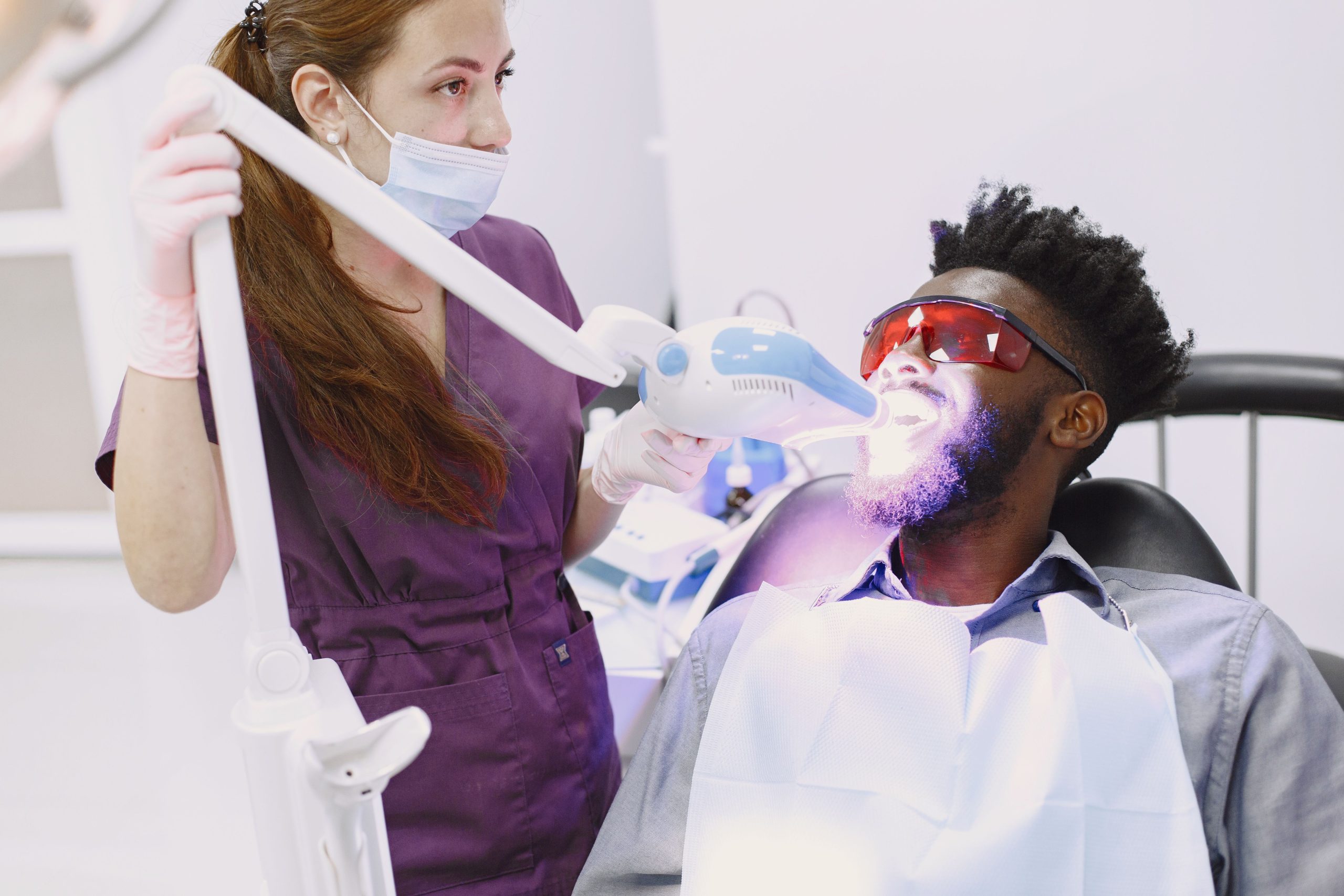
Professional whitening delivers faster, more dramatic results because dentists can use higher peroxide concentrations and apply protective barriers to your gums. During an in-office treatment, your dentist applies a protective gel to your soft tissues, then uses a bleaching gel containing 15-35% hydrogen peroxide. Some offices use LED or heat activation to accelerate the process, though research shows mixed results on whether light activation significantly improves outcomes.
The entire professional session takes 60-90 minutes, often with multiple 15-minute applications of fresh gel. Most patients see their teeth lighten by 3-8 shades in a single visit. The controlled environment also means immediate intervention if you experience severe sensitivity or gum irritation.
At-home options work more gradually but offer convenience and lower upfront costs. Whitening strips typically contain 6-10% hydrogen peroxide and require daily use for 10-14 days. Custom-fitted trays from your dentist provide better coverage than over-the-counter strips and allow for more even whitening, though they still take 1-3 weeks to achieve noticeable results.
The trade-offs become clear when you consider total time and cost. Professional whitening costs $300-800 per session but delivers results immediately. At-home treatments cost $20-200 but require weeks of consistent use — and many people abandon the routine before seeing significant improvement.
Effectiveness varies significantly by stain type. Professional treatments excel at removing deep, embedded stains that at-home products can’t touch. However, for maintenance whitening or mild surface stains, at-home options often provide adequate results with less expense and scheduling hassle. The key is matching the treatment intensity to your specific needs and timeline expectations.
How Often Can You Get Teeth Whitening Safely?

The safe frequency for teeth whitening depends entirely on the method and concentration used. Professional treatments should be spaced at least 6-12 months apart to allow your enamel to remineralize and recover from the oxidizing process. Dentists typically recommend no more than two professional whitening sessions per year, with some practitioners suggesting annual treatments as the safest long-term approach.
At-home treatments require different timing considerations. Whitening strips or gels can generally be used every 6 months, but only for the manufacturer’s recommended duration — usually 10-14 days maximum. The lower concentrations mean less immediate enamel stress, but extended or frequent use can still cause cumulative damage.
Daily whitening toothpastes fall into a separate category entirely. These products use mild abrasives rather than chemical bleaching and can be used indefinitely, though they only remove surface stains and won’t change your teeth’s natural color. Think of them as maintenance tools rather than whitening treatments.
How Does Whitening Affect Sensitive Teeth?
Tooth sensitivity during and after whitening occurs because peroxide temporarily opens the pores in your enamel, exposing the underlying dentin layer where nerves reside. This process is normal but can be intensely uncomfortable for people who already have sensitive teeth or worn enamel.
If you experience sensitivity, several strategies can help. Using a desensitizing toothpaste containing potassium nitrate for two weeks before whitening often reduces discomfort significantly. During treatment, shorter application times — even half the recommended duration — can still provide results with less sensitivity.
For people with chronic sensitivity, custom-fitted trays with lower-concentration gel applied every other day often work better than high-concentration treatments. The gradual approach takes longer but causes less nerve irritation. Some dentists also recommend applying fluoride gel immediately after whitening to help seal the enamel pores and reduce sensitivity.
What Are the Safety Guidelines and Risks?
Overuse of whitening products can permanently damage your enamel, leading to increased sensitivity, a translucent appearance, and ironically, teeth that look grayish rather than white. The enamel doesn’t regenerate, so damage from excessive whitening is irreversible.
Warning signs of overuse include sharp, shooting pain that persists hours after treatment, teeth that appear chalky or translucent, and increased sensitivity to temperature changes. If you experience any of these symptoms, stop whitening immediately and consult your dentist.
Gum irritation is another common risk, especially with at-home treatments where the bleaching gel can contact soft tissues. Properly fitted trays and careful application minimize this risk, but over-the-counter strips sometimes cause chemical burns if left on too long or if they shift during wear.
People with existing dental work should consult their dentist before whitening, since the treatment won’t affect crowns, veneers, or fillings — potentially creating a mismatched appearance that requires additional cosmetic work to correct.
What Are Common Teeth Whitening Myths and Misconceptions?
One persistent myth suggests that whitening damages tooth enamel permanently when used correctly. Research shows that professional whitening and properly used at-home treatments cause only temporary enamel softening that reverses within 24-48 hours. The key phrase is “when used correctly” — following recommended frequencies and durations.
Another widespread misconception claims that natural methods like baking soda, lemon juice, or activated charcoal are safer than commercial whitening products. The reality is more complex: these DIY approaches often cause more enamel damage than regulated whitening treatments. Baking soda and charcoal work through abrasion, literally scraping away surface enamel along with stains. Lemon juice is acidic enough to erode enamel directly.
Many people also believe that whitening works on all types of tooth discoloration equally. Yellow stains from aging, coffee, and tobacco respond well to bleaching. Gray stains from medications (particularly tetracycline antibiotics) or trauma are much more resistant and may require veneers or other cosmetic treatments for significant improvement.
The “instant results” myth persists thanks to dramatic before-and-after photos in advertising. Professional treatments do work faster than at-home options, but even in-office whitening typically requires 2-3 sessions spaced weeks apart for optimal results. Single-session dramatic transformations usually involve additional cosmetic procedures beyond simple bleaching.
Finally, many believe that once teeth are whitened, they stay that way indefinitely. Whitening is temporary — your enamel remains porous and vulnerable to new stains. Without maintenance treatments and lifestyle adjustments, most people see significant fading within 6-18 months.
How Can You Maintain Whitening Results Long-Term?
The lifespan of whitening results depends heavily on your daily habits and maintenance routine. Coffee, red wine, tea, and berries cause the fastest re-staining, often noticeable within weeks if consumed regularly without precautions. Smoking accelerates stain accumulation dramatically — many smokers need touch-up treatments every 3-4 months compared to 12-18 months for non-smokers.
Strategic timing can extend your results significantly. Drinking staining beverages through a straw reduces contact with your front teeth. Rinsing with water immediately after consuming coffee or wine helps prevent stains from setting. Waiting at least an hour after consuming acidic foods or drinks before brushing prevents you from scrubbing softened enamel.
Touch-up treatments using at-home products every 6-12 months often maintain professional whitening results without requiring additional in-office sessions. Many dentists provide custom-fitted maintenance trays with lower-concentration gel specifically for this purpose. Using these for 2-3 nights every few months typically keeps teeth at their post-treatment color.
Professional cleanings every six months also play a crucial maintenance role. Dental hygienists can remove surface stains and tartar buildup that at-home care misses, helping your whitening results last longer between treatments.
The most successful long-term approach combines realistic expectations with consistent maintenance habits. Rather than seeking permanent whiteness through frequent intensive treatments — which risks enamel damage — focus on sustainable practices that preserve both your whitening investment and your dental health. Your teeth’s natural aging process means some color change is inevitable, but proper maintenance can keep them significantly whiter than they’d be without any intervention.