


Meta Description: The ferry from Spain to Tangier takes an hour, but the real trip starts after the port. Here is how to turn a quick crossing into a northern Morocco road trip.
There is a moment on the Tarifa ferry, about halfway across the Strait of Gibraltar, when Europe is still visible behind you and Africa is already filling the horizon ahead, and the whole idea of the day changes scale. Thirty-five minutes of water separate two continents here, which is why Tangier has become the most popular add-on in southern Spain, the day trip that lets Andalusia travellers say they touched Morocco. And it is precisely why the travellers who know better smile at the day-trippers filing back aboard at sunset, because the ones walking the other way, toward a set of car keys, are about to see what the crossing was actually for.
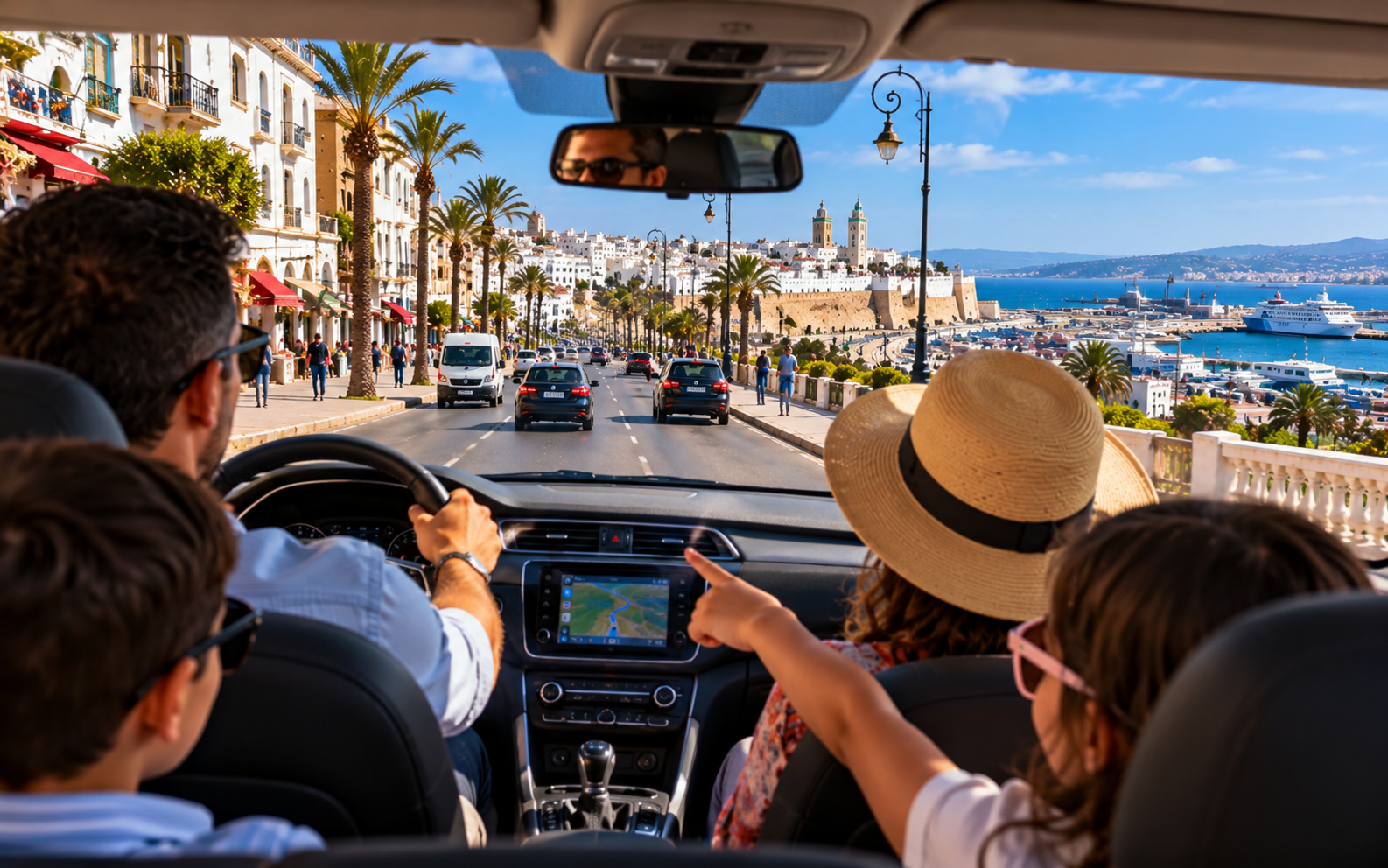
The uncomfortable truth about the Tangier day trip is that it samples the one part of the region that needs no vehicle, the medina and the Kasbah, and misses everything the north does best, which lies scattered across capes, mountains, and coastline no walking tour reaches. The fix costs about as much as the ferry ticket itself: a rental car in Tangier runs from roughly 150 to 250 dirhams per day for a city car, call it fifteen to twenty-five euros, with SUVs from around 400 dirhams, bookable before you even board so the keys are waiting when you clear the port. Stretch the day trip into three days with wheels, and the arithmetic of the whole crossing transforms, the same ferry, the same entry stamp, and roughly ten times the Morocco.
Here is what those three days look like, and the small craft that makes them effortless.
The Itinerary the Day-Trippers Never See
Give Tangier itself the first afternoon and evening on foot, as everyone should, the medina’s lanes, the Kasbah’s viewpoints, café hours above the port where the city has watched the strait for centuries. The car starts earning the next morning on the Atlantic circuit: Cap Spartel, twenty minutes west, where the Mediterranean formally hands over to the ocean beside a lighthouse and the Caves of Hercules, then the long beach road south, camels on the sand and surf schools in the breaks, down to Asilah, the whitewashed artists’ town whose mural-covered medina and sea ramparts hold an entire golden afternoon. It is a day of short hops and open coast, impossible by tour bus, trivial by car, and it resets every assumption the ferry crowd carries home.
The second full day is the one that justifies the crossing outright. Chefchaouen, the blue city, lies two hours southeast through the Rif mountains, and the drive itself dismantles the desert stereotype kilometre by green kilometre, valleys, cork oaks, villages stacked on hillsides, before the famous blue lanes take over for the afternoon. Overnight there if the schedule allows, because the town belongs to its guests after the day visitors leave, or roll back to Tangier for dinner; owning the clock means both versions work. A third day offers Tetouan’s deeply authentic medina an hour away, or, for travellers continuing rather than returning, the smooth autoroute south toward Rabat and Casablanca with a one-way drop-off arranged at booking, which quietly converts a Spanish beach holiday’s side quest into the opening chapter of a full Moroccan road trip.
The Craft of Driving the North, Learned Quickly
Moroccan driving intimidates from a distance and charms up close, and the north is its gentlest classroom. The customs number is about six. Manual gearboxes are the national default and automatics carry a premium in limited supply, so the need is declared at booking, never discovered at pickup. Posted speed limits are the real ones, enforced by routine radar, and the gendarmerie checkpoints along intercity roads are friendly thirty-second affairs with documents ready. Parking runs on marked blue zones and on the informal economy of vested guardians who watch the car for a few dirhams, a custom worth embracing with a pocket of coins. Fuel stations are frequent and full service, autoroute tolls take cash, rural roads are for daylight, and the medina is entered on foot, always, with the car parked contentedly at its gates.
The booking craft is equally brief. Paperwork means a home licence held at least a year, an International Driving Permit recommended, a passport, and a deposit card, with minimum ages generally from 21. Confirm the insurance excess by its name and number, match the mileage terms to the Chefchaouen ambitions, and spend two minutes at handover filming the walkaround, panels, wheels, spare, and triangle, keeping the video until the keys go back. Ferry travellers should note the arrival geography: the fast boats from Tarifa land at Tangier Ville, walking distance from the medina, while crossings from Algeciras dock at Tanger Med, forty minutes east, and the handover point should match the ticket, a detail worth one explicit line in the booking messages.
Making the Booking Before the Boat
The reason this trip has become so easy is that the car no longer involves the arrival-hall gamble. The Tangier listings on OneClickDrive put the city’s verified suppliers on one screen with real photos and transparent dirham pricing, and the assisted model suits the crossing perfectly: the team confirms the supplier, the exact car, the gearbox, and a handover timed to your ferry or flight, a small advance of around ten percent secures the reservation, and the balance settles directly with the supplier when the keys change hands at the port, the airport, or the hotel. For the full picture of how the model works across Morocco’s cities, and the one-way options that open the longer southern routes, the Morocco guides are worth a read more before locking the dates, since the same few decisions, gearbox, excess, mileage, pickup point, repeat in every city and reward being made once, properly, from the sofa.
Season the plan lightly: July and August funnel the great diaspora summer return through Tanger Med, filling the northern roads and emptying the automatic fleets weeks in advance, while spring and autumn offer the same blue lanes and Atlantic light at the year’s softest prices. Either way, the early booking wins on choice every time, and the ten-minute errand done before departure is the entire difference between a trip that starts at a counter and one that starts on the coast road.
The deeper point is the one the strait makes visually every single crossing. Two continents sit an hour apart here, and the day-trip version of that fact was always a little absurd, like flying to Italy for lunch. Tangier rewards arrival; the north rewards staying; and the difference between the two is a set of keys that costs less than the paella you had in Tarifa the night before. Board the ferry with the car already booked, watch Africa fill the windscreen, and when the day-trippers turn back at sunset, drive the other way.