


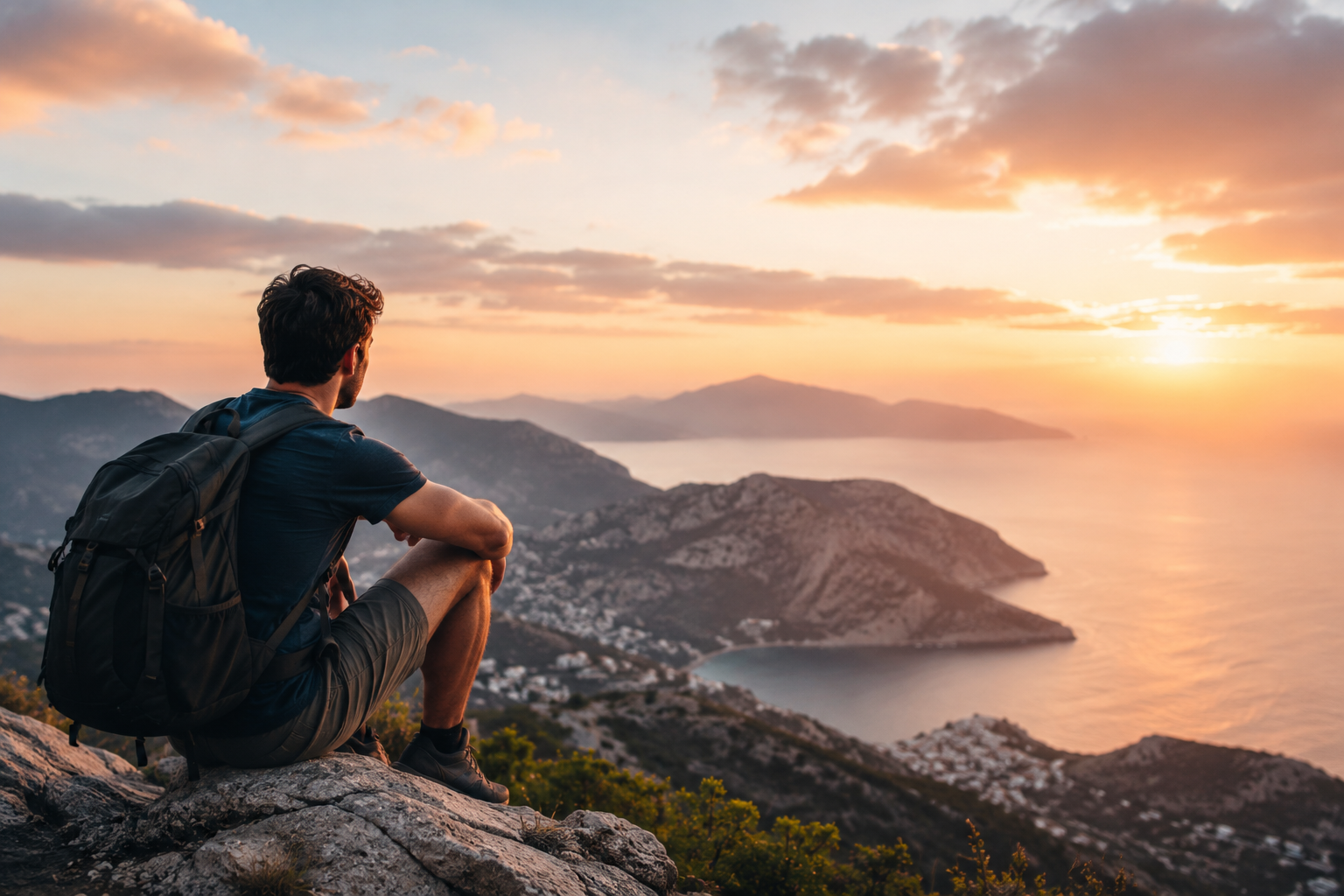
Search “solo travel,” and the imagery is consistent: a young woman on a clifftop, a packing list aimed at women, a community built around female safety. The picture is accurate but incomplete, since it omits one of the fastest-growing groups in the category. Men travel alone in large and rising numbers, yet the marketing and influencer economy rarely speaks to them directly. That gap between who is booking and who the industry talks to is the underdiscussed market, worth examining as a business reality and as a guide for any man considering his first trip alone.
The numbers tell a clearer story than the marketing does. Industry research valued the global solo travel market at roughly 482 billion dollars in 2024, with the male segment projected to grow around fourteen percent a year through 2030. Surveys point the same way: a majority of men now plan to take more solo trips, and roughly two in three first-time solo travelers of any gender intend to do it again, a stickiness the trade calls the hook effect. The audience is large, growing, and loyal, which makes its near-absence from the conversation genuinely strange.
Why the Coverage Lags the Reality
If the men are traveling in these numbers, why does the category still read as female by default? The honest answer is a mix of history and habit rather than deliberate exclusion, and the reasons are specific enough to name. Each helps explain why the booking data and the public image of solo travel have drifted so far apart.
- The solo travel media wave grew out of women’s safety communities, so the founding voice was female and stayed that way.
- Men report their solo trips less often on social platforms, so the visible sample skews away from them.
- Brands chase the loudest hashtag rather than the quietest booking, and the data on male travelers is simply less photogenic.
- The word “solo” still carries a faint stigma for men, framed as loneliness rather than independence.
None of these reasons reflects the actual booking data, which is why the gap persists: the industry keeps reading its own coverage instead of its sales figures. The result is a feedback loop in which female-focused content attracts more of the same, while a large and steadily growing male audience books quietly in the background, underserved by the conversation but far from absent in the numbers.
What Men Actually Want From the Trip
The motivations that surface in research differ in emphasis from the wellness-and-reset framing aimed at women, though the two overlap more than either side admits. Men disproportionately cite freedom, the appeal of an unplanned itinerary, and one specific activity as the spine of the trip rather than the destination itself. The pattern holds consistently enough across surveys to sketch a workable profile of what the male solo traveler is actually buying when he books.
| Common Motivation | What It Looks Like in Practice |
| Freedom and flexibility | No compromise on pace, route, or budget |
| A central activity | Hiking, fishing, diving, or a sporting event |
| Quiet competence | Handling logistics alone as a private test |
| Low-pressure socializing | Optional company, easy to opt out of |
The throughline running through all four rows is autonomy with a built-in off-ramp: the freedom to be completely alone all day, paired with the standing option of light, no-strings company in the evening. That combination shapes where these trips go and how a man structures his hours once he arrives, since the daytime rarely needs solving, but the evening sometimes does.
Solving the Evening Problem
Days on a solo trip fill themselves, but evenings are where men report the awkwardness, since a table for one carries more weight after dark. The practical solutions are low-commitment by design: a seat at a bar’s counter, a hostel common room, or a live sports broadcast in a pub. Even a quiet hour on a phone works, catching up on news and messages or spinning a few online slots at the NV Casino online before heading out for the evening. The point is a default that asks nothing of strangers, so the evening never depends on forcing a conversation that may not come.
Where a First Trip Should Begin
For a man weighing a first trip, the data doubles as advice. Begin domestically or regionally, since Europe is the category’s largest market and a short hop from Poland lowers the stakes while keeping the experience genuine. Build the trip around one anchor activity, book the first two nights and leave the rest open, and treat the single supplement, the surcharge solo travelers pay on rooms priced for two, as a known cost rather than a surprise. The first trip teaches more than any guide, which is why the hook effect is so reliable once a man takes the leap.
This mismatch between a large male audience and a female-coded conversation cannot last, because money eventually follows the booking data rather than the aesthetic. Operators are already trimming single supplements and broadening their imagery, and the coverage will follow. For the individual traveler, none of that lag matters: the trips are available now, the only real barrier is the first booking, and the freedom beyond it has never been better documented. Pick one activity, choose somewhere close, and go.