


In 1926, a vaudeville house opened on Lankershim Boulevard. We know it now as the El Portal, and it is one of the anchors of this district. That same year, roughly 850 miles north, another 1926 theatre opened in a state capital most people could not place on a map. It was built for silent film and vaudeville, it nearly got demolished, and it turns 100 this year.
The story of what Salem did with the Elsinore is worth knowing here, because it is the same story as ours, run on a different timeline.
What They Built
The Elsinore opened on May 28, 1926, on the site of a former livery stable.
Its developer, George B. Guthrie, was an attorney and art collector who believed Salem deserved a serious venue. He hired the Portland firm Lawrence and Holford, and the result was ambitious in a way that would be difficult to fund today.
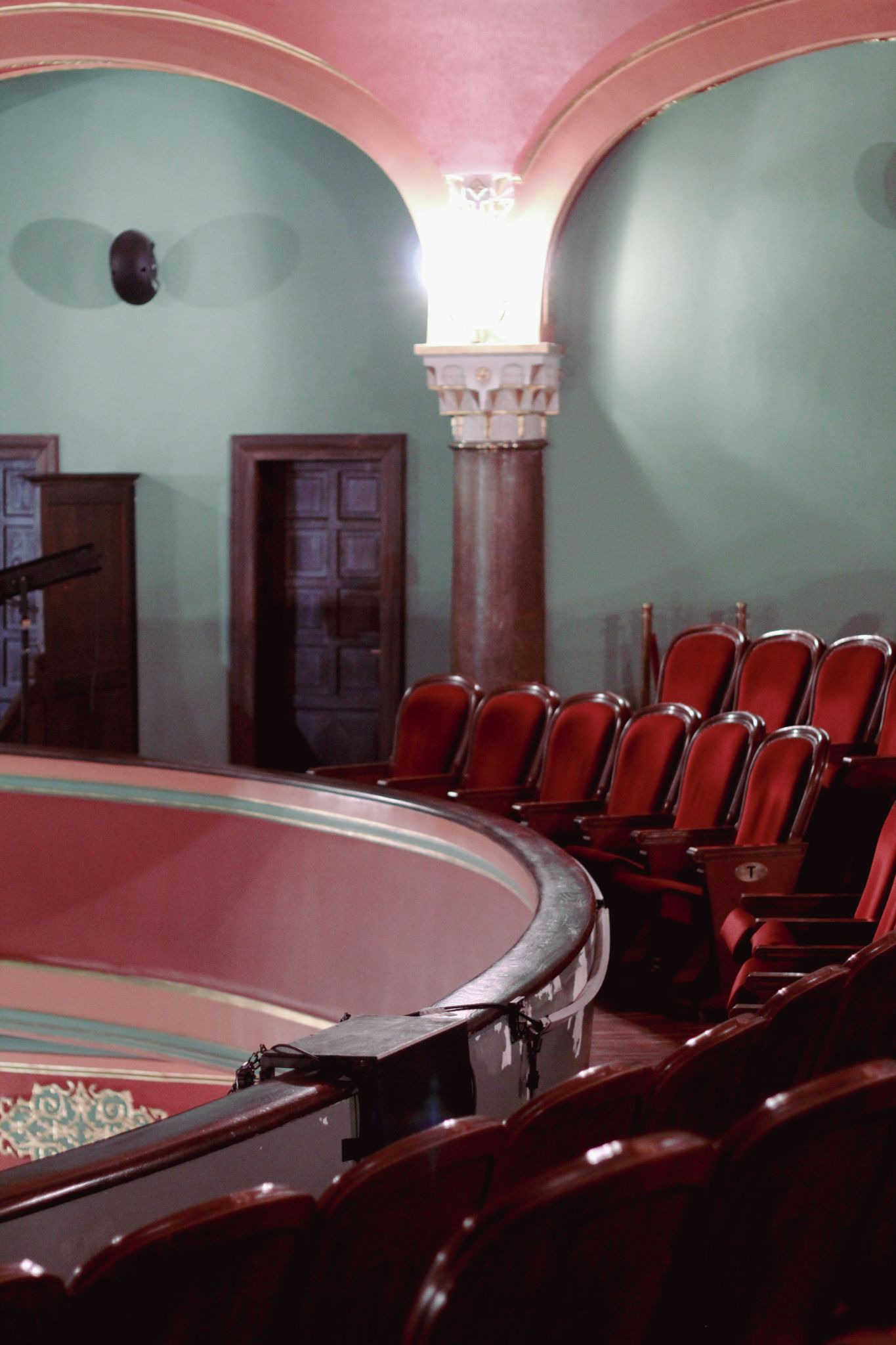
Ellis F. Lawrence, who later founded the University of Oregon School of Architecture, designed a building that combined a Gothic cathedral with a Tudor palace, named for the castle in Hamlet. According to the Oregon Encyclopedia, the interior included Povey Brothers stained glass, 30-foot faux stonework walls, candlelit chandeliers, and murals of Shakespeare’s characters.
It was billed as the largest and most lavish theatre between Portland and San Francisco. Around 1,400 seats.
Opening night ran two showings of Cecil B. DeMille’s The Volga Boatman, accompanied live on a Mighty Wurlitzer organ.
Then came the century that happens to every building like this. Sound equipment installed in 1932. Touring vaudeville through the thirties. According to the Willamette Heritage Center, it hosted Salem’s Mickey Mouse Club talent shows, then settled into decades as a movie house.
By the 1970s it was a second-run cinema in decline. The familiar trajectory.
What’s It Known For Is Not the Answer Most People Give
Ask what Salem is known for and you will hear the capitol building, state government, and agriculture. It is the kind of city people drive through on I-5 without stopping.
What’s it known for is a question worth actually researching before dismissing a place, and this local overview from Portland Real Estate covers the wider picture, including the arts and heritage layer that visitors routinely miss.
This matters for the theatre story specifically. The Elsinore was not saved because Salem was a wealthy cultural capital with deep philanthropic reserves. It was saved because a mid-sized government town decided a building was worth keeping.
That is a more replicable model than the version where a billionaire writes a check.
How They Actually Saved It
Here is the sequence, and it is instructive.
In 1990, the owner moved to sell. Demolition was on the table. A community group called the Save the Elsinore Committee formed and raised roughly $130,000 for code compliance work, which is a small number for a building that size and exactly the kind of number a volunteer committee can actually reach.
Meanwhile a separate group was campaigning for a new, larger auditorium for the city. Two organizations, competing for the same limited civic attention.
In 1992 the mayor asked them to stop competing and work together. They merged into a nonprofit called STAGE, with the combined goal of buying and restoring the Elsinore.
That merger is the pivotal move. Two groups pulling in different directions became one group with a building.
Funding still did not come easily, and this is the part that gets skipped in the tidy version of the story. Multiple grant applications were rejected before Meyer Memorial Trust awarded $400,000, which covered the purchase and left $100,000 for remodeling.
Years of rejections, then one yes that changed the outcome. Anyone who has run a capital campaign for a small house will recognize that shape.
The nonprofit bought the theatre in 1993 and converted it to a performing arts venue.
Then They Did the Hard Part
Buying a historic theatre is the beginning of the problem, not the end of it.
Listing came first. The Elsinore was added to the National Register of Historic Places in 1994 as part of the Salem Downtown State Street and Commercial Street Historic District, with Lawrence and Holford credited as architects and the style recorded as Tudor Gothic.
Then the money. In February 2002 they contracted an architectural firm for a full restoration estimated at $3.2 million, ultimately raising $3.4 million for a campaign called Return to Grandeur, completed in 2004.
The restoration brought back the Tudor Gothic ornamentation while installing contemporary production technology. That combination is the actual craft of this work: a house that looks like 1926 and can run a modern show.
They also kept the organ. The Elsinore retains a Wurlitzer instrument, which matters because a silent-film program with live accompaniment is programming almost nobody else can offer.
What Transfers to a District Like Ours
Four things, and none of them require a state capital.
Merge, do not compete. The single decisive moment in Salem was two organizations combining rather than splitting the available support. Arts communities fragment easily, and funders notice.
Small money first. That initial $130,000 for code work is what made the building viable enough to be worth a larger grant. Nobody funds a hopeless case.
Get listed. National Register status changes the conversation with funders, and it changes the conversation with anyone contemplating demolition.
Keep the thing nobody else has. The Wurlitzer is not nostalgia. It is a programming advantage, and every old house has some version of it.
The Hundredth Year
The Elsinore hits its centennial in 2026, still operating, still programming, in a downtown that could easily have lost it in 1990.
We have our own 1926 building here, and more than twenty other houses inside a square mile. The lesson from Salem is not that historic theatres survive because they are beautiful.
They survive because at a specific moment, a small number of people organized faster than the demolition did.