


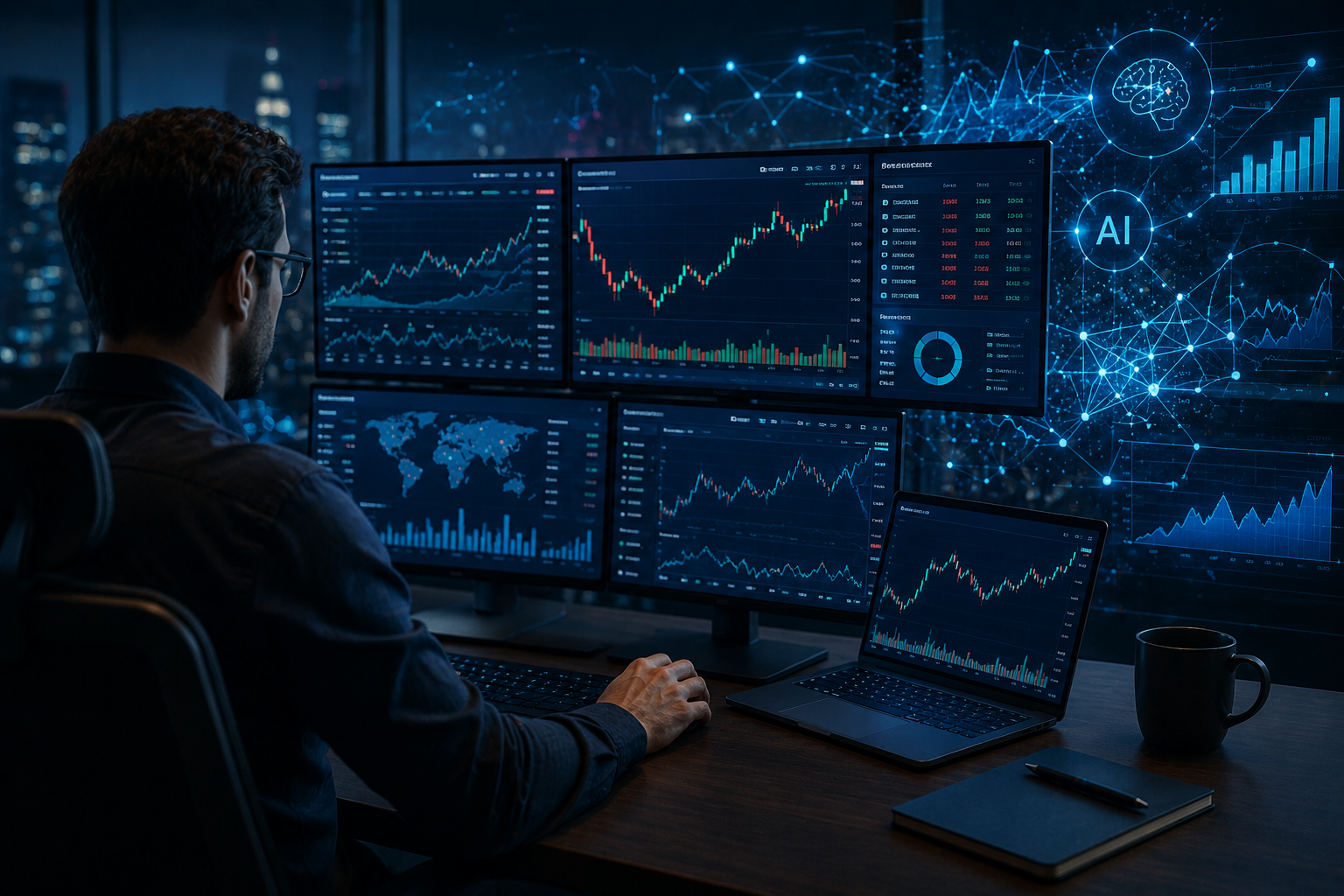
Recent developments in technology have played a key role in the creation of automated trading tools. These tools, also known as robot traders, are powered by advanced algorithms and artificial intelligence, enabling them to analyze vast amounts of market data and execute trades in milliseconds.
Tasks that previously required traders to spend hours analyzing charts and performing complex calculations can now be done in a fraction of a second using a robot trader. These bots also work around the clock, meaning you won’t miss out on any opportunities in the forex market.
Here we’ll take a deeper look at robot traders, the advantages they offer, and what they mean for the future of trading.
The Benefits of Trading Using Robots
§ Speed and Efficiency
The number one benefit of using a robot trader is speed. A trading bot can analyze vast amounts of market data and execute trades in milliseconds—far faster than any human trader. A robot trader can give you the edge in fast-moving markets or during periods of high volatility where prices can change in seconds.
§ Eliminates Impulse Trading
Traders often fall victim to emotional trading, either because of fear or greed, which can lead to impulsive or inconsistent choices. A robot trader operates based on predefined rules and algorithms, ensuring a disciplined approach to trading.
This approach helps you maintain discipline and strict adherence to your trading strategy at all times.
§ 24/7 Operation
Trading using robots enables traders to profit from the market across different time zones. A basic robot trader will scan the markets 24/7, allowing you to benefit from trading opportunities in the global market happening outside of your time zone.
So, whether you are asleep or engaged with other commitments, such as your 9-5, you can rest assured you will not miss out on trading opportunities that fit your strategy.
Risks and Limitations of Robot Traders
One common question that traders may ask is: Do forex trading robots really work? Yes, they do work, but they also have their fair share of risks.
The number one risk is that the algorithms that power most robot traders rely on historical market data. Markets are constantly evolving, and strategies that performed well in the past may fail under new or unexpected conditions. This could lead to substantial losses, especially when the algorithm is not regularly updated or tested.
Technical issues are also a serious threat. Your average robot trader relies on internet access to perform, so slight inconveniences like system glitches, latency issues, or incorrect data inputs can result in faulty trades. Even a small delay in internet speed can have a significant impact, especially in fast-moving forex markets.
The Future of Trading: Humans vs. Robots
The humans vs. robots debate is more about how trading bots can complement traders rather than replace them. While machines excel in speed, precision, and data processing, human traders still retain strengths in judging market sentiment and fundamental analysis.
Traders can rely on robots to handle data-heavy tasks, while focusing their own efforts on strategy, oversight, and risk management. This relationship allows for both efficiency and critical thinking, combining the strengths of a robot trader with human judgment.