


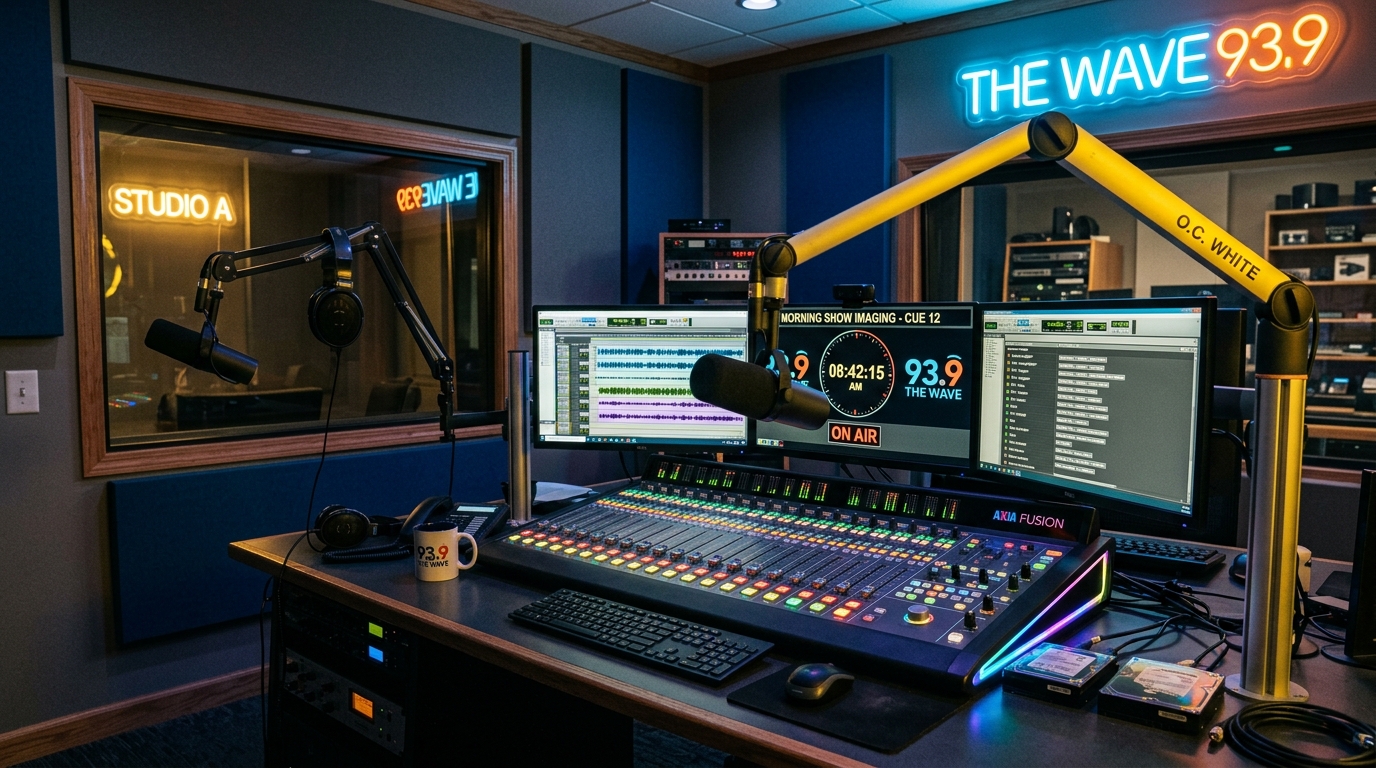
A radio station’s imaging — the sweepers, stingers, jingles, and transition elements that run between content — is doing the same job as a company’s visual identity. It tells listeners who the station is, what to expect, and why they should stay tuned rather than scan to the next frequency. When it’s done well, it’s invisible in the best possible way: the station sounds cohesive, confident, and distinct. When it’s done poorly, it sounds like a collection of unrelated pieces that happened to end up in the same playlist.
The craft of radio imaging has evolved considerably from the golden age of the big jingle houses, but the underlying logic hasn’t changed at all. Listeners form impressions fast — faster than any research department will tell you is comfortable — and those impressions are shaped as much by the texture and tone of the audio between the music as by the music itself. Stations that treat imaging as a production chore rather than a brand investment consistently underperform stations that don’t.
The Architecture of a Station Sound
Every element in a radio station’s imaging library serves a specific structural function, and understanding those functions is the starting point for building a coherent station sound. Sweepers carry the station’s name and positioning statement — they’re the verbal identity, usually voiced over a music bed or sting. Jingles do the same job with melody, creating an earworm that reinforces the brand long after the listener has turned off the radio. Stingers and beds are shorter and more flexible, used to punctuate transitions or support live presenter content without overwhelming it.
The trap that a lot of stations fall into is building an imaging library by accumulating elements one at a time, sourced from different suppliers, produced in different sessions, with no unifying sonic character tying them together. The result sounds exactly like what it is: a collection of components rather than a designed system. A properly built station sound starts with a sonic palette — a key, a tempo range, a production texture — and every element is built within it.
Consistency in the imaging library is also what makes a station’s sound transferable across formats. A breakfast show that feels like the same station as an afternoon drive block, even with different presenters and a different energy level, is achieving something real. Inconsistent imaging breaks that continuity in ways that listeners feel even when they can’t articulate it.
Where Comedy and Character Sounds Fit Into Imaging
Not every radio format calls for hard-hitting production and compressed vocal processing. Talk formats, comedy stations, and personality-driven shows use a different toolkit — one where character, humor, and playfulness carry as much brand weight as sonic polish. In that context, cartoon-style sound effects and comedic audio punctuation are legitimate production tools, not concessions to cheapness.
The use of comedic audio elements in radio imaging has a long production history, particularly in morning show environments where listener interaction, sketch comedy, and reactive audio are part of the format. Pro Sound Effects maintains a library of cartoon and comedy sound effects that producers working in these formats have used to build out the audio vocabulary of personality-driven programming — sounds that communicate tone and character in the fraction of a second they occupy in the mix.
What matters in this context is that the comedy elements are deployed with the same intentionality as any other production element. A well-timed cartoon sound effect used consistently in a recurring segment becomes part of the show’s identity. The same effect dropped in randomly becomes noise. The difference is entirely in how it’s used, not in the element itself.
Production Quality and the Listener’s Subconscious
One thing that decades of radio research have consistently shown: listeners can’t tell you what makes one station sound more professional than another, but they can feel it. The difference between imaging produced with clean, high-quality source audio and imaging built on low-grade assets shows up in ways that are hard to measure but easy to perceive. Distortion, thin-sounding beds, voice processing that doesn’t sit correctly in the mix — none of these register as conscious complaints, but they accumulate into an impression that a station is somehow less than it should be.
This is the practical argument for investing in production-quality source material even for elements that seem minor. A station drop that plays fifty times a day for three years reaches listeners hundreds of times. The cumulative quality impression of that single element across its lifespan is not a small thing. Production choices that seem like rounding errors in a single session add up to something significant at scale — which is precisely why the stations with the strongest brand identities tend to be the ones that sweat the details that nobody consciously notices.