


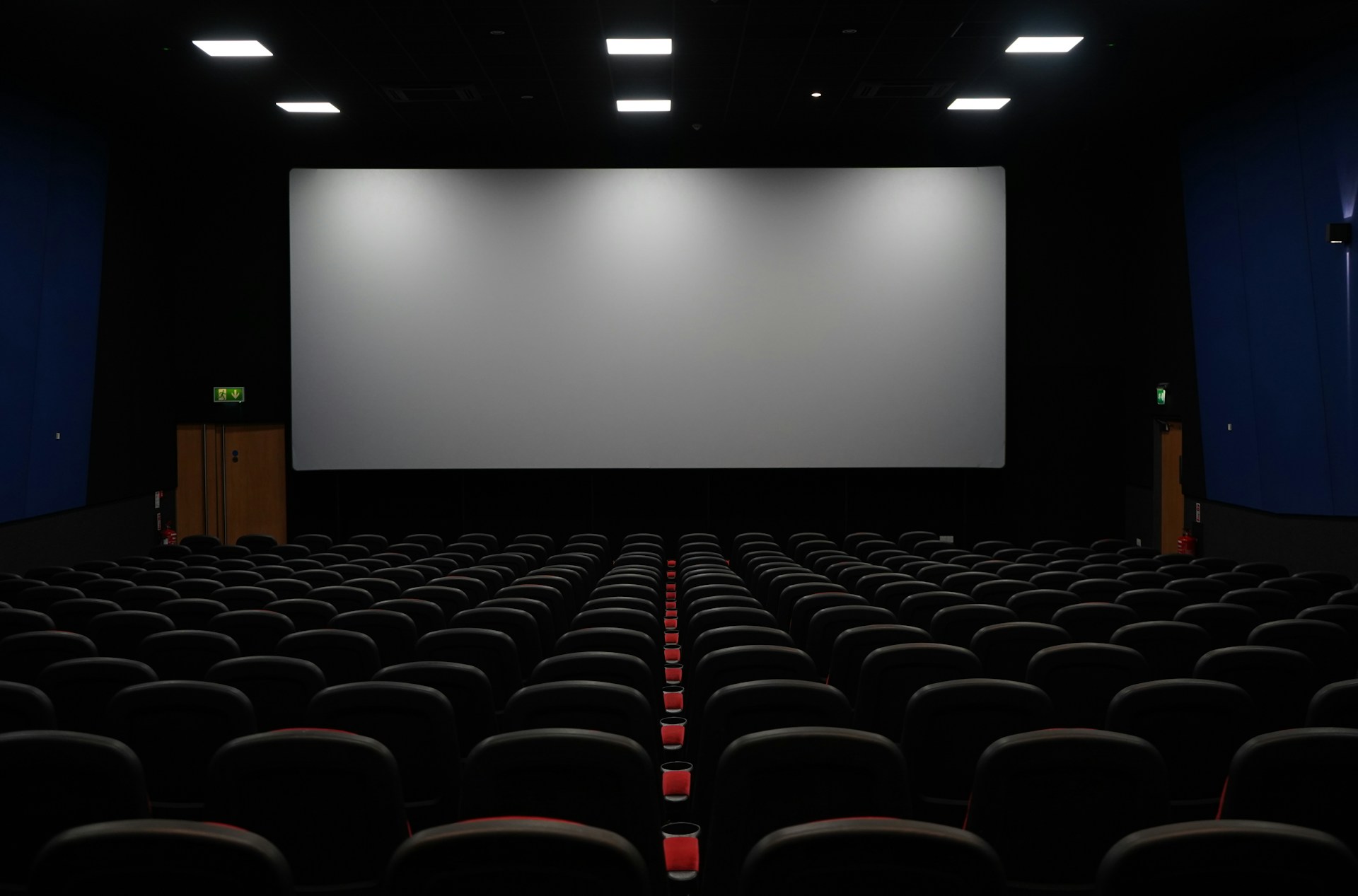
Whether it’s a pre-recorded stage production or the latest Hollywood movie, every cinema that screens digitally today uses video files that, through a sophisticated set of encryption tools and anti-piracy methods, are protected from being copied or leaked online.
Historically, cinemas would have to physically possess the 35mm film reel to show a movie. This would be cued up by the projectionist and played for the audience. But today, multiplexes get their movies via Digital Cinema Packages. These are distributed via satellite or high-speed internet. The movie is unlocked at each site through a digital key, known as a KDM. This enables the cinema to play the file on a specific screen for a specific timeframe.
To protect the artist’s work, the process begins with a technology known as a Cryptographically Secure Pseudo-Random Number Generator (CSPRNG). It produces unpredictable number streams that form the basis for encryption. It’s the same algorithm used to generate randomness in iGaming like 10p Roulette at online casino platforms, as one example, or create the single-use passcodes that allow us to access online banking. In theaters, CSPRNG is responsible for the unguessable digital keys that distributors use to scramble the digital files.
Behind the Screen
The CSPRNG can be thought of as the tool to create the master key. Once this has been done, the process moves to symmetric cryptography encryption using the industry-standard algorithm, AES-128. Because this encryption works rapidly, it’s ideal for the often-massive 4K video and multi-channel audio files that major Hollywood movies contain.
To deliver the master key – which, in terms of movies, is usually sent a day or two before the release date – asymmetric cryptography comes into play. Unlike symmetric encryption, asymmetric systems use two connected keys. A public key locks the data, while a private key is used to unlock it.
The distributor uses the specific theater’s public key to seal the master key inside a secure license file. When received at the cinema, this file is opened by the projector’s matching private key, which retrieves the master key that allows it to be played. Once the terms of the license file come to an end – after an agreed timeframe, for example – the projector denies access to the master key, effectively re-locking the film.
Alongside encryption, theaters have several other tools at their disposal. One of these is a security feature known as ‘zeroisation’. It is built into a digital projector’s Media Block. Here, anti-tamper sensors can detect if physical components are interfered with. If this happens, internal cryptographic keys are wiped almost instantly.
Some theaters use techniques to prevent people from using photography devices, too. Infrared emitters, usually positioned near or behind the screen, will ruin a bootleg recording, for instance. Theaters can add frame-rate interference as well. This creates distracting strobing on digital cameras. In addition, imperceptible pixel patterns can be randomly introduced so, if a copy appears online, they can be used to trace the location, date and time of the recording.
Securing the Magic
When the lights go down, artists can rest assured that a series of sophisticated technologies, from mathematical randomness to complex encryption, are in play safeguarding their work. Whether it’s a Hollywood blockbuster or a live NoHo theatre performance, digital cinema has risen to the challenge of ensuring the magic on screen remains protected.