


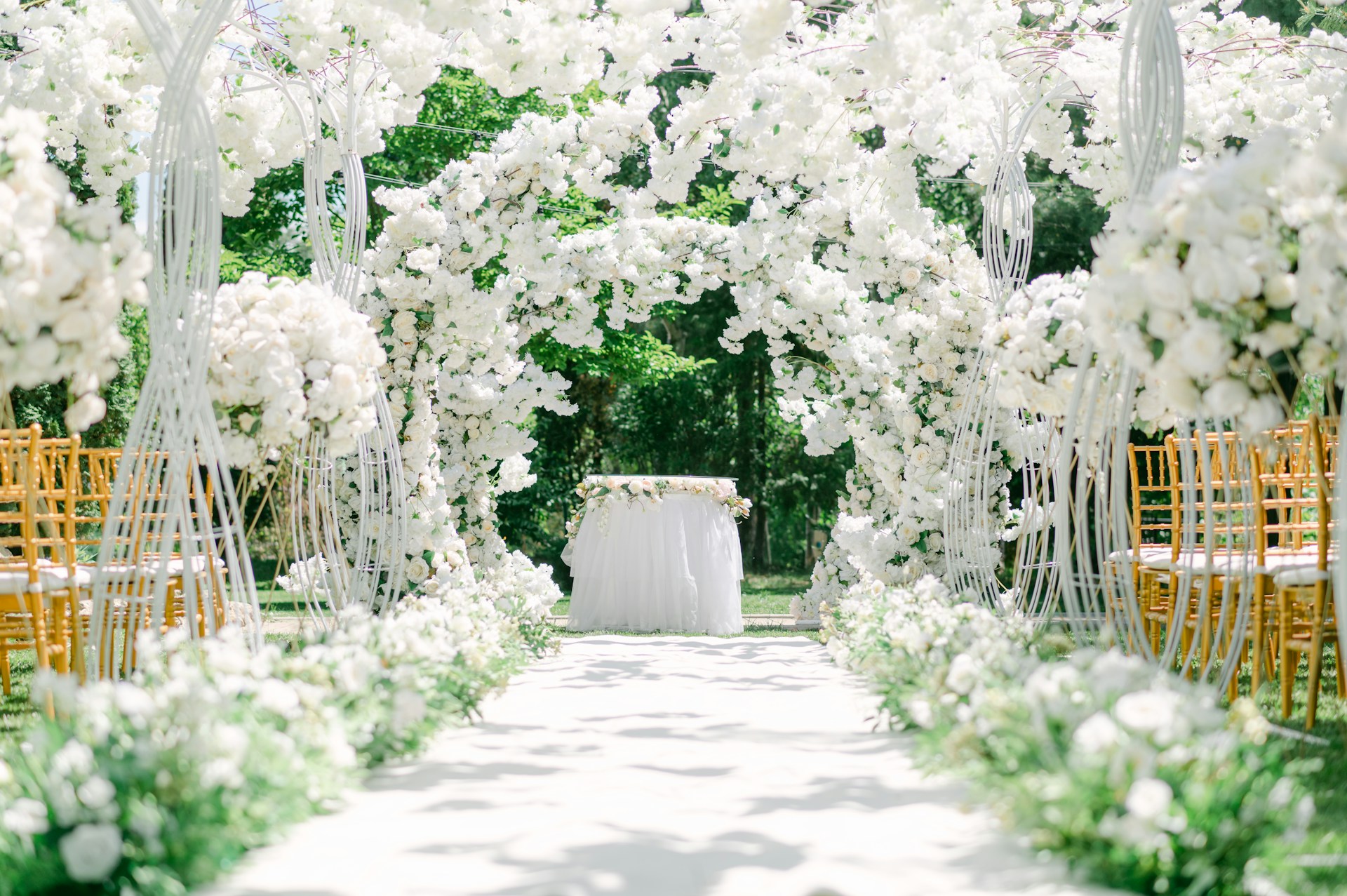
The average outdoor wedding costs 15% less than indoor ceremonies according to The Knot‘s 2024 Real Weddings Study, yet couples consistently report higher guest satisfaction scores for open-air celebrations. As venues adapt to post-pandemic preferences for fresh air and flexible spacing, outdoor weddings have surged from niche choice to mainstream preference. The challenge isn’t finding an outdoor space—it’s transforming that space into something that feels both intentional and magical while working with nature rather than against it.
Smart decoration choices can make the difference between a ceremony that feels hastily moved outside and one that genuinely belongs in its natural setting. Weather unpredictability, lighting challenges, and budget constraints create unique obstacles that indoor venues simply don’t face. Yet these same factors also unlock creative possibilities that traditional ballrooms can’t offer: towering trees as natural canopies, golden hour lighting that no electrician can replicate, and backdrops that change with the seasons.
How to Choose and Prepare Your Outdoor Wedding Venue for Decoration
Your decoration strategy begins long before you hang the first string light—it starts with understanding what your chosen space naturally offers and what it genuinely needs. A beach ceremony requires completely different preparation than a garden party or mountain meadow celebration, and attempting to impose the wrong style creates expensive problems later.
Ground conditions shape everything from guest comfort to decoration stability. Soft soil means you’ll need weighted bases for signage and ceremony structures, while rocky terrain limits where you can stake anything into the ground. Sandy locations demand wind-resistant decorations and covered areas for delicate elements like floral arrangements or paper goods. Walking the venue during different times of day reveals how shadows move, where wind typically blows strongest, and which areas stay naturally sheltered.
Consider the existing landscape as your starting design element rather than something to work around. Mature trees provide natural anchor points for lighting and can eliminate the need for expensive tent rentals in many climates. Open meadows offer unlimited sightlines but require you to create your own focal points and define ceremony spaces. Garden venues often come with established flower beds and pathways that can guide your decoration placement and color choices.
Infrastructure assessment prevents last-minute scrambling and budget overruns. Access to electrical outlets determines whether you can use plug-in lighting or need battery-powered alternatives. Restroom proximity affects guest flow and may influence where you position cocktail areas or reception seating. Parking limitations might require shuttle considerations that impact your timeline and setup logistics.
The key insight most couples miss: working with your venue’s natural characteristics always creates more stunning results than trying to transform the space into something it isn’t. A rustic barn fights against elegant crystal and silk, while a manicured garden setting can make burlap and mason jars feel forced.
Creative Natural and Sustainable Decoration Ideas for Outdoor Weddings
Using Local Florals and Greenery to Enhance Ambiance
Native plant integration creates the most harmonious and budget-friendly floral displays because you’re working with what already thrives in your specific climate and soil conditions. Spring ceremonies benefit from branches of flowering trees like dogwood or cherry, which provide dramatic height and volume at a fraction of the cost of imported blooms. Summer weddings can incorporate wildflower meadow plants that complement rather than compete with the natural surroundings.
Local nurseries often provide seasonal greenery at wholesale prices, especially for larger orders. Ferns, eucalyptus, and regional foliage varieties create lush backdrops that photograph beautifully and require minimal water throughout a long event day. These plants typically last longer in their native environment than shipped alternatives that may wilt under unfamiliar temperature and humidity conditions.
Potted plant arrangements serve double duty as decorations and future garden additions for your new home. Herbs like lavender, rosemary, and sage offer natural fragrance while guests mingle, and the plants can be divided among family members as living favors after the celebration.
Incorporating Reusable and Upcycled Decorative Elements
Vintage furniture pieces create conversation areas and ceremony focal points while avoiding the environmental impact of single-use decorations. Antique wooden ladders become rustic display stands for flowers or signage, while mismatched chairs add character to ceremony seating and can be repurposed in your home afterward.
Fabric and textile reuse transforms everyday items into elegant decoration. Vintage quilts become aisle runners that won’t sink into soft ground like traditional carpeting. Linen curtains hung between trees create intimate spaces for cocktails or photography, and these materials can later serve as home décor or be donated to other couples.
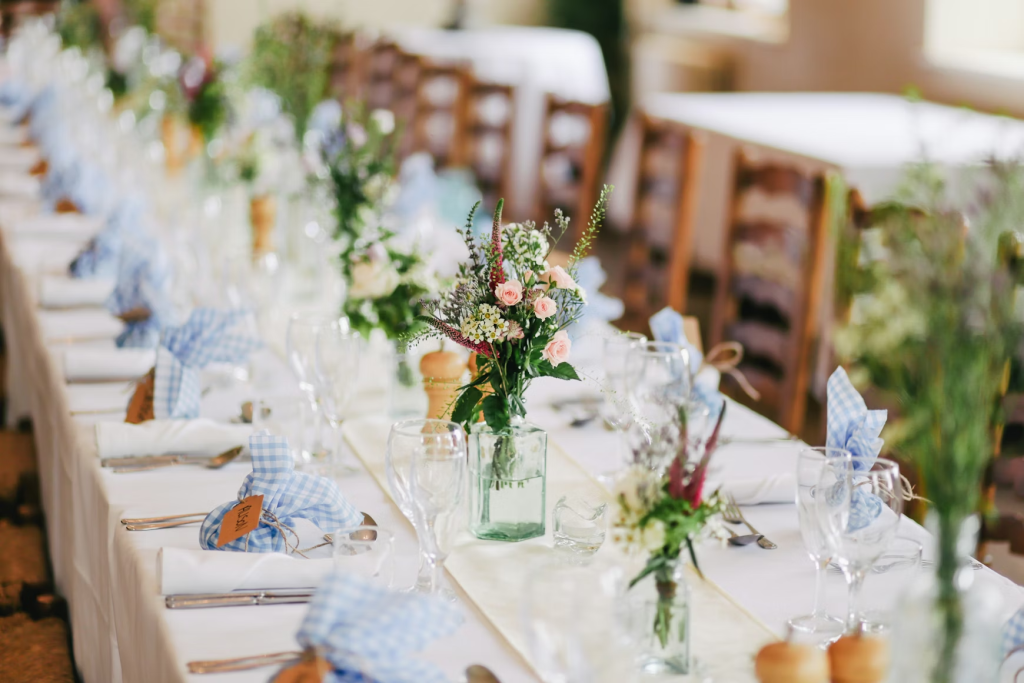
Glass containers of varying heights—collected from thrift stores or borrowed from friends—create cohesive centerpieces when filled with seasonal elements like branches, stones, or floating candles. This approach costs significantly less than renting matching vases while achieving a more organic, personalized aesthetic that suits outdoor settings.
How Lighting Techniques Can Transform Outdoor Wedding Spaces
Strategic lighting placement addresses the unique challenges of outdoor spaces while creating atmosphere that evolves throughout your celebration. String lights work best when hung at varying heights rather than uniform lines—drape them between trees, wrap them around existing structures, and create canopies over specific areas like dance floors or dining tables. The key is creating multiple light sources at different levels rather than relying on overhead illumination alone.
Pathway lighting ensures guest safety while adding magical ambiance as daylight fades. Solar stake lights charge during setup hours and automatically illuminate walkways without requiring electrical access. Luminarias—paper bags weighted with sand and containing battery-operated tea lights—line paths beautifully and can be assembled weeks in advance. For upscale events, consider renting low-voltage landscape lighting that professional installers can position along natural walking routes.
Candle arrangements provide the warmest, most romantic lighting but require weather contingency planning. Hurricane glass protects flames from breeze while magnifying the light output. Hanging lanterns suspended from tree branches create floating points of light that photographs beautifully against twilight skies. Always have battery-powered backup candles available for unexpected wind conditions.
Timing considerations affect how lighting functions throughout your event. Ceremony lighting needs differ completely from reception requirements, and the most successful outdoor weddings plan lighting that adapts as natural light changes. Consider how your beautiful wedding venue transitions from daylight ceremony to evening reception, and design lighting that enhances rather than fights these natural progressions.
The most impactful lighting creates layers of illumination—ambient lighting for overall space definition, task lighting for dining and dancing, and accent lighting that highlights specific decorative elements or landscape features. This approach ensures your venue feels intentionally designed rather than simply lit.
Seasonal Themes and Floral Arrangements Tailored for Outdoor Celebrations
Spring celebrations capitalize on nature’s own decoration timeline with flowering trees, bulb plantings, and fresh green foliage that requires minimal supplementation. Cherry and apple blossoms create stunning ceremony backdrops when branches are arranged in large containers, while tulips and daffodils planted in vintage containers can be positioned throughout the venue and later planted in guests’ gardens.
Summer weddings benefit from bold, heat-resistant flowers that maintain their appearance throughout long, warm days. Sunflowers, zinnias, and marigolds thrive in direct sunlight and create vibrant displays that complement outdoor settings. Consider timing: morning ceremonies can feature delicate blooms that might not survive afternoon heat, while evening receptions allow for more varied floral choices.
Fall themes leverage the season’s natural color palette with minimal additional decoration needed. Arrangements incorporating branches with changing leaves, seasonal fruits like apples or pears, and flowers in warm tones create cohesive designs that feel intentional rather than imposed. Pumpkins and gourds serve as both decoration and practical elements—hollowed-out pumpkins become unique vase alternatives.
Winter outdoor weddings require the most strategic planning but can achieve dramatic beauty through contrast. Evergreen arrangements provide rich color against snowy backgrounds, while bare tree branches create striking silhouettes that need minimal embellishment. Consider warming elements like fire pits or outdoor heaters as both practical necessities and decorative focal points.
Flower availability and timing significantly impact both cost and appearance quality. Seasonal blooms cost substantially less and look more natural in outdoor settings than forced greenhouse alternatives. Local flower farmers often provide bulk arrangements at competitive prices, especially for flowers that are currently in peak season rather than specialty imports.
Practical Tips for Weather Contingency and Budget-Conscious Decoration Planning
Preparing for Weather Challenges Without Compromising Style
Wind protection strategies preserve your decoration investment while maintaining visual appeal. Weighted bases for signage and floral arrangements prevent toppling without requiring permanent ground installation. Fabric elements like table linens or ceremony backdrops need secure attachment points—consider clips designed for outdoor use rather than assuming draped fabric will stay in place.
Rain contingency planning affects decoration choice from the initial planning stages. Waterproof materials for signage, covered areas for delicate elements, and backup indoor spaces for essential items like guest books or gift tables ensure your celebration continues regardless of weather surprises. Paper decorations require covered alternatives, while fabric and metal elements generally weather brief showers without permanent damage.
Temperature considerations influence both decoration materials and guest comfort elements. Heat can wilt flowers quickly, requiring shade structures or alternative decoration in direct sunlight areas. Cold weather may require heating elements that become part of your decorative scheme—fire bowls, patio heaters, or even warm beverage stations that serve both practical and aesthetic purposes.
Maximizing Impact with Budget-Friendly Decoration Solutions
Prioritization strategies ensure your decoration budget creates maximum visual impact by focusing spending on areas that photograph most prominently and affect guest experience directly. Ceremony focal points and entrance areas typically receive the most attention, while less visible spaces can utilize simpler, more cost-effective decoration approaches.
DIY elements that actually save money without looking homemade focus on assembly rather than creation. Arranging pre-purchased flowers costs significantly less than hiring florists for simple displays, while complex arrangements benefit from professional expertise. String light installation, basic signage, and simple table arrangements fall into the reasonable DIY category for most couples.
Rental versus purchase decisions depend on your specific venue and future needs. Items you’ll use again—like string lights, basic linens, or decorative containers—often cost less to buy than rent. Single-use items like specialty linens, large tent structures, or professional lighting equipment typically make more financial sense as rentals.
Smart couples focus on creating one stunning focal point rather than decorating every possible space uniformly. A beautifully decorated ceremony area or reception entrance makes a stronger impression than modest decoration spread throughout the entire venue. Guests remember impactful moments rather than comprehensive coverage, allowing you to concentrate resources where they’ll create lasting memories while keeping overall costs manageable.