


Music festivals used to be about coming together – all those thousands of people in one place, all united by the music, the energy and the memories that get made. From the legendary Woodstock to today’s global super-festivals, there’s something magical about these communal celebrations of music.
But, of course, not every festival gets to end in hugs and high-fives. History’s got a whole bunch of examples that show the darker side of things – think poor planning, the cops losing control of the crowd, extreme weather, dodgy stages, violence and – in the worst cases – outright scams. And let’s be honest, when you’re hauling tens of thousands of people into one spot, there’s not a lot of room for error.
This piece is about those really bad music festival incidents – what happened, and what we can learn from them so we don’t repeat the mistakes. It’s not about being a glutton for punishment; it’s about being smart and responsible, especially if you’re planning on putting on a big event or if you’re one of the people attending.
Altamont Free Concert – California, 1969
December 6, 1969, was the day the counterculture thing came crashing down – literally. About 300,000 people showed up at the Altamont Speedway, just outside San Francisco, for a free Rolling Stones concert that promised peace, love, and rock ‘n’ roll. What they got was something very different. The Altamont Free Concert would go on to become the poster child for the dark side of the sixties.
You see, the organizers made a very bad call; they hired the local Hells Angels, a gang infamous for their violence and love of bikes, to do security. They got a lousy deal on the beer, but they managed to hand out a lot of hurt to the people who showed up. It was a day-long free-for-all, with the Angels using pool cues and motorbike chains to keep people away from the stage. The violence was everywhere, with the bikers clashing with the concert-goers all day long.
Just when you thought it couldn’t get any worse, the Rolling Stones took the stage and things got really, really bad. An 18-year-old kid called Meredith Hunter got stabbed to death by an Angels member near the stage – it was all caught on film and later put in that Rolling Stones documentary “Gimme Shelter.” That wasn’t the only fatality that day – three people died in accidents, and the whole thing left a lot of people with really bad memories.
The site itself was a disaster – no one had thought to put up any barriers, the medical team got swamped and the stage setup was basically a recipe for disaster. It was a real wake-up call for everyone – the music scene, the cops, and the festivals themselves. It was like a whole generation’s dream of peace and love went up in flames.
What did we learn from Altamont?
- Don’t skimp on the security – get the pros in there, not some dodgy gang
- Make sure you’re working with the cops from day one
- Set up secure areas around the stages, and for goodness’ sake make sure it’s safe for people to get in and out
- Make sure your risk assessments are a lot more than just some brainstorm around the watercooler
Roskilde Festival – Denmark, 2000
You know Roskilde’s one of the big ones – one of Europe’s oldest and most respected festivals, which is why it was such a shock when it all went wrong on June 30, 2000. It was Pearl Jam night on the Orange Stage and the rain had turned the whole site into a quagmire. The crowd was a disaster – hundreds of thousands of people, all slippery and panicking and pushing to get as close as possible. The next thing you know, there’s a massive surge forward and people are getting squished.
Nine people ended up dead from asphyxiation, with loads more left seriously injured. People who were trapped at the front were screaming for the band to stop, but it just kept going. I mean, the band didn’t know what was happening – it wasn’t until ages later that the full extent of the disaster became clear.
Pearl Jam was devastated – they cancelled the rest of their tour and wrote a song about it called “Love Boat Captain”. It was a real turning point for the whole festival scene in Europe – they started to take crowd safety a whole lot more seriously.
What did we learn from Roskilde?
- Get a handle on crowd density – and make sure you’re monitoring it in real time
- Sort out a way for the people running the stage and the security to talk to each other
- Give whoever’s in charge the power to pull the plug on the show if things start getting really bad
- Make sure you’re accounting for weather – it may seem obvious, but it can make all the difference
Love Parade – Duisburg, Germany, 2010
The Love Parade started as this awesome electronic music event in Berlin and then grew into a series of festivals across Germany – so when it went down in Duisburg on July 24, 2010, it was big news. Unfortunately, it was the last time they’d ever hold the event.
The site they chose for the festival was this old freight rail yard – and if that’s not a problem waiting to happen, I don’t know what is. The access route to the festival was this tiny tunnel and ramp system – it was a real chokepoint, especially when hundreds of thousands of people tried to get in at the same time. You get the picture – the pressure built, people got panicked, and…
Twenty-one people ended up dead, and over 500 got seriously hurt from all the trampling and squishing. The disaster triggered a wide-ranging investigation, multiple lawsuits, and a global condemnation of the planning that went wrong. Organisers effectively put the final nail in the coffin of the Love Parade by announcing that it would be a permanent fixture on the scrap heap of history following the tragedy.
Key lessons from Love Parade
- Don’t ever rely on the same old single entry points to get crowds into an event
- You can’t get away with just making up a crowd capacity figure out of thin air – you need to do some proper planning and make sure you are prepared for the numbers
- Use crowd-flow models during the initial design phase of an event to get an idea of how things are going to flow – or in this case, how they are likely to back up
- Have a proper crowd management plan in place with multiple exit routes that are easily accessible in real-time
Indiana State Fair Stage Collapse – Indianapolis, 2011
On August 13 2011, thousands and thousands of fans were gathered at the Indiana State Fair in Indianapolis ready to see country music duo Sugarland take the stage. What at first glance seemed like it was going to be a great night of live music ended up being a stark lesson in the dangers of bad weather and shoddy structures.
A sudden storm system swept in and brought with it some seriously powerful winds – we are talking gusts of up to 70 miles per hour – that were described as being like a “gustnado” in their ferocity. Within seconds the temporary stage roof and metal rigging had collapsed into the crowd waiting below.
Seven people lost their lives in the disaster and dozens more were badly injured by falling equipment and debris. And to make matters even worse, there had been earlier warning signs that severe weather was on the horizon, but the concert hadn’t been cancelled or delayed in time. Many fans had no idea that the storm of the century was bearing down on them.
After the incident, there were plenty of lawsuits flying around, the state shelling out millions of dollars in compensation and a series of changes to the regulations governing outdoor staging and weather protocols at fairs and festivals across the US had to be made.
When temporary structures fail, or warnings are ignored, premises liability law often becomes central to determining responsibility. Consumer advocacy groups such as ConsumerShield outline how injured individuals may pursue claims when unsafe property conditions result in harm.
Key lessons from Indiana State Fair
- You need to have proper structural inspections carried out on any temporary staging before the event – its not something you can just skip
- Establish some conservative weather thresholds that automatically trigger an evacuation of the area – don’t just sit around waiting for things to get bad
- Make sure you have clear lines of authority in place that allow you to postpone or cancel an event at a moments notice if things get out of hand
- Keep a close eye on the weather forecast during an event – don’t just hope for the best
Fyre Festival – Great Exuma, Bahamas, 2017
You can’t have a discussion about festival disasters without mentioning the Fyre Festival debacle which became a global symbol of what happens when marketing hype and logistical incompetence get mixed together. Promoted for April 2017 on the picturesque island of Great Exuma in the Bahamas, Fyre Fest promised a luxury music festival experience like no other.
The marketing machine was in overdrive – influencer posts were plastered all over the social media with promises of luxury villas, pristine beaches, and gourmet food prepared by celebrity chefs. Festival tickets were selling for thousands of dollars, with many fans hoping for a five-star experience and a chance to rub shoulders with the famous.
But the reality on the ground was a whole different story. Instead of luxury villas, fans were greeted with disaster relief tents. The “gourmet” food served was cheese sandwiches in styrofoam containers – yep, you read that right. And there was no running water in many areas, inadequate sanitation, and the remote island location meant that getting off the island was no easy option for many of the disappointed guests. Many artists never even got to perform because the infrastructure just wasn’t there to support the event.
As the disaster unfolded, social media posts from stranded attendees turned Fyre into an international spectacle. The New York Times and other major outlets were on the story in real-time as fans documented the chaos on social media.
In the aftermath of the disaster, Billy McFarland was convicted of fraud and sentenced to six years in prison on one count of wire fraud, among other things. Lawsuits totalling tens of millions of dollars were filed, and some lucky fans received a full refund – though the saga took years to reach a conclusion.
Key lessons from Fyre Festival
- Don’t ever over-sell or misrepresent the conditions at an event – it just leads to a load of unnecessary trouble
- Make sure you have a solid infrastructure and all the necessary permits in place before you start promoting the event
- Prioritise the basic needs of your attendees – food, water, shelter and sanitation – its just basic common sense
- Make sure your marketing and advertising reflects reality, not some fantasy you are holding up as a prospect
Astroworld Festival – Houston, Texas, 2021
The Astroworld Festival founded by Travis Scott in Houston was meant to be a celebration of the rapper’s hometown and musical vision – but the November 5 2021 event at NRG Park ended up being one of the deadliest crowd crushes in American history.
During Scott’s headline set, tens of thousands of fans were pushing towards the main stage, with the crowd compression becoming increasingly deadly as those at the front found themselves trapped with no way to get out. Ten people lost their lives from compression asphyxia, and a 9-year-old child was among the victims – one of several teenagers who died in the disaster.
Reports came in that attendees were shouting for help, climbing camera platforms to escape and pleading for the show to stop. Medical staff struggled to get to the victims trapped in the dense crowd. The stage setup was later criticised for creating a “cage-like enclosure” that made exit points inaccessible.
Organisers – including Live Nation – were hit with a wave of lawsuits following the disaster, and over 50,000 fans had packed in despite security issues including people jumping turnstiles and sneaking in to the sold-out event. The disaster has raised new questions about crowd safety planning at major festivals.
Key lessons from Astroworld
- Enforce strict crowd capacity limits without exception – don’t let people pack in just for the sake of it
- Make sure there are multiple egress routes available to all attendees, not just those at the front
- Train your security staff to spot crowd distress signals – its just basic crowd control
- Make sure medical staff have a good view of the crowd at all times – you never know what might happen
- Establish some clear protocols that allow you to pause or cancel a performance if things start to get out of hand## Route 91 Harvest Festival Shooting – Las Vegas, 2017
The Route 91 Harvest Festival – an annual country music concert held right on the outskirts of the Las Vegas Strip – was turned into a nightmare on the night of October 1, 2017. It would go on to become the site of the deadliest mass shooting in modern American history.
During Jason Aldean’s set, a lone gunman opened fire from the 32nd floor of the Mandalay Bay hotel. He was spraying bullets all over the crowded festival grounds below. The attack went on for about 10 minutes – with some festival-goers at one point assuming the sounds of gunfire were fireworks before it became blindingly clear what was really happening.
In the end, 60 people lost their lives in the shooting, and hundreds more were left injured – some by bullets, but many more in the subsequent stampede as they scrambled to get out of there in the dark and confusion. Emergency responders were stretched to their limits trying to coordinate rescue efforts across the massive festival grounds.
The investigations into the shooter’s motives never really gave up any clear answers, but the incident did prompt some serious soul-searching about how to make hotel security and venue emergency response procedures better – as well as the risks that come with hosting big outdoor events.
Key lessons from the Route 91 disaster:
- Get security planning with local businesses and properties in line\
- Develop a system so staff can quickly spot and respond to potential threats\
- Make sure emergency communication systems can reach every corner of the festival grounds\
- Train staff to know exactly what to do in the event of an active shooter\
- Plan multiple evacuation routes to keep people away from potential danger zones
Weather-Driven Festival Disasters: Glastonbury 2005 and TomorrowWorld 2015
Not all festival disasters involve guns or rip-offs. Sometimes, it’s the weather that brings the chaos. Two pretty notable examples show just how important it is to be prepared for bad weather.
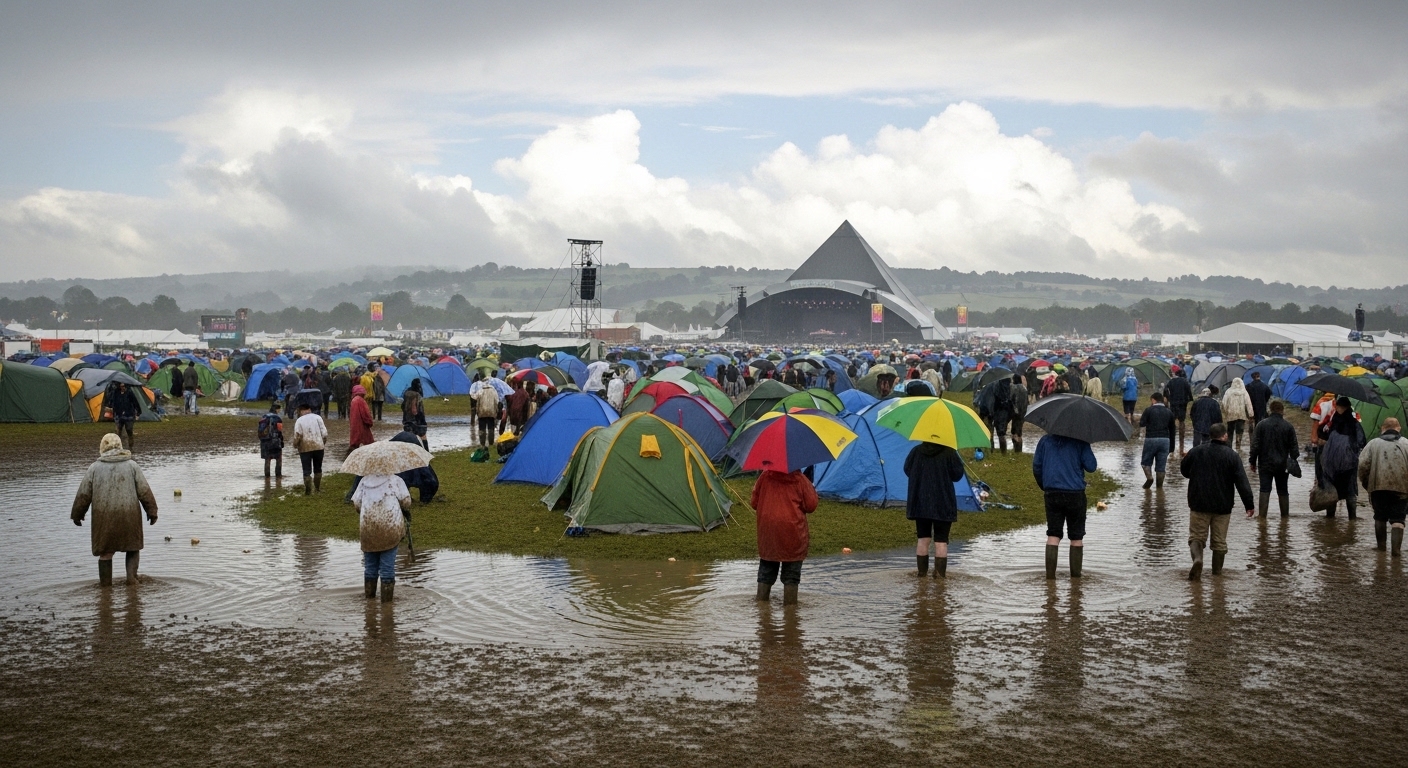
At Glastonbury 2005, the UK got absolutely battered by thunderstorms that left four feet of water on the festival grounds. Campsites got washed away, people’s gear got ruined, and just trying to move around the festival was a real challenge because of the mud. The whole thing earned the nickname “Farmageddon” – and it was a bit of a wake-up call for the festival organizers. They took the experience on board and totally overhauled their drainage and site planning for future years.
TomorrowWorld 2015 near Atlanta, Georgia, showed the result of festival organizers underestimating how bad the weather was going to be. Heavy rain turned the access roads and festival grounds into a mudbath, which immobilised all the vehicles. Shuttle services were shut down, leaving thousands of people stranded in the rain with a long way to walk back to their tents.
What All Music Festival Disasters Have in Common
It was a disaster, with many people forced to spend the night outdoors with no proper cover, and they all let their frustrations be known on social media. The whole experience ended up contributing to the festival being cancelled in subsequent years.
Combined lessons from the weather disasters:
- Invest in top-notch weather forecasting and monitoring\
- Develop a drainage plan and protect the festival grounds from getting waterlogged\
- Have backup transport and shelter options lined up\
- Don’t be afraid to make tough decisions and limit or cancel the event if conditions start to get bad\
- Never assume it’s going to be a sunny day – always plan for the worst
Common Patterns and Lessons from Music Festival Disasters
Looking back on all these different tragedies, there are some pretty clear patterns that emerge. The root cause of most music festival disasters can be boiled down to a few pretty key things:
Crowd problems – too many people in a small space without enough exit routes – ended up killing people at Roskilde, Love Parade and Astroworld. The physics of crowd compression is a pretty lethal force.
Structural and weather disasters caused fatalities at the Indiana State Fair, Glastonbury and TomorrowWorld. Temporary structures fail, the festival grounds get impassable and the organisers often don’t make the critical decisions until it’s too late.
Under-trained or not-so-professional security turned Altamont into a bloodbath and failed to stop the chaos at Astroworld. Crowd management at a festival needs more than just people standing around – it needs training, the right gear and clear authority to act.
Misleading promotion and poor communication defined the Fyre Festival disaster. Festivals are all about the hype, but if the reality doesn’t match the marketing you end up with a whole lot of disappointed and angry people.
Each and every one of these failures offers a pretty clear lesson: crowd safety has to be the top priority from day one. Plan for the worst weather, not the best. Tell the truth in marketing. And always have the authority to stop the show if things start to go pear-shaped. It’s not optional – it’s the difference between a fun festival experience and a preventable tragedy.
Conclusion: Remembering Tragedies to Build Safer Festivals
The lives lost at these festivals – from the 9 fans killed at Roskilde to the 10 people who died at Astroworld, from Meredith Hunter at Altamont to the 21 people killed at Love Parade – were all real people who came to celebrate music and never went home. Their deaths weren’t inevitable. In most cases, a bit of better planning, some honest communication and a genuine commitment to safety could have stopped the tragedy before it started.
Festivals will always carry some level of inherent risk when you’re gathering a big crowd. But with meticulous planning, proper security, high standards for festival structures and a willingness to cancel or delay the event if conditions are bad, most disasters can be prevented. The goal isn’t to get rid of festivals – it’s to make sure the only thing that’s really memorable is what’s happening on stage. Artists, promoters, cities and fans all have a responsibility to make sure safety comes first, so that future festivals can be all about the music, not emergency headlines.