


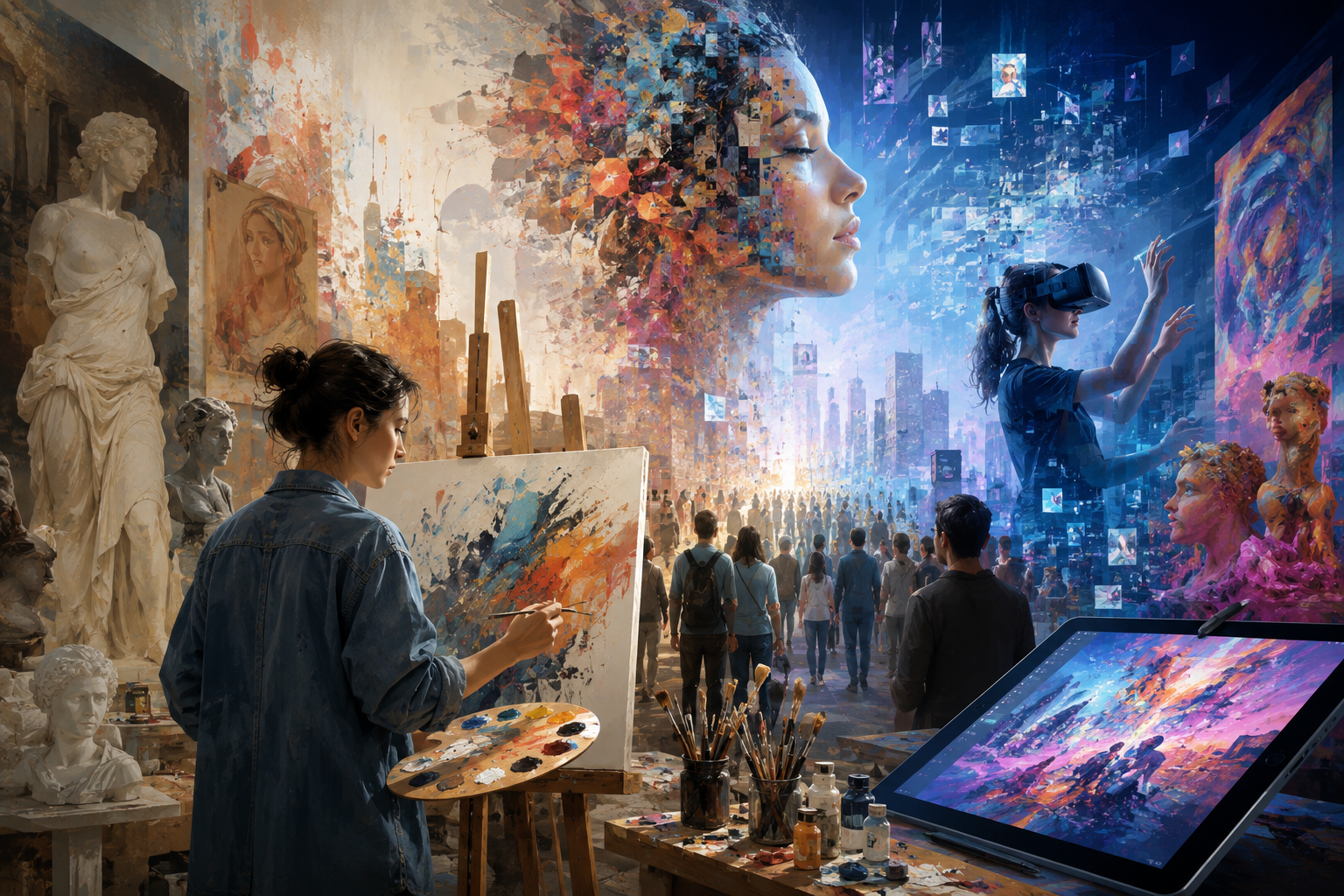
It’s easy to feel like art and artists are moving faster than at any other time in history. Although there is some merit to that, art has always been a reflection of ourselves, our values, our feelings and societal shifts. As we move through time with more technological advances, diversity and changing audience perceptions on how to consume art, the relationship between audience and artist is evolving. Audiences want to feel more engaged than sitting and watching a painting being produced. Artists want to reach larger audiences and are fighting against the four walls of gallery spaces. These are just a few reasons why we have more access to create and view art than ever before. But this has caused a shift in what defines an artist in the 21st century.
How The Definition Of Art Is Expanding
Art is no longer confined to galleries, studios, or formal exhibitions. It now exists in digital spaces, public environments, and everyday interactions. This expansion has allowed more people to engage with creative expression in ways that feel accessible and personal.
The boundaries between disciplines have also become more fluid. Visual art, music, design, and performance often overlap, creating hybrid forms that challenge traditional categories. This blending of styles encourages experimentation and innovation.
As definitions expand, more individuals are recognising their own creative potential. Artistic expression is no longer seen as exclusive but as something that can be explored in many forms. This shift has made the creative world more inclusive and diverse.
The evolving definition of art continues to reflect changes in society, technology, and communication.
The Influence Of Digital Platforms On Creativity
Digital platforms have completely changed the way art is made, distributed, and consumed. Artists now have access to audiences all over the world at the click of a button. Digital distribution has eliminated many of the gatekeepers that once stood between artists and their audiences. The process of creation has also been affected.
Response from audiences can be immediate in digital spaces. This type of instant feedback can shape the way artists approach their work. It can also allow for more experimentation and collaboration with other artists even if they are on the other side of the world. There are other factors unique to digital spaces that can affect creativity as well. The pressure to stay relevant can take a toll on artists who feel they need to constantly put out new work or be online.
Cultural Identity And Artistic Expression
The rich tapestry of artistic expression has always been deeply intertwined with cultural identity. Throughout history, artists have drawn inspiration from their surroundings, infusing their work with themes and narratives unique to their backgrounds. In today’s globalised world, this connection has become even more intricate and multifaceted.
Artists are now exposed to a myriad of cultural experiences, seamlessly blending diverse influences into their creations. As a result, artistic landscapes have become richer and more varied than ever before. Globalisation allows for fresh perspectives and interpretations that mirror the interconnectedness of our modern society.
The exchange of ideas and cultures has become a catalyst for creativity. However, in this melting pot of influences, there is also a rising consciousness about the importance of preserving cultural identity. Artists are finding ways to strike a balance between embracing global trends and honouring their own unique heritage.
By doing so, they maintain authenticity while still pushing boundaries and exploring new artistic horizons.
The Role Of Technology In Artistic Innovation
Technology provides new mediums and platforms for creation. From digital design programs to interactive installations and experiences. Technology has broadened the horizons of what can be created. It has allowed for new outlets of creativity to emerge.
Many artists are working in formats that were not available before. This can range from interactive visuals to generative design and multimedia storytelling. These formats allow for more immersive and interactive experiences.
Technology has made it easier for people to create and share their work. Anyone can create art with the right tools. There is no need to be trained at an institute. More people can participate and be creative thanks to technology.
Technology will continue to shape how we innovate in the art world.
Financial Awareness In Creative Careers
Creative careers often involve unique financial challenges. Income can be variable, and opportunities may differ significantly depending on industry and experience. As a result, financial awareness is an important aspect of sustaining a creative path.
Some individuals in creative fields also take time to review broader financial commitments as part of long-term planning. In certain cases, discussions around pcp claims may arise when reassessing previous financial agreements and their clarity. Similarly, awareness of pcp mis selling can become relevant when individuals reflect on whether financial products were fully understood at the time of agreement. These considerations highlight the importance of informed decision-making beyond creative work itself.
Financial understanding helps artists maintain stability while continuing to pursue their craft.
The Future Of Artistic Expression
It is likely that artists will continue to innovate and push boundaries with their creative practice into the future. Cultural influences will continue to evolve art as we know it while technology progresses. Artists will have more resources and platforms to work with.
Art may become more focused on interactivity and customisation. Audiences will have more opportunities to engage with art and influence how they experience it. This will continue to break down the barrier between artist and audience.
Art will continue to serve its purpose of expression and manifestation of the human condition. Whether through emotion or imagination, art will always relate to everything and everyone no matter the time period.
Art is humanity. As we grow and change, so will art.