


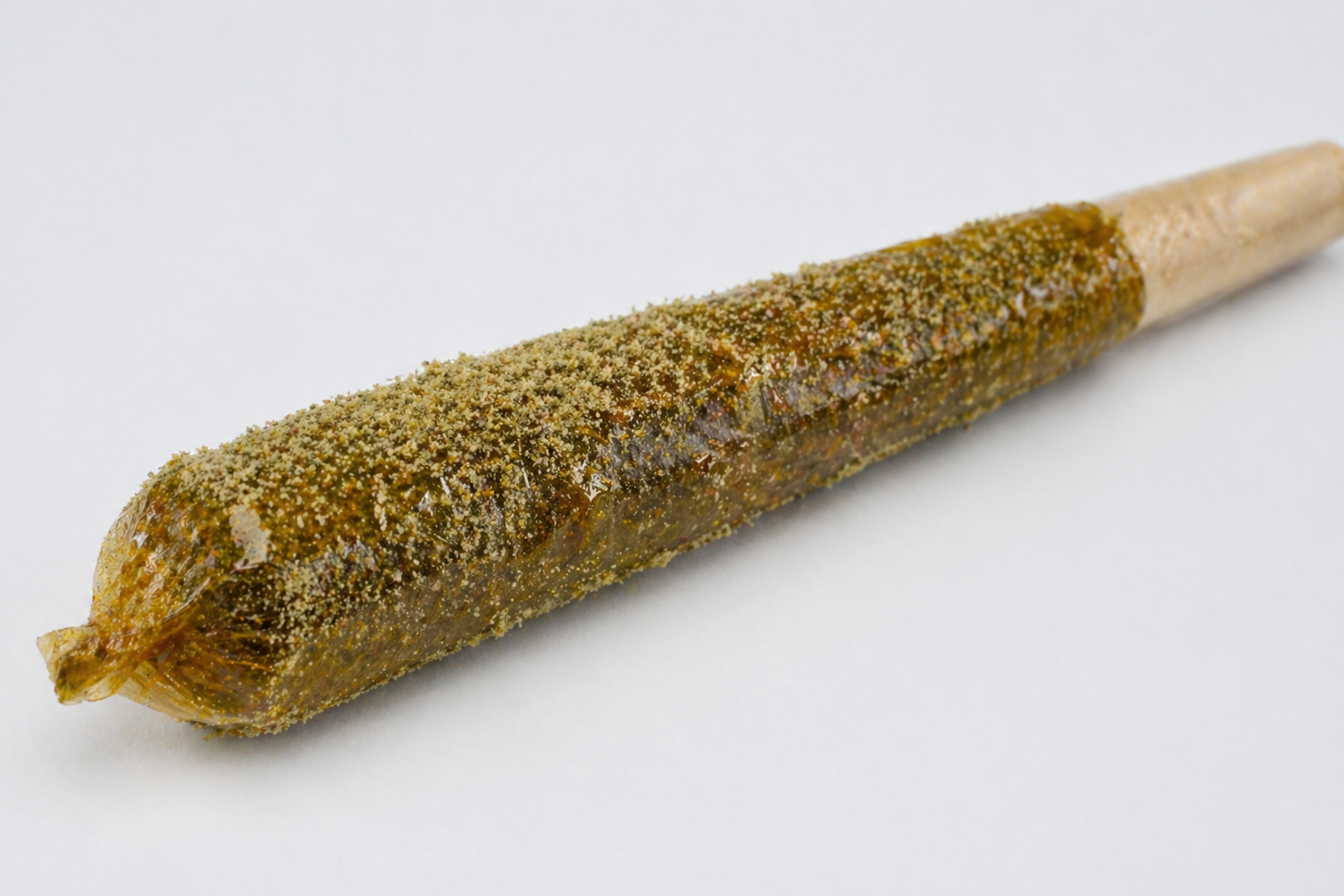
Infused pre-rolls are the fastest-growing product in legal cannabis. Here’s exactly what they are, what goes inside them, and why both consumers and brands can’t get enough.
Walk into any dispensary in a mature cannabis market today and the pre-roll wall looks different from what it did three years ago. Where there were once rows of single-strain joints at similar price points, there are now tiered displays — standard flower pre-rolls at the base, and above them, a growing premium section: “live resin infused,” “hash hole,” “diamond-dusted,” “sauce-coated.” These are infused pre-rolls, and they are reshaping the economics of cannabis retail.
This guide answers the core question: What is an infused pre-roll? and breaks down the concentrates involved, the production realities at scale, and why this sub-category has become the most dynamic growth story in legal cannabis.
What Is an Infused Pre-Roll?
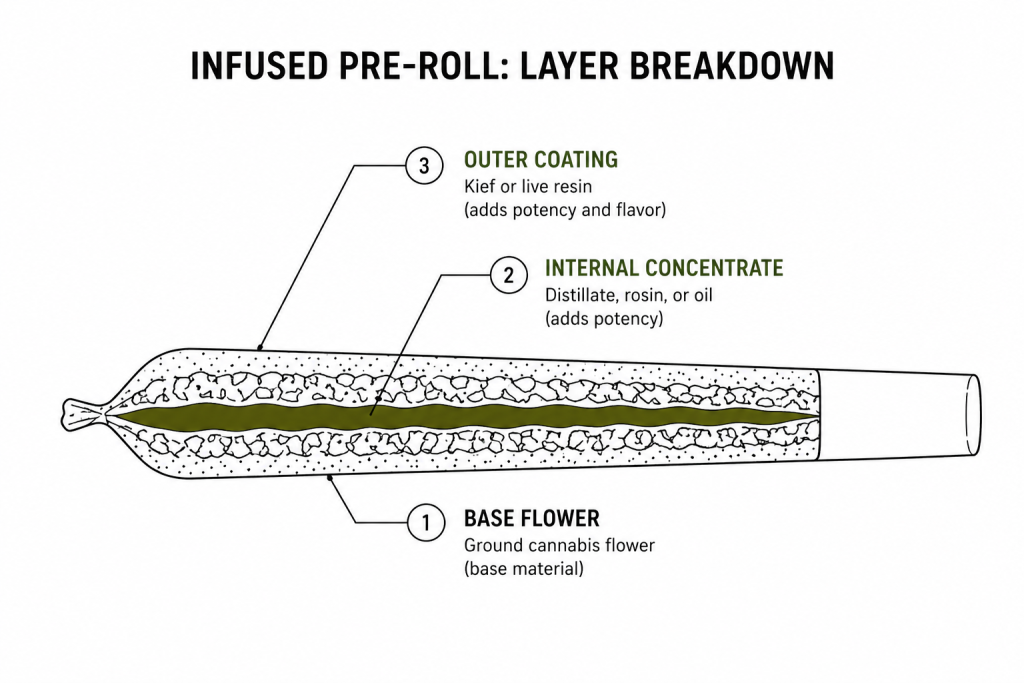
An infused pre-roll is a cannabis joint enhanced with one or more cannabis-derived concentrates in addition to the base flower fill. The word “infused” signals that something beyond ground flower has been added — and that addition can take several forms.
Concentrate can be mixed directly into the flower before filling, applied to the inner surface of the cone, coated onto the exterior of the finished joint, or formed into a solid core running through the center of the fill (the “hash hole” format). Premium products often combine methods: an internally blended fill, an exterior live resin coating, finished with a kief dusting.
The result is a product with significantly higher total cannabinoid content than a standard pre-roll, a more complex terpene profile depending on the concentrate used, and a meaningfully higher price point. Where a standard pre-roll retails for $8–$15, a premium infused pre-roll routinely sells for $20–$45.
The Concentrates Inside: What Each One Brings
The type of concentrate defines the character of an infused pre-roll more than almost any other variable:
Live resin is extracted from fresh-frozen cannabis, preserving the full terpene profile of the living plant. It delivers pronounced aroma, flavor complexity, and full-spectrum effects. Widely considered the gold standard for flavor-forward infused pre-rolls.
Live rosin is the solventless equivalent — produced with heat and pressure, no chemical solvents. It represents the luxury tier: expensive to produce, low extraction yields, but exceptional flavor integrity. The preferred choice for solventless-focused consumers.
Distillate is a refined, high-potency oil with most terpenes removed during processing. It maximizes THC percentage but contributes little to flavor. Cost-effective to produce and the most common infusion material at the value tier.
Kief is the fine trichome powder sifted from cannabis flower, used primarily as an exterior coating. It burns cleanly, adds cannabinoids and terpenes, and doesn’t significantly alter combustion behavior.
Bubble hash and dry-sift hash are traditionally made concentrates experiencing a significant revival in premium pre-roll formats — particularly in hash hole applications where a core of hash runs through the center of the fill.
THCA diamonds are crystalline concentrate forms used in ultra-premium products, sometimes testing above 60% total cannabinoids when combined with the flower fill.
Why Infused Pre-Rolls Are Dominating Sales
The numbers are unambiguous. According to BDSA, infused pre-rolls were the single fastest-growing cannabis product sub-category in the United States between 2022 and 2024. In several mature state markets, they now account for more than 30% of total pre-roll dollar sales — despite representing a smaller share of unit sales. The price premium is doing significant revenue work.
Several forces are driving this simultaneously.
Tolerance escalation. Legal market consumers who entered in 2014–2018 have now been consuming for a decade. Their expectations have risen accordingly. Standard pre-rolls at 20–24% THC no longer deliver what they once did for this cohort. Infused pre-rolls at 40–60% total cannabinoids do.
Premiumization. As legal markets mature, a familiar consumer goods pattern emerges: the market bifurcates into value and premium tiers, with premium capturing disproportionate revenue. Infused pre-rolls are cannabis’s premium convenience product — they justify a higher price point without requiring any equipment investment from the consumer.
Social media and visual appeal. No cannabis product photographs as dramatically as an infused pre-roll. A joint coated in live resin and rolled in purple kief, shot under macro lighting, is inherently shareable content. In markets where advertising is restricted, organic social discovery through product aesthetics is a genuine acquisition channel — and infused pre-rolls lead that aesthetic competition.
The Production Challenge: Where Scale Gets Hard
This is where the gap between artisan and industrial production becomes most consequential — and most relevant to brands thinking about growth.
At small scale, infused pre-rolls are hand-produced. A skilled technician fills cones by hand, applies concentrate with precision tools, rolls the exterior in kief or sauce, and seals each unit individually. Output is limited to a few hundred units per day, and quality depends entirely on individual consistency across a shift.
The problem is compounding variance. Hand-rolling introduces fill weight variance of 15–20%. When that variance is combined with manually applied concentrate ratios, the result is meaningful potency variation between units in the same batch. In a regulated market where label claims must be accurate, this is both a compliance risk and a consumer trust issue.
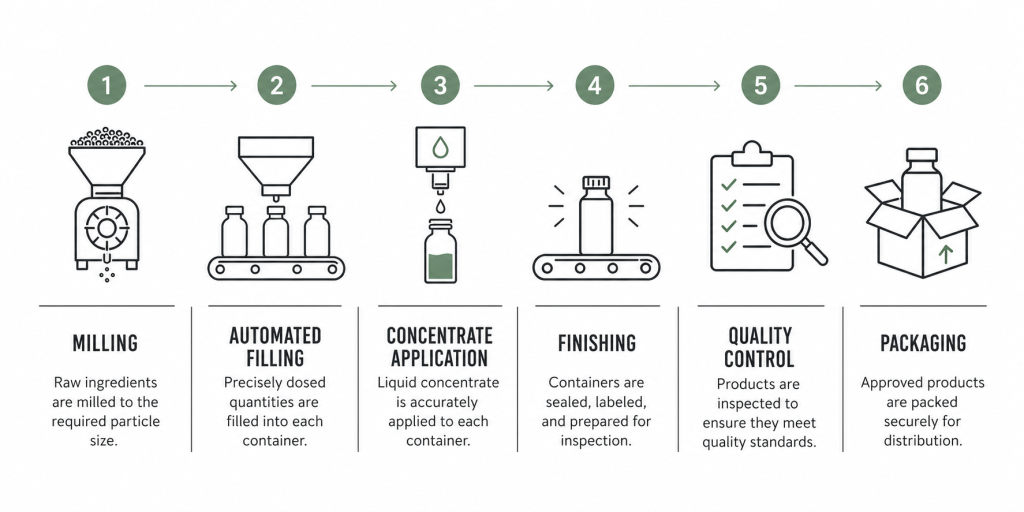
At commercial scale, the workflow separates into discrete stages: flower preparation and milling, automated cone filling with tamping, concentrate application, finishing treatments (kief, diamonds), quality inspection, and packaging. The automated filling stage is the operational foundation of everything that follows. Without precise, repeatable fill weights at this step, every subsequent infusion layer introduces compounding inconsistency.
This is precisely why producers scaling infused pre-roll programs invest in purpose-built equipment. A pre-roll infusion machine, like the Hefestus AuraX, handles the filling and processing demands of infused production at commercial throughput, delivering the weight tolerances and operational consistency that compliant, brand-quality infused pre-rolls require. The economics reinforce the case: automated production at scale reduces per-unit labor cost dramatically while simultaneously improving the consistency that protects both the brand and the consumer.
How to Read an Infused Pre-Roll Label
Not all infused pre-rolls deliver what their packaging implies. Here’s how to evaluate before buying:
Verify the concentrate source. “Live resin infused” is a floor, not a ceiling. The best products specify whether it’s cannabis-derived live resin versus botanically-terpened distillate, marketed with similar language. “Whole-plant” or “strain-specific” live resin is a positive signal.
Check total cannabinoids, not just THC. An infused pre-roll COA should reflect the combined potency of flower and concentrate. If it only shows the flower’s THC percentage, the label claim is incomplete.
Look for infusion weight disclosure. A 1g pre-roll with 0.1g of live resin is a different product from one with 0.25g, even if both say “live resin infused.” Brands that disclose this ratio are signaling transparency.
Check the packaging date. Terpene degradation is real. A live resin-infused pre-roll that has been in a display case for four months is a different product than one purchased fresh.
Are They Worth the Price Premium?
For the right consumer, yes — for two reasons.
First, the experience differential is real. A well-made live resin-infused pre-roll delivers qualitatively different effects, not just quantitatively stronger ones. The terpene preservation in premium concentrates produces flavor complexity and effect nuance that flower alone cannot replicate at any THC percentage.
Second, the unit economics favor infused for occasional consumers. One premium infused pre-roll at $32 consumed twice over a week competes favorably — in experience terms — with two standard pre-rolls at $12 each. The premium looks different analyzed per session rather than per gram.
The honest caveat: if the goal is simply high-THC delivery at lowest cost per milligram, distillate cartridges remain more economical. The infused pre-roll case rests on experience quality and consumption ritual, not pure potency math.
FAQ
Are infused pre-rolls stronger than regular pre-rolls?
Yes. Standard pre-rolls typically test 15–28% THC. Infused pre-rolls commonly reach 30–60%+ total cannabinoids. They are generally not recommended for new or low-tolerance consumers.
What is a hash hole pre-roll?
A pre-roll with a center core of hash or rosin running through the flower fill. As it burns, the heat melts the concentrate from inside out — producing a slow, even burn and gradual concentrate release. Considered the premium format within the category.
Can infused pre-rolls be produced at scale without sacrificing quality?
Yes, with the right equipment. Consistent, precise filling at the base production stage is the foundation. Automated machines that maintain tight fill weight tolerances allow every subsequent infusion step to be applied reliably — eliminating the compounding variance that makes hand-produced infused pre-rolls difficult to scale.