


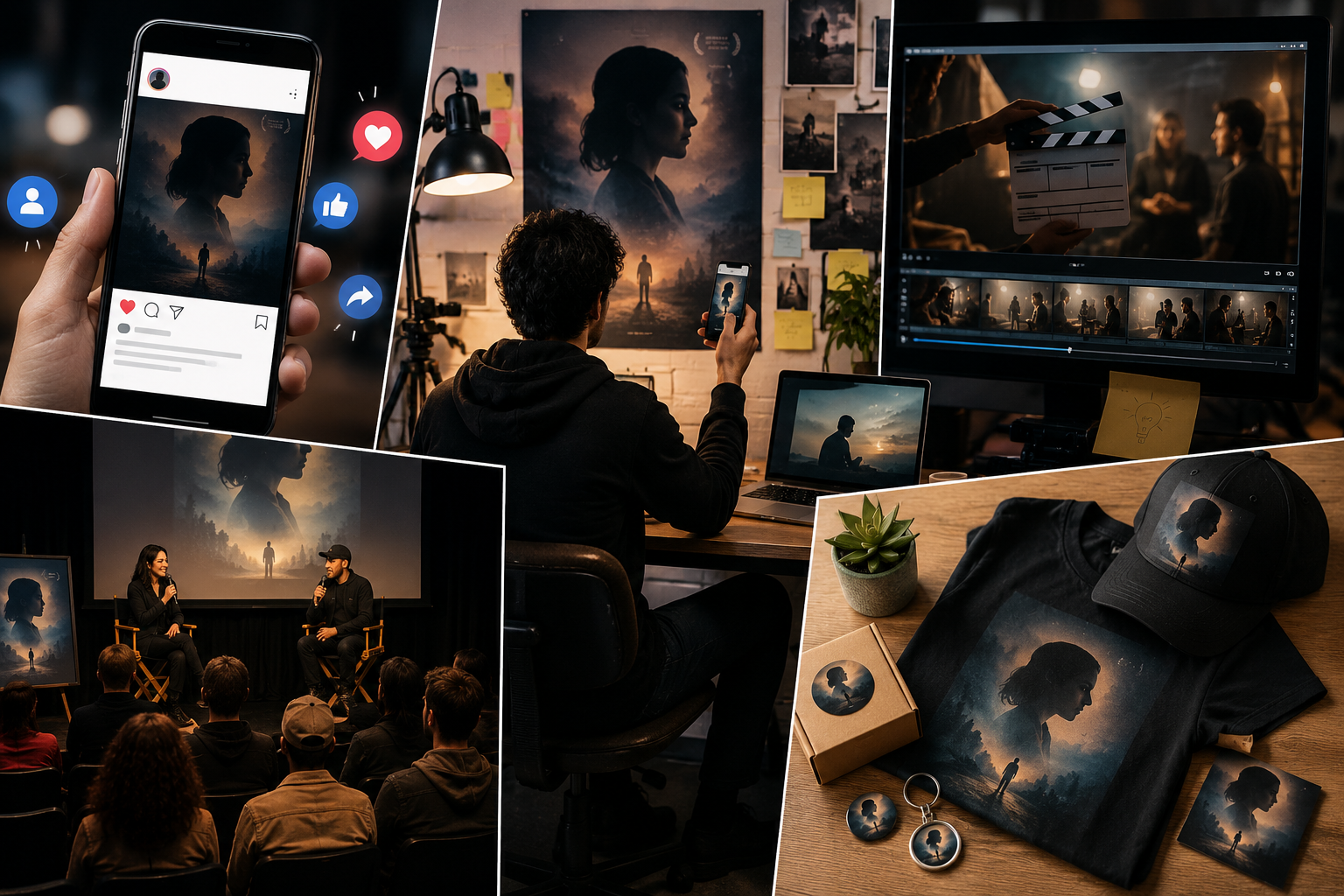
Making an independent film takes patience, creativity, and a great deal of determination. Once the final edit is complete, however, the next challenge begins: getting people to watch it. Without the marketing budget of a major studio, independent filmmakers need to find memorable and affordable ways to build interest. Fortunately, a smaller budget does not have to limit the impact of a promotional campaign.
Build a Story Around the Film
Audiences are often interested in more than the finished movie. They may also want to know how it was made, what inspired the story, and what challenges the team faced during production.
Filmmakers can share behind-the-scenes clips, location photographs, costume sketches, casting stories, and short interviews with the crew. This content gives potential viewers a reason to follow the project before the official release. It also helps the film feel more personal, which can be especially valuable when promoting an independent production.
Create Collectible Promotional Items
Custom lapel pins are a particularly creative option because they are compact, wearable, and collectible. The catch is that a pin is a small piece of metal, not a print, so the design has to be built for it rather than lifted from the poster. Enamel pins work by pouring color into recessed metal cells, which means every shape needs an outline around it, and those metal borders run about 0.3mm on a hard enamel pin. At the 1.25 inch size most buyers choose, that rewards a single silhouette, a character’s face reduced to a few shapes, or a symbol the film has already made memorable. If your artwork is a photographic still or carries fine detail you cannot simplify, offset printing pins are the better route, since they reproduce camera-ready images in full color under a clear epoxy coat. Services such as lapelpinnow.com carry both formats, so filmmakers can match the artwork to the process and end up with something cast members will actually wear.
Partner With Relevant Communities
Many independent films are connected to a specific subject, location, culture, or interest group. Reaching out to communities related to the film’s themes can be more effective than targeting a broad audience.
For example, a documentary about conservation could partner with environmental organizations, while a sports drama could connect with local teams and clubs. These partnerships may lead to shared social posts, event appearances, newsletter coverage, or special screenings.
Host an Unusual Screening
A memorable screening can generate more attention than a standard cinema showing. Filmmakers could choose a location that reflects the movie, such as an outdoor venue, historic building, gallery, bookstore, or community space.
Adding a live question-and-answer session, themed refreshments, a costume display, or an introduction from the director can make the event feel special. Guests may then be more likely to post photographs and recommendations online.
Encourage the Cast to Get Involved
Every cast and crew member has their own network. Providing them with trailers, posters, captions, and release information makes it easier for everyone involved to promote the film consistently.
Short personal videos can work particularly well. An actor explaining why the project matters to them may feel more genuine than a traditional advertisement.
Keep the Conversation Going
Promotion should not stop after release day. Filmmakers can continue sharing reviews, audience reactions, festival news, deleted scenes, and production stories. They can also celebrate milestones, such as streaming availability or award nominations.
The most effective independent film campaigns often feel like a community rather than a sales pitch. By combining storytelling, partnerships, creative merchandise, and memorable experiences, filmmakers can build genuine interest and give their new release a stronger chance of finding its audience.