


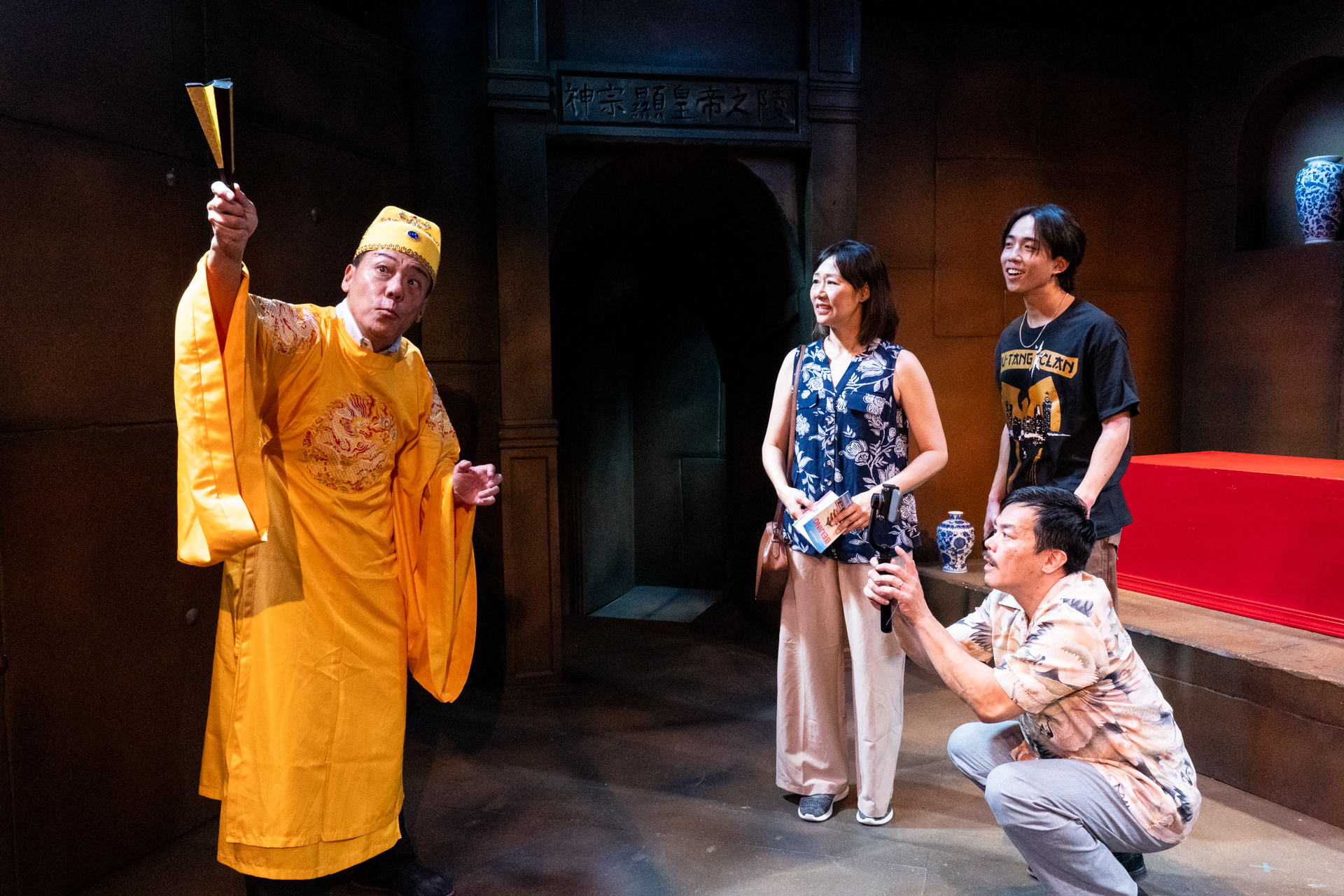
[NoHo Arts District, CA] – A NoHo Arts theatre review of In the Tomb of Ten Thousand Calendars looks at Moving Arts Theatre’s brilliant production of Stephen Dierkes’ play, directed by Jeff Liu.
I’ve been thinking about history quite a lot lately. In times of stress and chaos, uncertainty and fear, studying our collective past can be a comfort…or a reminder of our fragility and serious penchant for idiocy.
The way our world seems to be unravelling, it’s only human to hope that it couldn’t get worse. But even recent history teaches us that it always can and usually does. This play, In the Tomb of Ten Thousand Calendars, reflects on how the nature of human beings has been sadly changed very little by the passing of time. Older it seems, is not wiser.
The play is set over three acts, all taking place in the tomb of an Emperor of dynastic China who died over 400 years ago. The first act is shortly after his death and before the tomb, which is 90 feet underground, is sealed forever.
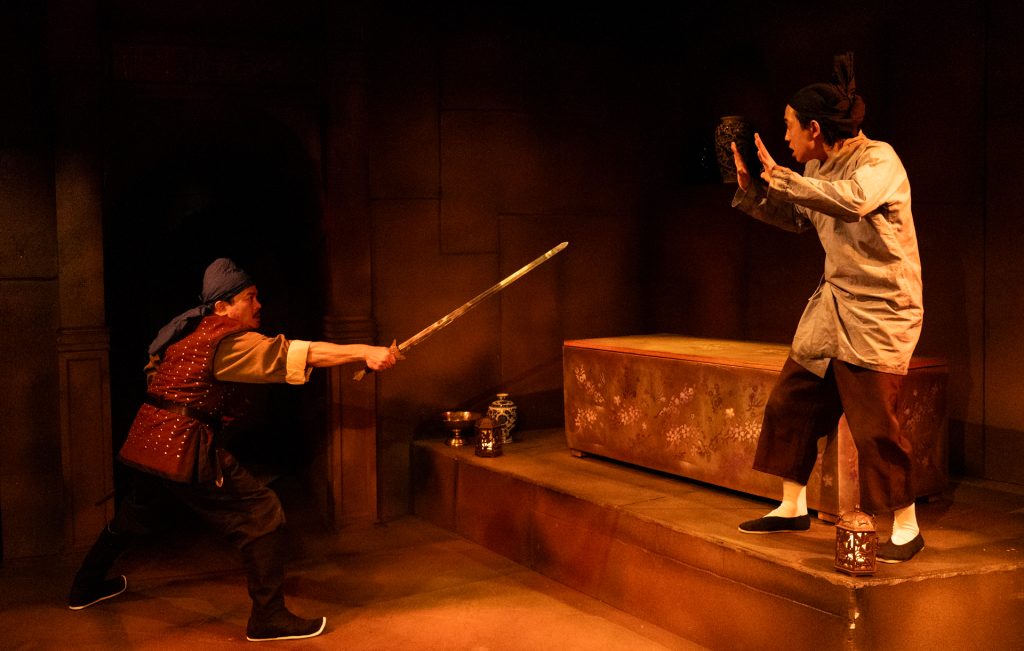
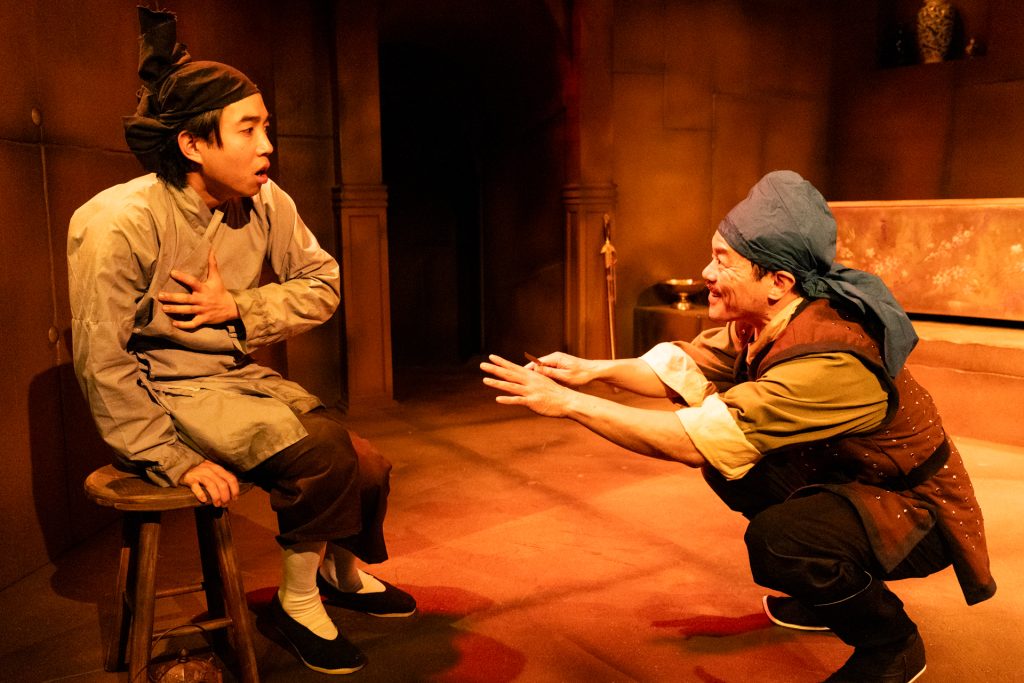
Four characters, four stories, four different reasons to be there. The guard, the messenger, the concubine and the priest. All representing the various tiers of 17th-century Chinese society: the poor, the slave, the unwed lover and the self-appointed highest authority…religion.
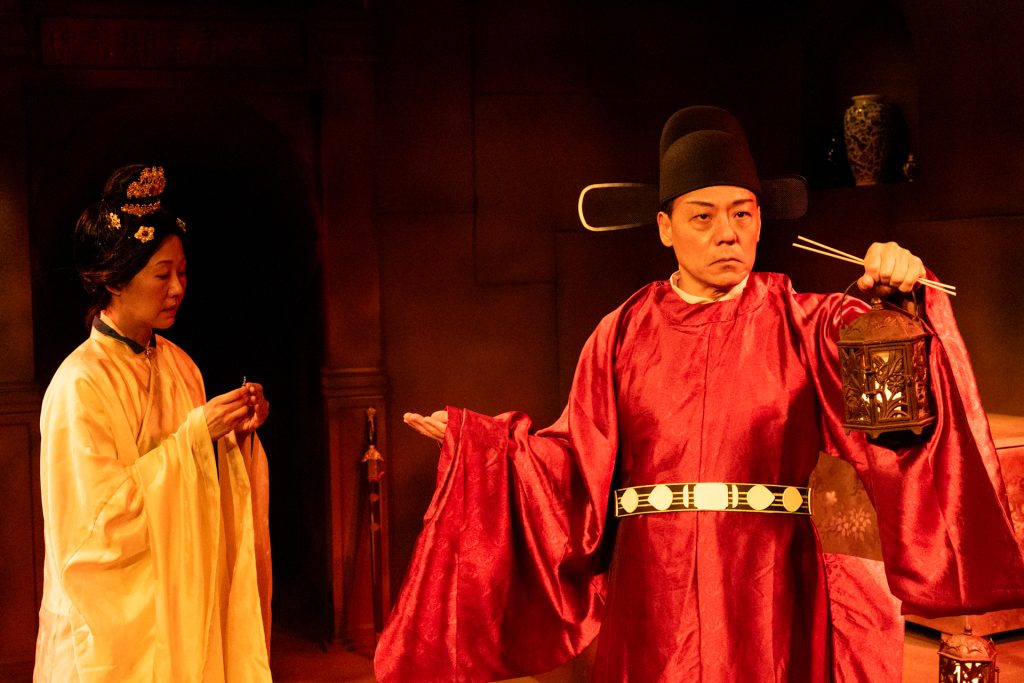
They all have their agendas, of course, and the priority is to seal the tomb as soon as possible. However, there are layers of reason at work and motives and opinions to be shared. Before they all leave the Emperor alone in his edifice, we are able to relate to each and every one of them.
The next act is the Cultural Revolution. It’s 1966 and Mao Zedong is busy ripping apart everything traditional. His Red Guards, thousands of young Chinese men and women, are fully mobilized and released from the old ideas of genuflection and honor and respect; they tear down, destroy and burn thousands of years of Chinese history in a matter of months.
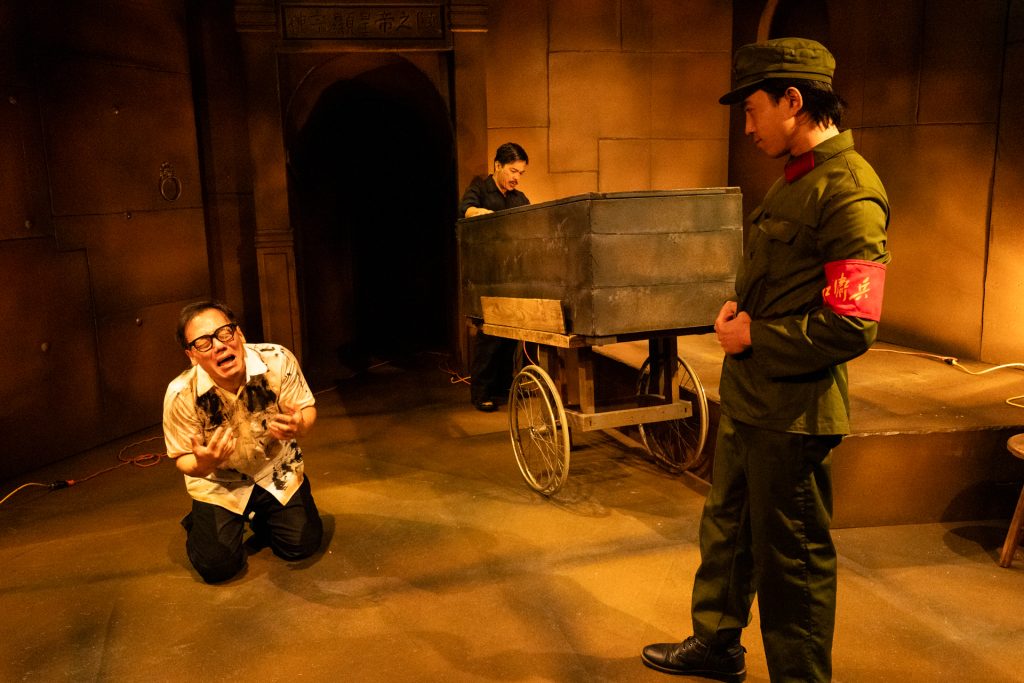
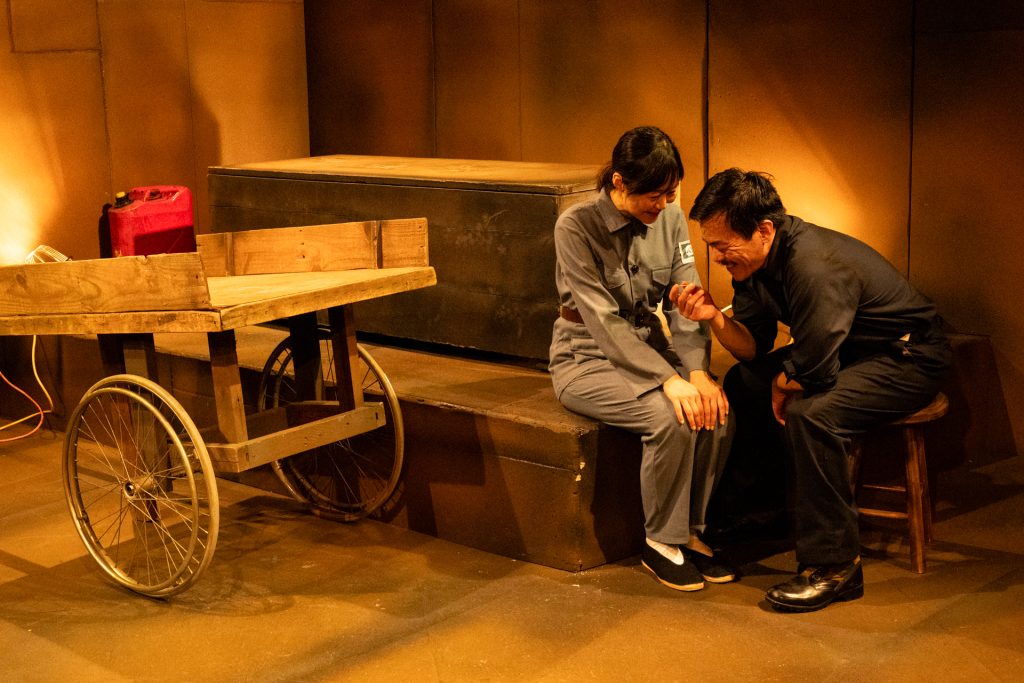
They have gleefully forced open this tomb to remove the emperor’s casket and take it away to be ceremoniously burned. However, two of the guards know each other from before the revolution. They were lovers and steal moments together while the leader arranges the fire above. They are helped by another man with a large cart for the casket, older and wiser and a former teacher he tries his best to play along with the plan without exposing his extreme sense of loss at the tragedy of this continuing and all to casual destruction. The roles may have shifted, but the theme is the same. Communism stills carries within it old resentments and entrenched hierarchy. You can burn the ‘ancient’ out of China, but you can’t burn it out of the memory, and the character of its people. The darkness of that time and the absolute convictions of the revolutionaries remind us all of so many horrors currently taking place around the world. Sixty years is a blink of an eye, isn’t it? These disparate characters collide in this small, quiet place, which resonates with the history of them all.
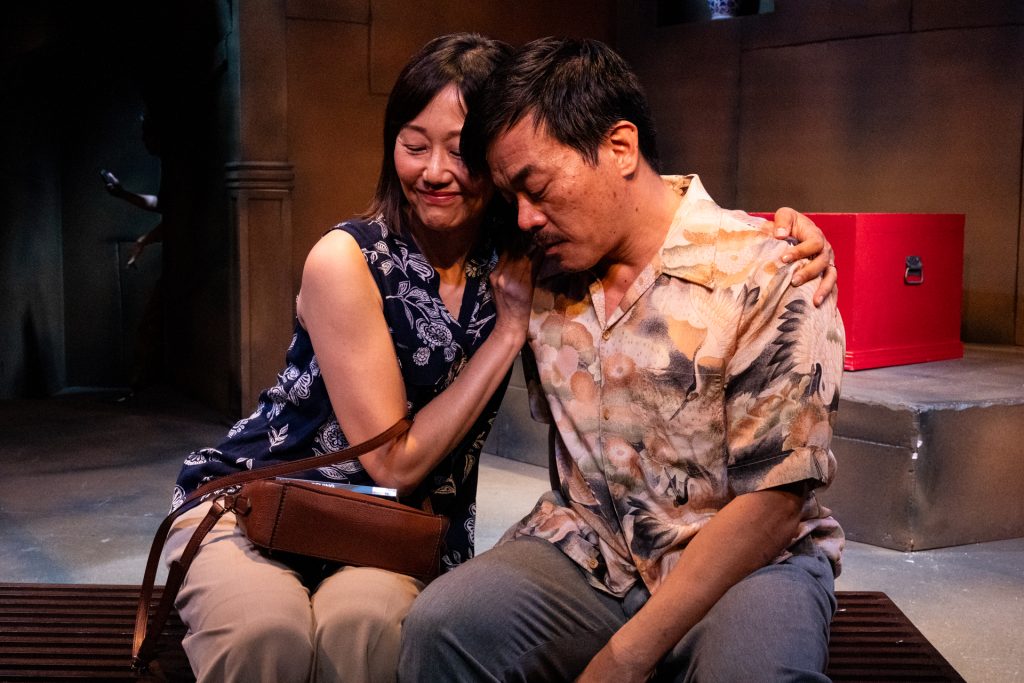
The third act is now. China is open for business; it’s communism still in place but tempered by time. Or money. A group of tourists views the tomb, with its replacement casket and appropriately costumed guide. A father, mother and teenage son are here for a private tour. American Chinese yearning for a little of the old ideas, old culture, old customs, and old habits so despised only decades earlier. Again, the roles are shifted, but the same characters are present. Unaffected by time or technology, moved from mother to father, from son to guide. Same actors, new moments and new relationships with still strong echoes of the past. Humans may move forward in time and think they have evolved, but we are all still stuck in our appointed roles from centuries ago. Destined to repeat and circle back and cling to the past or the future or whatever suits us at the time. Bound together by our own follies until we can learn to live another way. The hope comes as a surprise. The teenage son, permanently on his phone as they all are, mostly unresponsive to his parents, who worry that he isn’t paying attention. He read a book on the tomb and the Emperor. An actual paper book…how retro!
In the Tomb of Ten Thousand Calendars is an absolutely brilliant play. Subtle, funny, thoughtful and evocative.
It shows us ourselves without clumsy affectations or walloping us over the head with the obvious. Nuanced and clever, these characters are beautifully written and exquisitely played by four incredible actors. They magically morph from role to role, from century to century and from energy to energy. It’s a story within a story within a longing for change. The set is phenomenal, just perfectly made and huge doors, like the entrance to a tomb, act as curtains opening and closing at each act…wonderful!!
As I looked around the packed theatre, everyone was motionless, rapt and utterly bewitched. It takes a magical play to have this effect on experienced theatregoers such as these. You could honestly hear a pin drop. I love to observe audiences. Especially when I know that what we are experiencing is exceptional, like this wonderful, wonderful play, In the Tomb of Ten Thousand Calendars. Highly recommended!!!! In case there is any doubt.
Tickets:
https://movingarts.ludus.com/index.php
When:
August 29-September 20
Thursday, Friday, Saturday, Monday at 8 PM and Sunday at 4 PM
Where:
Moving Arts
3191 Casitas Ave, Atwater Village
The Cast:
In the Tomb of Ten Thousand Calendars stars Jonathan Cheung, Elaine Kao, Wayne Lee and West Liang.
The Team:
Written by Stephen Dierkes, directed by Jeff Liu. Scenic and lighting: Justin Huen*, Costume: JJ Javier, Sound: Kyle Cunanan, Props: Dana Schwartz* *(denotes Moving Arts member)