


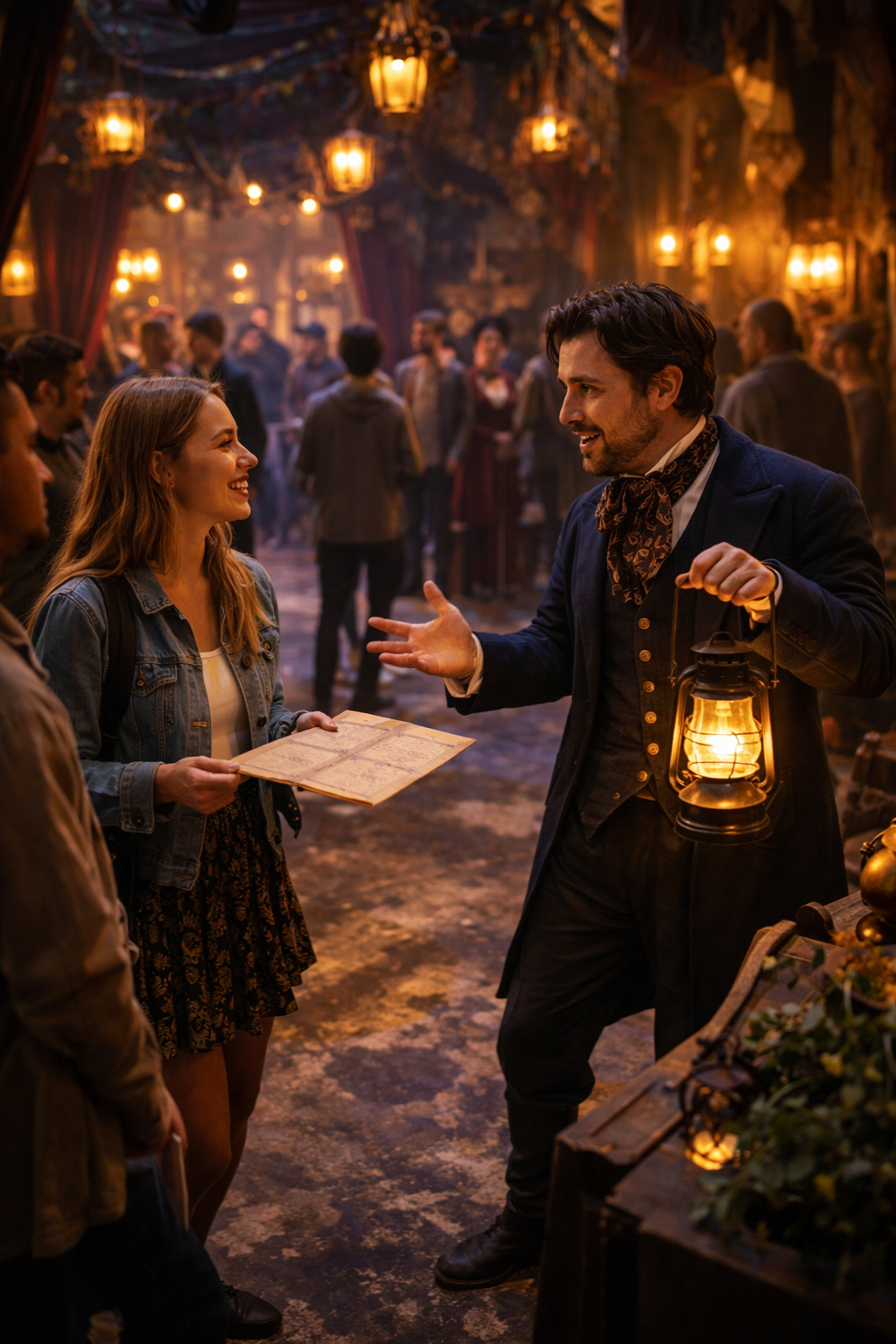
North Hollywood has always been a neighbourhood that punches above its weight creatively. From its indie theatre companies to its tight-knit community of performers and directors, the NoHo Arts District has long been a proving ground for bold ideas. Right now, one of the boldest changes in local theatre is the move toward immersive, participatory productions, and audiences are showing up for it in a big way.
This isn’t just a local trend. It reflects a genuine transformation in how people want to experience live performance. Passive watching is giving way to active participation, and theatres that understand this are finding new energy, new audiences, and new relevance.
Why NoHo Stages Are Going Immersive
The appetite for immersive entertainment has been building for years, but recent figures confirm just how serious the growth is. U.S. immersive experience market revenues hit $3.9 billion in 2024, growing at an annual rate of 21% since 2019, according to the Gensler 2025 Immersive Industry Report. That kind of sustained momentum signals a real shift in consumer behaviour, not a passing novelty.
For NoHo specifically, the timing is well-suited. The district’s concentration of small and mid-size venues, many of which already operate with flexible staging and experimental mindsets, gives local companies a natural advantage. Where large traditional theatres struggle to reconfigure fixed seating arrangements, NoHo’s spaces can adapt more readily to multi-room or roaming-audience formats.
How Local Companies Are Adapting Productions
NoHo creatives are increasingly integrating technology into their productions to meet demand for deeper audience engagement. Projection mapping, spatial audio, and interactive set design are becoming standard considerations rather than special additions. As noted by NoHo Arts District’s own coverage of immersive theatre technology, local performers and directors are building new digital skills to stay competitive.
The practical challenges are real. Rehearsals take longer when the audience’s movement is part of the choreography. Set design becomes a collaborative, problem-solving exercise rather than a backdrop task. Companies are investing more in pre-production planning, but those that get it right are seeing stronger word-of-mouth and repeat attendance than traditional productions typically generate.
Entertainment Crossovers Bringing New Audiences In
One interesting side effect of the immersive growth is the combo of entertainment categories. Escape rooms, interactive dining experiences, and even online platforms have conditioned audiences to expect participation as a baseline.
People accustomed to browsing something like GamblingInsider’s UK casino list are used to curated, interactive digital environments that explain the platforms’ different features, gaming options, and payment methods to players. They’re carrying that expectation into live spaces, too. Immersive theatre benefits directly from this cultural transformation.
This crossover is drawing in demographics that traditional theatre has struggled to reach. Younger audiences and first-time theatre-goers are more comfortable entering an unfamiliar room when they know they’ll be active participants rather than silent observers. For NoHo companies, that represents a genuine opportunity to expand their community footprint.
What This Transformation Means for NoHo Theatergoers
For audiences, immersive theatre offers something that streaming and passive entertainment simply cannot replicate: a genuine human connection within a shared, unpredictable experience. No two performances are identical, and that exclusivity has become a selling point in itself. The memory of a show where you made choices, moved through spaces, and interacted with performers is far stickier than any broadcast experience.
The broader market data support continued growth. The U.S. immersive entertainment market is projected to expand at a CAGR of 24.9% through 2033, potentially reaching $281 billion. For NoHo, riding that wave early means cementing a reputation as a destination for cutting-edge live performance, the kind of place where theatre isn’t something you watch, but something you genuinely live through.