


Education is essential for a child’s growth. It shapes their future and gives them important skills. As parents or guardians, it can be hard to see kids struggle in school. Grades often show how much a child understands or is engaged, but sometimes students face challenges that seem too big to handle. Instead of feeling overwhelmed, there are simple ways to help children get back on track and do well in their studies. It’s important to create a space where learning thrives so every student can reach their potential.
Here are some ways you can help kids improve their school grades.
Open Communication
Encouraging honest communication is crucial for success in school. When children feel safe to share their struggles, they’re more likely to talk about their schoolwork. Ask them about their day, subjects they find hard, or how they feel about their classes. This not only helps you understand their academic situation but also strengthens your relationship with them.
Listening without judgment creates a safe environment and can encourage them to share feelings about school stress or anxiety. Understanding their views can lead to practical solutions that meet their needs. Encourage them to express what they like or dislike about learning. This active involvement helps them take charge of their education and motivates them to ask for help when needed.
Online Tutoring
Online tutoring is a popular way for students to learn. It gives students personal attention, making it easier to understand academic topics. With online sessions, students can learn at home and fit tutoring into their schedules.
Many subjects are available, and students can find experts to help with areas where they need support. Whether it’s math, reading, or science, online tutors can customize lessons for individual needs, making learning more engaging. Students often feel more comfortable asking questions in one-on-one sessions, allowing them to work at their own pace. This helps them tackle tough subjects and boosts their confidence.
Active Involvement
Getting involved in your child’s education can improve their performance. Attend school events, parent-teacher meetings, or open houses to connect with teachers and learn about the curriculum. This shows your child that you care about their education. Even small actions like helping with homework or discussing school topics at dinner can make a big difference.
Creating a regular homework routine is also helpful. Set a consistent time and a quiet space for studying to promote good habits. Be present and engaged, offering support without doing their work for them. This balance helps build their confidence and encourages responsibility.
Structured Learning Environment
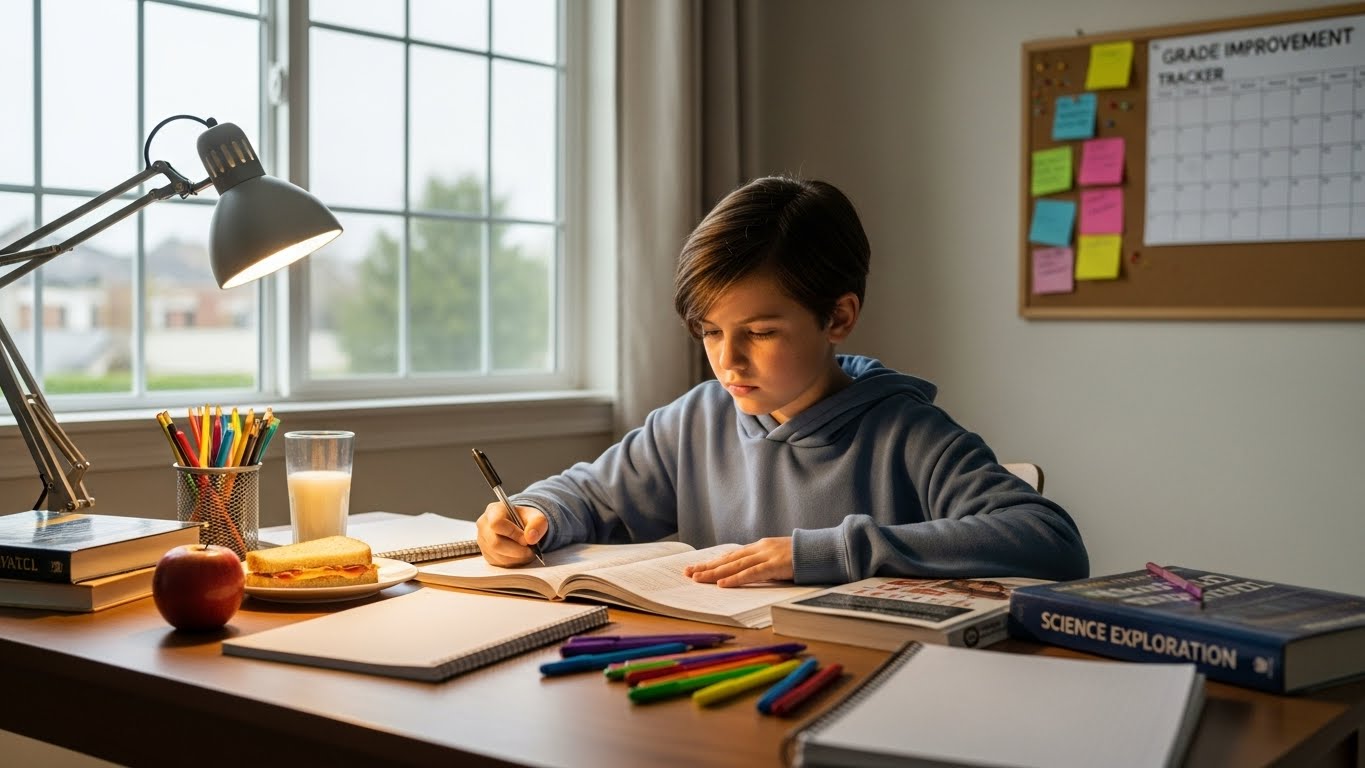
Having a dedicated study space can greatly improve a child’s focus and academic performance. A well-organized area that is free from distractions and has the necessary supplies can enhance concentration. Adding personal touches, like motivational quotes or a comfortable chair, makes the space inviting for studying.
Establishing a routine is also important. Set consistent study times that match your child’s energy levels to help them make the most of their study sessions. Mixing study time with short breaks can refresh their mind, improving retention and understanding.
Encouraging a Growth Mindset
It’s vital to promote a growth mindset to help kids face academic challenges. Teach them that effort matters just as much as ability. Encouraging resilience helps them see challenges as chances to improve. Celebrate all achievements, no matter how small, to reinforce their progress.
Urge them to take smart risks, like joining class discussions or exploring new projects, even if they worry about failing. When mistakes happen, help them figure out what went wrong and discuss different approaches. This mindset develops problem-solving skills and a positive attitude toward learning. Both are key to academic success.
Healthy Routine
Academic success connects directly to physical and mental health. Encourage regular exercise, a balanced diet, and enough sleep to improve a child’s focus and learning ability. Activities like sports or outdoor play offer physical benefits and relieve stress.
Mental wellness is crucial, too. Teach kids relaxation techniques, such as mindfulness or deep breathing, to help manage anxiety before tests or major assignments. A balanced lifestyle enhances their education.
Creating an environment that prioritizes learning while supporting health and well being is essential for academic success. Every child is different, so finding the right mix of strategies that work for them can lead to better grades and a more enjoyable educational journey.