


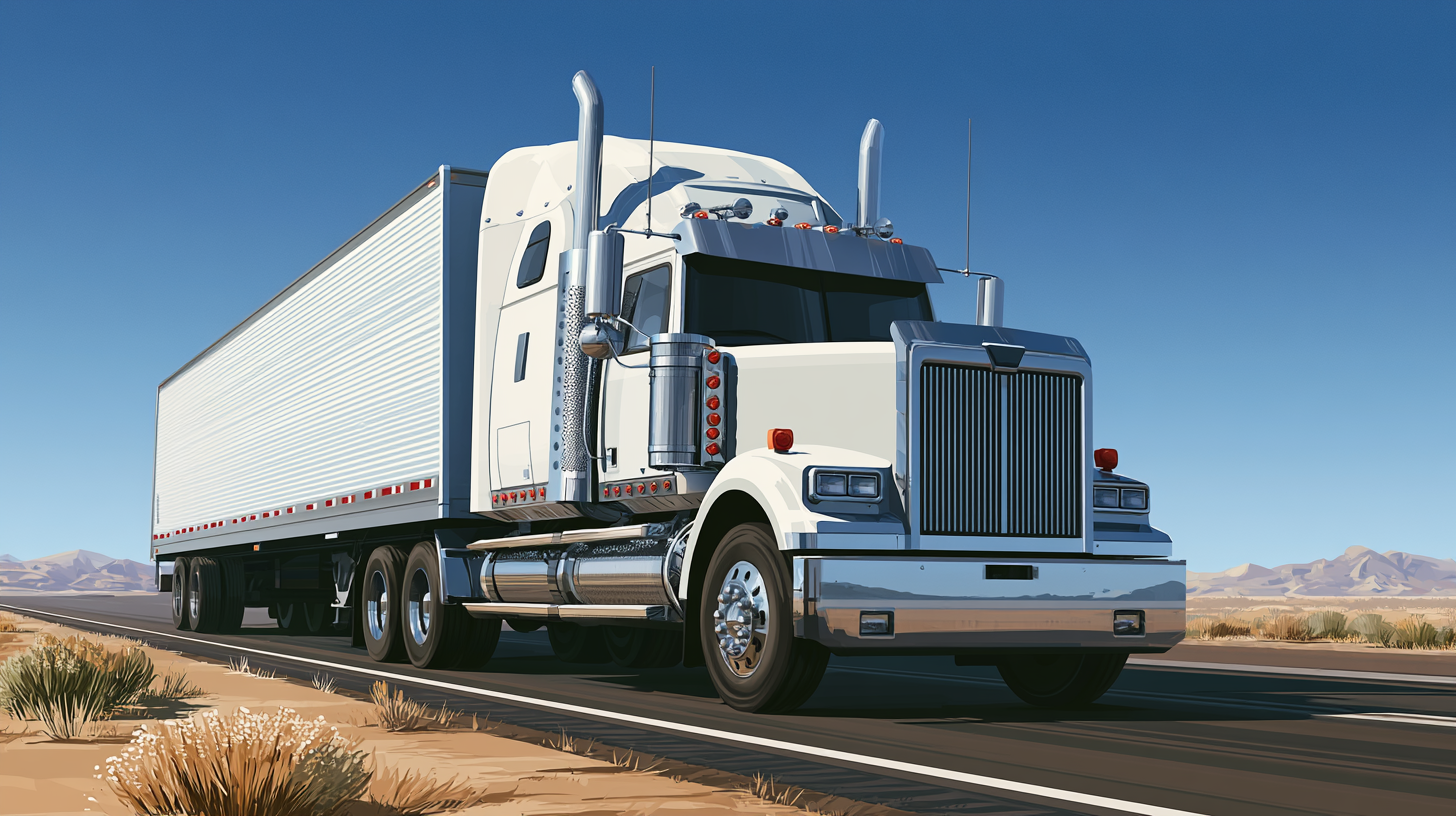
A new Class 8 semi truck tractor generally runs about $160,000 to $200,000 in 2026, with premium sleeper builds pushing past that. On the used side, ACT Research put the average retail price of a used Class 8 truck at $60,986 in July 2026, though real listings run from roughly $20,000 for older high-mileage units to well over $100,000 for newer, low-mileage tractors. In nearly every case, the trailer is priced separately, so treat the tractor as one piece of a major investment rather than the whole of it. Whether you are weighing a new or used semi, this guide walks first-time owner operators, small fleet buyers and fleet managers through the three numbers that make up the real semi truck cost before buying: sticker price, cash-to-close, and cost per productive mile.
What Counts as a “Semi Truck”? Tractor, Trailer, Day Cab and Class 8 Explained
Three terms do most of the work here. The tractor is the powered unit with the engine and cab. The trailer is the unpowered cargo box, deck or reefer unit it pulls. The complete rig is both together, which is what people usually picture when they say 18-wheeler.
A day cab has no sleeping berth and suits local and regional work, and a day cab spec normally prices below a comparable sleeper. A sleeper cab adds a berth for long-distance hauls, keeps drivers comfortable on multi-day runs, and costs more. Class 8 covers vehicles rated above 33,000 pounds GVWR, and the standard Interstate maximum gross weight is 80,000 pounds. Almost every advertised tractor price you see excludes the trailer.
New Semi Truck Cost in 2026: What to Expect
New semi truck prices span roughly $120,000 to $200,000, but mainstream 2026 Class 8 tractors sit at the top of that band, around $160,000 to $200,000 and up. New sleeper trucks commonly land between $160,000 and $240,000, and heavily optioned premium builds can approach $300,000. Anyone shopping a first truck should expect the quote to climb once emissions-compliant powertrains, advanced driver assistance features and aero fairings go on the build sheet, since the latest technology is rarely standard equipment.
| Configuration | Typical 2026 price |
| Class 8 day cab | $140,000 – $170,000 |
| Standard highway sleeper | $160,000 – $200,000 |
| Premium / high-spec sleeper | $200,000 – $240,000+ |
| Vocational or heavy-haul build | $180,000 – $300,000 |
Horsepower and torque, transmission and axle ratio, aerodynamic designs and interior trim all move the number. Build slot availability and dealer inventory affect what you can actually get this quarter, and semi truck prices in a tight order board quarter rarely leave room for discounting. Ask every dealer whether federal excise tax is inside the quoted price, because that one line can swing the final cost by more than $20,000.
How Much Is a Used Semi Truck?
Start with transaction data, not asking prices. ACT Research recorded a $60,986 average used Class 8 retail price in July 2026, down 4% from June and 2% year over year. ATD/NADA reported a 2025 dealer average of $64,163, which lines up closely. Used semi truck prices track freight demand, so the number you saw six months ago is not the number the market asks today.
| Mileage band | Typical price |
| Under 300,000 miles | $70,000 – $130,000 |
| 300,000 – 500,000 miles | $45,000 – $100,000 |
| Over 500,000 miles | $20,000 – $60,000 |
Model year alone tells you very little. A 2020 tractor with documented service and 380,000 highway miles is a different asset than a 2020 with 700,000 stop-and-go miles and a patched-together aftertreatment system. Expect a reconditioned dealer unit to price above auction, because auction prices carry no reconditioning and usually no recourse. Some dealers sell extended warranties on those reconditioned units, which is worth pricing against the repair risk you would otherwise carry alone. A national average is also not a valuation for a specific VIN. Two identical-looking used trucks on the same lot can sit $25,000 apart once records and emissions condition are on the table. Buying used shifts risk out of the payment book and into the repair bay.
What Factors Affect Semi Truck Prices? Spec, Mileage and Safety Features
- Day cab versus sleeper configuration
- Engine and drivetrain spec, including transmission and axle ratio
- Fuel economy and aero package
- Odometer mileage plus engine hours and idle hours
- Depth and continuity of maintenance records
- Condition of DPF, EGR and DEF systems
- Tire, brake and suspension wear across all axles
- Whether remaining warranty is transferable
- Brand reputation and regional parts availability
- Regional freight demand and fleet trade cycles
Models designed to improve fuel efficiency, with current aero packages and advanced safety systems, carry a premium, but they also depreciate faster in the early years, so factor resale value into the purchase price, not just the payment. A mainstream spec that earns a higher resale figure protects long-term value better than an unusual one.
What Should You Inspect Before Buying a Used Truck
Work through this before money changes hands, and rebuild the truck’s history from paperwork rather than the seller’s summary:
- Service records and current warranty status
- Engine hours and idle hours measured against the odometer
- Stored and active fault codes, plus aftertreatment regen history
- Blow-by, oil and coolant leaks, fluid condition
- Tires, brakes, suspension and fifth wheel on every axle
- Frame rails, cab mounts and corrosion, including the trailer if one is included
An annual DOT inspection confirms minimum safety compliance. It does not tell you whether the truck is a sound investment. Because a low purchase price can be erased by catch-up repairs, buyers should arrange an evaluation by a qualified heavy-duty shop; in the Seattle-Tacoma corridor, Torpedo Truck Repair is a relevant example of a facility working across Class 7-8 trucks and multiple trailer types. Get the immediate repair list in writing, priced, before you sign, and you avoid surprises in month one.
How Much Is a Semi Truck With the Trailer Included?
The advertised semi truck price almost never includes one. A new 53-foot dry van runs about $35,000 to $53,000, putting a new tractor and van combination at roughly $195,000 to $253,000 or more before taxes and FET. Reefers cost considerably more to buy and to maintain, flatbeds less, and specialized trailers vary widely. New carriers can skip buying one entirely by running power-only freight or renting a trailer month to month.
Down Payment, Taxes and Other Costs Before the First Load
This is cash-to-close, the second price, and it is where first-time buyers underestimate the upfront costs. Down payments range from about 1% to 40% depending on credit, time in business and equipment age. Budget for:
- Federal excise tax: the IRS imposes 12% on the first retail sale of qualifying heavy trucks and trailers. On a fully taxable $180,000 truck, that’s $21,600. Ask whether it’s in the quote.
- State sales tax, title and registration
- IRP apportioned plates and IFTA setup
- Insurance deposit. FMCSA’s $750,000 public liability minimum for for-hire non-hazmat property carriers is a legal floor, not a premium estimate.
- UCR registration, $46 in 2026 for a carrier with zero to two vehicles
- Form 2290 heavy vehicle use tax, $550 for a full period at 80,000 pounds taxable gross weight
- Driver qualification costs, including a commercial driver’s license and DOT physical if you are not already licensed
- ELD and communications hardware
- Opening tires, fluids and repairs, plus working capital for fuel and downtime
Buying the truck and being ready to run it are two separate financial events.
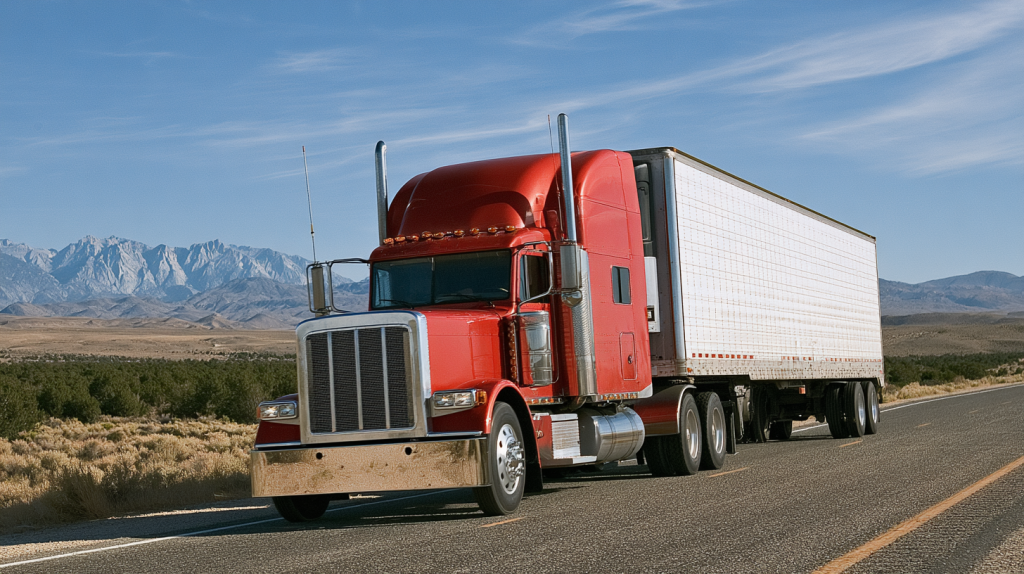
Monthly Payments and Financing: New Truck and Used Truck Scenarios
Commercial truck financing options commonly carry rates between 5% and 10%, with higher rates for a young business and for older equipment. Two illustrations:
| Scenario | Price | Down | Rate / term | Payment |
| New truck | $180,000 | 20% | 9% / 60 mo | ~$2,989/mo |
| Used truck | $65,000 | 20% | 11% / 48 mo | ~$1,344/mo |
These are math examples, not loan offers, and they exclude trailer, FET, insurance and registration. Watch balloon structures carefully. A lower monthly payment stretched over a longer term protects monthly cash flow while raising the true cost of the truck, and it can easily outlast the warranty that made the new semi truck attractive in the first place.
What Does It Really Cost Owner Operators to Own and Operate a Semi Truck?
ATRI’s 2026 report put the trucking industry’s average marginal cost of operating a truck at a record $2.336 per mile in 2025, up 3.4%, or $1.854 excluding fuel. Buying decisions get made on sticker price and paid for here.
| Category | Cost per mile |
| Driver wages | $0.818 |
| Fuel | $0.482 |
| Truck and trailer payments | $0.404 |
| Repair and maintenance | $0.215 |
| Driver benefits | $0.210 |
| Insurance premiums | $0.106 |
| Tires | $0.050 |
| Tolls | $0.043 |
| Permits and licenses | $0.008 |
| Total | $2.336 |
At 100,000 miles a year that’s about $233,600 all in. Owner operators should adapt the wage and benefit lines, since that money is their own compensation rather than payroll. Calculate fuel costs yourself: diesel price per gallon ÷ actual mpg. At $5.599 per gallon (week ending August 31, 2026) and 6.3 mpg, that’s roughly $0.89 per mile. Refresh it, diesel moves weekly, and half a mile per gallon of better fuel economy turns into real money over a year of long hauls.
How much should you set aside for fuel costs, maintenance and repairs?
Annual maintenance costs commonly land between $15,000 and $25,000, with insurance often $8,000 to $16,000. Hold a per-mile repair reserve, around $0.20 to $0.25, and a separate tire fund. Once the truck is purchased, a documented preventive-maintenance schedule covering oil changes, brake inspections and aftertreatment service should be treated as part of the financing plan, and service resources from shops such as Torpedo Truck Repair can help illustrate the systems that need line-item budgets, including brakes, suspension, emissions equipment, electrical systems and trailers. Maintenance costs on a high-mileage semi truck never arrive evenly, so a funded reserve beats a credit card. Then divide total annual cost by all miles, deadhead included. That’s your cost per productive mile.
New Semi Truck vs Used Truck: Higher Price, Less Risk
| New | Used |
| Higher purchase price | Lower upfront costs |
| Factory warranty coverage | Greater repair uncertainty |
| Latest safety features and fuel efficiency | Less depreciation exposure |
| Predictable early maintenance | Maintenance history becomes critical |
| Larger payment plus possible FET | May need immediate catch-up work |
Buying a new truck buys warranty coverage and quiet early years. A well specced used unit can produce real long term savings when the records hold up under scrutiny. The cheapest truck is not always the least expensive truck to own.
A Five-Step Affordability Test Before Buying Your First Truck
- Define the freight you’ll haul, whether that’s regional day cab work or long hauls, then spec the right truck for it.
- Get a real insurance quote before you sign any loan.
- Calculate costs across all miles, including deadhead.
- Keep repair and downtime reserves separate from the down payment.
- Compare projected revenue per mile against your cost per productive mile.
If all three prices work (sticker, cash-to-close and cost per mile), the truck is affordable. If any one fails, it isn’t, and matching equipment to freight is what separates a rough first year from long-term success.
Frequently Asked Questions
Is it profitable to buy a semi truck?
It depends entirely on whether your rate per mile clears your cost per productive mile. With ATRI’s 2025 benchmark at $2.336 per mile, a carrier averaging below that on all miles, deadhead included, is losing money regardless of how good the equipment looks. Rate discipline, not truck prices, decides whether the business survives its first two years.
How much is a 2026 Kenworth semi?
New 2026 Kenworth sleeper tractors generally price in the same $160,000 to $200,000-plus range as other mainstream Class 8 builds, with heavily optioned premium configurations running higher. Expect final semi truck prices to hinge on engine, transmission, axle ratio and interior package.
How much is a $70,000 truck payment?
Financing $70,000 at roughly 9% over 60 months works out to about $1,453 per month. That’s an illustration only, and it excludes insurance, registration, taxes and any trailer.
How long do semi trucks last?
A well-maintained truck in Class 8 service commonly reaches 750,000 to over 1,000,000 miles, often 15 years or more. Consistent preventive maintenance and aftertreatment care matter far more to that outcome than the original purchase price.
The Bottom Line on Semi Truck Costs
A semi truck can cost tens of thousands used, around $61,000 on average, or well past $200,000 new. Whether it turns out to be a smart investment comes down to the complete rig cost, cash-to-close and cost per productive mile measured against ATRI’s $2.336 benchmark. Price the full rig, then spend the small sum it takes to get a pre-purchase inspection quote and an insurance quote before you commit to buying anything.