


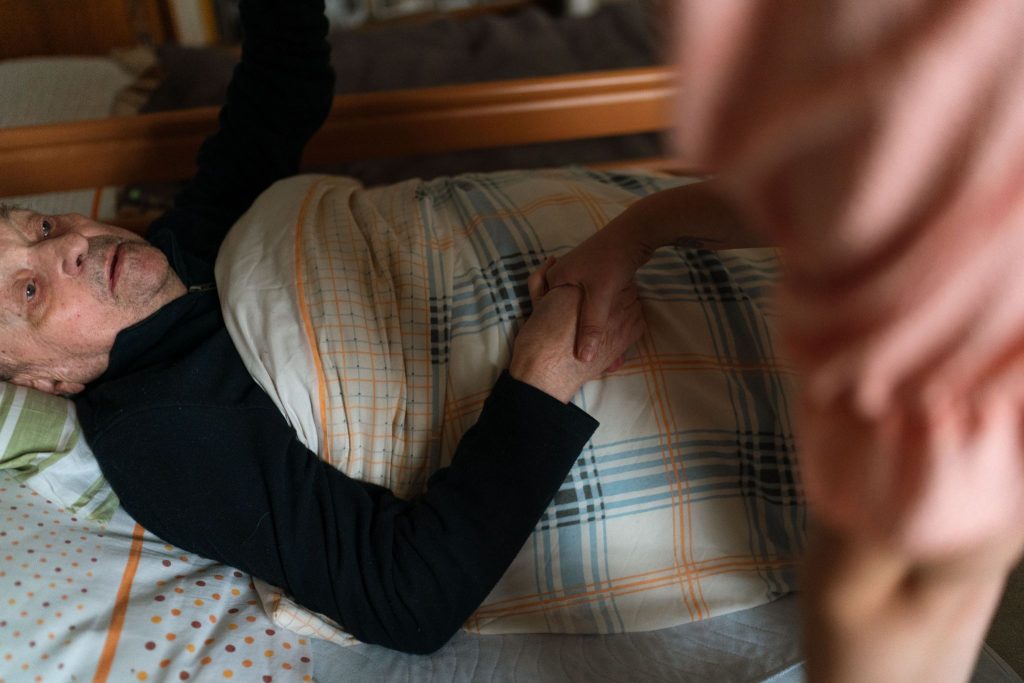
When an older person is spending most of the day in bed or just sitting in a chair, the ramifications go way beyond simple stiffness and pain. The lack of movement has a cumulative effect on the way the body functions and this impacts on circulation, muscle strength, the skin, the gut and the mood. The families of older people need to be aware of this as some of the problems can develop quite quietly and can become quite serious before you even realise that anything is amiss.
How Staying in One Position Affects the Body
The human body has to be moving regularly in order to maintain strength, to support circulation and to keep the joints supple. If you’re sitting or lying in one position for too long, then the muscles get absolutely no movement at all, and the joints become stiff. All of a sudden, getting up, walking or indeed getting from bed to chair can be very difficult.
Loss of muscle strength can happen very quickly in older people, particularly in those who have been unwell, had surgery or are in hospital. A person who may have previously been able to walk on their own may suddenly find themselves in need of assistance just to get out of bed.
Pressure Injuries Can Develop Without Obvious Warning
One of the major problems with immobility is the skin and the tissue underneath it. Pressure over areas such as the heels, hips, tailbone and ankles can lead to restriction of the blood supply to the tissue and thus tissue that is starved of oxygen and nutrients.
A Stage 4 bedsore is a very serious wound indeed with extensive tissue loss which may result in muscle, tendon and bone being exposed. These would require specialist treatment and very close monitoring.
These wounds don’t necessarily present as open sores initially. Persistent redness, odd warmth, discoloration, tenderness and just plain ‘different’ skin can all be signs of early damage. Those with reduced sensation may completely fail to feel any pain at all when their skin is damaged so regular visual checks by carers are absolutely vital.
Research from a systematic review and meta-analysis of older hospitalized patients has identified immobility as a significant risk factor for pressure injuries and reinforces the need to assess patients who are unable to reposition.
Circulation Problems and Blood Clot Risks
Movement is key to circulation, particularly the circulation of blood from the legs back to the heart. If you’re sitting or lying down for long periods, lower limb circulation drastically declines and then the risk of DVT increases. A clot in a deep vein will lead to one leg being swollen, warm, tender and/or painful.
Caregivers need to take new leg swelling seriously and not just assume it’s just part of being old. If a clot does dislodge and travel to the lung, it can cause acute chest pain, shortness of breath and indeed unexplained breathlessness. That’s a real emergency.
How Immobility Affects Digestion and Breathing
Physical activity is good for bowel function and a period of prolonged inactivity can lead to constipation, bloating and abdominal discomfort. Older people who are already on medication to slow the digestive process down may find their symptoms get worse if they are bedbound. Good fluid intake, appropriate fiber intake (where appropriate) and movement as tolerated will all help to support regularity.
Limited mobility can also have an effect on breathing. Shallow breathing, difficulty in clearing secretions and the tendency to lie in the supine position for long periods all contribute to an increased risk of respiratory complications, particularly in the post op patient or the patient who already has a lung condition. It’s vital to sit up as much as possible to enable safe movement and follow any prescribed breathing exercises.
Endnote
Immobility isn’t necessarily something you want to be getting into in the first place, particularly following a major illness, injury or surgery. Sadly, the complications of immobility are by no means inevitable. If a family sees their relative becoming less mobile, having some unexplained skin changes, or becoming increasingly dependent, then they should be asking the care team to have a look at the prevention and treatment plan.
Protecting the health of an older adult is all about picking up on the small changes early, getting the right care and making movement and comfort a key part of the day.