


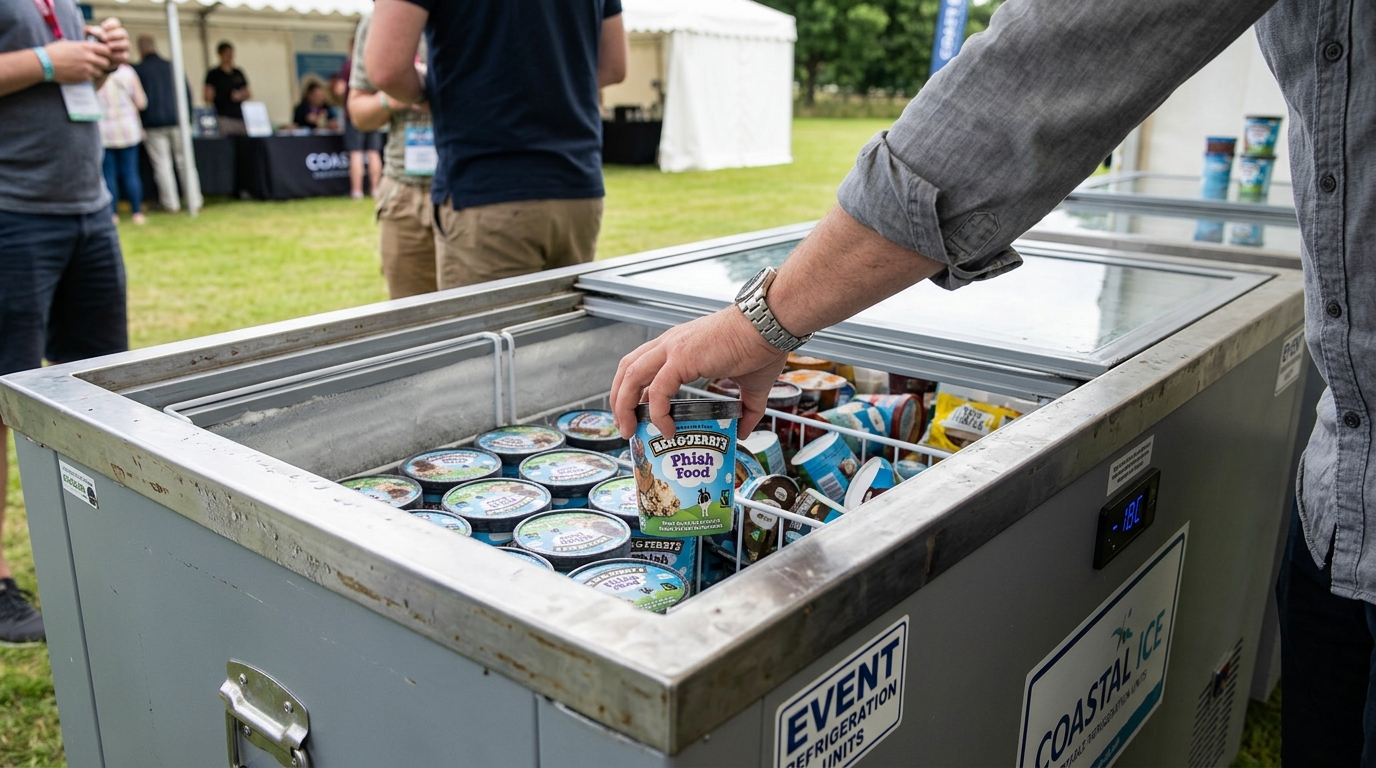
Running cold storage at a pop-up, market stall, wedding, or multi-day festival is one of those jobs that looks simple—until the first warm afternoon, the first queue, or the first delivery delay. Keeping products cool isn’t just about taste and presentation. It’s about safety, waste prevention, and protecting your margins.
The good news: you don’t need permanent cold rooms or built-in catering infrastructure to run a reliable chilled or frozen operation. You do, however, need a plan that matches your menu, your footfall, and the realities of outdoor (or temporary indoor) sites.
Start with the “cold chain,” not the cooler
Before you think about kit, get clear on what you’re actually trying to protect: the cold chain—the unbroken sequence of controlled temperatures from supplier to service.
Know your risk points
In temporary setups, cold-chain failures usually happen in predictable places:
- During delivery handoffs (products waiting on the dock, in the sun, or in a busy back-of-house lane)
- During peak service (doors opening constantly, stock being rummaged through)
- Overnight (power dips, someone forgets to close a unit properly)
- During breakdown (leftovers sitting out while everyone is focused on packing)
If you map those points early, your decisions about storage size, placement, and monitoring become much easier—and far less expensive than fixing problems mid-event.
Match storage temperature to product reality
Not everything that says “keep refrigerated” behaves the same. Dairy-based desserts, fresh seafood, and prepped meats are far less forgiving than bottled drinks. Frozen goods add another layer: if you’re thawing and refreezing, quality suffers fast (and safety can become a question). Group your stock by temperature requirement and sensitivity, then plan separate zones if needed.
Size your cooling needs based on throughput, not guesswork
One of the most common mistakes at events is underestimating volume. People plan cold storage for what they intend to sell, not what they need on hand to sell it smoothly.
Think in “service hours” of stock
A practical approach is to hold enough chilled inventory to cover your next service window plus a buffer. For example:
- For steady footfall: 2–4 hours of ready-to-serve stock accessible at all times
- For spikes (headline acts, post-ceremony rush): additional pre-chilled backup so you’re not trying to pull warm product into a unit mid-rush
This avoids the trap of repeatedly restocking from ambient deliveries or repeatedly opening the main storage, which forces the unit to work harder and warms everything inside.
Consider modular cold storage
For many temporary events, the most robust setup isn’t “one big fridge,” but a combination of:
- A primary cold store for bulk inventory
- A secondary, access-friendly unit near the service area for rapid turnover
That’s where solutions like hiring mobile refrigeration for events and festivals often fit naturally into an operations plan: you get proper capacity without building anything permanent, and you can position cold storage in a way that matches your workflow rather than the venue’s fixed layout.
Choose the right temporary equipment (and use it the right way)
Temporary doesn’t have to mean flimsy. The key is selecting equipment that can hold temperature under real event conditions—heat, dust, frequent access, and occasional chaos.
Fridge vs freezer: don’t blur the line
If your menu relies on frozen storage (ice cream, frozen meat, pre-made components), a fridge “turned colder” is not a freezer. Freezers need to recover temperature quickly after door openings and maintain safe holding temperatures even when ambient conditions rise.
Placement matters more than people expect
Even an excellent kit struggles if it’s placed poorly. Common placement mistakes include:
- Putting units in direct sun or against heat-reflective surfaces
- Blocking ventilation panels with crates, signage, or drapes
- Parking units where foot traffic forces doors to stay open longer
A simple rule: treat airflow around refrigeration like you treat clearance around a generator—non-negotiable.
Power planning: stable beats strong
Temporary sites can be power-noisy: long cable runs, shared circuits, or generators that are sized for sound systems rather than catering loads.
If you’re using powered refrigeration, plan for:
- Dedicated circuits where possible
- Proper-rated extension leads (and minimal daisy-chaining)
- RCD protection and weatherproof connections
- A realistic view of start-up draw (compressors spike on start)
If a unit is “cold enough” at 10 a.m. but drifts by 6 p.m., power stability is often the culprit.
Build habits that keep temperatures stable during service
Even with the right equipment, day-to-day handling makes or breaks temperature control. The goal is to reduce how hard your cooling system has to work.
Organise for speed
Every extra second a door is open is warm air entering and cold air leaving. Set up shelves, crates, and labelling so staff can grab what they need quickly.
A good workflow uses a “first touch” principle: the person opening the unit knows exactly what they’re reaching for before the door opens.
Pre-chill everything you can
Putting warm stock into cold storage is like pouring hot water into an ice bath. If you can pre-chill stock (or receive it cold and keep it cold), you preserve capacity for the things that genuinely need to be held at temperature.
Use simple temperature checks—and write them down
You don’t need an elaborate system, but you do need evidence and early warning. A basic log (with times and initials) catches issues before they become waste—or a compliance problem.
Here’s a lightweight checklist that works for most events (keep it to one page on a clipboard):
- Record temperatures at opening, mid-service, and close
- Check door seals and that vents are unobstructed
- Confirm stock rotation (oldest forward)
- Note any power interruptions or unusual ambient heat
Plan for the “what if” moments
Events are notorious for surprises: weather shifts, delayed deliveries, unexpectedly high footfall, or a neighbouring vendor tripping a breaker.
Have a contingency pathway
Ask yourself: if this unit fails, what happens in the next 15 minutes? In the next hour?
Smart contingencies include:
- A secondary cold space (even a smaller unit) for critical items
- Insulated boxes for short-term holding during service
- Clear decision rules for discarding compromised stock (don’t improvise under pressure)
Think about loading and access early
Mobile refrigeration is only useful if it can be placed where it needs to be. That means considering access routes, ground conditions, and load-in timing. A unit that arrives late or can’t get near your prep area creates the very exposure you’re trying to prevent.
The bottom line: cold storage is an operations decision
Keeping products cool without permanent equipment isn’t about finding a magic fridge. It’s about designing a temporary cold chain that fits your reality—your site, your staff, your service rhythm, and your risk profile.
Do that well, and you’ll protect food safety, reduce waste, and serve better products with less stress. And when the line gets long and the day gets hot, you’ll be glad your cooling plan was built for the real world—not the ideal one.