


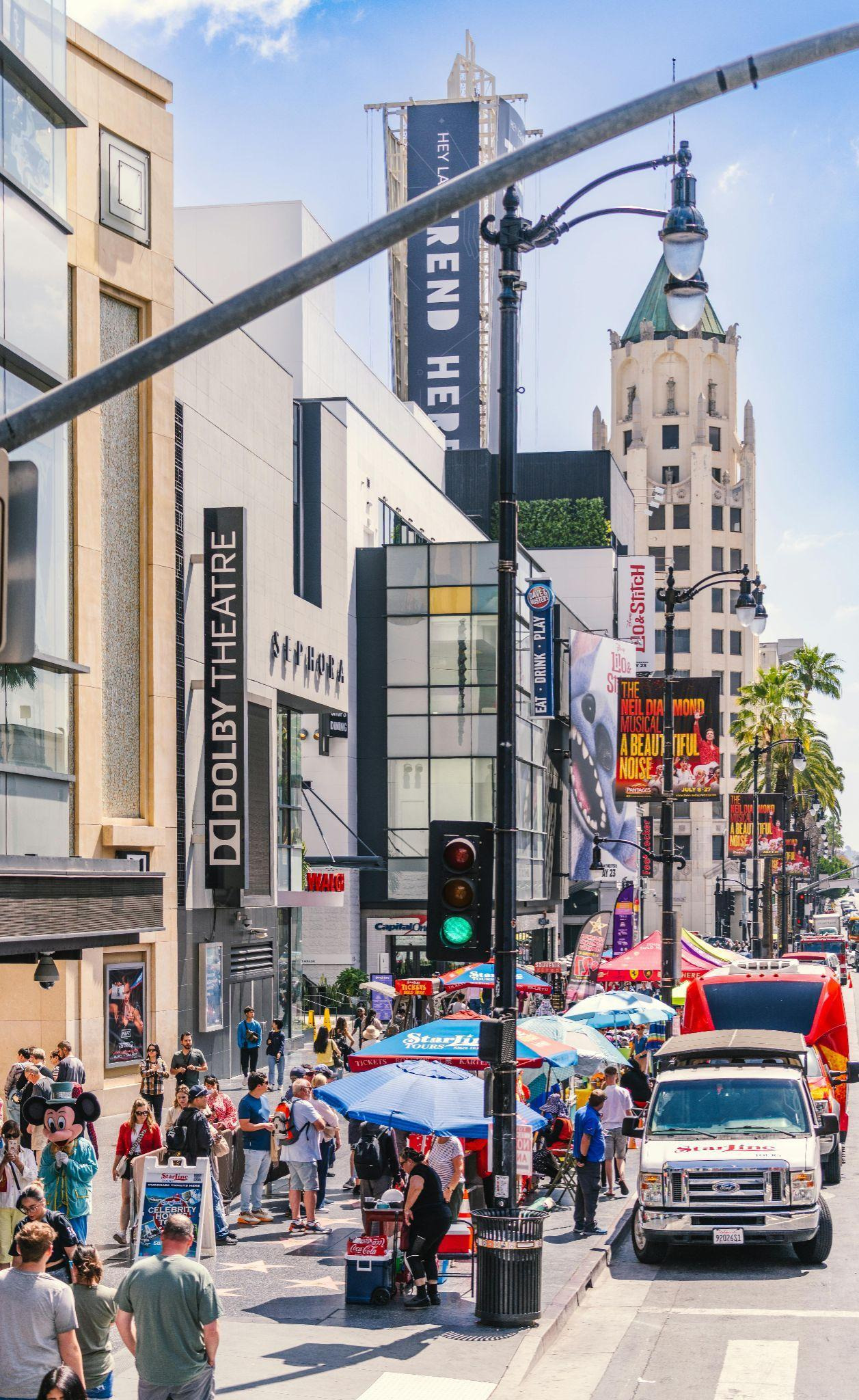
There’s a moment right before the bass kicks in. The lights go dark, the crowd noise fades, and then it hits you from somewhere above the left side of your head. A guitar riff that seems to travel across the ceiling. You’re sitting in a movie theater, but your body doesn’t know that. It thinks it’s at a show.
That’s Dolby Atmos. And it’s why concert films aren’t the dusty, bargain-bin DVDs they used to be.
The Format That Brought Live Music Back to Theaters
Concert films have been around since Woodstock. But for decades, they carried a stigma — something you rented when you couldn’t afford a real ticket, or watched on cable during a Sunday afternoon with nothing better to do. That changed around 2018, quietly at first, when a few studios started mixing music content in Atmos and releasing it in theaters.
The difference was not subtle.
Dolby Atmos uses up to 128 audio tracks placed in 3D space: above, beside, and behind the listener. Traditional stereo has two. Even 5.1 surround sound has six. Atmos doesn’t just add more speakers; it treats every sound as an object that can be positioned anywhere in the room and move dynamically. A drummer’s overhead cymbal can ring from the ceiling. Crowd noise can wash in from behind your seat. The singer’s voice can be pinned dead center while a synth pad floats across the entire room.
According to Dolby Laboratories, venues certified for Atmos playback now exist in over 90 countries. The number has grown every year since 2012, when the format launched commercially. That’s not an accident.
Why Concert Films Are Outselling Regular Screenings
The numbers are harder to ignore now. Taylor Swift’s “Eras Tour” film, released in October 2023, earned over $260 million globally in theaters. Beyonce’s “Renaissance: A Film” followed that same year. Renaissance pulled over $21 million in its opening weekend alone, with Atmos-certified theaters selling out first.
These are not small audiences catching nostalgia. These are fans who actively sought the experience. Pre-sale tickets for Atmos screenings of major concert films routinely sell out within hours, sometimes faster than tickets to the actual tours.
Part of the answer is access. A floor ticket to a stadium show can cost $300 to $800 or more in the secondary market. A movie ticket runs $18 to $30, even in a premium-format screen. For many fans, the film is the only realistic way to experience the production at anything close to its intended scale.
But price alone doesn’t explain the enthusiasm. People aren’t tolerating the cinema version. Many of them prefer it.
What Atmos Actually Does to a Live Recording
The production side of Atmos concert films is worth understanding because it’s more deliberate than most people assume.
A standard concert is recorded with dozens of microphones: stage mics, ambiance mics, crowd mics, and instrument feeds from the desk. A stereo mix collapses all of that onto two channels. An Atmos mix doesn’t. Sound engineers place individual elements in specific positions in 3D space and encode that positioning data alongside the audio.
When it plays back in a certified theater, the system reads that data and routes each element to the speaker or group of speakers that matches the encoded position. That process adapts to the number of speakers in any given room, which is why an Atmos mix can work in a 12-speaker setup or a 64-speaker setup and still feel coherent.
For live music specifically, this lets engineers do things they couldn’t before. Crowd ambiance can surround the listener rather than just come from two directions. Instruments can occupy their actual stage positions. A string section stage left feels stage left. It’s not a simulation of a concert. It’s a spatial reconstruction of one.
The late Jeff Lynne of ELO described Atmos in a 2019 interview with Sound on Sound as “the first format where I can actually place something and have it stay there the way I intended it.” That’s the experience fans are chasing.
The Vinyl Parallel: Why It’s Not a Coincidence
Vinyl’s resurgence followed a similar logic, and it’s worth drawing the line.
When streaming flattened music delivery to a single compressed file played through earbuds, a segment of listeners didn’t accept the trade-off. They went backward to a format that requires more effort, more care, and more attention. According to the Recording Industry Association of America (RIAA), vinyl revenue in the US exceeded CD revenue for the first time in decades in 2020 and has stayed above it since.
Vinyl isn’t popular because it’s convenient. It’s popular because it’s specific. You have to flip the record. You hear the needle drop. The room fills with a version of the recording that has weight and presence.
Atmos is doing the same thing for the theater experience. It’s asking the audience to show up somewhere, sit in a specific room, and give the music their full attention. The experience rewards that commitment. Streaming a concert film on a laptop while cooking dinner is not the same thing, and audiences know it.
Building a Home Listening Lounge for Watch Parties
Not everyone lives near an Atmos-certified venue, and not everyone wants to drive 40 minutes for a film they’ve been looking forward to for months. The good news is that home Atmos setups are genuinely viable now at prices that were unthinkable five years ago.
A basic home Atmos configuration starts with a receiver that supports object-based audio, at least four overhead or upward-firing speakers, and a source that outputs Atmos-encoded content. Brands like Denon, Marantz, and Sony all make AV receivers with full Atmos decoding in the $400 to $900 range. Upward-firing Atmos-enabled speakers, the kind that bounce sound off the ceiling, can be added as modules on top of existing floor speakers, which keeps the cost down if you already have a decent stereo setup.
A proper watch party room doesn’t require a full renovation. A few specific choices make an outsized difference: blackout curtains to kill ambient light, acoustic panels on the wall behind the TV and the side walls (not just behind the seating), and a seating arrangement that puts every chair within the ideal listening window. Most AV receivers include a room calibration tool, Audyssey, YPAO, AccuEQ, that uses a microphone to measure your room and adjust speaker timing and levels automatically.
The screen itself matters less than people think, past a certain size threshold. Once you’re above 65 inches, the visual experience scales well enough. What people consistently underestimate is how much the audio setup matters relative to display quality. A mediocre TV with a great Atmos sound system will beat a top-of-the-range OLED with a soundbar, every time, for a music film.
For watch parties specifically, seating depth is the variable most hosts get wrong. A room that seats eight people comfortably for conversation might only have three or four ideal audio positions. Think about it before the night arrives.
The lounge setup culture that’s grown around Atmos concert screenings has also bled into other home entertainment habits. Collectors who built dedicated listening rooms for vinyl often add a projector and a proper Atmos rig for the same space, running a Casino BetandPlay themed game night on weekends when it’s not a music film evening. These multipurpose home entertainment lounges are becoming a real design category, not just a hobbyist niche.
Why Studios Keep Greenlighting These Projects
The economics of concert films in Atmos have quietly become very good.
Production costs are lower than for a traditional feature. There’s no script, no reshoots, no cast of forty. The artist is already touring. The crew is already on site. The additional cost of capturing concert footage with cinema cameras and recording in multi-channel audio is, relatively speaking, modest.
Theatrical release windows for concert films are shorter than studio features, typically two to four weeks, which keeps marketing costs down and creates urgency. The “now or never” window mirrors what fans already feel about live events. That scarcity drives pre-sales.
After the theatrical window closes, the content has a second life on streaming platforms that license Atmos-encoded content. Apple Music, Tidal, and Amazon Music all support spatial audio. Netflix has built an Atmos catalog. The film earns once in theaters and again in licensing.
Studios that passed on this format five years ago are now scrambling to catch up. Sony Music Entertainment and Universal Music Group both have dedicated divisions for premium format music content now. That infrastructure didn’t exist at this scale before the Atmos theater wave proved the market.
The Artist Perspective: Why Performers Are Saying Yes
There used to be resistance from artists. A concert film felt like a compromise: a document of a tour that was supposed to be a live experience, packaged for people who couldn’t make it. Some performers explicitly avoided it. Others allowed low-budget VHS-quality releases that confirmed every suspicion.
Atmos changed the calculus because the format can be an artistic statement in itself.
Billie Eilish’s live recordings mixed in Atmos have received serious attention from audio engineers not just as concert documents but as production examples. Coldplay’s “Music of the Spheres” live recordings mixed spatially have been cited in trade publications as reference material. The format gives artists enough control over the listening environment that the film version of a show can be something different from the show itself.
That’s a meaningful shift. When artists see the format as creative territory rather than a commercial afterthought, the quality of what gets made goes up. And when quality goes up, audiences come back.
What This Means for Live Music Going Forward
The format has already started influencing how tours are recorded from the start.
Crews on major tours now capture Atmos-ready stems as a matter of course, even before a film release is confirmed. The infrastructure for post-production spatial mixing is more established than it was three years ago. Engineers who specialize in live-to-Atmos mixing are in demand in a way they weren’t in 2020.
Some artists are experimenting with hybrid releases: a streaming spatial audio mix available the same week as the theatrical event, with the theater version offering the full surround experience and the streaming version offering a version optimized for headphones. It’s not an either/or anymore.
The vinyl parallel holds here too. Nobody stopped streaming music when vinyl came back. The formats coexist because they serve different listening intentions. Atmos concert films coexist with streaming video for the same reason. They’re not competing for the same moment in your day.
They’re competing for your attention on the nights when you actually want to pay attention. And right now, a lot of people want that night to sound like a real show.