


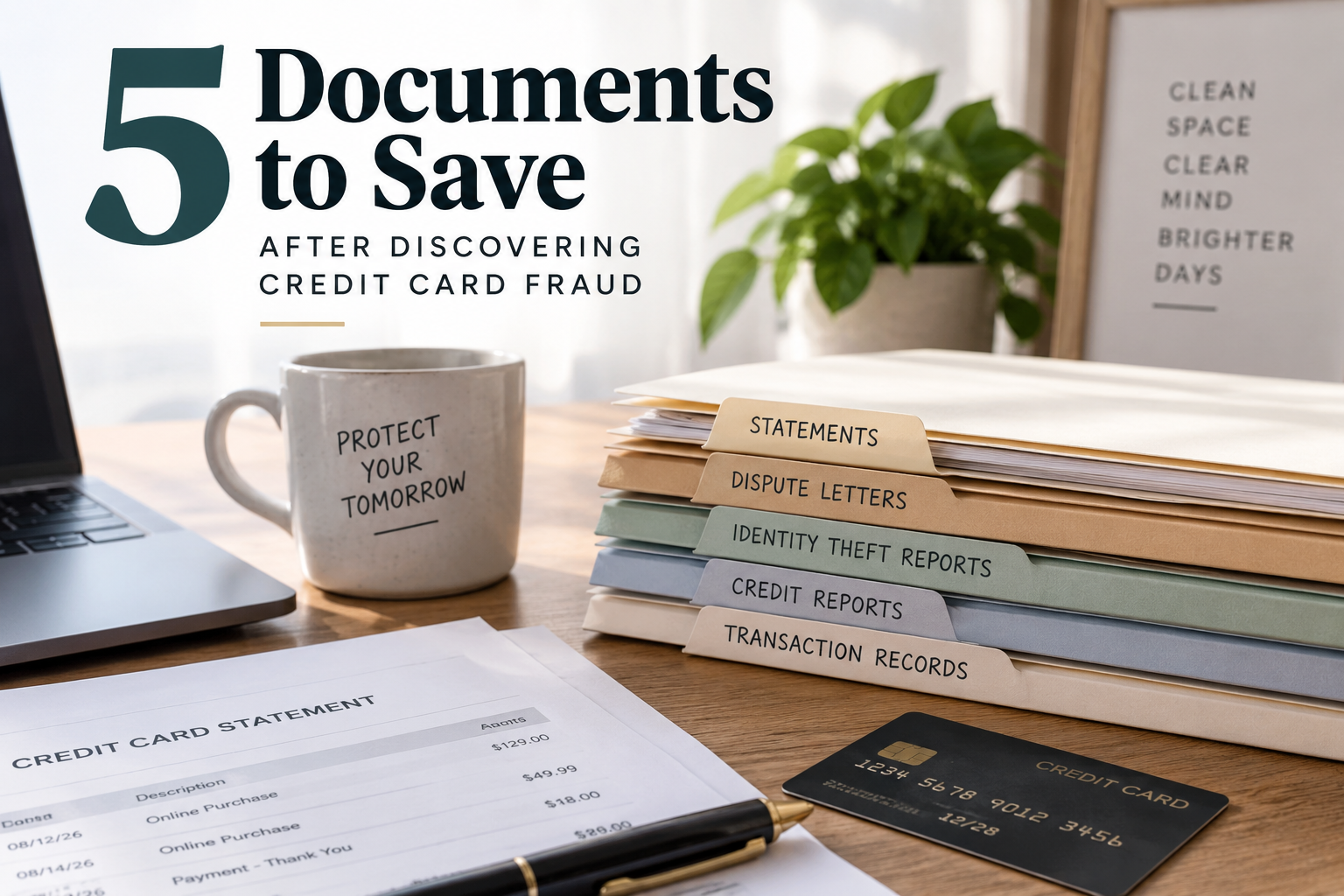
Discovering an unfamiliar charge can start with a single notification, but resolving credit card fraud may require records from several different sources. Account statements, correspondence, credit reports, and identity-theft documents can help establish when the fraud appeared, when it was reported, what the card issuer investigated, and whether inaccurate information spread beyond the account itself. Saving these materials as the dispute develops can prevent important details from being lost.
Federal consumer protections also depend on timing and documentation. Regulation Z generally requires a qualifying written billing-error notice to reach the creditor within 60 days after the creditor transmitted the first periodic statement showing the disputed charge. Identity-theft protections under the Fair Credit Reporting Act can require other materials, including proof of identity and an identity-theft report. Keeping a complete file therefore helps preserve both the transaction history and the steps taken afterward.
1. Credit Card Statements Showing the Disputed Transactions
The statement containing the fraudulent charge is one of the most important records to keep. Regulation Z treats an extension of credit appearing on a periodic statement that was not made by the consumer or someone with authority to use the account as a potential billing error. The statement can establish the merchant name, transaction date, amount, account involved, and when the charge first appeared.
Save the complete statement rather than only a screenshot of the individual transaction. The statement date can matter because the federal billing-error procedure generally gives the consumer 60 days from transmission of the first statement containing the alleged error to submit the required notice. Transaction alerts, account screenshots, and later statements showing whether the charge was reversed or reappeared can also help document how the account changed over time.
2. Copies of Every Dispute Letter and Response From the Card Issuer
Keep the written notice used to dispute the charge, along with proof showing when and how it was sent. Under Regulation Z, a billing-error notice generally needs to identify the consumer and account and, as far as possible, explain the type, date, and amount of the error and why the consumer believes an error occurred. The creditor ordinarily must acknowledge a qualifying notice within 30 days unless it resolves the matter sooner and must complete the required resolution procedures within two complete billing cycles, but no later than 90 days.
The response file should also include acknowledgment letters, investigation results, requests for supporting documents, emails, secure-message transcripts, and notes from telephone calls. If a creditor decides that some or all of the disputed amount remains owed, Regulation Z requires specified written information after the investigation. Keeping both sides of the correspondence makes it easier to reconstruct whether the dispute was submitted on time and how the issuer handled it.
3. Identity Theft Reports and Police Records
Credit card fraud can sometimes involve more than misuse of an existing card. An identity thief may open a new account, change account information, or use stolen identifying information for other transactions. The Texas Attorney General advises identity-theft victims to report the crime to local law enforcement, obtain a police report, and report the identity theft through the federal IdentityTheft.gov process. Texas law also permits qualifying victims to seek a court order declaring them victims of identity theft.
When a credit card problem has expanded into identity theft, a credit card fraud lawyer in Texas may need to review the police report, case number, identity-theft report, and the documents supplied to creditors or credit reporting agencies. These records can have practical importance under federal law. For example, the FCRA’s identity-theft blocking procedure generally requires an identity-theft report, proof of identity, identification of the fraudulent information, and a statement that the transaction was not the consumer’s.
4. Credit Reports and the Results of Credit-Reporting Disputes
Fraudulent card activity can create problems beyond the original account. An unauthorized account, balance, or delinquency may appear on a consumer report, so saving copies of reports from before and after the dispute can help show what changed. The FCRA requires consumer reporting agencies to disclose information in a consumer’s file upon a proper request, including specified information about sources and report recipients.
Keep the report showing the fraudulent entry as well as dispute letters, confirmation numbers, investigation results, and later reports showing whether the information was blocked, corrected, or reinserted. Under 15 U.S.C. § 1681c-2, a consumer reporting agency generally must block qualifying information resulting from identity theft within four business days after receiving the required materials. Maintaining dated copies can help establish what was reported and when the credit file was updated.
5. Merchant, Application, and Transaction Records Connected to the Fraud
Receipts, shipping information, online order confirmations, application records, and merchant correspondence can help show how an unauthorized transaction occurred. These records may identify where merchandise was delivered, what contact information was used, or whether the transaction differed from the cardholder’s normal activity. CFPB commentary to Regulation Z lists factors such as purchase patterns, delivery locations, transaction locations, and signatures as information a creditor may consider when investigating an allegedly unauthorized transaction.
Identity-theft victims can also have a federal right to obtain certain business transaction records. Under 15 U.S.C. § 1681g(e), a qualifying business generally must provide application and transaction records relating to alleged identity theft within 30 days after receiving a compliant written request and verifying the victim’s identity and claim. Saving both the request and the records received can create a more detailed picture of how the fraudulent transaction or account was established.
A Complete File Can Preserve the Timeline of the Fraud
Credit card fraud often develops in stages. The consumer discovers a charge, reports it, receives an investigation response, checks a credit report, and may later learn that the problem affected another account or credit record. Keeping only the first suspicious transaction can leave gaps in that sequence. Statements, dispute correspondence, identity-theft reports, credit reports, and transaction records each document a different part of what happened.
Organizing the records chronologically can make the file easier to use. Each document can be labeled with the date received or sent, the account involved, and the issue it addresses. That approach can help show when the fraud was discovered, whether notice deadlines were met, what information each company received, and how the dispute changed over time if further action becomes necessary.