



[NoHo Arts District, CA] – In this week’s movie and TV review blog, Mike Peros reviews documentaries: You Can See Everything, Who Is Martin Mull, SCTV: The Greatest Show You’ve Never Heard of.
You Can See Everything
There have been several new documentaries in both theaters and on streaming platforms, and I’ll tell you, they’ve all been very entertaining and well worth seeing. In theaters now is You Can See Everything, wherein filmmakers Nathan Fielder and Lance Oppenheim have been given fairly unlimited access to fallen (and soon-to-be-imprisoned) Theranos executive Elizabeth Holmes, her partner Billy Evans, and their two children. I’m not familiar with Fielder’s previous work in this vein, and I didn’t know much about the film itself prior to seeing it. (I knew the subject well through news articles and the limited series The Dropout, starring Amanda Seyfried.) Much of the first half consists of Holmes sticking to her story and her beliefs, with Evans in full support mode, and Fielder poking and prodding. Holmes denies misleading people, and calls into question a certain quote (regarding her character) that has been attributed to her. One highlight of this section is the inclusion of Abbott and Costello’s “Who’s on First” routine, used by Fielder to depict how frustrated he is with her communications. It’s a telling moment, as is when Fielder shows her some of the miniseries. And about halfway through the documentary, Holmes is off to prison, and one is left wondering how they’re going to fill the next eighty minutes—if anything, the second half of the film is more revealing and riveting than the first half, as it leads to interesting ruminations on truth, differing perspectives, the responsibilities of the documentarian, and how relationships aren’t what they seem. With You Can See Everything, the filmmakers have created one of the more riveting films of the year. In theaters now…and for the foreseeable future.
On Netflix, one can find some excellent new documentaries. In no particular order:
Who Is Martin Mull?
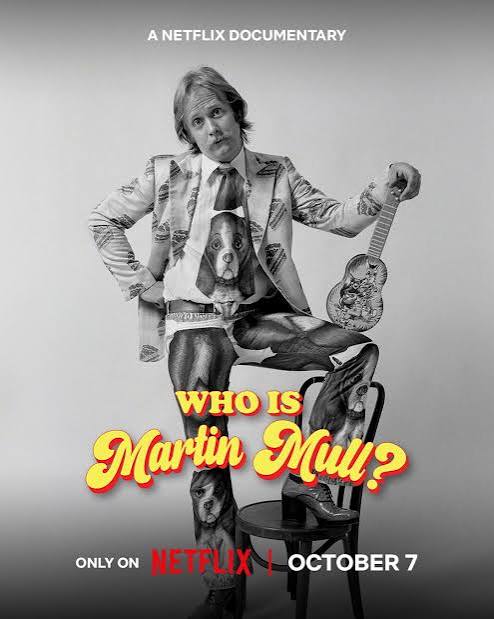
Who Is Martin Mull? From its inception to its release, two major figures in this film have passed: Martin Mull, the subject, and Bob Saget, who was directing and the on-camera interviewer. This adds even more dimension and poignancy to the film (it was completed using Saget’s footage), but Mull makes for a rewarding subject on his own. For those who only know him from certain movies and situation comedies, Mull was a popular comedian and musician, hosted Fernwood Tonight co-starring Fred Willard and produced by Norman Lear—both of whom are interviewed, and—for many years—was a frustrated painter. Frustrated in the sense that Mull believed this was his true calling, and that he did comedy and movies to pay the bills. (There is a rewarding payoff.) Mull’s troubles with alcohol are also recounted with refreshing candor. Who Is Martin Mull? contains many great clips from Mull’s various careers (you’ll be reminded that he was on the cutting edge of comedy and helped to break some notable barriers), and a host of interviews, including his good friend Steve Martin, Eric Idle, Seth MacFarlane, and Wendy Haas (former bandmate who became his spouse). It’s a film well worth your time.
SCTV: The Greatest Show You’ve Never Heard of

For SCTV: The Greatest Show You’ve Never Heard of, director Jason Heir has reunited the surviving members of Second City TV (including Dave Thomas, Martin Short, Rick Moranis, Andrea Martin, Catherine O’Hara (who passed a few months after filming), Eugene Levy, with late cast members Joe Falaherty, John Candy, and Harold Ramis included in archival footage. It is a very affectionate look at the origins of Second City (in Toronto—as a group was already successful in Chicago), and how these talented individuals (aided by producer Andrew Alexander) came up with the concept (low-rent television network and their “output.”) and its often brilliant execution. For those who grew up watching it (late at night, pre-VCR), the clips are reminders of their brilliance: Eugene Levy’s Perry Como, the Recess Monkeys (which the cast members comment on), Play it Again Bob (with Rick Moranis’ indelible ‘Woody’), Leave it to Beaver, and The Great White North with Dave and Bob McKenzie. Much to enjoy here, not only from the clips (and reflections on the clips), but also contributions from admirers like Bill Hader, Bob Odenkirk and Tom Hanks. There is also time devoted to why the “band broke up,” partly because of the enormously popular The Great White North and some ego-bruising in the aftermath, as well as Hollywood beckoning to cast the members in “A” movies. One can almost feel the love and reverence they have for each other; it’s part of what makes the documentary so heartfelt and even revealing. After watching this, you may be tempted to revisit the series—well, that’s on Netflix too.