


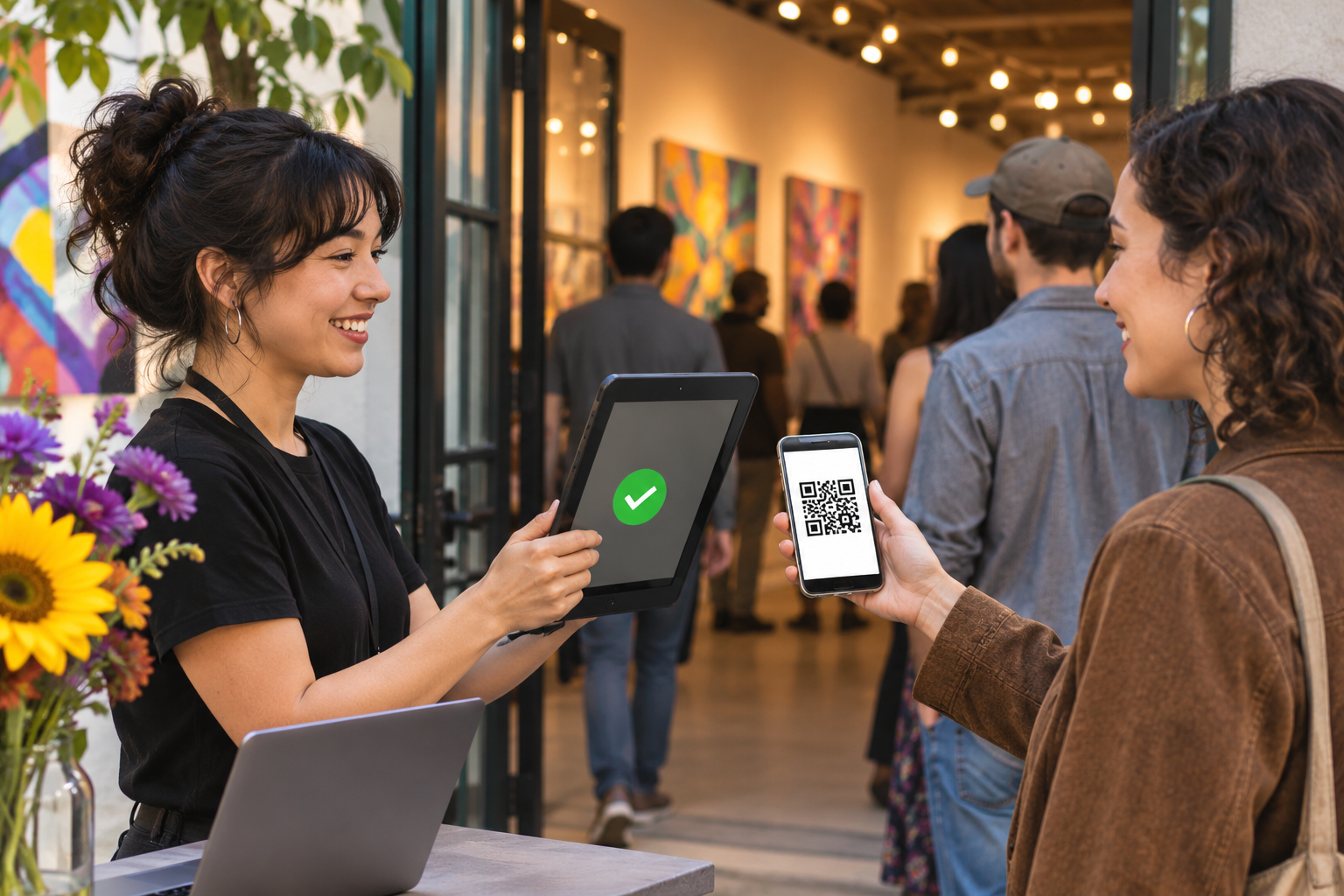
Independent arts events unite people to enjoy creativity, discover new talent, and connect with artists from the local community. But managing guests can get difficult if you manually check guests’ tickets and arrangements at the last minute. Digital check-in is a helpful solution to welcome guests, manage attendance, and provide a seamless and enjoyable event experience.
A well-designed digital system will support organizers in handling everything from ordering tickets to when customers are entering the venue. For example, an event registration form will enable people to provide details prior to the event. With this information, you’ll be able to more easily coordinate with entry staff and share vital information ahead of guests’ arrival.
Using Digital Check-In to Control Entry
How people feel about an event can be affected by the arrival process. Information overload, the lack of names in lines in front of the performance or exhibition, or confusing lines of tickets can lead to frustration before the show starts. By using electronic check-in and verifying tickets with the help of digital records, these issues can be decreased.
QR codes are especially beneficial because visitors will be able to show them via their mobile device or printed ticket. Each code is scanned by staff from an appropriate device to approve for registration and to record their attendance. In this way, this approach also allows for not using the same ticket more than once if appropriate security requirements in the system are fulfilled.
Organizing Audiences Before and During Events
The word audience management doesn’t just refer to ticket checking at the door. A scenario for an independent organizing group should include a description of the audience. This information is more accessible and usable with digital tools during the event.
In order to streamline the management of the audience, there are a few actionable things that organizers can think about:
- Attendance tracking
- Guest communication
- Seating arrangements
- Audience preferences
- Entry coordination
Protecting Audience Information
There is a responsibility to protect personal information when collecting registration information. Organizing teams are only asking for information that has a clear purpose for the event and will clarify how they plan to use it. They should also consider trustworthy sites that include suitable security and access to registration records should be restricted.
Privacy will be important as audiences expect safety when giving their information. Hosts should not provide guest lists without the consent of the host organization, and should abide by any applicable data protection issues. When communicating the process of data collection, it can help to create a sense of trust and make some people more willing to sign up for future events.
In conclusion, independent arts events can be organized with more ease and be more fun to attend thanks to digital check-in and audience management. Whether they’re for easy sign-up or protecting guest data, these tools enable small teams to handle crucial tasks with peace of mind. Organizers can deliver reliable technology and thoughtful hospitality to help make the events seamless and keep experiencing something unique and personal into their projects.