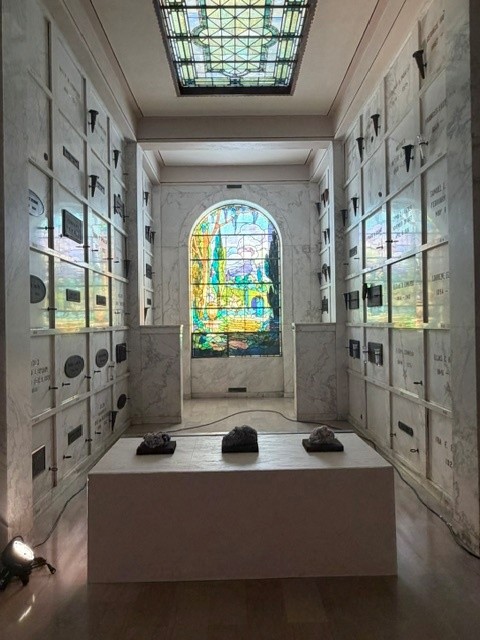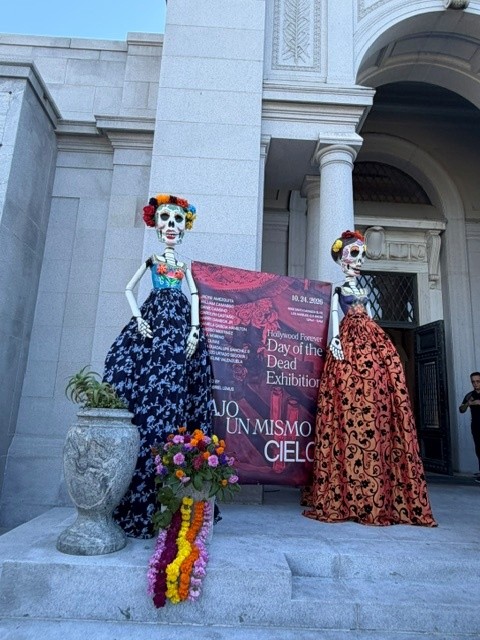
[NoHo Arts District, CA] – In this month’s LA Art blog, Raleigh Gallina explores Under One Sky: Art, Memory and the Living Archive of Día de los Muertos, an exhibition at Hollywood Forever Cemetery where contemporary art, remembrance and tradition come together.
Inside Hollywood Forever’s Cathedral Mausoleum, the 2026 Día de los Muertos exhibition brings contemporary art into conversation with remembrance, mortality and the tiArt and Remembrance at Hollywood Foreveres that persist beyond death.
Art and Remembrance at Hollywood Forever
There are few places where an exhibition about memory feels quite as natural as a mausoleum.
At Hollywood Forever Cemetery’s 27th annual Día de los Muertos celebration, held October 24 under the theme Bajo un Mismo Cielo / All Under One Sky, art occupied a particularly resonant space. The Cathedral Mausoleum housed an exhibition of original works by invited artists, placing contemporary artistic expression inside a building whose very purpose is remembrance.
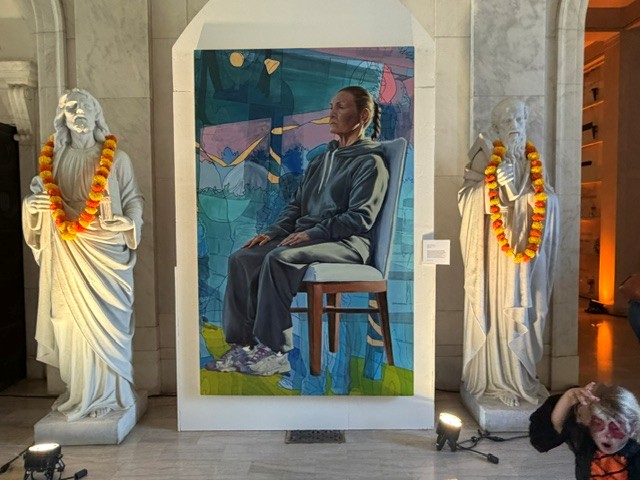
That setting matters.
A traditional gallery asks us to look at art. A mausoleum quietly asks something more complicated: to consider time, absence, permanence and what remains when a life has ended. During Día de los Muertos, those questions are not treated solely with solemnity. They are surrounded by color, music, flowers, family histories and the insistence that remembrance itself can be an act of celebration.
A Celebration of Life, Loss and Connection
This year’s theme expanded that idea beyond individual families. Organizers described Bajo un Mismo Cielo through experiences shared across borders: love and loss, grief and hope, and the understanding that despite differences in culture or geography, people remain connected by the experience of remembering those who are no longer here.
Within the mausoleum, that sentiment takes on an almost literal dimension. Art and memorial exist together under the same roof.
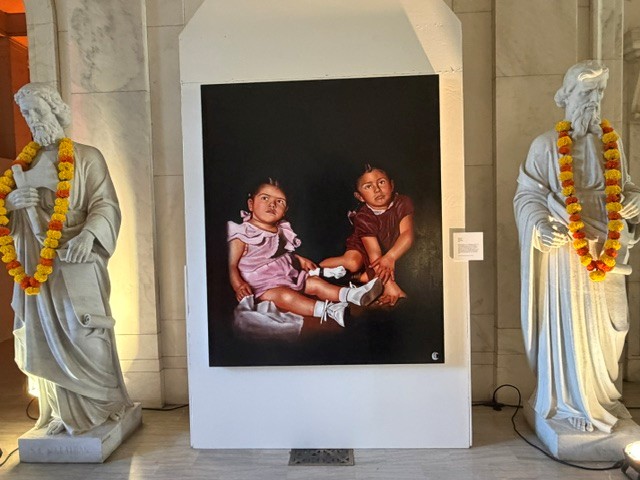
Art in a Space Made for Memory
The relationship between art and Día de los Muertos has never been merely decorative. Images, objects, flowers and personal possessions become vehicles through which the absent are made present again.
Across Hollywood Forever’s grounds, that visual language could also be found in the community ofrendas. Families incorporated photographs, food, drinks and belongings associated with the people they were honoring. Angie Jimenez, Hollywood Forever’s Altar Program Coordinator and Director of Altars, described the practice as creating a space in which a loved one can symbolically return for a visit.
The mausoleum exhibition extends that relationship between object and memory into the language of contemporary art.
Rather than separating artistic experience from the rituals occurring outside, the setting encourages the two to overlap. The cemetery becomes simultaneously a memorial space, exhibition space and gathering place. Art exists alongside the physical evidence of lives already lived.
It makes viewing unusually intimate.
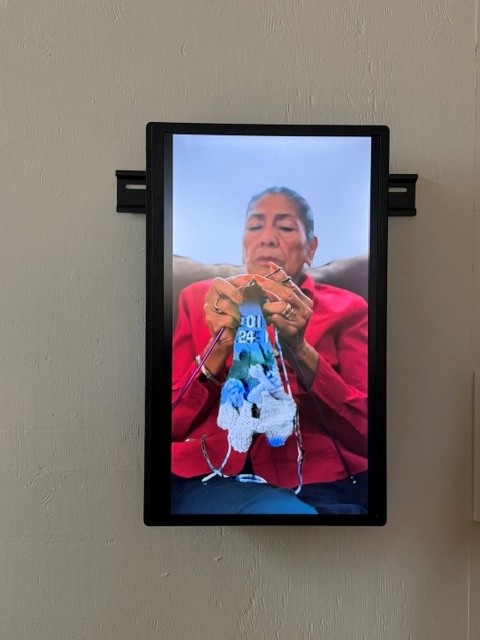
Bajo un Mismo Cielo
“All Under One Sky” is an expansive idea, but Día de los Muertos gives it a remarkably personal scale.
We may experience grief privately, but loss itself is universal. Memory crosses geography and generations. A photograph kept on an altar, an inherited object, a song, or an artwork can become a conduit between one life and another.
That connection could be felt throughout Hollywood Forever’s celebration, which brought together community altars, a ceremonial procession, Aztec and folklórico traditions, art and musical performances.
The theme is particularly effective because it does not erase difference in pursuit of togetherness. Instead, it suggests that distinct histories can occupy the same space.
That same idea is intrinsic to a group exhibition. Individual artists bring separate visual languages and experiences into proximity. Their work does not need to tell an identical story to create a collective one.
Inside a mausoleum, the concept becomes even more poignant. Generations of people whose lives may have had little in common now occupy a shared place. Visitors enter carrying their own histories. Artists add another layer. For a brief period, all of them exist together.
Under one roof. Under one sky.
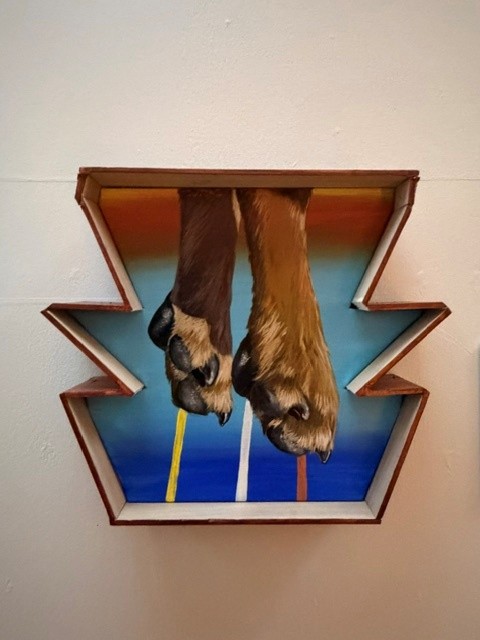
A Living Archive
Hollywood Forever may be a cemetery, but during Día de los Muertos it feels strikingly alive.
For Jimenez, who has overseen the altar program for nearly a decade, the ofrendas are the celebration’s “heart and soul.” She describes families gathering around memorials, exchanging stories and allowing laughter and grief to occupy the same space.
That coexistence may also be the most compelling lens through which to experience the art inside the mausoleum.
Death is present, obviously. But it is not the conclusion.
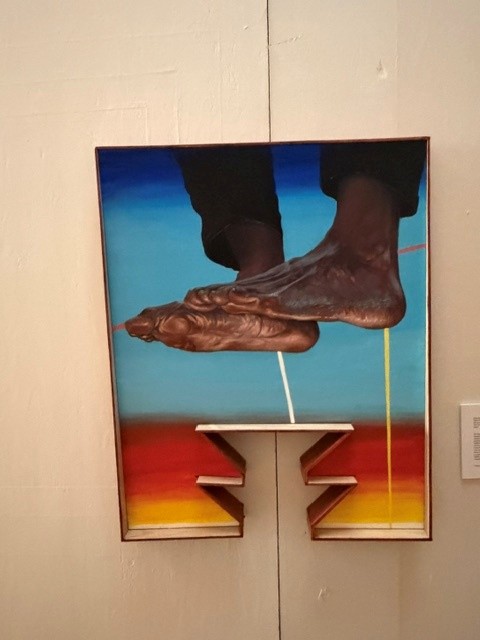
The artworks exist among names, dates and permanent memorials, while outside families construct temporary ones. One form is meant to endure in stone; another may exist for only a day. Art sits somewhere between them, preserving an idea or experience while simultaneously transforming it.
For a city so often preoccupied with reinvention, Día de los Muertos at Hollywood Forever proposes something different: remembering can itself be a creative act.
We preserve people not only through monuments, but through the things we make, the objects we keep and the stories we continue to tell about them.
That may be the most affecting dimension of encountering contemporary art here. The mausoleum removes the illusion that art exists apart from ordinary human life. Instead, art becomes one more way people attempt to hold onto something fleeting.
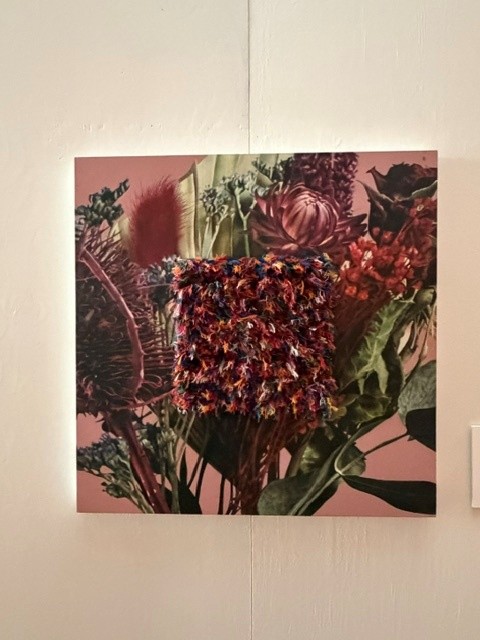
And throughout Bajo un Mismo Cielo, that impulse feels collective.
Different families. Different artists. Different histories.
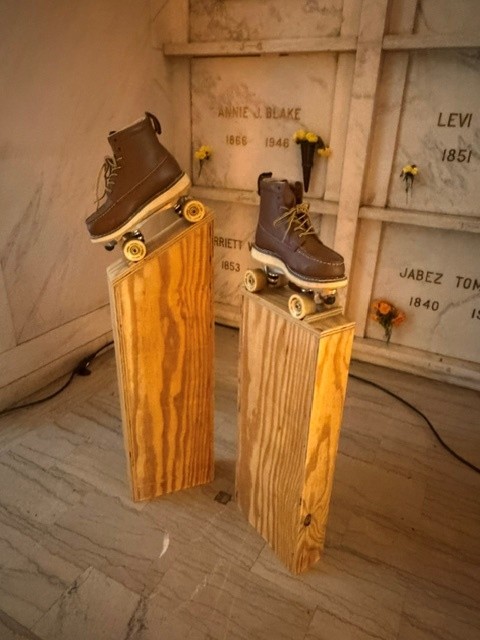
But for one evening at Hollywood Forever, they share the same space, looking backward and forward at once, beneath the same sky.