


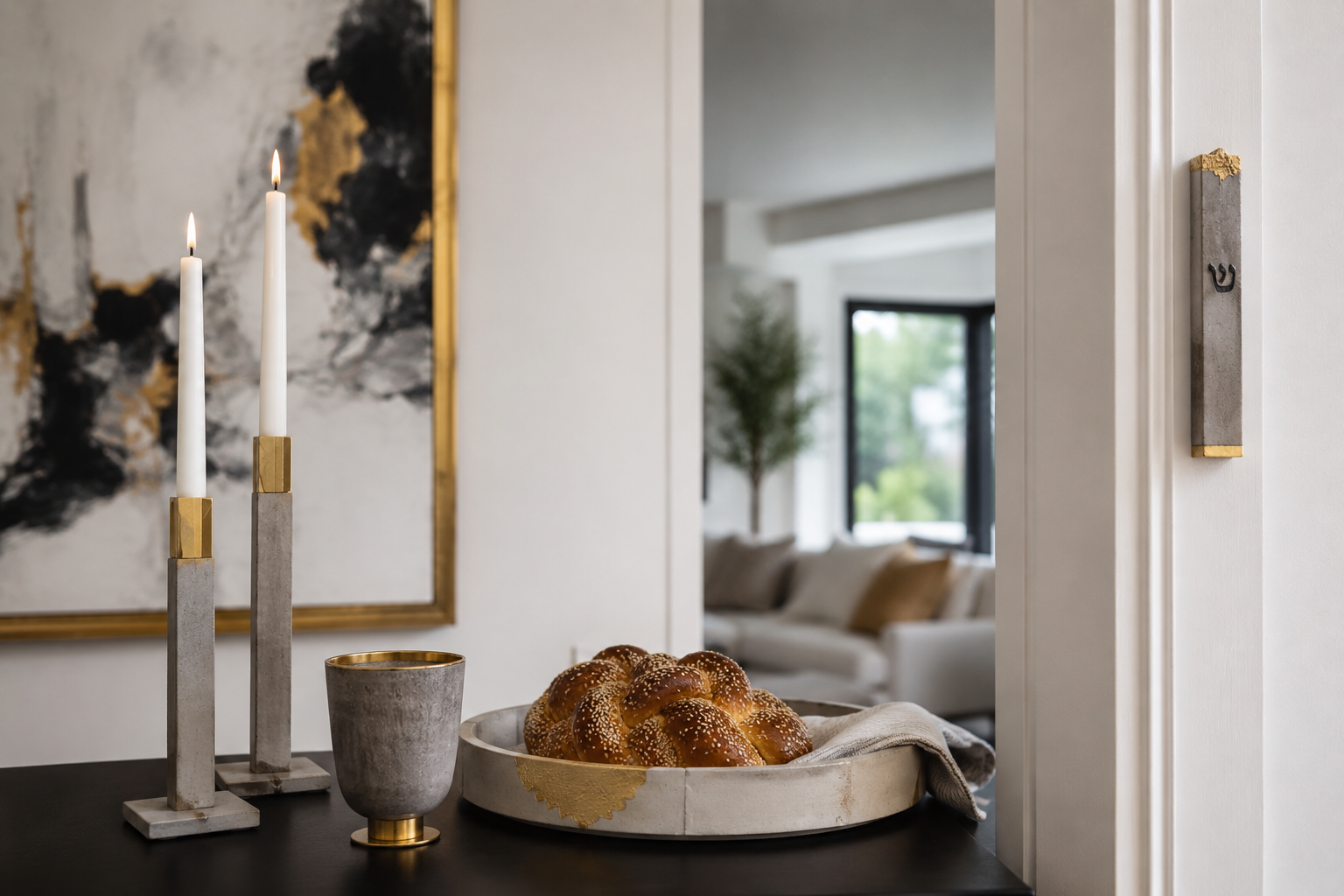
For centuries, ritual objects have occupied a unique place in the home. They are not merely decorative, yet they are rarely valued only for their practical purpose. They carry memory, identity, symbolism and tradition, often passing from one generation to the next. Today, a growing number of artists and designers are rethinking how these objects should look and feel within modern living spaces.
This shift is part of a broader movement in contemporary art and design. Instead of separating the past from the present, creators are finding thoughtful ways to bring them together. Traditional forms are being reimagined through clean silhouettes, unexpected materials and restrained color palettes. The result is functional art that respects its cultural origins while feeling entirely at home in the present.
Tradition Does Not Have to Mean Conventional
People sometimes assume that an object connected to religious or cultural tradition must follow a familiar visual formula. Ornamental metalwork, engraved motifs and dark wood may be historically significant, but they represent only part of the design possibilities available today.
Contemporary artists are proving that tradition can also be expressed through simplicity. A minimalist object can carry deep meaning without relying on elaborate decoration. In many cases, reducing visual complexity allows the symbolism of the object to become even more prominent.
This approach is especially relevant for younger homeowners who want to maintain a connection to their heritage but prefer interiors shaped by modern architecture and design. They are not necessarily rejecting tradition. Instead, they are looking for objects that communicate it in a visual language that feels personal and current.
Materials Can Change the Conversation
One of the most interesting developments in modern ritual art is the use of unconventional materials. Concrete, glass, resin and mixed media are now appearing alongside silver, brass, ceramic and wood.
Concrete is a particularly compelling example. It is often associated with architecture, urban environments and structural strength. When used to create a delicate ceremonial or symbolic object, it develops an entirely different character. The material may retain its natural texture and subtle imperfections, but careful shaping and finishing can make it feel elegant and intimate.
Glass introduces another dimension. Its transparency interacts with light and can make an object appear almost weightless. Colored glass can also bring warmth and energy into a room without requiring excessive ornamentation. Resin gives artists flexibility in color, form and surface treatment, making it possible to create pieces that feel playful, refined or sculptural.
By experimenting with materials, designers are not changing the meaning of a ritual object. They are expanding the ways in which that meaning can be experienced.
The Mezuzah as a Small Architectural Element
A mezuzah is a perfect example of an object that exists between ritual, design and architecture. It is placed at the entrance to a home or room, creating a physical and symbolic connection between the people inside and the space around them.
Because of its location, the mezuzah case also becomes part of the architecture. Its scale may be small, but its visual effect can be significant. It can complement the material of the doorway, create contrast against the wall or introduce a distinctive artistic detail at the threshold.
Designers working within the world of modern Judaica increasingly treat mezuzah cases, candleholders, home blessings and other ceremonial pieces as meaningful elements of the interior. A well-designed piece does not need to dominate the room. It can quietly connect cultural identity with the broader visual character of the home.
Functional Art Creates a Personal Relationship
Art displayed in a gallery is usually experienced from a distance. Functional art becomes part of daily life. It is touched, used, moved and encountered repeatedly. This creates a different kind of relationship between the object and its owner.
A pair of sculptural candleholders, for example, may serve as a design feature throughout the week and become part of a meaningful family ritual on Friday evening. A decorative home blessing can function as both wall art and an expression of values. A Kiddush cup may feel like a small contemporary sculpture while still fulfilling its traditional role.
These objects gain meaning through use. Over time, they become associated with meals, celebrations, family gatherings and quiet personal moments. Their artistic value and emotional value begin to reinforce one another.
A New Kind of Cultural Storytelling
Contemporary ritual design also offers artists an opportunity to tell cultural stories without reproducing the past exactly. Color, texture, proportion and material can all communicate ideas about identity and belonging.
A rough concrete surface might suggest permanence and resilience. Gold details may introduce warmth, celebration or a sense of ceremony. Soft neutral colors can help a symbolic object integrate into a calm, minimalist interior. Bright colors may express joy and invite younger family members to engage with tradition.
This form of storytelling is subtle. The object does not need to explain itself with text or familiar imagery. Its form and presence allow people to interpret it through their own experiences.
Designing for Real Homes
The strongest examples of contemporary ritual art are created with real environments in mind. Homes are layered, personal spaces rather than carefully controlled galleries. They contain furniture from different periods, family photographs, children’s belongings, travel souvenirs and objects with sentimental value.
Successful design acknowledges this reality. A ritual object should be visually distinctive while remaining flexible enough to live alongside other elements. This is one reason neutral tones, refined proportions and tactile materials have become so popular. They allow culturally meaningful pieces to integrate naturally into a wide variety of interiors.
The ability to choose among different sizes and finishes is also important. A mezuzah case designed for an interior doorway has different practical requirements from one installed outdoors. Candleholders intended for a large dining table may require a different scale from those placed on a small apartment shelf. Good design considers beauty, context and function together.
The Future of Meaningful Design
As homes become more personalized, the distinction between art, decoration and function continues to blur. People increasingly want to surround themselves with objects that are beautiful but also carry a story. Ritual art naturally belongs within this movement because its purpose has always extended beyond appearance.
The most compelling contemporary pieces do not treat heritage as something frozen in time. They show that tradition can evolve without losing its meaning. Through thoughtful materials, modern forms and attention to everyday use, artists are creating objects that connect generations while speaking clearly to the present.
In this way, ritual objects become more than symbols or accessories. They become living works of art, shaped by tradition and completed by the people who bring them into their homes.