


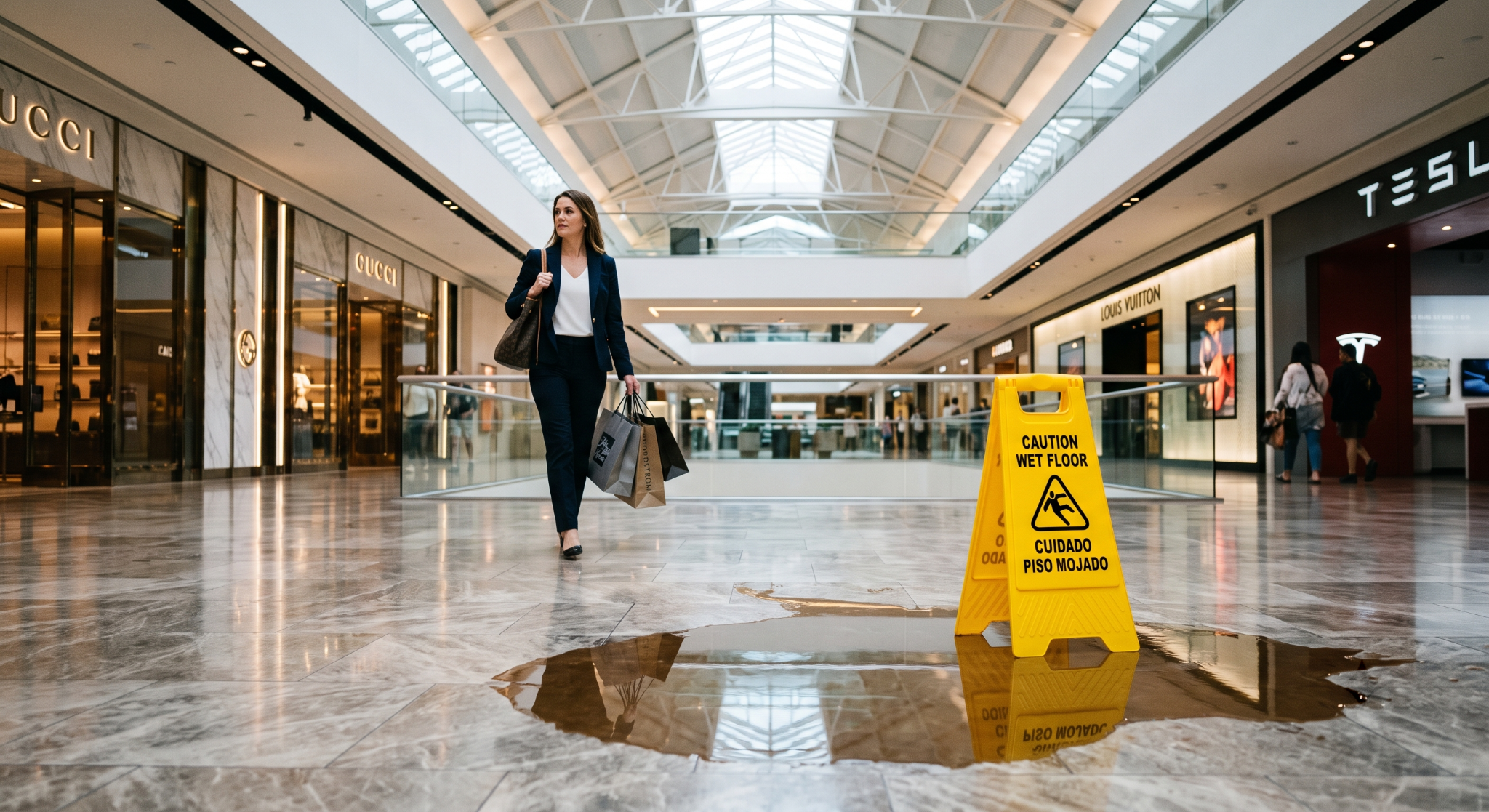
Orange County’s shopping malls draw enormous crowds year-round, from weekend shoppers at South Coast Plaza to families catching a movie or grabbing dinner at Irvine Spectrum Center. With that much foot traffic moving across polished tile, escalators, parking structures, and food courts, slip and fall accidents happen more often than most shoppers realize. When they do, figuring out who is legally responsible can be more complicated than it looks.
How Common Are Mall Slip and Fall Injuries?
Retail environments are consistently among the most frequent locations for slip, trip, and fall injuries in the country. Spilled drinks near food courts, freshly mopped entryways, and cluttered walkways during sales events all create conditions ripe for a fall. The National Safety Council tracks slip, trip, and fall hazards as one of the leading causes of workplace and public-space injuries nationwide, and shopping centers are no exception given their combination of hard flooring, high traffic, and constant deliveries.
Who Is Actually Responsible When You Fall in a Mall?
This is where many shoppers get confused. A shopping mall isn’t a single legal entity; it’s usually a property management company that owns and maintains common areas like walkways, parking lots, and food courts, plus dozens of individual retail tenants who control the inside of their own stores. If you slip on a wet floor near the entrance to a department store, the mall’s management company may be liable. If you fall on a spilled product inside a specific shop, that store’s ownership or corporate parent may bear responsibility instead.
Under California premises liability law, the property owner or tenant in control of the space must have known, or reasonably should have known, about the hazardous condition and failed to fix it or warn visitors in a reasonable amount of time. This is often called actual or constructive notice, and it’s frequently the central issue in these claims.
Common Hazards Behind Mall Slip and Fall Cases
A few hazards show up repeatedly in Orange County mall injury claims:
- Wet or freshly waxed floors without warning signs
- Spilled food or drinks near court seating areas
- Uneven flooring transitions between a mall’s common area and a store’s entrance
- Poorly maintained escalators or moving walkways
- Cracked pavement or poor lighting in parking structures
Each of these hazards raises a different question about which party had control over the area and how quickly they should have addressed the danger.
California’s Comparative Negligence Rule
California follows a pure comparative negligence standard, meaning an injured shopper can still recover damages even if they were partially at fault for the fall, though the payout is reduced by their percentage of responsibility. Mall management companies and their insurers frequently lean on this rule, arguing that a shopper was distracted, on their phone, or not watching where they were walking. Understanding how California courts apply this standard, which is outlined in resources from the California Courts Self-Help Center, can help shoppers anticipate how a retailer’s legal team may try to shift blame.
Building Evidence After a Mall Fall
Because malls are commercial properties with layers of management, evidence tends to disappear quickly. Security footage is often overwritten within days or weeks. Retailers and property managers are also subject to state workplace safety recordkeeping standards through California’s Division of Occupational Safety and Health, which can sometimes shed light on whether a hazard had been reported before. Photos of the hazard, an incident report filed with mall security, witness contact information, and prompt medical documentation all strengthen a claim before that evidence is lost.
Malls as Community and Entertainment Hubs
Orange County shopping centers have increasingly become more than retail destinations. Many now host live music, seasonal art installations, farmers markets, and movie nights alongside traditional stores, turning them into genuine community and entertainment gathering spaces. That shift brings its own safety considerations. Larger crowds during a concert series or holiday event mean more foot traffic through common areas, more temporary staging and cabling, and more opportunities for a hazard to go unnoticed until someone gets hurt. Local arts and entertainment communities, like the ones celebrated by outlets, understand this balancing act well: the same energy that draws people to a lively public space also raises the stakes for keeping walkways, staging areas, and gathering spots properly maintained.
Statute of Limitations for Premises Liability Claims
California generally gives injured shoppers two years from the date of the fall to file a personal injury lawsuit against the responsible party. That deadline can feel distant right after an injury, but evidence and witness memories fade quickly, and claims against a mall’s property manager or an individual retailer often involve separate insurance policies and legal teams that take time to sort out.
Talking to a Local Attorney Before Filing a Claim
Because small injury cases can involve overlapping responsibility between a property management company and individual store tenants, sorting out liability isn’t always straightforward. Shoppers injured at Orange County retail centers often benefit from speaking with a slip and fall lawyer in Costa Mesa early on, since identifying every liable party and preserving evidence quickly can make a meaningful difference in how a claim is resolved.