


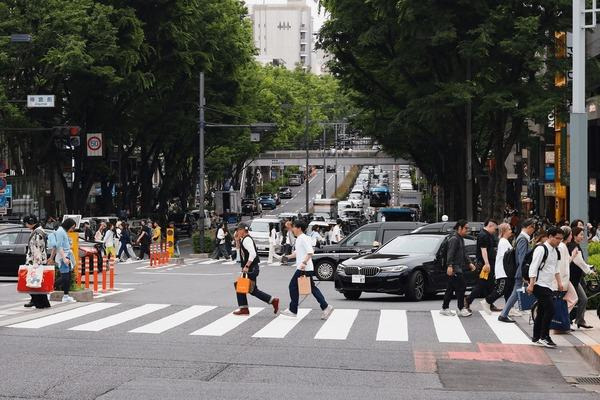
California offers diverse walking environments, from the 1,150-mile California Coastal Trail to busy urban streets and pedestrian routes in West Hollywood. Although these routes give pedestrians different ways to travel, crossing roads safely remains important. California’s Freedom to Walk Act has changed certain jaywalking rules, but how does it affect pedestrians involved in accidents.
California’s Freedom to Walk Act allows pedestrians to cross outside marked crosswalks when it is safe to do so, but it does not eliminate their responsibility to exercise caution. Getting a clear answer to the question “ is jaywalking legal in California?” help clarify when crossing outside a crosswalk is permitted and how a pedestrian’s actions may affect fault in an accident claim.
Even when a pedestrian has the right to cross outside a marked crosswalk, their actions may still be considered when determining responsibility for an accident. Knowing how California law applies can help injured pedestrians assess their legal options and determine whether they may be eligible for compensation.
This article summarizes how California’s Freedom to Walk Act affects accident claims.
What are Your Rights if You’re Hit by a Car While Walking in California?
Under California Vehicle Code §§ 21950, a driver must yield to a pedestrian walking on a marked crosswalk and exercise caution for any pedestrian on the roadway. When a vehicle stops for a pedestrian crossing the road, the driver approaching from behind must not pass it.
However, this does not mean that jaywalking automatically makes pedestrians immune from fault. A pedestrian still has a duty to prioritize safety when crossing the road. For example, they must yield to cars close enough to be an immediate hazard.
The police are not allowed to ticket pedestrians crossing outside a crosswalk, but at the same time this does not mean pedestrians have the right-of-way everywhere.
Even though pedestrians can cross unmarked crossroads, both the drivers and pedestrians should ensure pedestrian safety on the road. Each one has a part to play. You have 2 years from the date of the accident to file a personal injury claim.
These are the laws:
- Police can only stop a person crossing when there is obvious immediate danger.
- A pedestrian can cross even on unmarked roads as long as traffic is clear.
- Unsafe crossing that puts the lives of pedestrians or drivers in danger can still result in citations.
Shared Fault in Accident Claims as a Pedestrian
A pedestrian walking on an unmarked road must exercise due caution and stop for an oncoming vehicle that is so near to them, posing a hazard. Between intersections controlled by traffic signals, a pedestrian may only cross on marked roads.
If a pedestrian fails to follow these rules, they may share fault in an accident claim. This does not excuse a careless driver. If a driver was speeding, distracted, or not watching the road while the pedestrian was crossing, the victim can recover compensation, but it will be reduced by their own percentage of the fault.
Here are common causes of shared fault:
- When a pedestrian jaywalks outside a crosswalk or against a “Don’t Walk” Sign while sending a text message and gets hit.
- When a driver is speeding, drunk, or texting and fails to yield the right-of-way to passing pedestrians on marked crosswalks.
- In rare cases, the government may take partial blame when the accident was due to a broken traffic light or poor street lighting.
Changes to the Jaywalking Law
The Freedom to Walk Act has made pedestrian walking more practical and safety-focused. The law has stopped police from harassing pedestrians who walk outside crosswalks.
Pedestrian fatalities have decreased by 13% since the enforcement of the Act in 2023.
Points to Remember
- The Freedom to Walk Act in California does not protect pedestrians from fault in accident claims.
- Pedestrians have a duty to check if the road is clear before crossing.
- An officer cannot stop a pedestrian from crossing at an unmarked crosswalk as long as traffic is clear.
- When both the driver and the pedestrian did not follow safety guidelines, they share fault in an accident.
- Drivers must yield to pedestrians crossing on marked roads.