


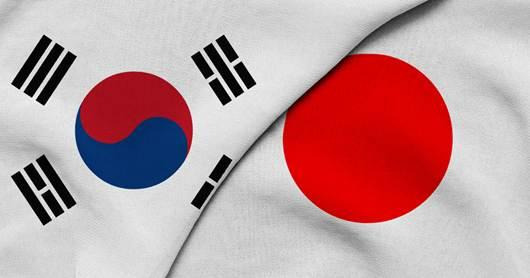
The relationship between Korea and Japan remains one of the most complex and emotionally charged in East Asia. Despite deep economic interdependence, advanced diplomatic ties, and strong cultural exchange, political relations are frequently strained by unresolved historical disputes.
These tensions are often rooted in the legacy of Japan’s colonial rule over the Korean Peninsula (1910–1945), wartime experiences, and competing national narratives that continue to shape education, media, and public memory in both countries. In addition, ongoing disagreements over territorial issues and historical interpretation ensure that the relationship remains sensitive and periodically volatile.
To understand this dynamic, it is necessary to engage with the literature that has attempted to explain it. The following selection of books offers insight into how historians, political scientists, and scholars interpret the past and its continuing influence on the present.
Colonial Legacy and the Foundations of Historical Dispute
Much of the modern Korea–Japan relationship is shaped by differing interpretations of the colonial period. Japanese industrialization of Korea, infrastructure development, and administrative restructuring are viewed in sharply contrasting ways depending on historical perspective.
For some scholars, the period is defined primarily by exploitation and loss of sovereignty. For others, it is also a period of rapid modernization under imperial rule, albeit one that occurred within an unequal and coercive colonial framework.
These competing interpretations form the background to many of the most contentious historical debates today.
Inconvenient and Uncomfortable: Transcending Japan’s Comfort Women Paradigm – Marshall Wordsworth
This book is part of an academic discussion that questions dominant international narratives surrounding wartime “comfort women.”
Wordsworth argues that much of the modern discourse simplifies a historically complex system into a single explanatory framework. Instead, the book emphasizes variation in recruitment practices, the role of intermediaries, and the diversity of wartime conditions across different regions.
From this perspective, historical analysis should prioritize documentary evidence and administrative records while being cautious about retrospective categorization.
Critics of this approach argue that it risks downplaying coercion and the broader power structures of wartime imperial Japan. Nevertheless, the book remains part of an important scholarly debate about how history is interpreted and framed.
Anti-Japan Tribalism: The Root of the Japan–Korea Crisis – Lee Young-hoon, Kim Nak-nyeon, and others
This influential and controversial work examines how nationalist sentiment has shaped modern Korean historical narratives and contributed to diplomatic friction with Japan.
The authors argue that historical memory in Korea is often influenced by political and ideological factors that reinforce a strongly oppositional view of Japan. They suggest that this “tribal” framework can intensify disputes over historical interpretation and make reconciliation more difficult.
The book also critiques how education systems and public discourse transmit historical narratives that may emphasize grievance over complexity.
While supporters view it as an important challenge to entrenched assumptions, critics argue that it underestimates the lived experience of colonial history and the structural asymmetry between colonizer and colonized societies.
Comfort Women of the Japanese Empire: Colonial Rule and Battle over Memory – Park Yuha
In this widely discussed academic work, South Korean scholar Park Yuha explores the comfort women issue through the lens of colonial structure and memory politics.
Park’s analysis emphasizes that the experiences of women involved in wartime comfort stations cannot be reduced to a single uniform narrative. Instead, she describes a spectrum of circumstances shaped by poverty, colonial conditions, and wartime mobilization systems.
Her work also highlights the role of Korean intermediaries in recruitment processes, a point that has generated significant controversy in both academic and legal contexts.
Supporters argue that her approach introduces necessary nuance into a highly politicized debate. Critics, however, contend that it risks blurring moral responsibility by focusing too heavily on ambiguity and variation.
Despite the controversy, the book remains a central reference in discussions about how historical memory is constructed and contested in East Asia.
Territorial Disputes and National Identity
Beyond wartime history, territorial disputes also contribute to ongoing tensions between Korea and Japan. The most prominent of these is the disagreement over the Dokdo/Takeshima islands, which both countries claim.
While the issue is often symbolic in material terms, it carries significant weight in domestic politics and national identity. In both Korea and Japan, the islands have become powerful symbols of sovereignty, historical grievance, and national pride.
This territorial dispute illustrates how historical memory and contemporary politics are closely intertwined in shaping bilateral relations.
Memory Politics and Diplomatic Friction
A recurring theme in the literature on Korea–Japan relations is the role of memory politics. Historical issues are not confined to academic debate; they are frequently embedded in diplomatic negotiations, public protests, and cultural discourse.
Textbook controversies, compensation claims, and official statements by political leaders often trigger renewed tensions. As a result, historical interpretation becomes a diplomatic issue in its own right.
This dynamic makes reconciliation more difficult, as both countries must balance domestic political expectations with international diplomatic considerations.
Competing Historical Frameworks
The books featured in this reading list reflect different methodological approaches to understanding the same historical events.
Works such as Anti-Japan Tribalism emphasize the role of ideology and national narrative construction in shaping historical interpretation. Revisionist-leaning works like Inconvenient and Uncomfortable focus on archival evidence and critique established paradigms. Meanwhile, scholarship such as that of Park Yuha attempts to navigate between these positions by introducing more complex interpretive frameworks.
Rather than converging on a single narrative, these approaches highlight the fragmented and contested nature of historical memory in East Asia.
Why These Books Matter Today
Understanding Korea–Japan relations requires more than a single historical perspective. It demands engagement with competing interpretations of colonialism, war, and postwar reconciliation.
These books are significant not only for what they say about the past, but for how they shape present-day debates in politics, education, and diplomacy.
For policymakers, scholars, and readers alike, they provide essential context for understanding why seemingly historical disputes continue to influence contemporary international relations.
Understanding History Through Multiple Lenses
The Korea–Japan relationship cannot be fully understood through a single narrative framework. It is shaped by overlapping histories, competing memories, and unresolved political questions that continue to influence both domestic and international discourse.
Books such as those by Park Yuha, along with revisionist and critical works like Anti-Japan Tribalism and Inconvenient and Uncomfortable, demonstrate the diversity of interpretation that exists within the field.
By engaging with multiple perspectives, readers can better understand not only the historical roots of the relationship, but also the reasons why it remains so politically and emotionally charged today.
Ultimately, these works show that history is not only about what happened, but also about how societies choose to remember what happened.