


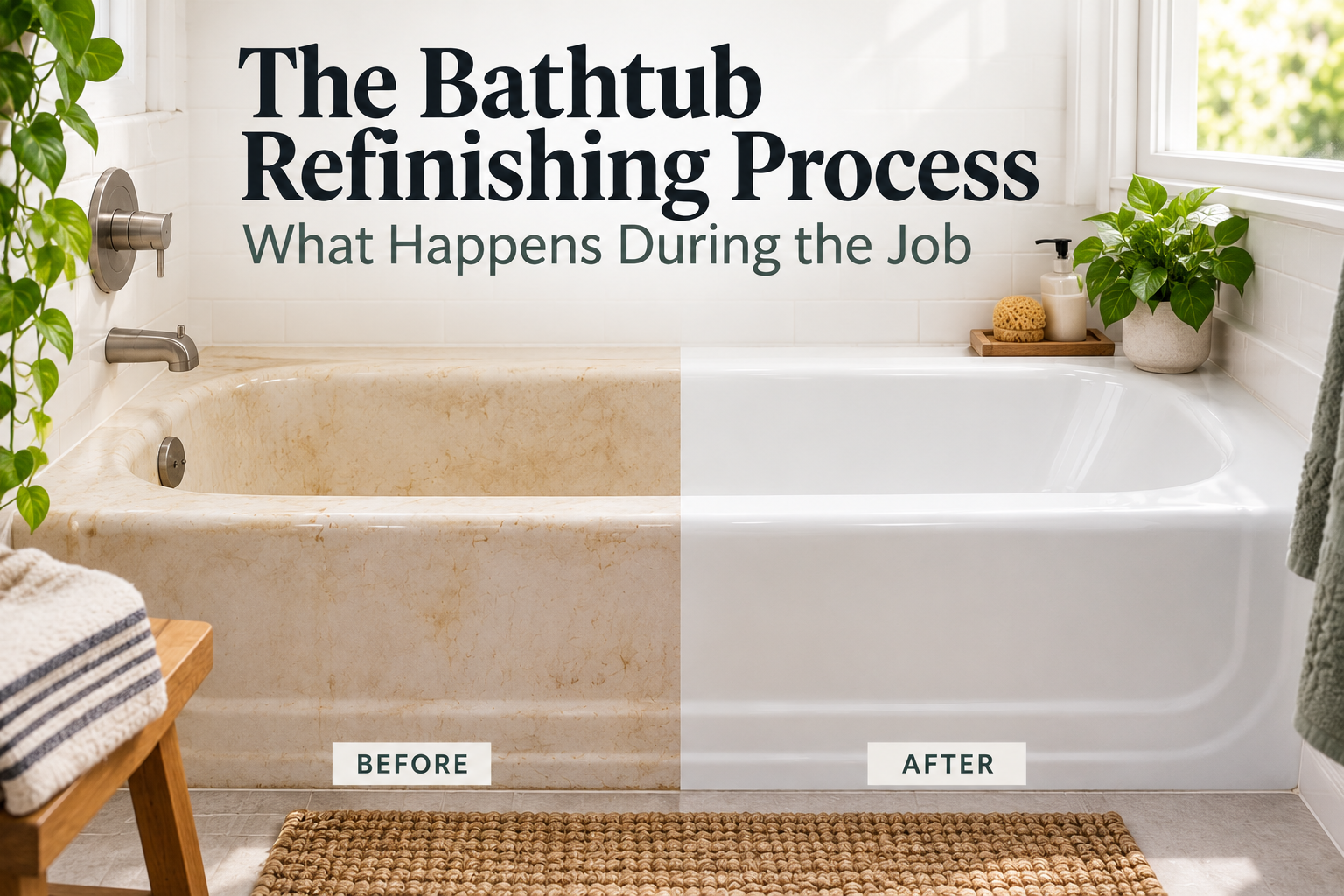
Bathtub refinishing is often described as a simple fix, but the process involves real preparation and chemistry. Here’s a clear walkthrough of what actually happens.
Bathtub refinishing has become a popular alternative to full tub replacement because it costs significantly less, generates no demolition debris, and can be completed in a fraction of the time. What most homeowners don’t have a clear picture of is what the process actually involves. Understanding the steps gives you better context for what a quality job looks like, what to expect during and after the work, and what questions to ask before hiring someone to do it.
Done correctly, refinishing can extend a tub’s serviceable life by a decade or more. Done poorly, the new finish peels within a year or two and creates a worse situation than the original surface. The difference usually comes down to surface preparation.
Assessment and Preparation
The job starts before any chemicals are mixed. A technician doing the job properly will examine the tub’s condition, note any chips, cracks, rust spots, or areas where previous coatings have failed, and assess whether the substrate is a good candidate for refinishing. Heavily damaged tubs, tubs with significant rust through the substrate, or tubs with repeated previous refinishing that hasn’t held up may not be good candidates. Services like bathtub refinishing in Waco include this assessment before work begins.
Chips and cracks are filled with a repair compound before the refinishing process starts. Rust spots on steel tubs need to be cleaned back to sound metal and treated before any coating goes on. Areas where old coatings have peeled need to be fully stripped rather than coated over, since new finish applied over a failing old finish will have the same adhesion problems.
Surface Preparation: The Most Critical Step
This is where most of the labor in a quality refinishing job goes. The existing surface, whether it’s porcelain, fiberglass, or acrylic, needs to be thoroughly cleaned of soap scum, mineral deposits, mold, and any silicone caulk residue. Silicone is particularly problematic because it prevents adhesion even when it’s present in tiny amounts that aren’t visible.
After cleaning, the surface is etched to create a profile that the new coating can bond to. On porcelain, this is typically done with acid etching. On fiberglass and acrylic, mechanical abrasion achieves the same purpose. The goal is to create microscopic roughness that gives the coating mechanical grip, since the chemistry of the new finish needs something to grab onto.
Masking and Ventilation
Before any finish is applied, the surrounding area is carefully masked to protect surfaces that aren’t being refinished. The drain, overflow plate, fixtures, and surrounding walls all need protection from overspray. A properly masked job leaves clean, precise edges at the boundaries of the refinished area.
Ventilation is both a safety and quality concern. The coatings used in bathtub refinishing contain strong solvents that produce significant fumes. Adequate ventilation protects the technician and ensures the coating cures properly rather than being compromised by solvent vapor concentration in the enclosed space. A good-quality refinishing job is not something to attempt in a tightly sealed bathroom without proper ventilation equipment.
Primer Application
A bonding primer is applied to the prepared surface before the finish coats go on. The primer creates a chemical bridge between the existing substrate and the new topcoat. Without it, or with an inadequate primer, the topcoat relies entirely on mechanical adhesion from the surface preparation, which isn’t sufficient for a long-lasting result.
The primer needs to dry before topcoating can begin. Rushing this step compromises the bond between layers. In professional refinishing, the time between primer and topcoat application follows the product manufacturer’s requirements for the specific conditions present.
Topcoat Application
The topcoat is typically applied in multiple thin coats using a spray gun rather than a brush or roller. Spraying allows the coating to go on at a consistent, controlled thickness without brush marks or roller texture. Multiple thin coats build to the required film thickness while minimizing runs and sags that can ruin the appearance.
The topcoat formulations used in professional refinishing are typically two-component systems that cure through a chemical reaction rather than just through solvent evaporation. This produces a harder, more durable surface than single-component products. The mixing ratio between the two components needs to be precise, and the mixed material has a limited pot life, which requires efficient working habits.
Curing and Post-Job Care
After the final coat is applied, the finish needs time to cure before it can contact water. Most refinishers specify a 24 to 48-hour wait before the tub is used for the first time. The initial period is particularly sensitive because the finish is still completing its chemical cure and hasn’t yet reached its full hardness.
The caulk around the tub perimeter is typically replaced after refinishing because the masking process removes it and because fresh caulk creates a clean finished look that complements the new surface. Using a mildew-resistant caulk and applying it neatly is the final step in a complete refinishing job.
Wrapping Up
Bathtub refinishing is a process that rewards patience and preparation more than any other single factor. The surface preparation phase is unglamorous and time-consuming, but it determines how long the finished result will hold up. A job done right, with proper prep, good primer, and quality topcoat materials, produces a surface that looks excellent and lasts. A rushed job looks fine the day it’s done and shows problems within a year.
Frequently Asked Questions
How long does a refinished bathtub last?
A properly done refinishing job on a tub in reasonable condition should last ten to fifteen years with proper care. The main factors are the quality of the surface preparation, the quality of the coating materials used, and how the surface is maintained afterward. Abrasive cleaners, harsh chemicals, and impact from dropped objects are the main ways people shorten the life of a refinished surface.
Can any bathtub be refinished?
Most can, but not all. Cast iron and steel tubs with porcelain enamel are excellent candidates. Fiberglass and acrylic tubs can be refinished with appropriate materials. Tubs with very deep cracks, significant rust through the substrate, or structural damage may not be good candidates because the underlying problems will affect the refinished surface. A thorough assessment before committing to refinishing is the responsible approach.