


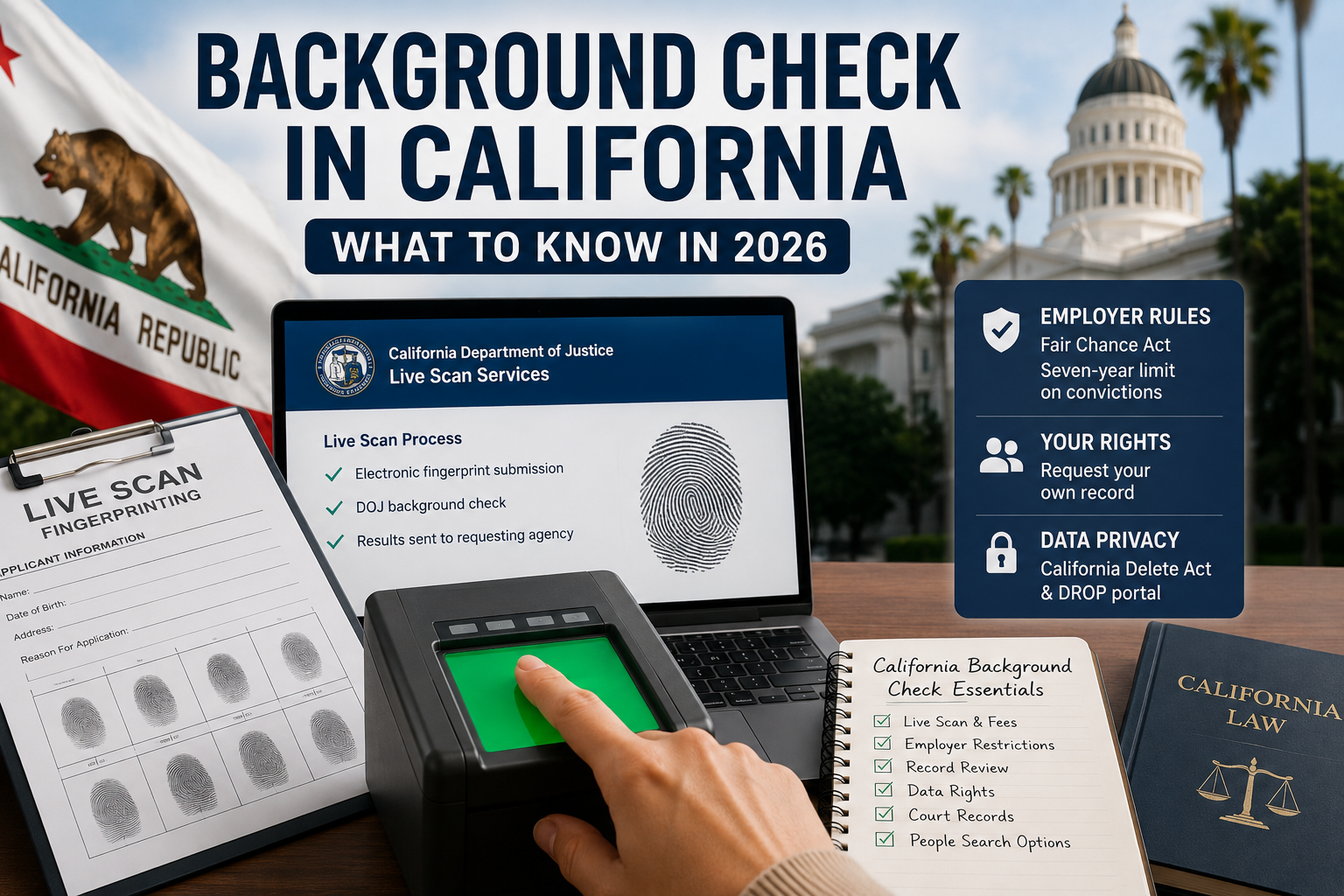
California runs a tightly regulated background check system, with rules that shifted in 2026. Whether you are trying to run one, request your own record, or understand what constitutes a background check in California, here’s what you need to know.
How a Background Check in California Actually Works
California’s electronic fingerprinting system, Live Scan, processes most of the state’s official background checks and is directly associated with the Department of Justice (DOJ). It works by matching physical fingerprints against DOJ records, rather than name-based searches.
The process typically involves two separate fees. The first is a rolling fee ($20 to $60) charged by the Live Scan location that you visit, with the charges depending on whether it’s an in-person or mobile appointment.
Additionally, the DOJ charges an investigation fee of $32 for standard employment and licensing. There’s also a $17 fee if an FBI-level check is required. These processing fees are either incurred by the applicant at the counter or billed directly to the organization requesting the background check.
The results are routed to the agency that initiated the check rather than the applicant. If the automated system does not find a database match for the person in consideration, the results are typically available within 48 to 72 hours. A match, on the other hand, requires a DOJ technician to manually review the results, delaying the processing time.
Requesting Your Own Record
If you are looking to see what your own California criminal history contains, you would have to complete the Record Review version of the Live Scan form, BCIA 8016RR. This form needs to be submitted with a valid photo ID at a Live Scan location along with a DOJ processing fee of $25, in addition to the local vendor’s rolling fee.
Applicants who qualify for a low-income fee waiver must complete Form BCIA 8690 and bring it to their appointment to avoid the $25 state fee. This is the only instance of Live Scan that sends the results directly to the applicant rather than an agency.
What Employers Can and Can’t Ask in 2026
California’s Fair Chance Act forms the basis of employer background rules, applying to every employer with five or more employees. The law forbids employers from requesting conviction history at any point before making a job offer. This includes job application forms, screening rounds, and interviews.
Once an offer is made, the employer can run a background check. Should the results return a history of a conviction, the employer must conduct an individualized assessment before rescinding the offer and provide written notice to the applicant explaining the decision.
Furthermore, Civil Code § 1786.18 limits background checks to convictions from the past seven years, with no exceptions to high-salary positions.
California Data Rights in 2026
The California Delete Act went a step ahead by introducing the state’s centralized Delete Request and Opt-out Platform (DROP). This portal, managed by the California Privacy Protection Agency (CPPA), allows residents to submit a single, free deletion request that removes their data from hundreds of registered brokers simultaneously.
Many residents submitted their details earlier in the year, but the enforcement took full effect on August 1, 2026. Data brokers are now legally required to retrieve information from DROP at least once every 45 days and purge any matching user data.
This move is a powerful step in preventing aggregators from reselling public records with outdated background check information.
Court Records Aren’t Centralized
California’s court records aren’t searchable through a single portal, unlike the DOJ’s statewide criminal history system. Each superior court manages its own search system in its county.
Anyone trying to find a specific court filing must navigate to the relevant county’s court website rather than look for a single statewide search.
When a People Search Platform Makes More Sense
If you are not navigating an employment decision and are looking for a fast, complete background check, a people search platform can help.
A background check through CheckPeople.com aggregates criminal records, public records, and contact details into a single report for a quick, personal overview. This bypasses the need to figure out individual county court websites.
Background Check in California: The Bottom Line
A background check in California is stricter and more layered than most states. The fingerprint-based DOJ system for official matters, the Fair Chance Act’s protections for job applicants, and DROP’s push to curb outdated data work together to regulate background checks while making it consumer-friendly.
The key lies in understanding how these systems work, what your rights are, and how they apply to your specific situation.