


The best sci-fi worlds feel like they were already alive before the story began. They have rules, pressure, history, and spaces that shape the people inside them.
That is the kind of world Anakin Li is interested in building. As a Production Designer, Art Director, and co-founder of WEIAI Vision Factory in Beijing, Li works across visual storytelling, concept development, and production design. His background includes fine art, short films, advertising, graphic design, theme park-related concepts, immersive design, and independent film work.
Li describes it simply: “I design the world before I design the plot.”
That idea guides much of his approach to science fiction. Before focusing on the story itself, Li thinks about the world surrounding it. How does its society work? What kind of technology exists there? Who has power? What rules shape daily life? What do ordinary people have to live with, accept, or fight against?
For Li, these questions are part of production design. A set is more than a place for characters to stand. A room, station, street, or research facility can show how a world functions. It can tell the audience what kind of pressure a character is under before anyone explains it.
This approach is especially clear in Tremors, a Beijing-shot sci-fi concept short and proof of concept for a possible feature film. The project began with a speculative idea: earthquakes create fractures in space-time. These fractures open hidden passages between different moments, places, and timelines.
From that idea, the story developed into something very human. A father searches for his lost child after an earthquake. The emotion is direct and easy to understand. A parent loses a child and tries to find them. The science fiction world makes that search larger, stranger, and more uncertain.
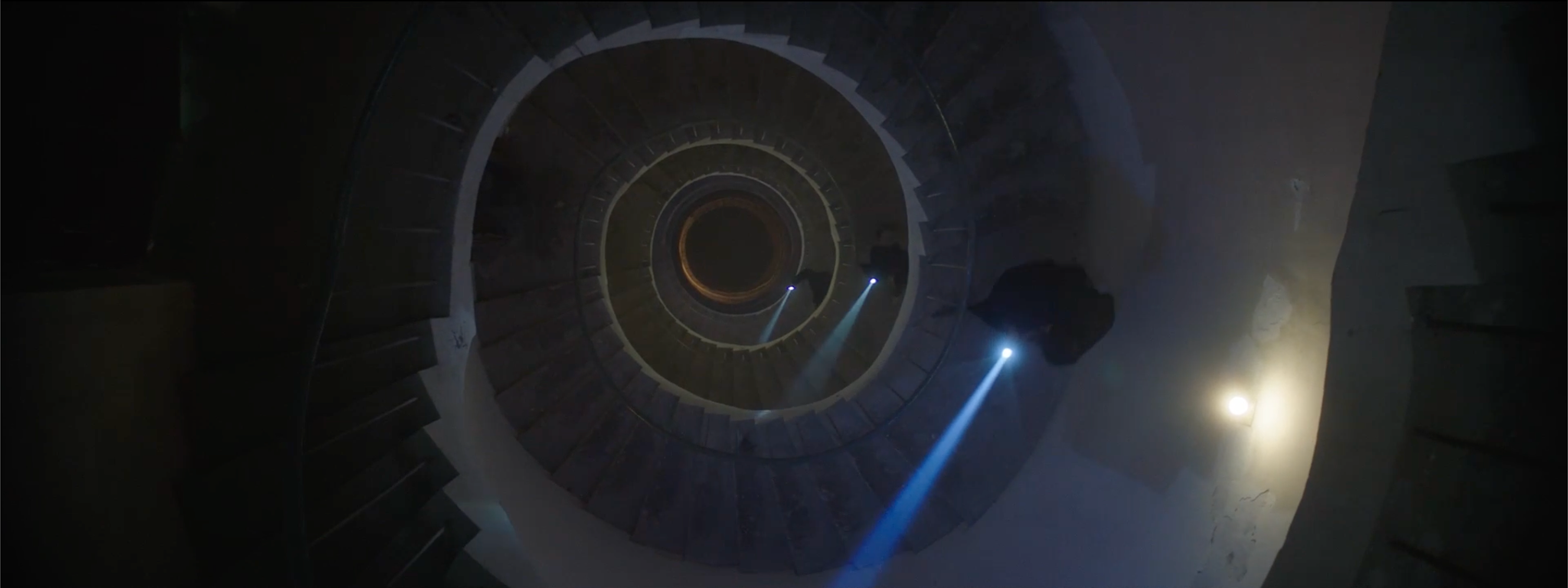
As the father follows signs of unusual seismic activity, he reaches an empty subway station. At first, it seems like a familiar urban place. Then it begins to feel like something else. Hidden staircases and strange train routes suggest that the station may be a gateway through time.
That setting matters. A subway station already carries strong emotional meaning. It is a place of waiting, leaving, returning, and missing someone by a few seconds. In Tremors, those everyday feelings connect with the sci-fi idea. The station becomes a place where grief, memory, and time all meet.
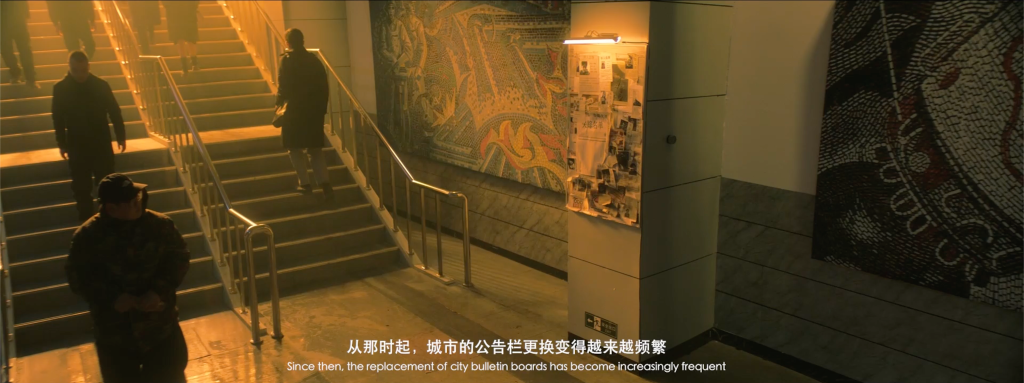
Li’s production design becomes part of the storytelling through these details. The empty station, hidden routes, earthquake patterns, and time-traveling train are tied to the rules of the world. They help the story make sense. They also give the father’s search a physical path.
Tremors was developed as a concept short, so the world had to be built carefully from the beginning. The team had to think about how the earthquakes worked, how space-time fractures might be discovered, what kind of research institution might study them, and how an ordinary city space could become a passage to another moment.
That process pushed Li to treat production design as part of story development. The design had to support the emotional journey while also making the sci-fi idea feel believable. The audience needed to understand the world through what they saw: the spaces, routes, details, and atmosphere.
This same method also appears in Li’s original speculative concepts and visual development ideas. These should be understood as concepts, design studies, and imagined story worlds, rather than completed films or released projects. They show how Li thinks as a designer.
He often starts by building the larger world. He considers its economy, social structure, technology, institutions, spaces, and rules of survival. From there, he looks for the human story that naturally belongs inside it.
For Li, the size of the world only matters when it changes what the characters feel and choose. A larger system should make their fears, losses, and decisions feel closer, not more distant.
This is one reason science fiction interests him. The genre allows him to explore future technology, artificial intelligence, class systems, environmental pressure, and social change while staying close to ordinary human emotions.
Li’s background in fine art also supports this way of working. Concept development and drawing help him turn an abstract idea into a visual world. A concept might begin as a question about time, society, technology, or survival. Production design gives that question a form that the audience can understand.
His work across advertising, short films, graphic design, immersive concepts, and theme park-related design has also shaped how he thinks about how audiences enter a world. Each format asks the designer to communicate a world clearly. The audience has to understand where they are, what kind of reality they have entered, and why it matters.
Li has also recently designed his first independent feature film in the United States, continuing his shift toward larger-screen projects and original IP. His long-term goal is to create cultural works shaped by science fiction and speculative ideas.
For Li, worldbuilding gives a story a solid stage to stand on. A fully realized world can place familiar emotions under unfamiliar pressure. It can help audiences think about who people become during loss, uncertainty, and change.
That is what makes speculative storytelling valuable to him. Science fiction gives Li a way to imagine the future while also asking how people might prepare for an unpredictable world, emotionally and intellectually.
Production design plays an important role in Li’s work because it gives the world its rules, gives the characters something to push against, and gives the audience a place to enter.
By the time the story begins, the setting has become more than a backdrop. It has become a world that can carry emotion, conflict, and possibility.