


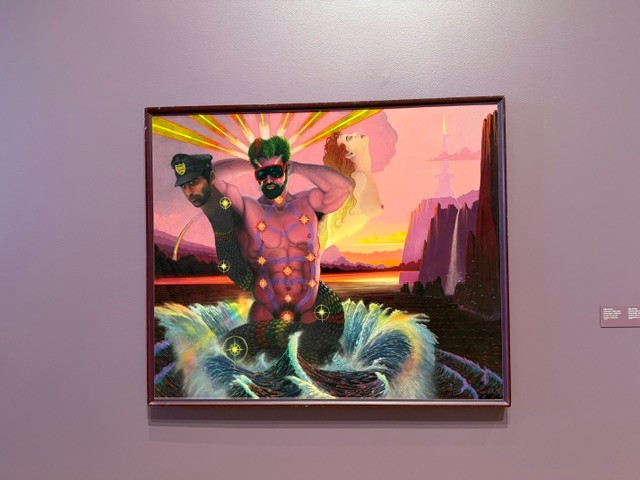
[NoHo Arts District, CA] – This month’s LA Art blog features A Queer Arcana: Art, Magic, and Spirit at the Palm Springs Art Museum, with a closer look at visionary artist and remote viewing pioneer Ingo Swann.
In A Queer Arcana: Art, Magic, and Spirit, the Palm Springs Art Museum assembles an intergenerational constellation of artists who treat mysticism not as metaphor but as method. Among them, Ingo Swann stands apart not simply as an artist engaging the occult, but as a figure who attempted to systematize it. His contribution reframes the exhibition’s premise: what if art is not only an expression of inner worlds, but a tool for perceiving realities beyond the senses?
Ingo Swann’s Visionary Art in A Queer Arcana
Swann (1933–2013) occupies a peculiar place in 20th-century culture. Known widely as the originator of remote viewing, a claimed psychic technique for perceiving distant locations, he worked at the intersection of avant-garde art, Cold War science, and parapsychological research. Yet long before his involvement with government-funded experiments, Swann had established himself as a painter, developing a visual language rooted in perception, symbolism, and altered states of awareness.
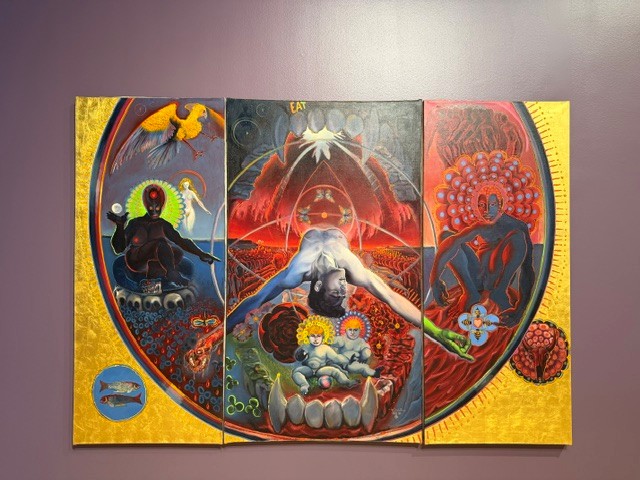
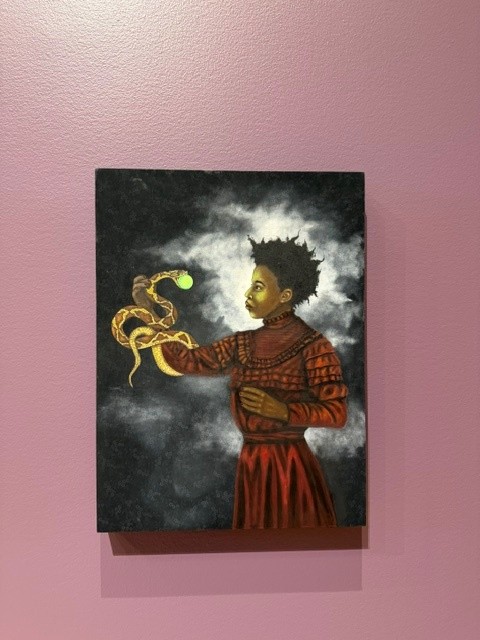
Seen within A Queer Arcana, Swann’s work aligns with the exhibition’s exploration of esoteric knowledge as a tool for survival and transformation. The show traces how queer artists have historically turned to occult practices such as tarot, ritual, and mysticism to construct alternative systems of knowing outside dominant culture. Swann’s practice extends this lineage into an unusual direction: the laboratory.
Rather than embracing mysticism as purely expressive or intuitive, Swann approached perception itself as something trainable, measurable, and expandable. He helped develop controlled remote viewing, a method that aimed to turn psychic perception into a repeatable process. This emphasis on structure distinguishes him from many other artists in the exhibition. Where others turn to ritual, Swann turns to procedure.
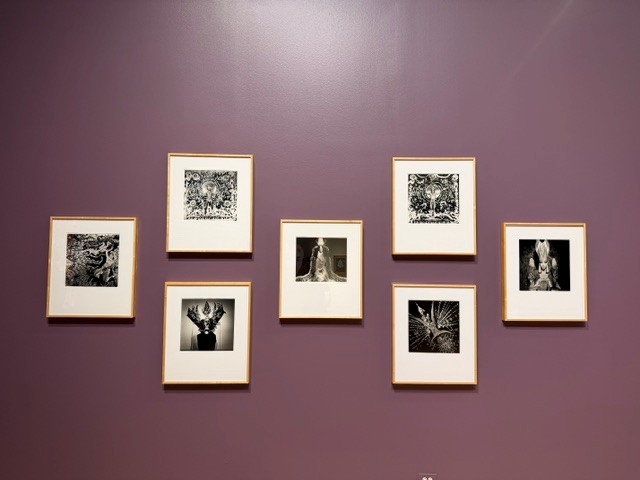
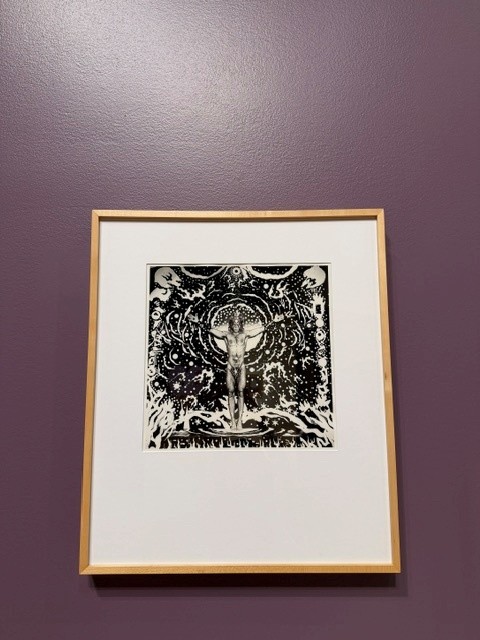
His art mirrors this inquiry. His paintings, often rendered in luminous oils, move between representation and abstraction, frequently depicting cosmic landscapes, radiant energies, and otherworldly terrains. These images function less as fantasies than as translations of experiences he described as out-of-body perception or heightened awareness.
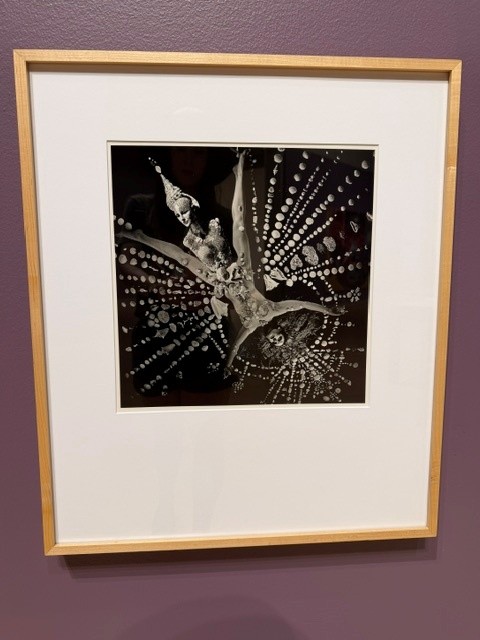
Swann’s imagery places him within a broader tradition of cosmic art, a genre concerned with visualizing humanity’s relationship to the universe. Within the context of A Queer Arcana, however, these works take on an added resonance. The exhibition frames esoteric practices as ways of resisting fixed or normative versions of reality. For queer artists, alternative spiritual systems have often provided languages that exceed what can be seen or socially recognized.
By placing Swann alongside artists working with tarot, ritual, and occult symbolism, A Queer Arcana reframes belief itself as a creative act. The significance of his work lies less in whether remote viewing can be verified than in how it expands the idea of perception and imagination within art.
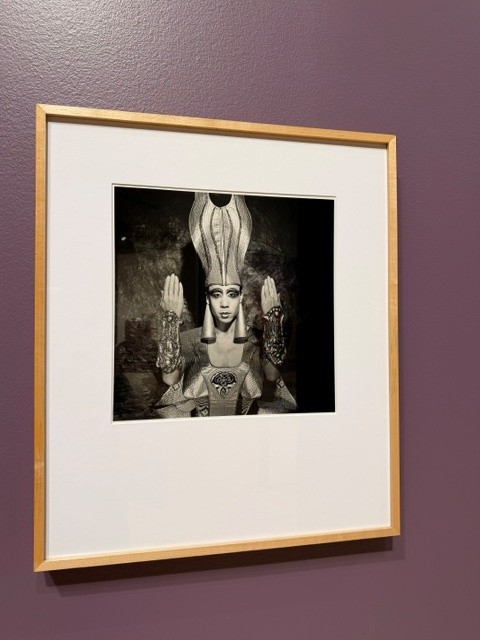
Within A Queer Arcana, this concern connects to a broader understanding of art as a way of sensing what lies outside ordinary frameworks. The exhibition suggests that queer artistic practices have long involved perceiving what is not yet visible and imagining alternative worlds, identities, and forms of knowledge. In this context, Swann’s work becomes less an outlier and more an example of a shared pursuit, expanding the possibilities of what it means to see.
Visit A Queer Arcana at Palm Springs Art Museum
Location:
Palm Springs Art Museum (Main Museum)
101 Museum Drive, Palm Springs, CA
Exhibition Dates:
A Queer Arcana: Art, Magic, and Spirit is on view from March 28 through October 18, 2026
Museum Hours:
- Thursday: 12:00 pm to 8:00 pm
- Friday to Sunday: 10:00 am to 5:00 pm
- Monday to Wednesday: closed