


North Hollywood has always been a neighborhood that moves. Between the dance studios along Lankershim, the theatre stages and the social dance nights around the Valley, there are plenty of places to take your first salsa, swing or waltz class. Sooner or later, every new dancer runs into the same question: do I really need dance shoes?
The short answer is yes. Here is why, and how to choose a first pair.
Why Street Shoes Hold You Back
Everyday shoes are designed to grip pavement. On a studio floor, that grip works against you. Rubber soles stick when you try to pivot, which puts strain on knees and ankles and makes turns feel clumsy. Dance shoes use suede soles that let you slide and spin while still giving you enough traction to stay balanced.
They are also built to bend. A dance shoe flexes with your foot, so you can point, roll through steps and feel the floor beneath you.
Latin or Standard?
Ballroom shoes generally fall into two families.
Latin shoes are made for dances like cha cha, rumba, samba and salsa. For women, they are usually open-toed sandals with a higher, slimmer heel. For men, they typically have a slightly raised heel to help with hip action and quick footwork.
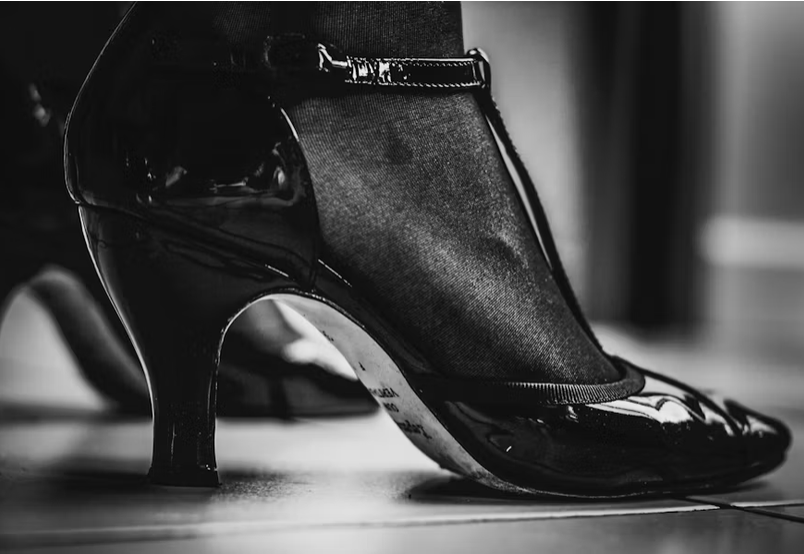
Standard or smooth shoes are made for waltz, foxtrot, tango and quickstep. Women’s styles are closed-toe pumps with a moderate heel, and men’s styles are low-heeled lace-ups that support the long, gliding steps these dances require.
If you are just starting and not sure where your classes will lead, a closed-toe practice shoe or a lower heel is a forgiving place to begin.
Getting the Fit Right
Dance shoes should fit snugly, more snugly than street shoes. They will relax a little as you break them in, and a close fit gives you better control. Your toes should reach the end of an open-toed Latin sandal without hanging over it. Many dancers go down half a size from their usual shoe size, but sizing varies by brand, so check each size chart carefully.
Heel Height Matters
Beginners often reach for the tallest heel, but comfort and stability come first. A two-inch heel is a popular starting point for women, and plenty of dancers stay there for years. As your balance and strength develop, you can experiment with higher heels if you enjoy them.
Where to Look
Ask your instructor what they recommend for the styles you are learning. Many studios have favorite brands and can tell you what holds up to the way they teach. If you would rather browse at home first, specialty retailers make it easy to compare styles by dance type and heel height. Ballroom Shoes carries Latin, standard and practice shoes for everyone, which is helpful when you are trying to figure out which category fits your classes.
Caring for Your Shoes
Wear your dance shoes only on the dance floor. Walking outside in them ruins the suede soles quickly. Brush the soles with a wire brush every few sessions to restore their grip, and keep them in a shoe bag between classes.
Step Out With Confidence
The right pair of shoes will not make you a great dancer overnight, but it removes a lot of unnecessary struggle. Your turns get smoother, your feet hurt less and you can focus on the music and your partner. In a neighborhood with as much rhythm as NoHo, that is a very good place to start.