


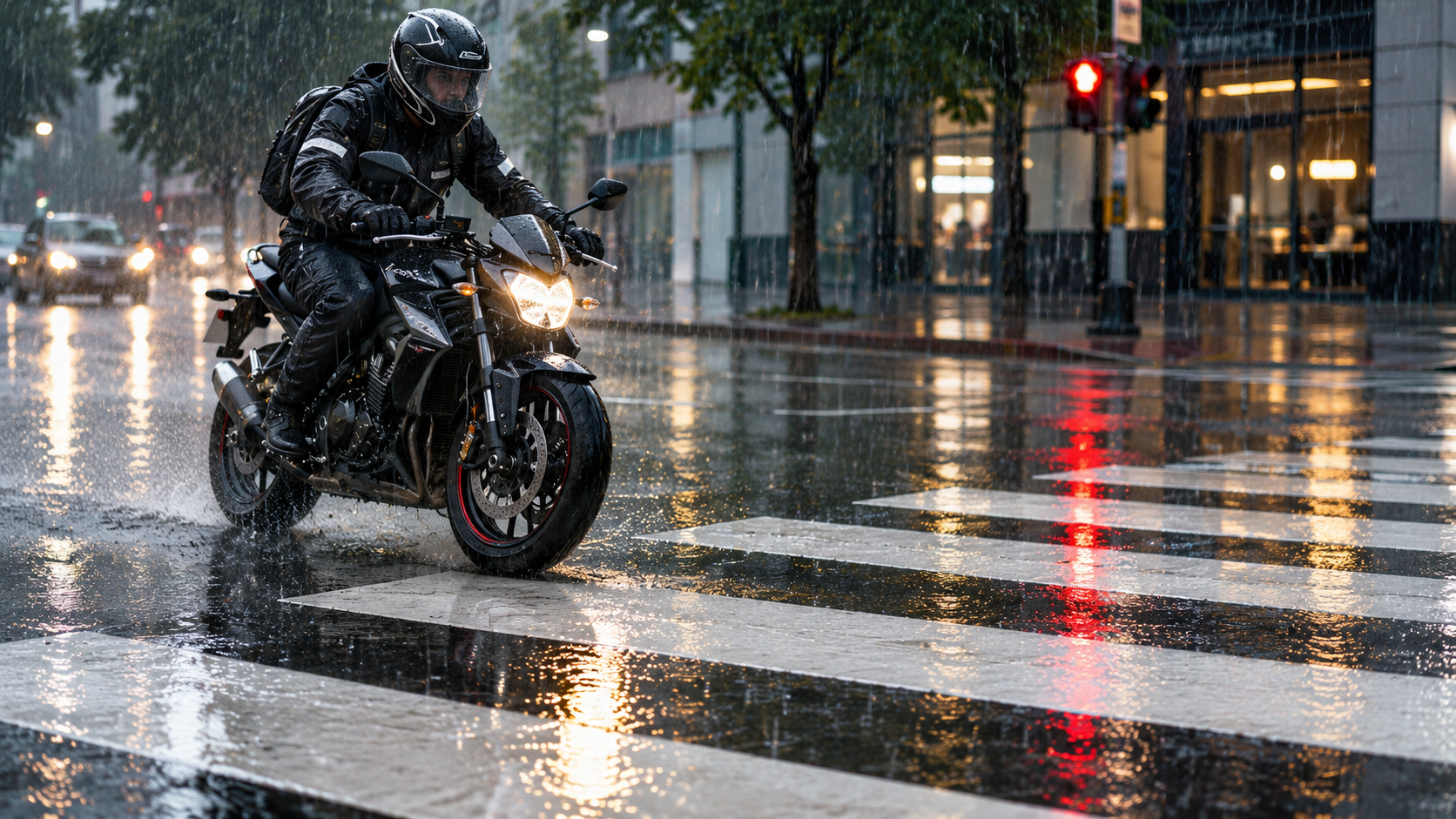
Most drivers barely notice the white stripes painted across a crosswalk, even in the rain. For motorcycle riders, however, those same markings can become slippery enough to cause a dangerous fall. Riders injured in such accidents may turn to motorcycle accident lawyers in Seattle to find out whether unsafe road conditions played a part in what happened and what legal options they have.
Why Wet Crosswalk Paint Can Be Dangerous
Crosswalk markings help pedestrians and drivers recognize where people should cross. However, some painted road surfaces provide less grip than the surrounding pavement when wet. That difference can be especially noticeable to motorcycle riders.
Motorcycles depend on traction to maintain balance while accelerating, braking, and turning. When a tire moves from ordinary asphalt onto a slippery painted stripe, its grip can change suddenly. A rider who is leaning or braking could lose control.
Not every painted crosswalk presents the same level of danger. Some road markings contain materials designed to improve traction, while others smooth out with wear. Rain, surface condition, and riding speed can all affect how slippery a marking becomes.
Two Wheels Leave Less Room for Mistakes
A car can usually roll over a slippery painted stripe without the driver noticing much of a difference. With four wheels keeping it steady, a brief loss of grip at one tire is less likely to upset the vehicle’s balance. Motorcycles are different because they rely on just two small contact patches to stay upright.
If the front tire suddenly slips, the rider may not have enough time to correct the problem. The bike can slide out from underneath them, particularly when they are turning a corner or trying to slow down. Sometimes all it takes is a moment of lost traction for the rider to end up on the pavement.
Riding in the rain already means taking things slower and leaving more room to stop safely. Wet crosswalk stripes make intersections even trickier because tires may move between surfaces with different grip levels. Spotting those painted areas ahead of time gives riders a chance to slow down and avoid sudden movements.
Intersections Create Additional Risks
Crosswalks are usually found at busy intersections where people stop, turn, or wait for pedestrians to cross. Motorcyclists often have to brake or steer through these areas, which can be tricky on wet pavement. If the tires pass over slippery painted stripes while turning or slowing down, the rider could suddenly lose grip.
Imagine someone riding a motorcycle toward a red light in the rain. They start slowing down, but as the tires roll across the white crosswalk markings, the bike begins to slide on the wet paint. With other vehicles nearby, the rider may have little room to recover before an accident.
Car and truck drivers should be especially mindful of motorcycles on wet roads. If a motorcyclist slips while crossing a painted section of road, they may need extra space to straighten the bike or stop. Leaving plenty of room between vehicles gives everyone more time to respond if something goes wrong.
Road Maintenance Can Affect Rider Safety
The paint and other materials used for crosswalks can vary depending on the road and the agency responsible for maintaining it. Some markings use materials that provide extra grip, helping tires hold the road when conditions are wet. How agencies apply and maintain the markings can also affect how safe they are for motorcycles.
Years of passing traffic, rain, and changing weather can gradually wear down painted crosswalk surfaces. If motorcyclists have repeatedly slipped in the same spot, that may be a good reason for the road authority to take a closer look. Still, a slippery crosswalk does not necessarily mean someone was legally responsible for an accident.
After a motorcycle crash, investigators may examine the type of paint used, when the crosswalk was last maintained, and whether it met applicable safety standards. Photos of the road and statements from witnesses can show what conditions were like when the rider fell. Depending on who was responsible for the road and the markings, the investigation may involve a government agency, a private contractor, or both.
Final Thoughts
Wet crosswalk markings may not cause much trouble for car drivers, but they can be dangerous for motorcycle riders. If a rider gets hurt after slipping on painted pavement, motorcycle accident lawyers in Seattle can look into the road conditions and whether another driver or another party played a role in the crash. Finding out what caused the accident can help injured riders understand their rights and decide what to do next.