


Ever had someone tell you their kid “just isn’t trying hard enough” at school? Odds are you have. And sometimes that’s true. But a lot of the time, there’s something else going on under the surface that no amount of trying can fix on its own.
That’s usually where psychoeducational testing comes in. The name alone makes it sound intimidating, like something that happens behind a closed door with clipboards and stern faces. The reality is a lot gentler, and honestly a lot more useful than most people expect.
So let’s talk about what these assessments actually measure. Because the mystery around them tends to stop people from getting help they could really use.
First, What Even Is Psychoeducational Testing?
Picture this: a child is bright, chatty, full of ideas, and yet every time they sit down to read, it’s like the words scramble on the page. The parents are confused. The teacher is confused. The kid is probably the most confused of all.
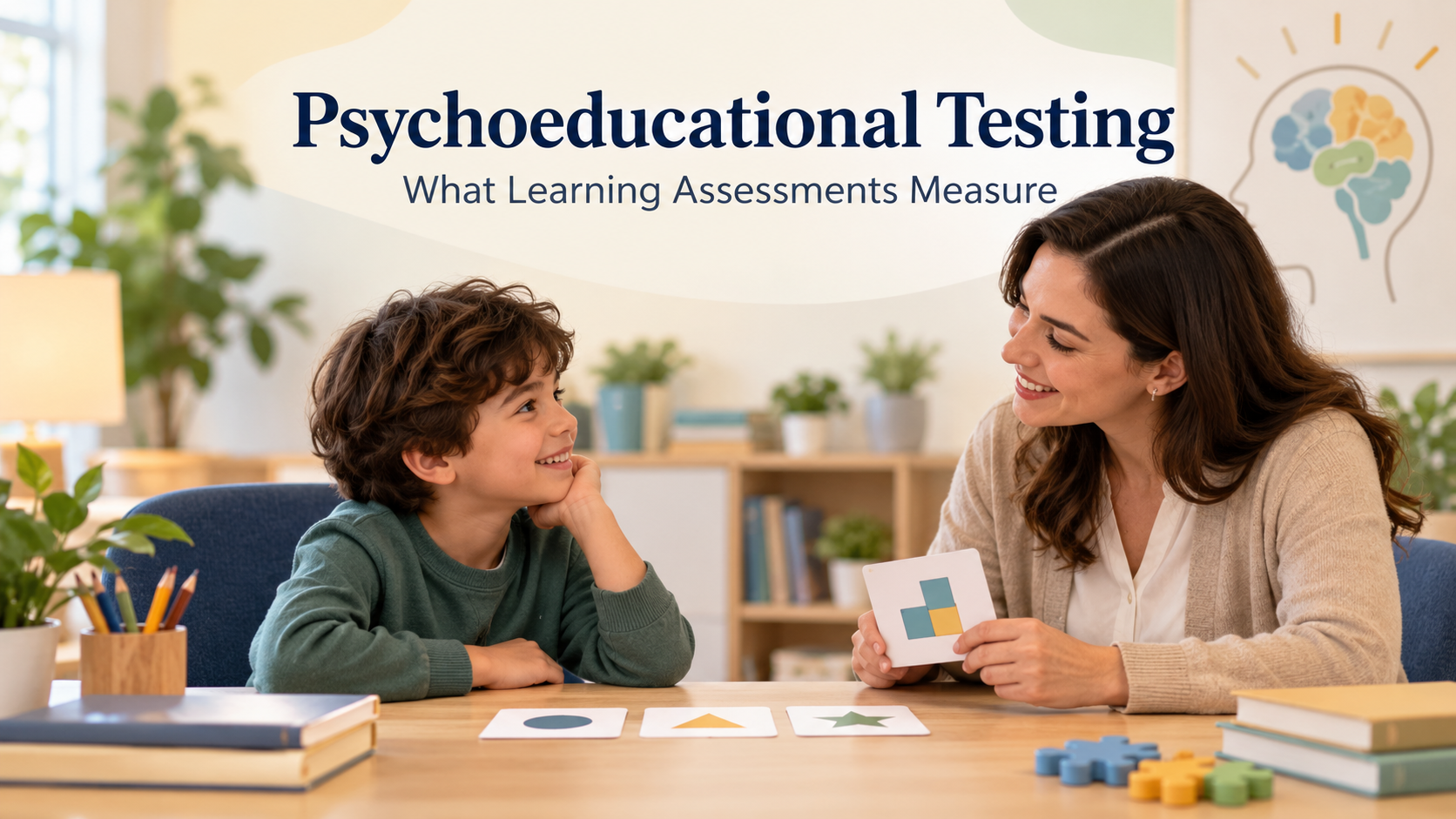
A psychoeducational assessment is basically a structured way of figuring out what’s happening in situations like that. It looks at how someone thinks, learns, and processes information. Not just whether they’re “smart,” which is a word that means almost nothing once you look closely, but how their brain actually handles different tasks.
The truth is, intelligence isn’t one single thing. It’s a bunch of different abilities working together, and some of those abilities can be strong while others lag behind. Testing helps spot the gaps.
The Stuff These Assessments Actually Look At
Here’s where it gets interesting. These tests measure a few key areas, and once you understand them, the whole thing makes a lot more sense.
There’s cognitive ability, which is the broad thinking stuff. Reasoning, problem solving, that kind of thing. Then there’s memory, both the short term working kind and the longer term storage kind. Ever met someone who can remember a conversation from ten years ago but forgets what you said thirty seconds ago? Memory is weird like that, and it’s not one single skill.
Processing speed gets measured too. This one surprises people. Some kids understand everything perfectly well, they just need more time to get it out. Slow doesn’t mean struggling. It just means slow, and that’s genuinely okay.
Then you’ve got the academic side. Reading, writing, maths. The assessment compares how someone performs in these areas against what you’d expect based on their thinking ability. When there’s a big mismatch, that’s often a clue pointing toward something like dyslexia or dyscalculia.
This part’s a bit tricky, but stick with me. A learning difficulty isn’t about being less capable. It’s about a specific area not lining up with everything else. A kid can be gifted and dyslexic at the same time. Happens more than you’d think.
Why Bother Getting Tested At All?
Fair question. Testing takes time, and it costs money, so people naturally wonder if it’s worth it.
The short answer is that guessing rarely works. The other day someone mentioned their son had been labelled “lazy” for years, only for a proper assessment to reveal a processing issue nobody had spotted. All that time, the kid wasn’t lazy. He was working twice as hard as everyone else just to keep up, and nobody knew.
A good report does more than slap a label on someone. It explains how that person learns best. It gives teachers something concrete to work with. It helps parents stop blaming themselves, and stop blaming the kid, which is honestly half the battle.
Proper cognitive and learning assessments give you a clear picture instead of a hunch. And once you’ve got that picture, you can actually do something with it.
It’s Not Just For Kids
People assume this is all about primary school children, but adults get assessed too. Plenty of grown ups go their whole lives feeling like something was off and never quite knowing why. Maybe reading always took forever. Maybe focusing in meetings felt impossible.
Getting answers later in life can be oddly emotional. There’s relief in finally understanding something you’d carried around for decades. Turns out it wasn’t a character flaw. It was just how your brain was wired.
What Happens With The Results
Once the testing wraps up, you get a report. A good one is written in plain language, not academic jargon that needs a dictionary to decode.
It’ll outline strengths, which matters just as much as the difficulties. Everyone has things they’re naturally good at, and knowing those can shape everything from study strategies to career choices.
Then come the recommendations. Practical stuff. Extra time on exams, specific teaching approaches, tools that help. The kind of thing that makes daily life easier rather than just naming a problem and leaving you stuck with it.
Look, testing won’t magically fix everything overnight. But it hands you a map. And trying to find your way without one is a lot harder than it needs to be.
If you’ve ever had that nagging feeling that something isn’t quite adding up, whether for yourself or someone you love, getting clarity is rarely a decision anyone regrets.