


Theater has always been good at doing a lot with a little.
A small company can transform a black box into another world. A community theater can bring together actors, directors, volunteers and audiences on a budget that would barely cover one department in a larger organization.
But behind the curtain, that resourcefulness often extends to technology too.
The box office runs on one system. The website on another. Sales reports live in spreadsheets. Producers get screenshots over email. Touring productions coordinate with venues through shared documents. And sometimes the technology available to a 100-seat theater feels a generation behind what audiences experience everywhere else online.
That may be starting to change.
A new generation of event technology is making infrastructure that once made economic sense mainly for larger organizations accessible to independent theaters and cultural organizations as well.
One emerging platform taking that approach is Entase.
Small theater shouldn’t mean small technology
The economics of independent theater are difficult enough already. Technology shouldn’t add another major fixed cost.
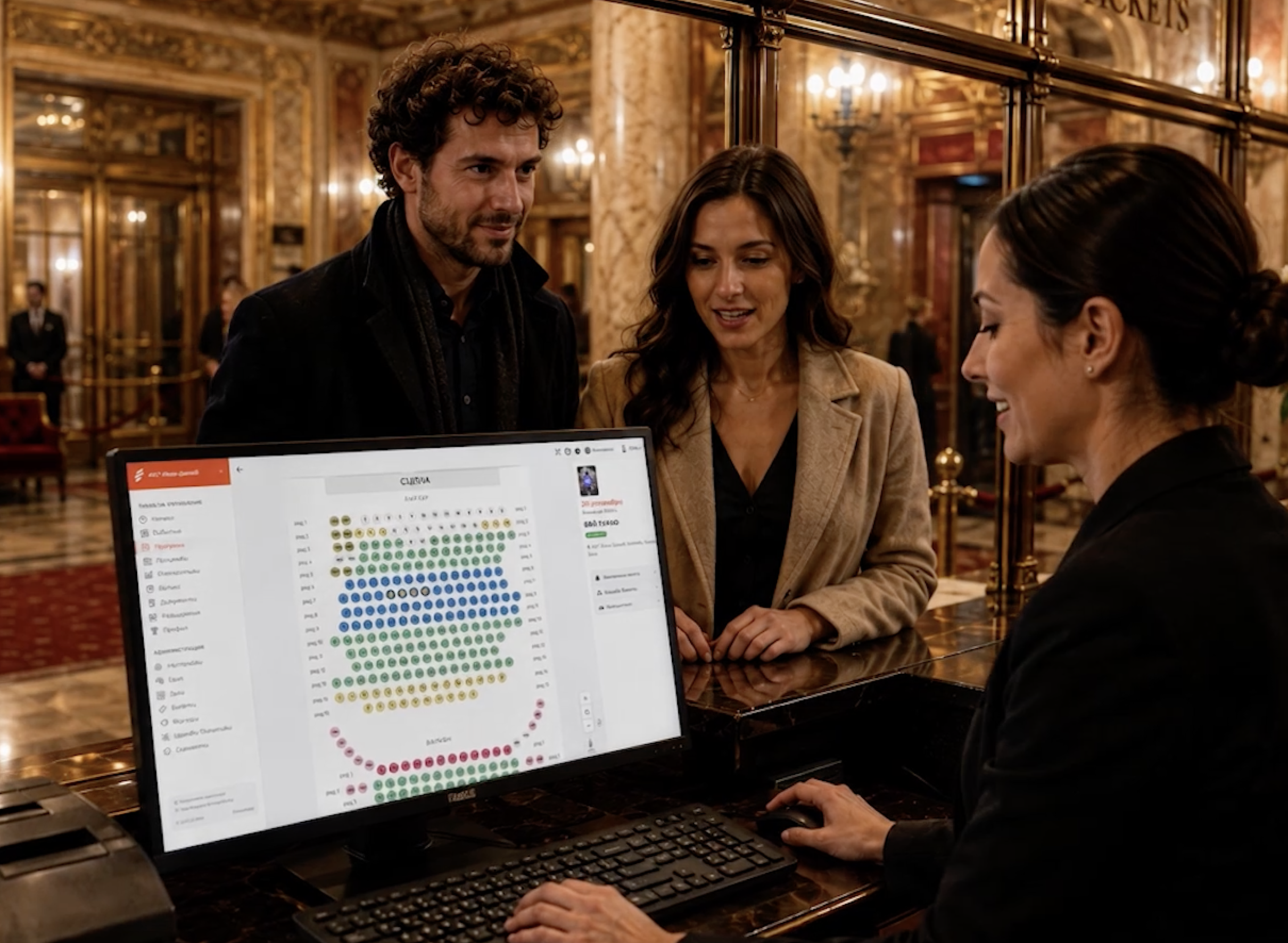
Entase approaches that problem in an interesting way: its physical box office is fully functional and free to use, with unlimited box office sales at no charge. There are no setup or monthly platform fees.
That distinction matters.
Instead of asking a theater to invest heavily before it sells its first ticket, the technology can become part of the existing operation — whether the organization runs a permanent venue, produces a few shows each year or operates largely through volunteers.
But affordability is only half of the equation.
The more interesting idea is that inexpensive software no longer needs to feel inexpensive.
The website becomes the box office
For many audience members, the first visit to a theater no longer begins at the theater.
It begins on its website.
That makes the ticket-buying experience part of the production’s digital front door. Sending visitors away to a disconnected ticketing website introduces another brand, another interface and another step between interest and purchase.
Entase can instead be embedded directly into a theater’s own website and adapted to its identity. Events, repertoire and checkout can live where the audience already is.
For straightforward setups, that doesn’t require a developer. For organizations that want deeper customization, Entase also provides code-level integration options and direct technical support.
The result is something closer to white-label infrastructure than a traditional ticket link: the theater keeps its identity while the technology operates underneath it.
From selling tickets to understanding what sells them
For smaller theaters, marketing is often remarkably hands-on.
A new production might be promoted through Instagram, a local publication, an email newsletter, posters around the neighborhood, partner organizations and word of mouth — all at the same time.
The difficult question comes later: what actually sold the tickets?
Entase brings tools more commonly associated with modern ecommerce directly into theater marketing. Custom tracking links and audience segments can show which campaigns and channels are generating sales, while integrations with Meta and Google Tag Manager support advertising, measurement and retargeting.
Even sales made at the physical box office can become part of that picture.
The practical tools are there too: built-in short links make campaigns easier to share, while flexible promo codes can be created for a particular production, audience or promotion and measured afterwards.
For a theater working with a limited marketing budget, better technology isn’t necessarily about spending more.
It’s about knowing which efforts are filling the seats — and which ones aren’t.
One system around the production
The same philosophy extends beyond checkout.
Box office operators, marketers, accountants, ushers and administrators can work through individual profiles with different roles and permissions rather than sharing access to a single account.
Tickets can move directly into Apple Wallet and Google Wallet. Audiences can purchase in more than 30 languages. The box office, phone sales and website can work from the same inventory.
Then there is the less glamorous side of theater operations: reporting.
A theater may need to keep its board informed. A producer may need sales figures. A venue partner may need to follow performance. Instead of repeatedly exporting spreadsheets or sending screenshots, Entase allows a statistics view to be shared through a private link.
It is a small feature, but one that recognizes something important: producing theater is collaborative long before the audience takes its seat.
Built for productions that move
That becomes even more apparent with touring theater.
A production might originate with one company, perform at another venue and involve different teams along the way. Traditional ticketing systems tend to think in terms of a single organizer selling a single event.
Entase supports co-hosting, allowing organizations and venue partners to collaborate around the same event while maintaining their own access and roles.
For a touring company, visiting production or co-production, that can remove a surprising amount of administrative friction.
Technology should disappear
Perhaps the most interesting thing about the next generation of theater technology is that audiences shouldn’t have to think about it at all.
They should find a performance, choose a seat, pay, put the ticket in their phone and walk through the door.
The producer should see the numbers. The box office should see the inventory. The usher should be able to scan the ticket. The board should be able to see the report it needs.
And the theater shouldn’t need an IT department to make those things happen.
That is the direction Entase is betting on: sophisticated event infrastructure becoming something even a small cultural organization can simply use.
At a time when theaters are being asked to do more with tighter resources, that may be the more meaningful technology trend — not another tool demanding additional budget and attention, but better infrastructure quietly removing work from the people already doing too much.
Because a theater’s budget may determine the size of its stage.
It shouldn’t determine the quality of the technology behind it.
See how Entase can work for your cultural organization:
https://www.entase.com/event-organizers/theater-and-opera