


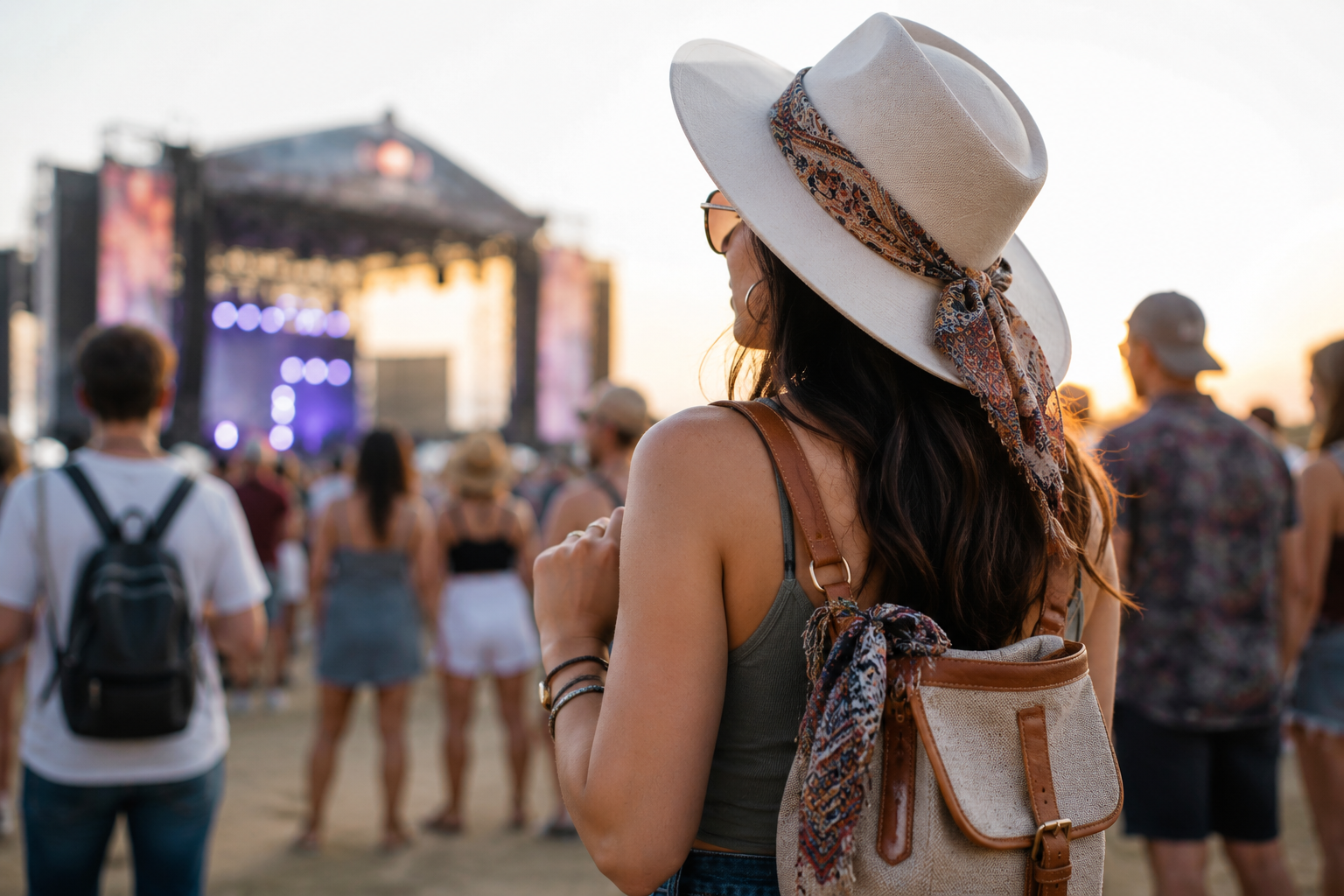
Stepping into a packed amphitheater on a Saturday night, or wandering through a sprawling outdoor festival, feels different when you’ve put real thought into what you’re wearing.
Accessories are often what separate an outfit that feels thrown together from one that feels intentional. The right pieces add personality, tie a look together, and make the whole experience feel more like yours. Choosing them well means balancing style with comfort, and keeping the practical realities of the event in mind from the start.
Start With the Type of Event
Not every occasion calls for the same approach. A theater performance has a different energy than an open-air music festival, and what works in one setting can feel completely out of place in another. At a formal theater show or opera, understated pieces tend to fit better: a simple necklace, a structured bag, a pair of classic earrings. At an outdoor concert or cultural street fair, there’s far more room to play with bold colors, casual textures, and pieces that can handle some movement and dust.
Live Nation reported global attendance up 14% to 44 million fans in Q2 2025, which speaks to just how many people are showing up to events of all kinds right now. With that many gatherings happening across different formats and venues, the range of appropriate styles is wider than ever.
Think about the general atmosphere before you start putting pieces together. A rooftop jazz performance calls for something different than a three-day camping festival. Matching your accessories to the setting is the most straightforward way to make sure everything feels right once you’re actually there.
Make Comfort Part of Your Decision
Long events involve a lot more physical activity than people often plan for. Standing through a two-hour set, walking between stages, navigating a crowded venue, it all adds up. Heavy statement necklaces, stiff belts, or oversized bags that dig into your shoulder become genuinely uncomfortable after a few hours. Lighter, well-fitted pieces are almost always the better call.
Outdoor events introduce variables that indoor venues don’t. Sun, wind, unexpected rain, and temperature drops between afternoon and evening all affect what makes sense to wear. A wide-brimmed hat or a lightweight scarf can shift from decorative to genuinely useful depending on what the weather does. Check the forecast before you finalize anything, and think about whether each piece will still feel good to wear six hours in.
In a crowded space, large or fragile accessories become a liability. Dangling earrings can snag, wide-brimmed hats block sightlines for people behind you, and oversized bags are difficult to manage when space is tight. Accessories that stay close to the body and don’t require constant adjustment are almost always more practical in a packed venue. Simple often wins.
Choose Pieces That Show Your Personal Style
Accessories are one of the most direct ways to express who you are without changing the core of what you’re wearing. A simple outfit can take on a completely different character depending on whether you pair it with bold geometric earrings, a vintage bandana, a beaded bag, or a structured crossbody in an unexpected color. Choose pieces that feel genuinely like you rather than like something you borrowed for the occasion.
At creative events, individual style is often part of the shared experience. Concerts, festivals, and cultural gatherings tend to attract people who put real thought into their appearance, which makes it a natural setting for accessories that are a little more personal or distinctive. Sunglasses, scarves, layered jewelry, and embroidered bags all offer ways to build on a look without going overboard.
For outdoor events especially, a hat does double duty: it’s practical for sun protection and it’s one of the easiest accessories to personalize. You can also design your own hat so that it reflects something specific about your taste rather than defaulting to whatever’s on a rack. A custom graphic, a specific colorway, or a meaningful phrase turns a functional piece into something that actually says something about the person wearing it.
Pick One Accessory to Be the Focus
Wearing too many statement pieces at once tends to make an outfit feel busy rather than bold. When everything is competing for attention, nothing actually stands out. A better approach is to choose one piece as the anchor and keep everything else more understated around it.
Some combinations that work well:
- A distinctive hat paired with minimal jewelry and a simple bag
- Statement earrings with a neutral crossbody and clean shoes
- A colorful or embroidered bag against a more toned-down outfit
- A bold scarf worn simply, with everything else kept low-key
The goal isn’t to match every piece perfectly. Accessories can complement each other through color, texture, or mood without being identical. A warm-toned hat, a neutral bag, and simple gold jewelry can feel cohesive without looking coordinated in a stiff or overdone way.
Think About the Venue and Weather
Indoor venues are generally more forgiving in terms of weather, but they come with their own considerations. Some venues have strict bag size policies, especially for larger arenas or events with heightened security. Checking the rules before you arrive can save you from having to leave something at the door or at your car. Many venues now require clear bags, which changes what you’re working with stylistically.
Outdoor venues require more planning. The United States personal accessories market was valued at USD 97.47 billion in 2024 and is projected to reach USD 158.04 billion by 2030, with a significant part of that growth driven by demand for pieces that are both functional and expressive. That shift is visible at live events, where people increasingly want accessories that perform well in real conditions, not just look good in photos.
Think about whether a piece could become inconvenient in a crowd, whether it needs to be stored somewhere during the show, and whether it suits the actual conditions you’ll be dealing with.
Final Words
The best approach is also the most straightforward: think about the type of gathering, prioritize comfort alongside style, let one piece take the lead, and make sure everything you bring suits the venue and the weather. None of that requires a complicated process. Just a little thought before you walk out the door.
The pieces that work best are the ones you stop thinking about once you’re there, because they look right, feel comfortable, and let you stay focused on the experience itself.