


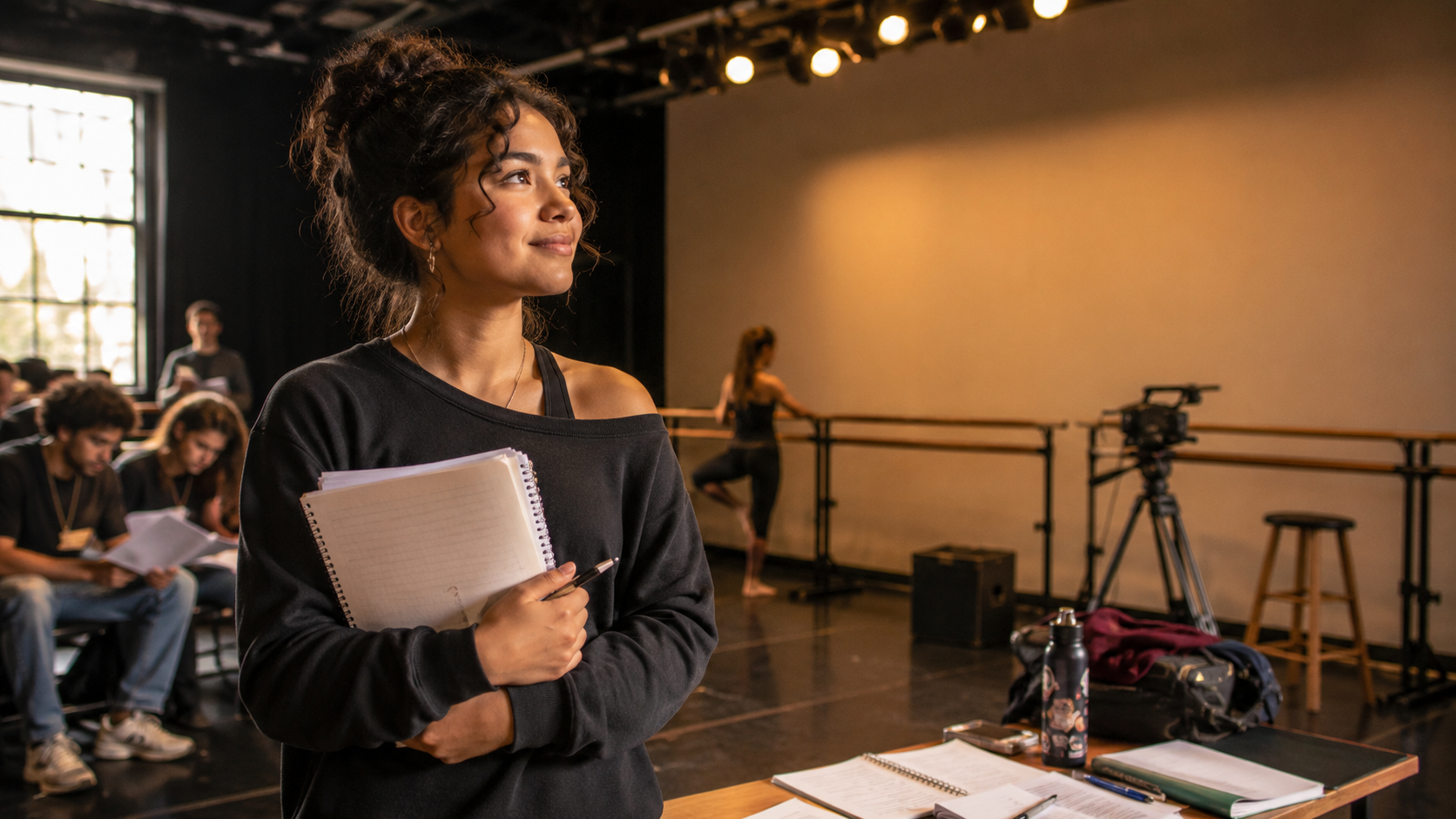
For young artists in North Hollywood and across Los Angeles, the idea of a creative career does not have to feel abstract.
The city is filled with theatres, rehearsal rooms, film sets, galleries, dance studios, recording spaces and training programmes where people are already doing the work. That makes Los Angeles an exciting place to begin an artistic life, but it can also make the college decision more complicated.
Should you pursue a conservatory? A university arts programme? Community college first? Should you stay close to Los Angeles or spend several years somewhere completely different?
There is no single correct route. The better goal is to understand what kind of artist you want to become and choose an educational path that gives you room to get there.
Start With the Artist, Not the School Name
Before building a college list, think about the work itself.
An actor who wants intensive daily conservatory training may need something very different from a student who wants to combine theatre with psychology. A filmmaker interested in directing will evaluate programmes differently from somebody focused on cinematography. A dancer hoping to audition professionally while studying may place much greater value on location and scheduling flexibility.
Write down what you actually want from the next few years.
Consider training style, faculty, performance opportunities, facilities, interdisciplinary work, cost, location and the ability to explore subjects outside your primary art form.
Students who want a more structured way to connect those priorities with the application process may look for college application strategy support, but even with professional guidance, the final decisions need to remain rooted in the student’s own artistic goals.
A prestigious name cannot compensate for a programme that is wrong for the artist.
Understand the Two-Layer Application
Arts applications can be more demanding than standard university applications because applicants may effectively be completing two evaluations at once.
There is the academic application, and then there is the artistic one.
Depending on the programme, that may mean auditions, portfolios, artist statements, creative supplements, recorded performances, writing samples or interviews.
Preparation should start long before the deadline.
A monologue chosen months in advance has time to develop. A portfolio assembled gradually gives you room to photograph work properly and remove weaker pieces. Musicians and dancers benefit from having several opportunities to record rather than depending on one high-pressure session.
The artistic supplement should never be treated as something to “finish later.”
For many programmes, it is central to the decision.
Use Los Angeles as Part of Your Education
One major advantage local applicants have is access to a working creative community.
You do not need to wait until university before gaining meaningful experience.
Take a class. Volunteer backstage. Work on a student film. Attend productions outside your normal taste. Help with a community event. Make a short film with friends. Join a small creative project where everybody is figuring things out together.
The goal is not to collect activities because they might look impressive on an application.
The goal is to accumulate enough real experiences to discover what kind of work keeps pulling you back.
An actor who spends time backstage may discover an interest in directing. A filmmaker who works with dancers may begin thinking differently about movement. A visual artist helping on a theatre production might become fascinated by scenic or costume design.
Those experiences strengthen applications almost as a side effect because they give students something genuine to talk about.
Consider More Than One Route
For Los Angeles students, a four-year arts institution straight out of high school is not the only legitimate path.
Community colleges can provide affordable opportunities to study theatre, film, music, design and other disciplines while completing transferable academic coursework. For students who are still developing portfolios, adjusting financially or deciding what type of arts programme suits them best, that flexibility can be valuable.
Other students begin at a four-year institution and later realise the programme or campus is not right for them.
When moving institutions becomes part of the plan, specialised transfer application consulting can help students organise the process. But the most important transfer question remains personal: why is changing schools necessary for the education you now want?
A convincing answer should go beyond dissatisfaction. It should explain what the student has learned and what the new institution can provide that the current one cannot.
Build the Artistic Life Before Asking a College to Validate It
College can provide teachers, collaborators, equipment, facilities, performances and time to develop.
What it cannot manufacture is curiosity.
So do not wait for an acceptance letter before becoming serious about the work.
See theatre. Make theatre. Photograph your neighbourhood. Record music. Visit galleries. Read scripts. Edit films that do not work. Take classes that expose your weaknesses. Collaborate with people who are better than you at something.
Living around Los Angeles means you are already surrounded by reminders that artistic careers are built through repeated practice, relationships and experimentation.
Make the work first.
Then build an application that shows where you hope to take it.