


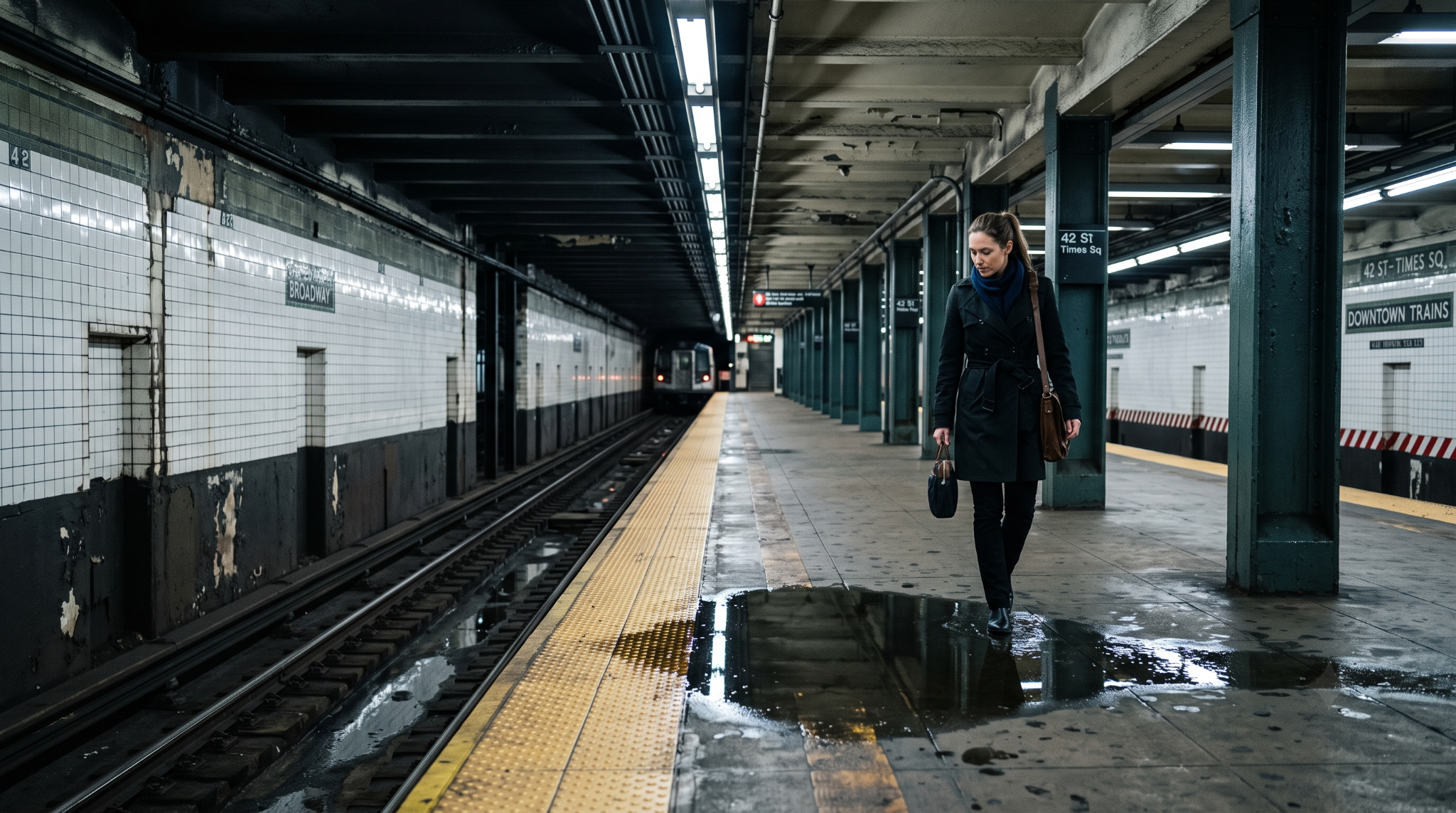
NoHo Arts District residents know the value of a good stage, and few stages compare to New York City. Whether you’re heading east for a Broadway run, an off-Broadway audition, or a family visit, sooner or later you’ll find yourself on the subway or a city bus. Millions of New Yorkers and visitors rely on the Metropolitan Transportation Authority every single day, and with that volume of foot traffic comes a steady number of slip and fall accidents on platforms, staircases, and buses. If you’re ever injured on the MTA system, the process for holding the agency accountable looks very different from a typical premises liability claim, and the differences can cost you your case if you don’t act quickly.
Why MTA Falls Are So Common
Subway stations and bus stops are high-traffic environments with conditions that change by the hour. Common hazards include:
- Wet or icy stairs and platforms, especially during rain or snow
- Broken or malfunctioning escalators and elevators
- Uneven flooring, cracked tiles, and loose grates
- Debris, spills, or garbage left in stairwells and mezzanines
- Gaps between the platform edge and the train
- Sudden bus braking or poorly secured flooring on buses
Because these hazards exist inside a massive, aging transit network, the MTA and its subsidiary, the New York City Transit Authority (NYCTA), are frequently named as defendants in premises liability lawsuits. But suing a public authority is not the same as suing a private landlord or store owner.
The Notice of Claim: Your 90-Day Deadline
The single most important thing an injured rider needs to understand is the Notice of Claim requirement. Under New York’s General Municipal Law, anyone injured by the negligence of a public authority like the MTA or NYCTA must file a formal Notice of Claim within 90 days of the accident, not the usual one-to-three-year statute of limitations most people assume applies. This notice must identify the time, place, and nature of the injury, and it must be served on the correct agency.
Miss this window, and in most cases your right to sue is permanently barred, regardless of how strong your injury claim might otherwise be. Courts can grant limited extensions in narrow circumstances, but relying on that possibility is a poor strategy. You can review the exact statutory language governing this requirement under New York General Municipal Law Section 50-e.
After the Notice of Claim is filed, claimants typically must also sit for a statutory hearing (a “50-h hearing”) before a lawsuit can even be filed another procedural step unique to claims against government entities.
Proving Negligence Against the MTA
Beyond the tight deadlines, proving fault against a transit authority requires evidence that the MTA had actual or constructive notice of the hazardous condition and failed to fix it within a reasonable time. This is why documentation matters enormously:
- Report the incident immediately to an MTA employee, station agent, or bus operator and request an incident report.
- Photograph the hazard the wet stairs, broken step, debris, or defective escalator before it can be cleaned up or repaired.
- Identify witnesses who saw the fall or the hazardous condition beforehand.
- Seek medical attention right away and keep every record, since gaps in treatment are often used to argue an injury wasn’t serious.
- Preserve your clothing and footwear, which can become evidence regarding the surface condition.
Transit systems are also subject to general workplace and public-safety standards for walking surfaces, similar to those enforced by OSHA’s walking-working surfaces regulations, which set a useful benchmark for what a “reasonably safe” stairway, platform, or ramp should look like.
Comparative Fault Still Applies
New York follows a pure comparative negligence rule, meaning an injured rider can still recover damages even if they were partially responsible for the fall, say, by looking at a phone while descending stairs. Your compensation is simply reduced by your percentage of fault rather than eliminated. This makes it especially important to have an attorney who can push back against an agency’s attempt to shift blame entirely onto the rider.
Why You Shouldn’t Navigate This Alone
Claims against the MTA involve a patchwork of short deadlines, mandatory hearings, and an institutional defendant with its own legal department built to minimize payouts. A single missed procedural step filing a day late, naming the wrong entity, or leaving out required details in the notice can end a valid claim before it starts.
If you or a family member was hurt in a fall on a subway platform, staircase, or city bus, don’t wait to get advice. Experienced legal advocates that Bronx residents already trust can evaluate whether the MTA, a private contractor, or an adjacent property owner bears responsibility, and can make sure every filing deadline is met while you focus on recovery.
The Takeaway
A fall on the subway or a city bus isn’t just a personal injury case; it’s a race against a 90-day clock and a set of procedural rules most people never encounter until it’s too late. Acting fast, documenting everything, and bringing in counsel who regularly handles claims against the MTA gives injured riders the best chance at full and fair compensation.