


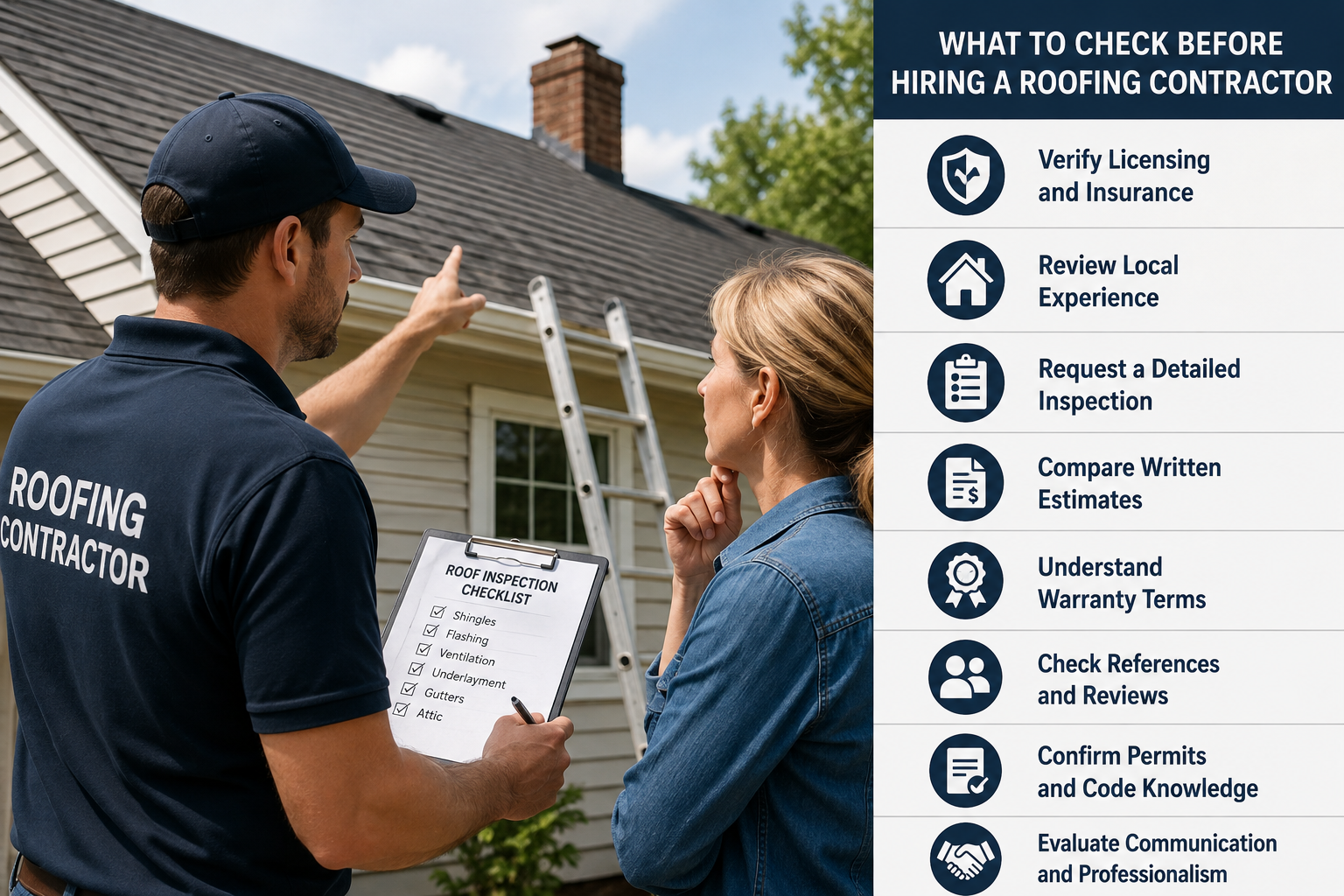
A roof replacement shapes safety, comfort, repair costs, and resale value for years. Many homeowners start this process after a leak, missing shingles, or storm damage forces quick action. That urgency can cloud judgment and invite weak proposals. Careful screening brings the decision back to evidence. Before any contract moves forward, homeowners should verify credentials, insurance, project scope, references, warranties, and a steady record of local work.
Start With Local Proof
Local history says more than polished sales language. Climate, permit habits, and material performance vary by area, so nearby experience matters. A contractor like Walsh Roofing residential roofing contractors can help homeowners see how a company describes repairs, replacements, ventilation, and service categories. That overview is useful, yet it should be treated as a starting point, then checked against public records, recent jobs, and outside feedback.
Check Insurance Carefully
Insurance protects the house, the owner, and the crew on site. A serious contractor should provide current proof of general liability coverage and workers’ compensation. Dates, policy numbers, and carrier names should be easy to read. If anything looks incomplete, the insurer can confirm active status. That brief phone call may prevent costly disputes after property damage or an injury during installation.
Review Experience By Roof Type
Time in business matters, but relevant project history matters more. Asphalt shingles, tile, slate, and low-slope systems each demand different repair methods and fastening patterns. Homeowners should ask how many similar roofs the crew handled during the past year. Photos, manufacturer names, and project descriptions can reveal whether the contractor understands drainage, ventilation, and flashing details for that roof style.
Ask About Inspection Method
A useful inspection goes beyond a quick glance from the driveway. Reliable roofers document flashing wear, shingle damage, moisture signs, and ventilation problems with photos and notes. Homeowners should ask whether the attic, decking, and roof penetrations will be reviewed. That written record creates a solid basis for comparing proposals later. Without it, bid differences are harder to judge fairly.
Compare Written Estimates
A strong estimate should explain materials, labor, tear-off work, cleanup, permits, and payment timing. Thin one-page quotes often hide major scope gaps. Homeowners should look for underlayment details, flashing replacement, disposal costs, and allowances for damaged wood. If one price sits far below the others, the difference may reflect omitted work, not genuine savings. Clarity matters more than a low headline number.
Read Warranty Terms
Warranty language deserves slow, careful attention before any signature is placed. Manufacturer coverage usually applies to product defects, while workmanship coverage addresses installation mistakes. Those protections differ in length, transfer rules, and claim procedures. Homeowners should ask what could void coverage, including poor ventilation or later repairs by another company. Strong terms help only when the written conditions are clear.
Study Reviews And References
Online reviews can help, though patterns matter more than a perfect rating. Recent comments may reveal repeated trouble with delays, billing disputes, cleanup, or weak communication. A dependable roofer should also provide references from nearby projects completed within the last year. Past clients can often describe punctuality, jobsite behavior, and follow-up support more honestly than any advertisement or brochure.
Watch the Sales Process
The sales conversation often predicts how the project will be managed later. Pressure to sign immediately, vague answers, or large deposits up front should raise concern. Homeowners should expect direct responses about scheduling, materials, permits, and change orders. A contractor who listens carefully during early meetings is more likely to communicate well once noise, weather, and hidden deck damage complicate the job.
Check Permit and Code Knowledge
Roof work often requires permits, inspections, and compliance with current building rules. Contractors should explain who pulls the permit, how reviews are scheduled, and which upgrades may be required. Homeowners should be wary if a roofer suggests skipping that process to save money. Those shortcuts can create trouble during insurance claims, resale, or later repairs performed by another company.
Storm Areas Need Extra Questions
In storm-prone areas, homeowners should ask about wind ratings, fastening patterns, water barriers, and attic airflow. Those details affect long-term performance more than color samples or glossy product claims.
Understand Payment Terms
The payment structure should protect both sides without loading risk onto the homeowner. Large cash demands before materials arrive deserve close scrutiny. Many reputable contractors use staged payments tied to visible progress, such as delivery, dry-in, and final completion. The contract should also explain how change orders are priced and approved. Clear terms reduce friction and keep expectations aligned throughout the project.
Final Walkthrough Matters
Before final payment, the homeowner should inspect cleanup, leftover materials, visible workmanship, and project documents. That short walkthrough can catch loose ends before they become lingering frustrations.
Conclusion
Hiring a roofing contractor should never be based solely on price. The strongest choice usually combines verified licensing, active insurance, relevant experience, detailed estimates, clear warranties, and steady communication. Homeowners who check those points early can avoid many preventable surprises later. Vetting takes extra time, yet that effort protects one of the most important parts of the house and helps the project move forward with fewer disputes.