


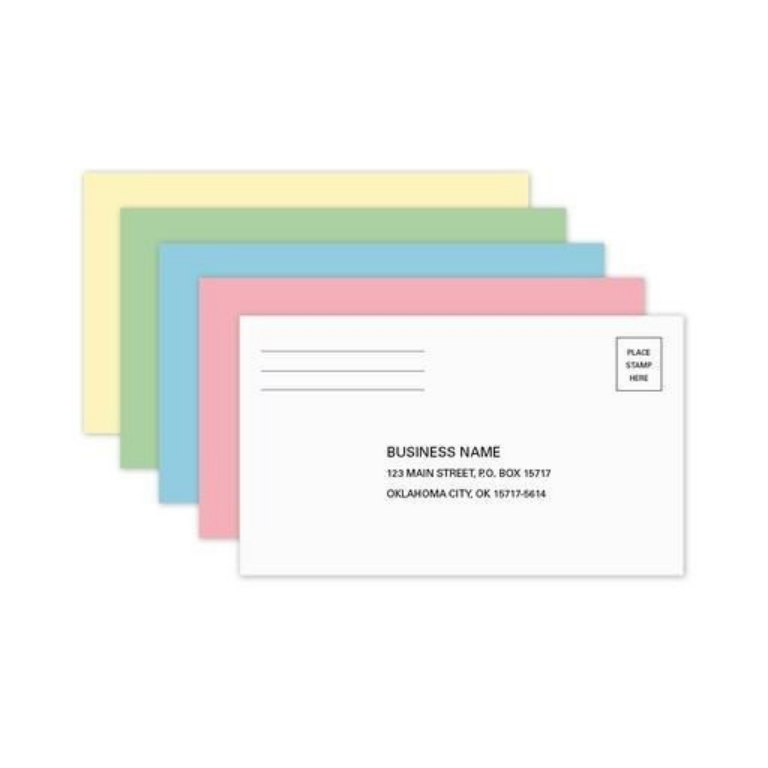
If you have ever asked a customer, donor, or applicant to mail something back to you, you already know the problem: most people will not bother finding a stamp. A postage-paid reply envelope removes that excuse entirely. The recipient only has to drop a form or payment inside and seal it shut.
Simple as that sounds, a surprising number of businesses still get the details wrong. Small mistakes in size, printing, or postage can quietly tank your response rate. This matters whether you are collecting payments, running a donor appeal, or sending out a survey.
With this in mind, this article looks at the small details, from sizing and postage to tracking returns, that determine whether a reply envelope actually gets used.
- Use the Right Envelope Size for the Reply
Start with the basics of your self addressed stamped envelope setup. A basic #6 envelope is adequate for short forms, checks, or replies, whereas a #9 provides enough space for folding letters or other documents. While guessing about the proper size may appear innocuous enough, a reply item that is too small for the document it encloses will likely be set aside, more so than a right-sized item. An item that is simply too large, without a real reason for it, will result in unnecessary extra postage costs, without providing any value whatsoever. Using pre-made stock that is created for this very purpose eliminates the guessing game and maintains consistency with all your mailings.
- Pre-Print the Return Address, Don’t Handwrite It
The handwriting on a return address seems impromptu, and anything that seems impromptu is not trustworthy in business communication. Having your address pre-printed shows it’s a standard, professional procedure, whereas having it handwritten might seem like something put there on the spur of the moment. Handwriting might sometimes be illegible, the ZIP code may contain a mistake, or it may become smudged, thus making it go to the wrong recipient.
- Match Your Postage Option to Your Response Volume
Businesses generally choose between two approaches to postage for reply envelopes. Courtesy Reply Mail already has a stamp or printed indicia on it, so you pay for every envelope you send out, regardless of whether it comes back. Business Reply Mail works the opposite way. According to the United States Postal Service, Business Reply Mail allows a permit holder to provide recipients with a prepaid way to respond, and the sender is billed only for the pieces that are actually mailed back. If you expect a modest response rate, BRM usually saves money. If you expect most recipients to reply, paying postage upfront on every envelope can end up cheaper once permit and per-piece surcharges are factored in. There is no universal right answer here, only the option that matches how many replies you realistically expect from a given list.
- Keep the Reply Form Short and Simple
The envelope is only half the equation. Whatever is going inside it- a form, a check stub, a survey- should take under a minute to fill out. Every extra field or confusing instruction is one more reason a recipient sets the whole packet aside and forgets about it. Bold the one action you actually need someone to take, whether that is signing a line or writing in a dollar amount, so it is impossible to miss even at a glance. If a form needs more than a few lines of instructions to explain, that is usually a sign the form itself needs simplifying rather than the instructions needing more detail.
- Order Envelopes That Meet USPS Specifications
Reply envelopes have to follow specific formatting rules, particularly for Business Reply Mail, which requires precise barcode placement, a Facing Identification Mark, and an accurate ZIP+4 code tied to your permit. Getting these details wrong can mean rejected mail or unexpected surcharges, and fixing a formatting error after a print run has already shipped is far more expensive than catching it beforehand. Working with a printer that builds reply envelopes to postal specifications from the start saves you from discovering a formatting problem after a batch has already gone out, and it lets you focus on the message rather than the fine print of postal regulations.
- Track Returns So You Know What’s Working
Once your reply envelopes are in circulation, pay attention to what actually comes back. A sudden drop in response rate across a mailing often points to something specific: wrong postage type, a confusing form, an address error, rather than random bad luck. Comparing return rates across different mailings over time tells you far more about what is working than any single campaign ever could on its own, and it gives you a clear signal for which version of the envelope, form, or offer to keep using going forward.

Conclusion
A self-addressed stamped envelope is a small piece of paper doing a surprisingly large amount of persuasive work. Getting the size, printing, postage, and form design right does not require a marketing degree, just attention to a handful of details that are easy to overlook. Get those details right once, and the same reply envelope keeps quietly improving your response rate on every mailing that follows, without asking you to reinvent the process each time.